How to Test for Arsenic in Water: Lab and Speciation
Arsenic needs a certified lab, not a strip. See total versus speciated testing, sampling rules, and what a result above 0.010 mg/L means.
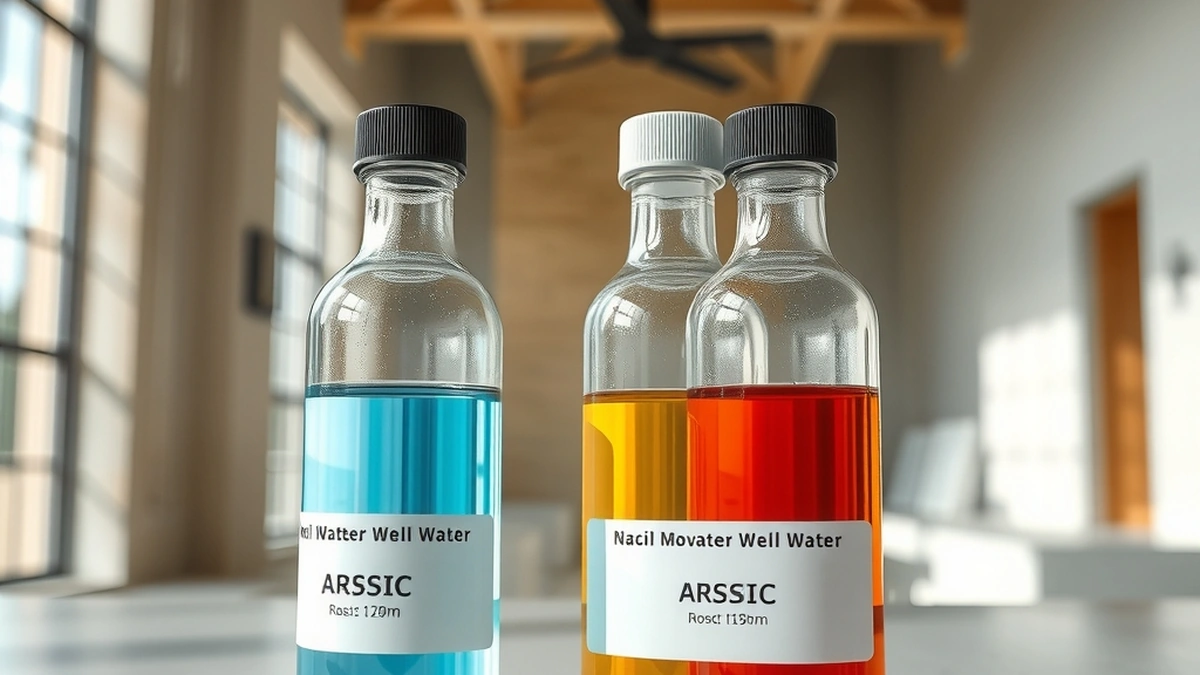
Test for arsenic with a certified laboratory, since no reliable home strip exists at the 0.010 mg/L limit. Ask for total arsenic and, if treatment is being planned, a speciation test that separates As(III) from As(V).
- Lab test
- $40 - $150
- Federal limit
- 0.010 mg/L
- Speciation
- $50 - $150 extra
- Sample tap
- Cold, untreated
- Retest interval
- Every 3 - 5 years
Some links on this page are affiliate links.If you buy through them we may earn a commission at no extra cost to you. We do not accept payment for rankings. Read the full disclosure.
Arsenic testing requires a certified laboratory. Home strips are not reliable at the 0.010 mg/L limit, and a false sense of safety is worse than no test. A lab panel costs $40 - $150, and a speciation test adds $50 - $150.
Why Strips Do Not Work
Arsenic is measured at parts per billion. A result of 0.010 mg/L is 10 ppb, and the difference between 8 and 12 ppb decides whether treatment is required.
Colorimetric strips and handheld kits do not have that resolution, and many are calibrated for much higher concentrations in industrial or aquarium use.
A lab uses inductively coupled plasma mass spectrometry or another approved method with a reporting limit well below 10 ppb.
Total vs Speciated
A total arsenic test reports the sum of all forms. That is enough to know whether the water exceeds the limit.
A speciation test reports As(III) and As(V) separately. That is what a treatment designer needs, because the two forms behave differently.
If the water is high in As(III), an adsorptive media system without oxidation may remove only a fraction of the total. The speciation result prevents that mistake.
Taking the Sample
| Step | Action | Reason |
|---|---|---|
| 1 | Use the lab bottle | Clean and preserved correctly |
| 2 | Sample a cold untreated tap | Treatment changes the result |
| 3 | Run water 3 - 5 minutes | Clears the line |
| 4 | Fill without touching the cap | Avoids contamination |
| 5 | Follow preservation instructions | Some tests need acid |
| 6 | Deliver within the holding time | Results depend on it |
Speciation samples sometimes need to be filtered in the field and shipped cold. Ask the lab before collecting, because a mishandled speciation sample is a wasted test.
Reading the Result
A result under 0.005 mg/L is well below the limit. Retest in three to five years.
A result of 0.005 - 0.010 mg/L is approaching the limit. Retest annually and consider treatment if the trend is upward.
A result at or above 0.010 mg/L exceeds the federal limit. Treat the drinking water or find another source.
Speciation results add a second layer: a high As(III) share means oxidation is part of the design.
What the Number Does Not Tell You
A single test is a snapshot. Arsenic concentrations can vary with pumping rate, season, and aquifer mixing.
A well that pumps from two zones may produce different water at different times. A sample taken after heavy use may differ from one taken after a quiet period.
That variability is a reason to retest rather than to assume a single low result is permanent.
Testing After Treatment
Sample the treated water at the tap and compare it with the raw result. A working system brings arsenic below 0.005 mg/L.
Test after every media change and at least annually. Media exhaustion is gradual, and the first sign is a rising treated result.
If the treated number climbs toward the raw number, the media is spent or the system is bypassed. Those are different fixes, and the test narrows it down.
When to Test
Test once on any private well, ideally before buying the property or before relying on the water.
Test every three to five years after that, or annually if a result was near the limit or if treatment is installed.
Test after any change in the well, the pump depth, or the water source. A new well or a deepened well can draw from a different layer with different arsenic.
Common Mistakes
The first is using a strip and trusting the result. It is not a valid test at this concentration.
The second is ordering total arsenic when a system is being designed. Speciation tells the installer which media and whether oxidation is needed.
The third is sampling through a filter. The result then describes treated water, not the well.
The fourth is skipping the retest after treatment. Media exhausts, and a system that worked in year one may not work in year three.
- Order the lab bottle and ask about preservation.
- Sample a cold untreated tap after flushing.
- Request total arsenic and, for treatment design, speciation.
- Deliver within the holding time.
- Compare the result with the 0.010 mg/L limit.
- Retest treated water at 30 days and annually after.
That sequence costs $40 - $150 and prevents both a false negative and an undersized system. The lab result is the cheapest part of an arsenic project and the one that decides everything else.
Arsenic is a geologic contaminant, and nearby wells drilled into the same formation often show similar concentrations. A neighbor’s result is not a substitute for your own, but it is a useful warning, and some states publish results by township or aquifer.
The result still has to come from your well. Two wells a hundred feet apart can draw from different fracture zones and produce different water, which is why a shared number is a hint rather than a finding.
Some states publish arsenic results by township or aquifer. A quick check can tell you whether the area is known for the problem and whether testing should move up the priority list.
A final note on the lab report: check the reporting limit before celebrating a non-detect. A result of “less than 5 ng/L” is meaningful, while “less than 20 ng/L” cannot distinguish a low result from a moderate one, and the treatment decision may need a more sensitive method.
For the treatment options, see arsenic in water treatment. For the well problem, see arsenic in well water. For the full panel, see water tests for wells.
Frequently asked questions
How do I test for arsenic in well water?
Use a certified laboratory. Collect a cold untreated sample in the lab's bottle and return it within the holding time. Home strips are not reliable at the limit.
What is the arsenic limit in drinking water?
The federal limit is 0.010 mg/L, which is the same as 10 parts per billion. Results at or above that level call for treatment or another source.
What is arsenic speciation testing?
It reports As(III) and As(V) separately. The split matters because treatment media capture As(V) far better, and As(III) usually needs oxidation first.
Can I test arsenic with a pool or aquarium kit?
No. Those kits are not calibrated for drinking water at 10 parts per billion and will not give a usable result.
Why does arsenic vary between wells?
Arsenic occurs naturally in certain rock formations. Depth, aquifer, and pH all affect the concentration, so neighboring wells can differ substantially.
How often should arsenic be tested?
At least once on a private well, then every three to five years. Test annually if a prior result was near the limit or if treatment is installed.
Sources
Some links are affiliate links.If you buy through them we may earn a commission at no extra cost to you. We do not accept payment for rankings. Read the full disclosure.