Arsenic in Well Water: Treatment Options
How to test for arsenic in well water and compare treatment methods including reverse osmosis, adsorption, and whole-house systems.
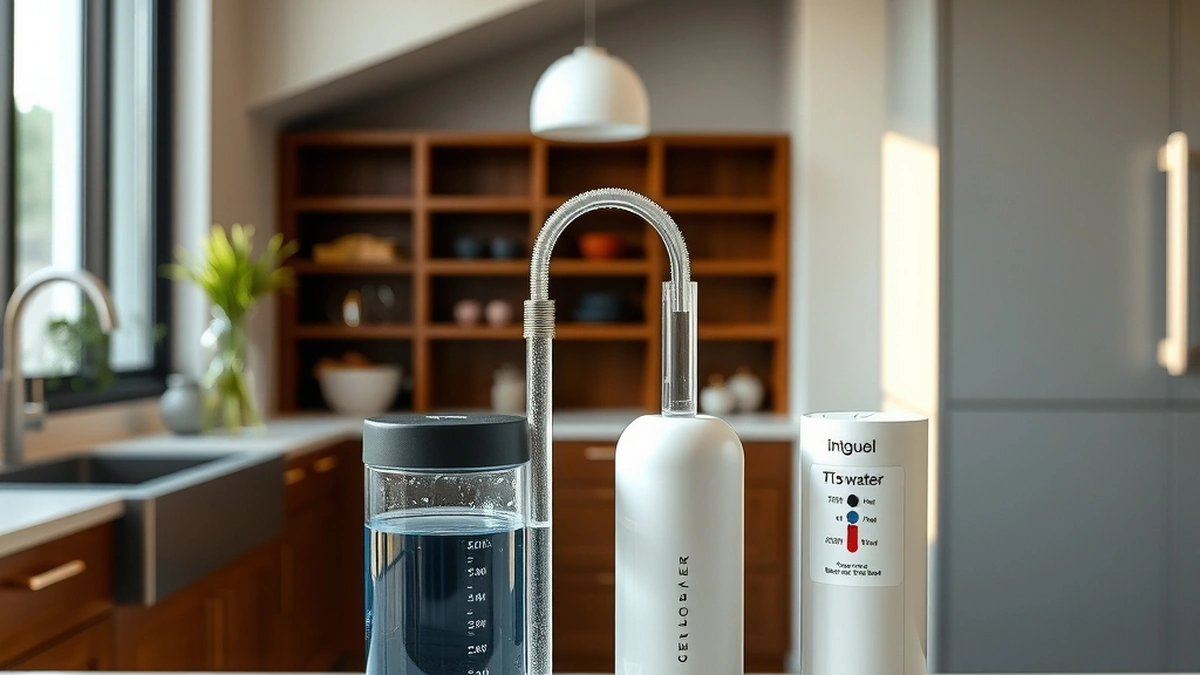
Test your well water first. If arsenic is present, point-of-use reverse osmosis or adsorption media are common treatment options; whole-house systems depend on concentration and water chemistry.
- First step
- Certified lab water test
- Common treatment
- Point-of-use reverse osmosis
- Under-sink RO installed
- $300–$900
- Whole-house RO installed
- $3,000–$8,000
- RO arsenic rejection
- 80–95%
Some links on this page are affiliate links.If you buy through them we may earn a commission at no extra cost to you. We do not accept payment for rankings. Read the full disclosure.
Arsenic in well water is treated by testing first, then selecting equipment matched to the arsenic form and concentration. There is no single treatment that fits every well. The right choice depends on whether you need water for drinking and cooking only or for the entire house, and on what else is in the water.
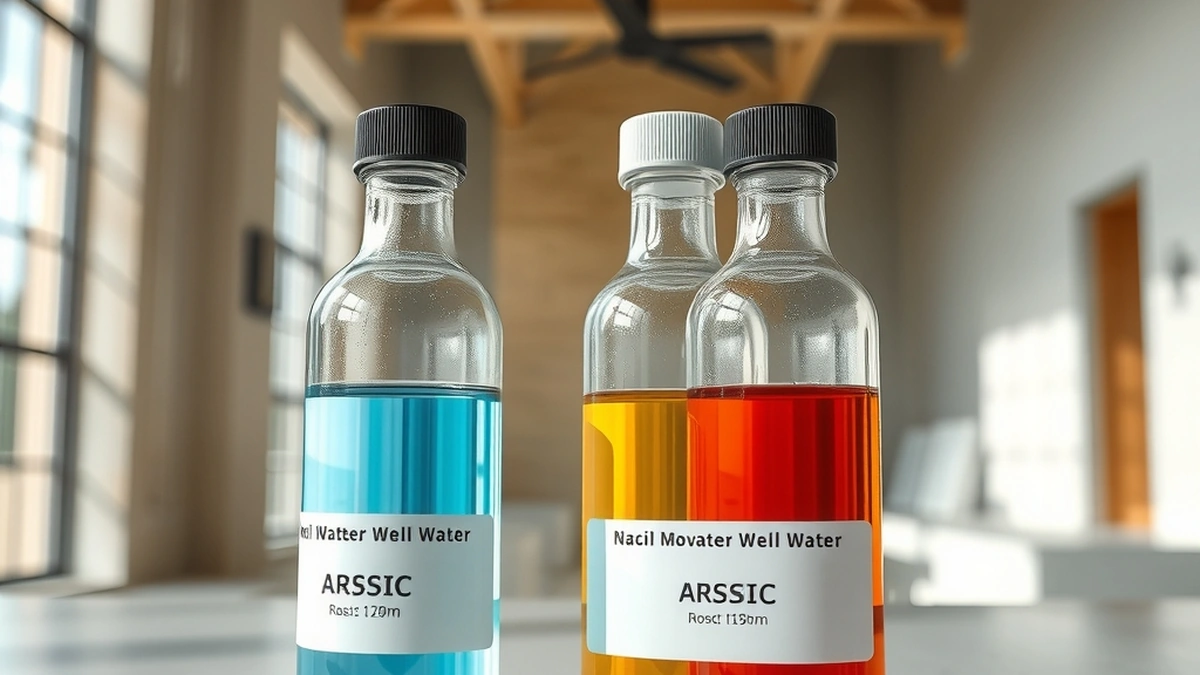
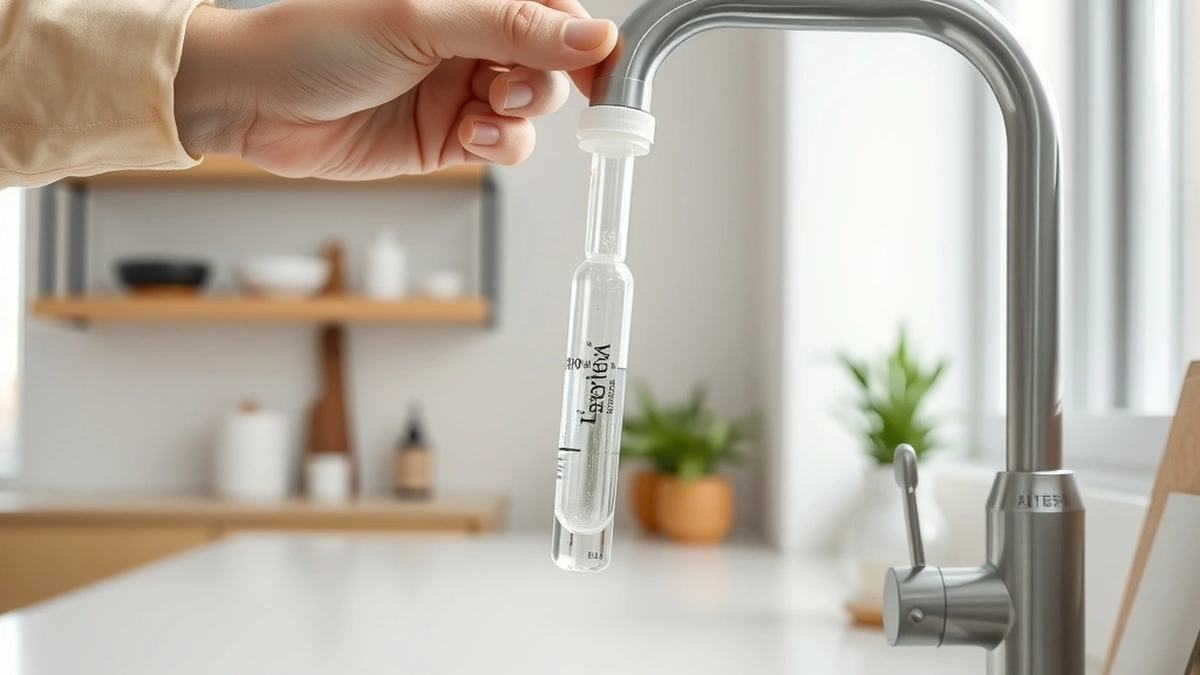
Start with a certified lab test. A standard water test typically costs $40 to $150 and tells you the total arsenic level, plus iron, hardness, pH, and other parameters that affect treatment performance. Without those numbers, equipment selection is guesswork.
Understand Arsenic Forms
Arsenic in well water usually appears as two forms: arsenic III and arsenic V. Arsenic III is uncharged and harder to remove with standard filtration. Arsenic V carries a charge and is generally easier to reduce. Many treatment systems work better on arsenic V, so some setups include a pre-oxidation step to convert arsenic III to arsenic V before the main treatment.
A lab test can specify which form is present. If it only reports total arsenic, assume the harder-to-treat form may be present and choose equipment accordingly.
Point-of-Use Reverse Osmosis
Reverse osmosis is a common option for drinking and cooking water. An under-sink RO system typically costs $200 to $600 for equipment and $300 to $900 installed. Running costs run about $60 to $150 per year for filters and membrane replacement. The membrane usually lasts 2 to 3 years.
RO rejection rates for arsenic fall in the range of 80 to 95 percent. That means if your water contains 10 parts per billion (ppb) of arsenic, treated water might contain roughly 0.5 to 2 ppb, depending on the unit and water chemistry. These are estimates based on rejection percentages, not guarantees for a specific well.
RO systems also produce waste water. A typical waste ratio is 3 to 4 gallons of waste for every 1 gallon of treated water. For a household using 3 gallons of treated water daily, that could mean 9 to 12 gallons sent to drain each day.
For more detail on pricing, see our breakdown at /reverse-osmosis-system-cost/.
Adsorption Media
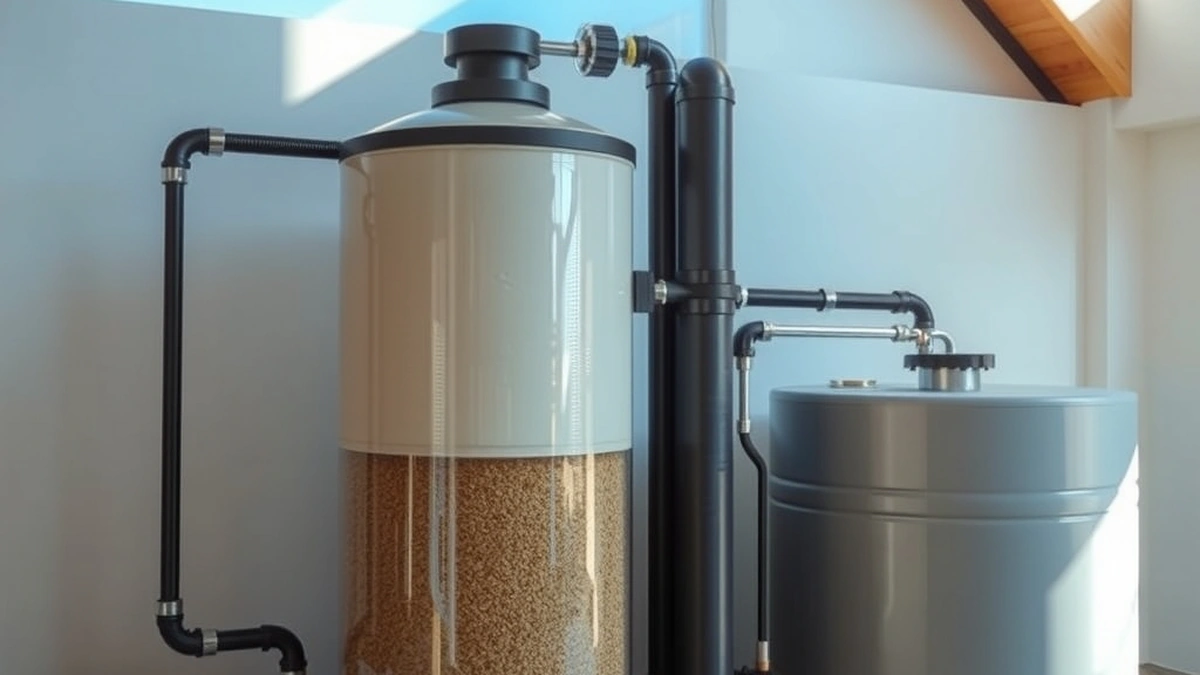
Adsorption filters use media such as iron-based granules to bind arsenic as water passes through. These systems are often installed as point-of-use units under the sink or as whole-house tanks. Whole-house adsorption equipment and installation vary widely by flow rate and tank size, so a site-specific quote is typical.
Adsorption cartridges must be replaced when exhausted. Replacement frequency depends on arsenic concentration, water usage, and competing contaminants. Unlike RO, adsorption does not typically produce a waste-water stream, but spent media may require disposal according to local rules.
Because adsorption capacity is consumed by arsenic and other contaminants, high sulfate, phosphate, or silica levels can shorten media life. This is why the full water chemistry matters before sizing a system.
Whole-House Treatment
If arsenic is high enough that you want to treat all water entering the home—including water for bathing and laundry—a whole-house system may be considered. Whole-house reverse osmosis typically costs $3,000 to $8,000 installed. It requires pre-treatment, storage tanks, and repressurization pumps, adding complexity and maintenance.
Whole-house adsorption tanks are another route. Sizing depends on daily water use and arsenic load. For example, if a household uses 300 gallons per day with 20 ppb arsenic, the daily arsenic load is 6,000 micrograms. Media capacity must exceed that load between change-outs, with a safety margin for competing ions.
Whole-house treatment also means treating water that does not need arsenic removal, such as outdoor irrigation. That increases salt, water, or media consumption without a corresponding benefit.
For broader cost context, see /whole-house-water-filter-cost/ and /well-water-treatment-cost/.
What Water Softeners Do Not Do
A water softener removes hardness minerals such as calcium and magnesium through ion exchange. It is not an arsenic treatment. Standard softener resin does not target arsenic reliably, and arsenic can pass through untreated.
Softener equipment ranges from $600 to $2,500, with installation adding $500 to $1,500, for a total installed range of $1,200 to $4,500. Salt costs run $120 to $400 per year, and resin rebeds cost $300 to $600 every 8 to 12 years. Capacity typically spans 24,000 to 64,000 grains, using 8 to 12 pounds of salt per regeneration. Expected system life is 10 to 15 years.
If your well also has hardness, a softener may be part of the overall water treatment plan, but it should not be purchased to address arsenic. For cost details, see /how-much-does-a-water-softener-cost/ and /water-softener-installation-cost/.
Pre-Treatment and Competing Contaminants
Iron, manganese, hardness, sulfate, and organic matter can all interfere with arsenic treatment. Iron above 2 to 3 parts per million may foul softener resin or coat adsorption media. Hardness can reduce RO membrane life and increase scaling. Sulfate competes with arsenic on some adsorption media.
If iron is present, an iron filter may be needed upstream. Iron filter systems typically run $800 to $2,500 installed. If hardness is also a concern, a softener can follow the iron filter. Each added stage increases cost and maintenance, so test results should drive the sequence.
UV lamps do not remove arsenic. UV systems treat microorganisms and require lamp replacement every 12 months at roughly $30 to $90 per lamp. They are unrelated to arsenic chemistry.
Maintenance and Ongoing Costs
All arsenic treatment requires maintenance. RO membranes need replacement every 2 to 3 years. Carbon pre-filters typically need changes every 6 to 12 months at $80 to $300 per year. Sediment pre-filters may need changes every 3 to 6 months. Adsorption media must be replaced when exhausted, which a pressure drop or breakthrough test can indicate.
For a household using 2 gallons of RO-treated water daily for drinking and cooking, annual water production is about 730 gallons. At a running cost of $60 to $150 per year, the cost per gallon is roughly $0.08 to $0.21, not including the initial equipment and installation amortized over time.
Whole-house systems treat much larger volumes, so cost per gallon drops, but total annual spending is higher due to media, electricity, and waste handling.
Testing Schedule
Test well water for arsenic at least once per year. Retest immediately after installing treatment to confirm performance, and again after any major plumbing change, nearby land use change, or noticeable change in taste, odor, or appearance. Keep lab results on file to track trends and justify media replacement timing.
Treatment decisions should follow the numbers, not assumptions. A current lab report is the starting point for every equipment recommendation.
Next, compare how much does a water softener cost, water softener installation cost, whole house water filter cost before you commit.
Frequently asked questions
What is the first step for arsenic in well water?
Test the water at a certified laboratory to determine the arsenic concentration and check for competing contaminants such as iron, hardness, and sulfate.
Can a water softener remove arsenic?
A standard water softener is designed for hardness minerals, not arsenic, and should not be relied on as an arsenic treatment method.
Does reverse osmosis remove arsenic?
Reverse osmosis systems typically reject 80–95% of arsenic, making them a common point-of-use option for drinking and cooking water.
What is the difference between arsenic III and arsenic V?
Arsenic III is uncharged and harder to remove; arsenic V is charged and generally easier to treat with standard filtration or RO.
How much does under-sink RO cost installed?
Installed under-sink reverse osmosis typically ranges from $300 to $900, with yearly running costs around $60 to $150.
How often should well water be retested for arsenic?
Retest at least annually, or whenever you change treatment equipment, notice water quality changes, or drill a new well.
Sources
Some links are affiliate links.If you buy through them we may earn a commission at no extra cost to you. We do not accept payment for rankings. Read the full disclosure.