Water Softener Installation Cost, Line by Line
Break down equipment, labor, salt, and maintenance costs for a home water softener, with grain capacity and installed price ranges.
A professionally installed water softener typically runs $1,200–$4,500 total, with equipment at $600–$2,500 and labor at $500–$1,500.
- Equipment only
- $600–$2,500
- Installation labor
- $500–$1,500
- Total installed
- $1,200–$4,500
- Salt per year
- $120–$400
- Resin rebed
- $300–$600
Some links on this page are affiliate links.If you buy through them we may earn a commission at no extra cost to you. We do not accept payment for rankings. Read the full disclosure.
A standard ion-exchange water softener costs $1,200–$4,500 installed. That total splits into equipment at $600–$2,500 and labor at $500–$1,500. Ongoing salt runs $120–$400 per year, and a resin rebed is $300–$600 every 8–12 years.
Test the water before pricing equipment
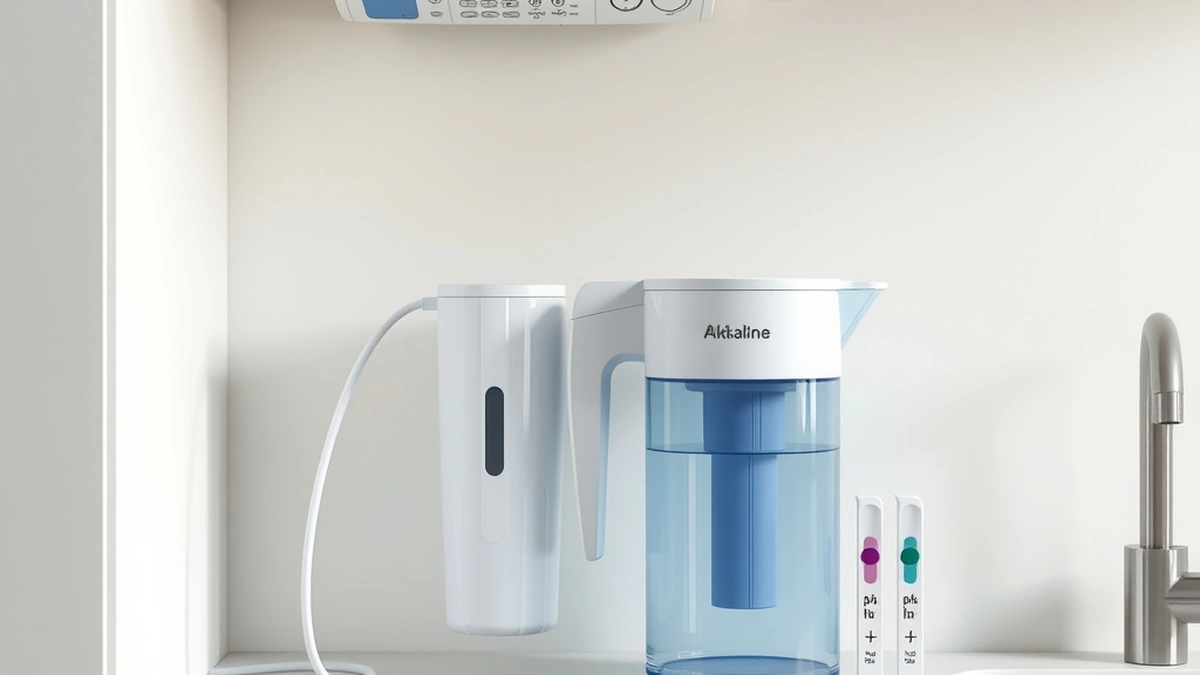
Water treatment starts with a lab test, not a shopping cart. A water test is estimated at $40–$150 and tells you hardness in grains per gallon (GPG), iron levels, and whether you need pre-treatment. Hardness is commonly classified as soft at 0–3 GPG, moderate at 3–7 GPG, hard at 7–10 GPG, and very hard at 10+ GPG. Iron matters because most softeners handle only 2–3 ppm of iron; above that, you may need an iron filter at $800–$2,500 installed before the softener will work as specified.
Sizing follows the test. A softener is rated by grain capacity, typically 24,000–64,000 grains. To estimate daily demand, multiply household members by roughly 75 gallons per person per day, then multiply by hardness in GPG. For example, four people at 75 gallons each equals 300 gallons per day. At 10 GPG hardness, that is 3,000 grains per day. With a standard reserve, a 32,000-grain unit might regenerate about every 10 days. Salt use per regeneration is typically 8–12 pounds, so salt consumption scales with regeneration frequency.
Equipment cost line items
The equipment line covers the softener tank, control valve, resin, and bypass valve. Prices are estimates and vary by grain capacity, valve type, and whether the cabinet is all-in-one or two-tank.
- Basic 24,000–32,000 grain unit: $600–$1,200
- Mid-range 40,000–48,000 grain unit: $1,200–$1,800
- High-capacity 60,000–64,000 grain unit: $1,800–$2,500
Metered demand-initiated regeneration models usually cost more than timer models but can reduce salt and water use because they regenerate only when needed.
Installation labor line items
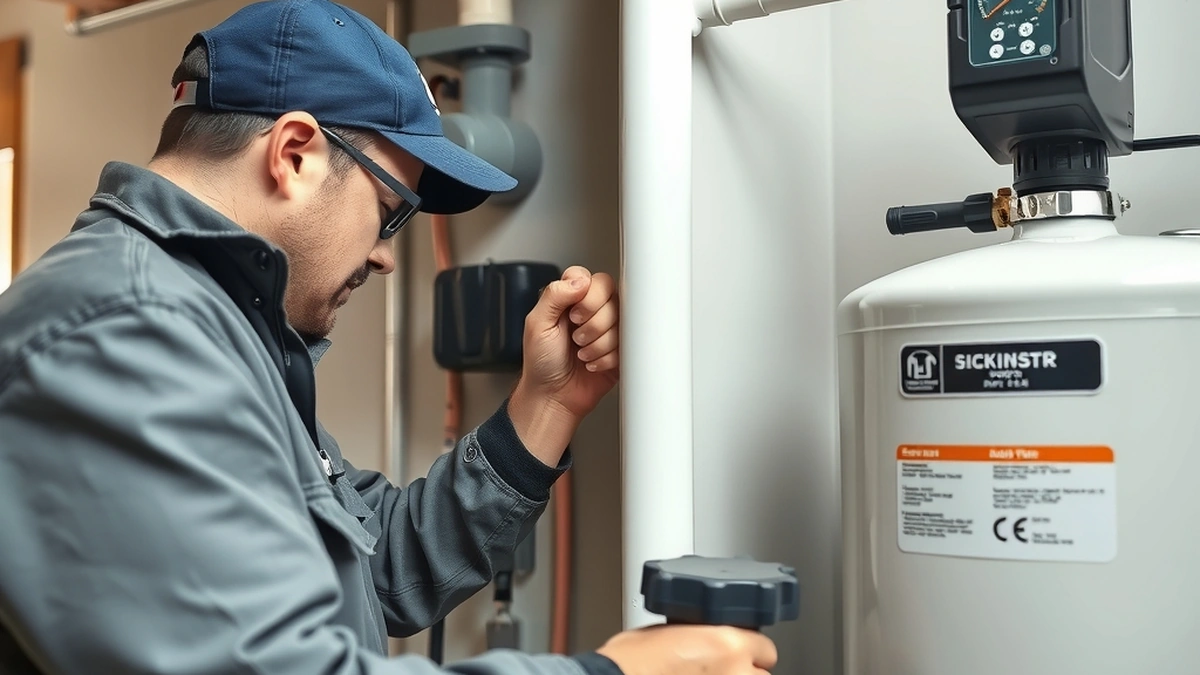
Labor is estimated at $500–$1,500 and assumes a straightforward install: main water line access, a nearby drain, and a grounded electrical outlet. The line breaks down roughly as follows:
- Shut-in and plumbing connections: $200–$600
- Drain line and air gap: $100–$300
- Electrical hookup: $50–$150
- Programming and startup: $50–$150
- Old unit removal and disposal: $100–$300
Costs rise if you need new copper or PEX runs, a dedicated outlet, or a concrete pad. Homes with well water often need a sediment pre-filter, which adds to the whole-house filter cost discussion covered in /whole-house-water-filter-cost/.
Total installed cost
Combining equipment and labor gives the installed range:
- Low end: $600 equipment + $500 labor = $1,100, rounded to the published $1,200–$4,500 range start
- Mid example: $1,500 equipment + $1,000 labor = $2,500 installed
- High end: $2,500 equipment + $1,500 labor = $4,000, within the $1,200–$4,500 installed estimate
These are estimates. Permit fees, if required locally, are extra and vary by municipality.
Annual operating costs
Salt is the recurring cost. At 8–12 pounds per regeneration and roughly one to three regenerations per week for an average household, annual salt use can land in the $120–$400 range depending on local salt prices and water hardness. For more detail on salt pricing and usage, see /water-softener-salt-cost/.
Resin lasts an estimated 8–12 years. A rebed is estimated at $300–$600. Over a 10–15 year softener life, budget for at least one rebed, possibly two.
Cost per gallon context
To put installed cost in perspective, a softener treating 300 gallons per day handles about 109,500 gallons per year. At $2,500 installed and a 12-year life, the equipment-plus-install portion is roughly $0.0019 per gallon before salt. Adding salt at $250 per year brings the annual operating cost to about $0.0023 per gallon combined. These are estimates based on mid-range pricing and average usage; actual cost per gallon changes with grain capacity, hardness, and local utility rates.
Alternatives and add-ons
If hardness is your only concern, a softener is the standard tool. If you also have chlorine, sediment, or taste issues, a carbon filter is $500–$1,800 installed with cartridges at $80–$300 per year replaced every 6–12 months. Sediment cartridges typically need replacement every 3–6 months.
For drinking water only, an under-sink reverse osmosis system is $300–$900 installed with $60–$150 per year in running costs and a membrane replaced every 2–3 years. Whole-house RO runs $3,000–$8,000 installed and is usually unnecessary just for hardness. Salt-free conditioners are $500–$1,800 installed but do not remove hardness minerals the way ion exchange does; they alter scale formation instead. UV systems address microbes and require a lamp replacement every 12 months at $30–$90. More on UV pricing is in /uv-water-purifier-cost/.
Well water with iron above 2–3 ppm or sulfur may need dedicated filtration before softening. Iron filters are $800–$2,500 installed and sulfur filters are $1,000–$3,000 installed. Related well-water pricing is covered in /well-water-treatment-cost/. If your goal is drinking water at one tap, see /reverse-osmosis-system-cost/.
Bottom line
Expect $1,200–$4,500 installed for a standard water softener, with equipment at $600–$2,500 and labor at $500–$1,500. Add $120–$400 per year for salt and plan for a $300–$600 resin rebed every 8–12 years. Start with a lab water test at $40–$150 to confirm hardness and iron, then size the grain capacity to your household’s daily demand.
Next, compare how much does a water softener cost, whole house water filter cost, reverse osmosis system cost before you commit.
Frequently asked questions
What is the installed cost range?
Total installed cost is estimated at $1,200–$4,500, combining equipment and standard labor.
How much does softener equipment cost alone?
Equipment alone is estimated at $600–$2,500, depending on grain capacity and features.
How much is installation labor?
Standard installation labor is estimated at $500–$1,500, assuming existing plumbing access.
What does salt cost per year?
Salt is estimated at $120–$400 per year, based on usage and local salt prices.
When is a resin rebed needed?
Resin typically lasts 8–12 years; a rebed is estimated at $300–$600 when performance drops.
Should I test water before buying?
Yes. A lab water test is estimated at $40–$150 and confirms hardness and iron levels first.
Sources
Some links are affiliate links.If you buy through them we may earn a commission at no extra cost to you. We do not accept payment for rankings. Read the full disclosure.