Reverse Osmosis System Cost: Under-Sink vs Whole-House
Compare installed cost, annual maintenance, and water waste for under-sink and whole-house reverse osmosis systems before you buy.
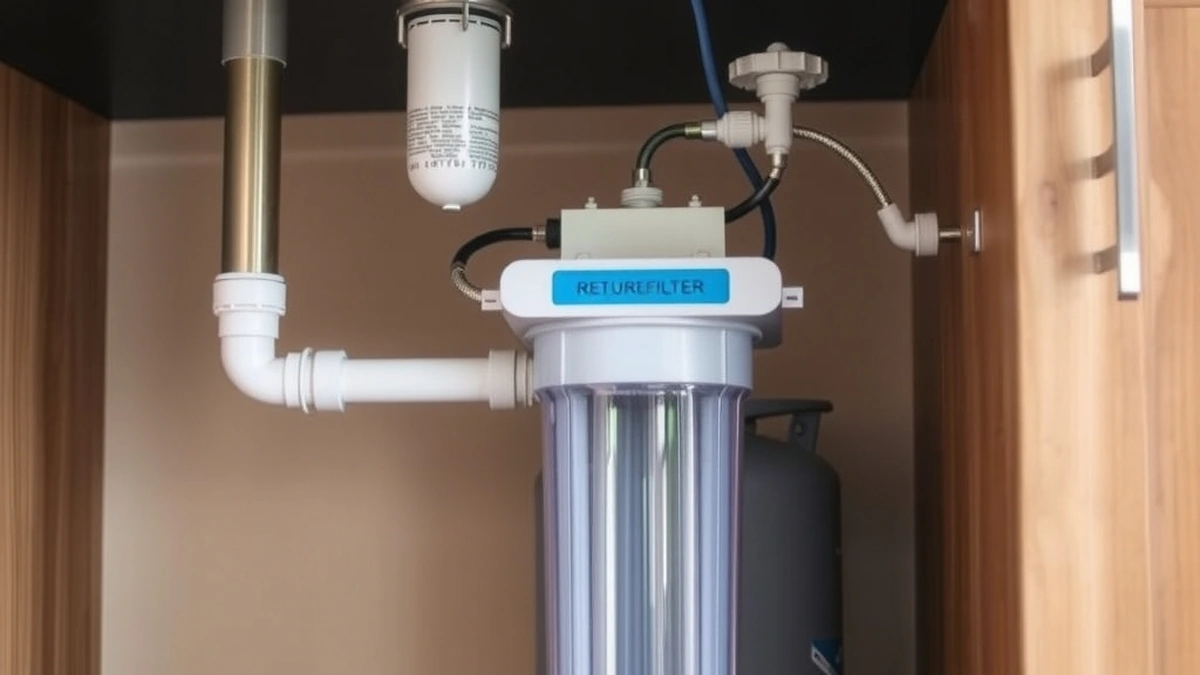
Under-sink RO typically installs for $300-$900 and runs $60-$150 per year; whole-house RO installs for $3,000-$8,000 with higher membrane and prefilter costs.
- Under-sink RO equipment
- $200-$600
- Under-sink RO installed
- $300-$900
- Whole-house RO installed
- $3,000-$8,000
- Under-sink RO annual running cost
- $60-$150
- RO membrane life
- 2-3 years
Some links on this page are affiliate links.If you buy through them we may earn a commission at no extra cost to you. We do not accept payment for rankings. Read the full disclosure.
Under-sink reverse osmosis typically costs $300 to $900 installed, while whole-house reverse osmosis runs $3,000 to $8,000 installed. The gap comes from system size, booster pumps, storage tanks, and the plumbing labor needed to treat every tap instead of one kitchen faucet. A lab water test, usually $40 to $150, should come before either purchase to confirm total dissolved solids and any pretreatment needs.
Under-Sink RO Installed Cost
Under-sink reverse osmosis equipment ranges from $200 to $600. Adding professional installation brings the typical total to $300 to $900. Most kits include sediment and carbon prefilters, an RO membrane, a pressurized storage tank, and a dedicated faucet.
Installation variables that move the price within that range:
- Distance from the cold-water supply line to the sink cabinet
- Drain saddle connection for RO waste water
- Countertop or sink hole drilling for the dedicated faucet
- Existing cabinet space and accessibility
For context, a standard under-sink RO system rejects an estimated 80 to 95 percent of dissolved solids, depending on membrane quality and feed water chemistry. That rejection rate applies to the treated stream; the remainder exits through the waste line.
Whole-House RO Installed Cost
Whole-house reverse osmosis installs for $3,000 to $8,000. The equipment alone is substantially more expensive because it must size for peak household flow rather than a single drinking-water tap. A whole-house RO package typically includes larger membrane housings, a booster pump to maintain line pressure, a storage tank, and a re-pressurization pump to deliver treated water through the home’s distribution piping.
Labor is also more involved. The system usually ties into the main water line after the pressure tank or meter, and installers may need to route a dedicated waste line and install an air gap or drain connection sized for higher discharge volumes.
Because whole-house RO treats water for showers, laundry, and dishwashers, it produces much more product water daily. That scale increases membrane surface area requirements and, consequently, replacement cost when the membrane reaches the end of its estimated 2- to 3-year service life.
Annual Operating Costs
Under-sink RO running costs are estimated at $60 to $150 per year. This covers sediment cartridges, carbon cartridges, and membrane replacement. Sediment cartridges generally need replacement every 3 to 6 months, while carbon cartridges typically last 6 to 12 months. The membrane usually lasts 2 to 3 years.
Whole-house RO carries higher annual costs because cartridge volumes are larger and membranes cost more at commercial sizing. Exact figures depend on daily gallons treated and local water quality, but owners should budget several hundred dollars annually for consumables, plus periodic pump maintenance.
Water Use and Waste Ratio
Standard reverse osmosis operates at an estimated waste ratio of 3 to 4:1. That means for every gallon of treated water stored, 3 to 4 gallons are sent to the drain. An under-sink system producing 50 gallons per week might send 150 to 200 gallons weekly to waste.
Whole-house RO multiplies that volume. If a household uses 300 gallons of treated water per week for drinking and cooking only, an under-sink system handles that volume efficiently. Treating 300 gallons per day for the whole home sends roughly 900 to 1,200 gallons weekly to drain unless the system includes a recovery pump or permeate recycle feature. High water bills or septic constraints can make this a deciding factor.
Pretreatment and Water Testing
Test first, equipment second. Hardness above 7 grains per gallon is considered hard, and 10+ grains per gallon is very hard. High hardness can scale an RO membrane and shorten its life. Iron above 2 to 3 parts per million generally exceeds what a softener handles reliably and can foul RO membranes. Nitrate at or above 10 milligrams per liter is a common reason homeowners consider RO, since RO rejection can reduce nitrate levels in the product stream.
If hardness is present, a water softener often protects the RO membrane. Softener equipment runs $600 to $2,500, with installed costs of $1,200 to $4,500. Salt runs $120 to $400 per year, and resin rebeds cost $300 to $600 when needed. For more detail on softener pricing, see our breakdown at /how-much-does-a-water-softener-cost/ and installation guidance at /water-softener-installation-cost/.
If iron or sulfur is present, dedicated filtration may be required ahead of RO. Iron filters install for $800 to $2,500, and sulfur filters install for $1,000 to $3,000. A whole-house carbon filter, often used for chlorine reduction, installs for $500 to $1,800 with cartridge costs of $80 to $300 per year. Whole-house filter flow rates typically range from 8 to 15 gallons per minute.
Cost Per Gallon Comparison
To compare systems on a volume basis, estimate annual treated water and divide by total annual cost.
Under-sink example:
- Treated water: 3,650 gallons per year (10 gallons per day)
- Equipment amortized over 10 years: $600 installed cost divided by 10 equals $60 per year
- Annual consumables: $100 midpoint
- Total annual cost: $160
- Cost per gallon: $160 divided by 3,650 equals roughly $0.04 per gallon
Whole-house example:
- Treated water: 54,750 gallons per year (150 gallons per day)
- Equipment amortized over 10 years: $5,500 installed midpoint divided by 10 equals $550 per year
- Annual consumables: $400 estimate
- Total annual cost: $950
- Cost per gallon: $950 divided by 54,750 equals roughly $0.017 per gallon
The whole-house system has a lower cost per gallon because fixed equipment costs spread across much higher volume, but the total dollars leaving your bank account each year are far higher. Waste water is not included in the treated gallon count; if you pay sewer charges on total water use, add the 3-to-4:1 waste ratio to your operating budget.
When to Choose Each Configuration
Choose under-sink RO if your primary concern is drinking and cooking water at one location. The lower installed cost, simpler plumbing, and modest waste volume make it practical for most homes. Pair it with a lab test to confirm that total dissolved solids, nitrate, or other dissolved contaminants justify membrane treatment.
Choose whole-house RO only if water quality problems affect water throughout the home or if you require treated water for every fixture. The higher installed cost, larger waste stream, and greater maintenance burden require a clear justification from test results. In many cases, a whole-house carbon filter or softener addresses the issue at lower cost; see /whole-house-water-filter-cost/ for filter pricing and /well-water-treatment-cost/ for well-specific scenarios.
If you are on a private well, the EPA and CDC recommend routine testing because well water is not regulated under the same public supply standards. A baseline lab test helps you avoid buying equipment you do not need or undersizing a system that cannot handle your water chemistry.
Bottom Line
Under-sink reverse osmosis installs for $300 to $900 and costs an estimated $60 to $150 per year to operate. Whole-house reverse osmosis installs for $3,000 to $8,000 with proportionally higher annual maintenance and waste water volumes. Start with a $40 to $150 lab water test, match the system to your actual contaminant levels and daily water use, and compare total cost of ownership rather than equipment price alone.
Next, compare how much does a water softener cost, water softener installation cost, whole house water filter cost before you commit.
Frequently asked questions
What does under-sink RO cost installed?
Under-sink reverse osmosis equipment runs $200-$600, with installed prices typically landing between $300 and $900 depending on plumbing and faucet configuration.
What does whole-house RO cost installed?
Whole-house reverse osmosis systems generally install for $3,000-$8,000, reflecting larger membranes, booster pumps, and whole-home plumbing integration.
How much does RO cost to run per year?
Under-sink RO annual running costs are estimated at $60-$150, covering membrane, carbon, and sediment cartridge replacement.
How long does an RO membrane last?
RO membranes typically last 2-3 years before replacement is recommended, depending on feed water quality and daily usage volume.
How much water does RO waste?
Standard reverse osmosis systems send roughly 3 to 4 gallons of water to drain for every 1 gallon of treated product water.
Should I test water before buying RO?
Yes. A lab water test typically costs $40-$150 and identifies hardness, iron, and total dissolved solids that determine whether RO is the right fit.
Sources
Some links are affiliate links.If you buy through them we may earn a commission at no extra cost to you. We do not accept payment for rankings. Read the full disclosure.