What a catalytic carbon filter costs
Catalytic carbon filters run $700-$1,800 installed. See media pricing, annual cartridge spend, and when catalytic carbon beats standard GAC.
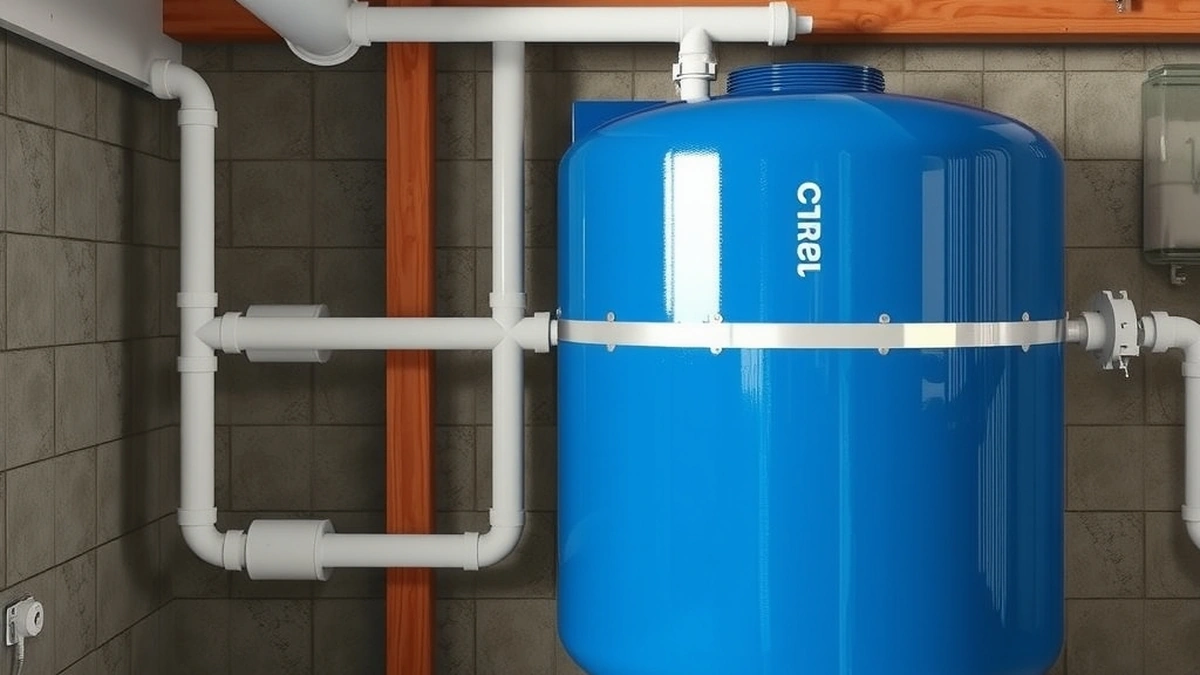
A catalytic carbon filter costs $700-$1,800 installed, sitting at the upper end of the $500-$1,800 carbon filter range because the media costs more. Replacement media and cartridges add $80-$300 per year.
- Installed range
- $700 - $1,800
- Media premium
- $40 - $120 per cu ft
- Annual media and filters
- $80 - $300
- Typical flow rate
- 8 - 15 GPM
- Media life
- 3 - 5 years
Some links on this page are affiliate links.If you buy through them we may earn a commission at no extra cost to you. We do not accept payment for rankings. Read the full disclosure.
A catalytic carbon filter costs $700-$1,800 installed for a whole-house system, which puts it at the top of the general $500-$1,800 carbon filter range. The premium over a standard granular activated carbon tank is the media itself, not the plumbing. Budget $80-$300 per year for replacement cartridges or media top-ups.
What makes the media different
A catalytic carbon filter is a point-of-entry tank filled with activated carbon that has been processed to speed up the breakdown of chloramine and dissolved hydrogen sulfide. Standard carbon adsorbs; catalytic carbon also catalyzes a chemical reaction on its surface.
That difference matters because a growing number of US water utilities disinfect with chloramine rather than free chlorine. Chloramine is harder to strip with plain granular activated carbon, and a standard tank may pass it through at flow rates a house actually uses. Catalytic media holds up better at the same contact time.
The tank, control valve, and bypass are commodity parts. A 10-inch by 54-inch fiberglass tank with a backwashing valve costs $300-$700 depending on the valve. Media is the variable: standard GAC runs $25-$60 per cubic foot, catalytic runs $65-$180.
Price bands by configuration
| Configuration | Installed cost | Best for |
|---|---|---|
| Whole-house tank, 1.5 cu ft | $700 - $1,100 | 2-3 bathroom home on chloramine |
| Whole-house tank, 2.5 cu ft | $1,100 - $1,800 | 4+ bathrooms, high flow demand |
| Under-sink catalytic cartridge | $150 - $400 | One tap, chloramine taste |
| Dual-stage carbon + sediment | $900 - $1,800 | Well water with sediment |
| Replacement media only | $180 - $450 | Existing tank, media exhausted |
The installed figure assumes an existing loop or accessible main, a standard backwash drain, and no electrical work. Cutting into a finished wall or rerouting a main adds labor fast.
The arithmetic behind a typical quote
Take a 2-cubic-foot whole-house unit. Catalytic media at $90 per cubic foot is $180. The tank and valve assembly is $450. Bypass, fittings, and drain line are $90. Labor at 4 hours and $95 per hour is $380. Total: $180 + $450 + $90 + $380 = $1,100.
The same job with standard GAC at $40 per cubic foot swaps $180 for $80 and lands at $1,000. The $100 gap buys chloramine capacity, which is either necessary in your water or it is not. That is a test question, not a sales question.
Ongoing cost is modest. A cartridge-based under-sink unit runs $80-$300 per year in replacements at a 6-12 month interval. A backwashing tank uses no cartridges but needs media replacement every 3-5 years at $180-$450, which amortizes to $36-$150 per year.
Catalytic versus standard GAC
Standard GAC is the right choice when the goal is chlorine taste and odor on water that is already low in sediment. It is cheaper per cubic foot and easier to find. It is the wrong choice when the utility uses chloramine, when a sulfur odor persists after a softener, or when carbon is being asked to protect a downstream RO membrane from oxidants.
Catalytic media is also more forgiving of backwash timing because its reaction does not depend on the same pore structure. That does not make it maintenance-free. Media beds compact, and a tank that never backwashes will channel and lose contact time regardless of what is inside it.
For a direct comparison of carbon block versus granular media in point-of-use housings, the carbon block versus GAC breakdown covers pore size, flow, and cartridge life.
Sizing before price
Flow rate sets the tank diameter, and the tank diameter sets the media volume. Whole-house carbon filters commonly support 8-15 GPM. A three-bathroom home with two simultaneous showers peaks near 5-7 GPM, so a 1.5-cubic-foot tank with a 9-10 inch diameter is usually enough. A home with irrigation tied to the treated line needs more.
Contact time is the second number. Catalytic carbon needs roughly 2-4 minutes of empty bed contact time for chloramine. Push 15 GPM through a tank holding 1.5 cubic feet and contact time collapses. That is why oversized flow on an undersized tank is the most common installation mistake.
Hardness and iron matter too. Iron above 2-3 ppm will coat carbon media and shorten its life. If the lab report shows iron, treat it upstream. A water test at $40-$150 that includes iron, manganese, and hardness prevents an expensive mistake here.
Five steps before you buy
- Pull a lab report and confirm whether the utility uses free chlorine or chloramine.
- Measure peak flow by counting fixtures that can run at once, then add 2 GPM headroom.
- Check for iron and manganese; treat those first if either is elevated.
- Confirm a drain is within 10 feet of the proposed tank location for backwash.
- Compare two quotes on media volume and valve brand, not on tank color.
What moves the number
Three line items explain most of the spread between a $700 quote and an $1,800 quote: media volume, valve quality, and access. A 1.5-cubic-foot tank with a basic timer valve sits at the bottom. A 2.5-cubic-foot tank with a metered, demand-initiated valve and a sediment pre-filter sits at the top.
Access is the wild card. A main line in an unfinished basement with a floor drain 4 feet away is a 3-hour job. The same main in a finished ceiling with no drain means cutting drywall and running PVC, which can add $300-$600 in labor and patching.
For the sulfur side of the problem, hydrogen sulfide treatment explains why carbon alone sometimes stops working. And if you are pricing the whole entry point rather than one tank, whole house water filter cost covers the combined sediment, carbon, and softener stack.
Frequently asked questions
Why does catalytic carbon cost more than standard carbon?
The media is processed to increase catalytic activity against chloramine and hydrogen sulfide, which adds roughly $40-$120 per cubic foot. The tank, valve, and labor are the same.
How much media does a whole-house catalytic filter need?
Most single-family systems use 1.5-2.5 cubic feet, sized to flow rate and backwash capability. A 10-inch by 54-inch tank typically holds about 1.5 cubic feet.
How often does catalytic carbon media need replacement?
Every 3-5 years under normal municipal chloramine service. Water with heavy hydrogen sulfide loads can exhaust media in 2-3 years.
Can catalytic carbon remove hydrogen sulfide?
Yes. Catalytic media accelerates the oxidation of dissolved hydrogen sulfide, which is why it is common on wells with a sulfur odor. It is not a substitute for a dedicated sulfur filter at high concentrations.
Does a catalytic carbon filter need backwashing?
A tank-style unit does, typically every 3-7 days depending on the valve setting and sediment load. Cartridge-based catalytic units are replaced rather than backwashed.
Will catalytic carbon remove chloramine?
It is one of the few carbon media that does so at a practical contact time. Standard GAC has limited chloramine capacity, which is the main reason utilities that use chloramine push homeowners toward catalytic media.
Sources
Some links are affiliate links.If you buy through them we may earn a commission at no extra cost to you. We do not accept payment for rankings. Read the full disclosure.