What a dual tank water softener costs
Dual tank softeners run $1,800-$4,500 installed. See why twin tanks cost more, what salt and resin add over 10 years, and when one tank is enough.
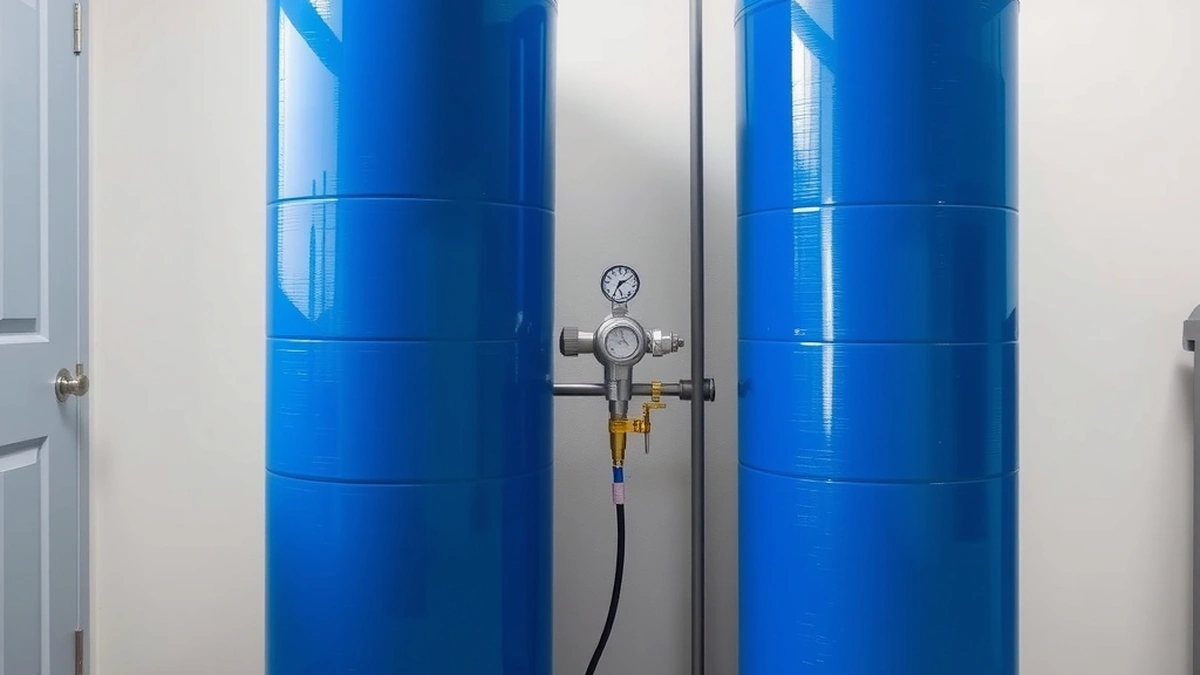
A dual tank water softener costs $1,800-$4,500 installed, at the top of the $1,200-$4,500 softener range. Two resin tanks, a shared valve, and more plumbing add $400-$1,200 over a single-tank system of the same capacity.
- Installed range
- $1,800 - $4,500
- Equipment only
- $900 - $2,500
- Salt per year
- $120 - $400
- Capacity per tank
- 24,000 - 64,000 grains
- System life
- 10 - 15 years
Some links on this page are affiliate links.If you buy through them we may earn a commission at no extra cost to you. We do not accept payment for rankings. Read the full disclosure.
A dual tank water softener costs $1,800-$4,500 installed, roughly $400-$1,200 more than a single-tank unit of the same total capacity. The extra money buys continuity: one tank serves the house while the other regenerates, so soft water never stops. Whether that is worth $600 depends on how your household uses water at 2 a.m.
What a dual tank system actually is
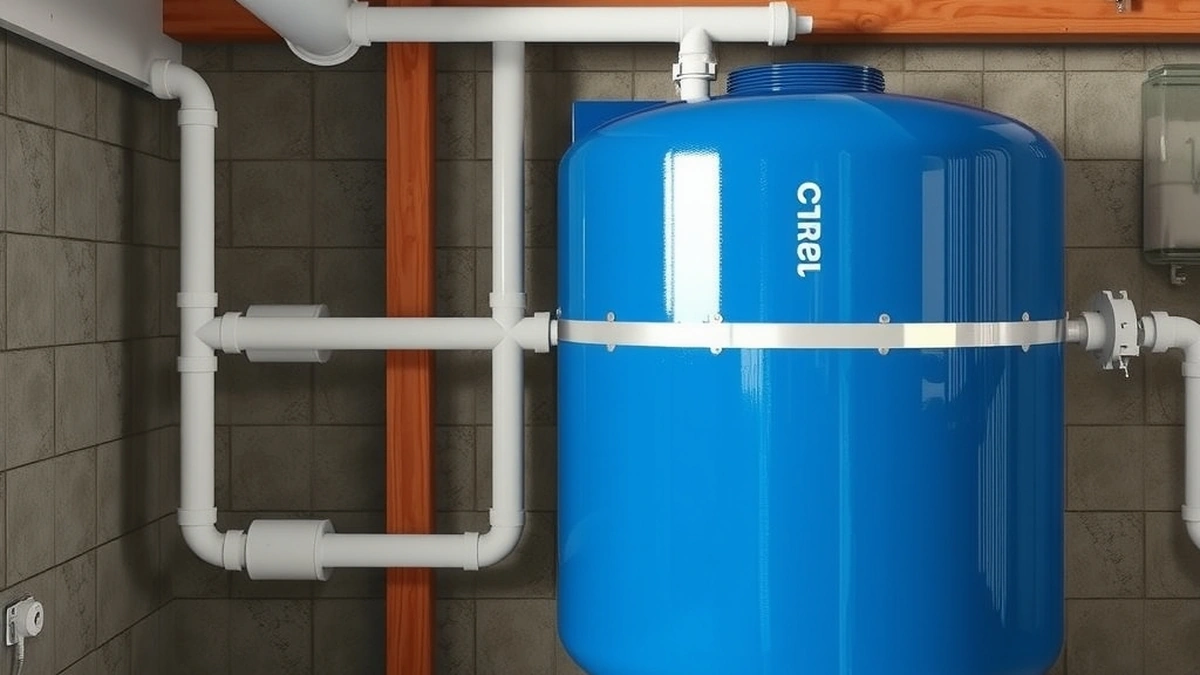
A dual tank water softener is an ion exchange system with two resin vessels that share a brine tank and either alternate or run in parallel. In the alternating design, one tank is online while the other draws brine, backwashes, and rinses. When the working tank exhausts, the valve swaps roles.
The hardware difference is easy to price: a second pressure vessel at $250-$500, a second distributor and resin charge at $200-$450, and a more complex valve body or a pair of valves at $250-$600. Plumbing doubles at the manifold, though the rest of the install is unchanged.
Sizing still runs on the same numbers as any softener. Capacity is 24,000-64,000 grains, salt dose is 8-12 pounds per regeneration, salt costs $120-$400 per year, and the system should last 10-15 years before the vessels or valve need replacement. Resin lasts 8-12 years and a rebed runs $300-$600.
Where the money lands
| Line item | Single tank | Dual tank |
|---|---|---|
| Equipment | $600 - $1,800 | $900 - $2,500 |
| Installation labor | $500 - $1,500 | $700 - $1,700 |
| Installed total | $1,200 - $4,500 | $1,800 - $4,500 |
| Salt per year | $120 - $400 | $120 - $400 |
| Resin rebed | $300 - $600 | $500 - $1,000 |
The installed ranges overlap at the top because a large single-tank unit with a metered valve can cost as much as a small twin. Capacity, not tank count, is the real price driver.
The ten-year arithmetic
Run a mid-range twin: $1,400 equipment, $700 labor, $2,100 installed. Salt at $22 per month is $264 per year, or $2,640 over ten years. One resin rebed at $700 in year ten brings the total to $5,440.
The same house on a single 48,000-grain unit: $1,000 equipment, $600 labor, $1,600 installed. Salt at $20 per month is $240 per year, or $2,400 over ten years. A rebed at $450 brings the total to $4,450.
The difference is $990 over a decade, or about $99 per year, for uninterrupted soft water. That framing is more useful than the sticker gap, because a softener is a fifteen-year purchase and the install price is only a third of the lifetime cost.
Dual tank versus single tank
A single tank is offline for 60-120 minutes during regeneration. Most households never notice because the timer runs at 2 a.m. and the water heater holds enough soft water to cover the gap. Problems appear with shift workers, households that run laundry overnight, and homes with a boiler feeding a hot-water loop on demand.
A dual tank never goes offline but costs more, takes roughly twice the floor space, and has more parts that can fail. Two tanks also mean two vessels to inspect for leaks and a more complex valve that a homeowner is less likely to service alone.
The honest dividing line is water use pattern, not house size. A 4,000-square-foot home with two occupants is a single-tank job. A 2,000-square-foot home with six occupants, a home business, and a guest suite is a twin-tank job.
If you are still comparing formats, dual tank versus single tank softener walks through recovery, space, and failure modes. For sizing math, water softener grain capacity explains how to convert hardness and household gallons into a grain figure.
Sizing the pair correctly
Each tank in an alternating pair should be sized to carry the house alone for a full day. That means the pair’s total capacity is roughly double the daily demand, not double the single-tank rating you would otherwise buy.
Example: 18 grains per gallon hardness, 250 gallons per day, 7 days between regenerations. Daily removal is 18 × 250 = 4,500 grains. Weekly removal is 4,500 × 7 = 31,500 grains. Add a 20 percent reserve and each tank needs about 38,000 grains, so a pair of 40,000-grain tanks is the right order.
Oversizing costs money in salt and tank size. Undersizing a twin tank is worse than undersizing a single, because both tanks cycle more often and the valve works harder.
What the installer does, step by step
- Test hardness, iron, and pH at the tap; iron above 2-3 ppm changes the equipment list.
- Locate the main, a drain, and a grounded outlet within reach of both tanks.
- Cut in a bypass valve and manifold so either tank can be isolated.
- Set hardness, capacity, and regeneration day override on the valve.
- Run a manual regeneration and verify brine draw, then check for leaks at both tanks.
What changes the quote
Four things move a twin-tank quote: total capacity, valve brand, drain distance, and whether the main is copper or PEX. A metered, demand-initiated valve adds $150-$350 over a timer valve and pays that back in salt within a few years.
Retrofitting a twin into a closet built for one tank is the expensive scenario. Two 10-inch by 54-inch tanks need about 30 inches of width plus clearance for the brine tank, which is a 4-foot footprint. Measure before you buy, not after.
For the salt side of ownership, how often to add salt and water softener salt cost cover the recurring line. If you are comparing a salt-free unit instead, salt-based versus salt-free softener sets out what each does and does not remove.
Frequently asked questions
Why does a dual tank softener cost more than a single tank?
You buy two pressure vessels, a more complex valve or two valves, and extra plumbing. The premium is typically $400-$1,200 over a single-tank unit of the same total capacity.
Does a dual tank softener use more salt?
No, if it is set up correctly. Total capacity and salt dose per regeneration stay in the same 8-12 pound range, so annual salt spend remains $120-$400.
How long does a dual tank softener last?
The pressure vessels and valve are typically rated for 10-15 years. Resin is the wear item and usually needs replacement every 8-12 years at $300-$600.
Is a dual tank softener worth it for a family of four?
Usually not. A single 32,000-48,000 grain unit regenerates at night and never runs dry for a four-person home. Twin tanks earn their price in households with high simultaneous demand or 24-hour water use.
Can a dual tank system be installed on a well?
Yes, and that is a common application. Well systems with high hardness and no utility backup benefit most from continuous soft water during regeneration.
What is the difference between twin tank and twin alternating?
Twin alternating systems switch tanks so one always serves while the other regenerates. Twin parallel systems run both tanks together and regenerate both, which is a capacity decision rather than a continuity one.
Sources
Some links are affiliate links.If you buy through them we may earn a commission at no extra cost to you. We do not accept payment for rankings. Read the full disclosure.