
Grain Capacity Explained: 24k, 32k, 48k, 64k Water.
How water softener grain capacity works, how to size 24k, 32k, 48k, and 64k units, and what they cost installed.
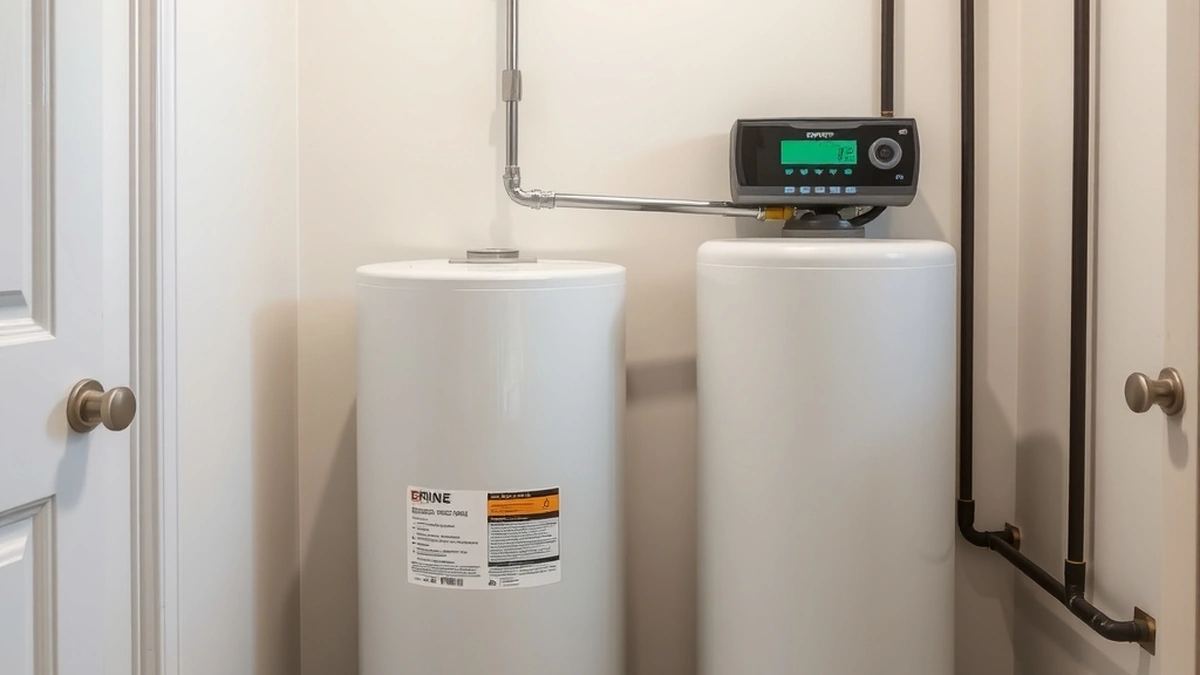
Grain capacity is the amount of hardness a softener can remove between regenerations; 24k–64k ratings match different household hardness and water use levels.
- Equipment cost range
- $600–$2,500
- Installed cost range
- $1,200–$4,500
- Salt per regeneration
- 8–12 lbs
- Typical resin life
- 8–12 years
- Softener lifespan
- 10–15 years
Some links on this page are affiliate links.If you buy through them we may earn a commission at no extra cost to you. We do not accept payment for rankings. Read the full disclosure.
Grain capacity is the amount of hardness a water softener can remove between regeneration cycles. A 24,000-grain unit handles lighter loads, while a 64,000-grain unit is built for larger homes or harder water. Choosing the wrong size means either frequent salt regeneration or wasted capacity, so grain capacity should be matched to measured hardness and daily water use.
What Grain Capacity Actually Means
Grain capacity is measured in grains of hardness removed per regeneration. One grain equals 1/7000 of a pound, and water hardness is reported in grains per gallon (GPG). If your water tests at 10 GPG and your household uses 300 gallons per day, the daily grain load is:
10 GPG × 300 gallons = 3,000 grains per day
A 32,000-grain softener would theoretically last about 10.6 days between regenerations at that load. In practice, softeners are programmed to regenerate before reaching 100 percent capacity to maintain consistent soft water, so usable capacity is lower than the nameplate rating.
Equipment typically ranges from $600 to $2,500, with installed costs from $1,200 to $4,500 depending on plumbing and labor. Salt runs about $120 to $400 per year. Resin rebeds cost $300 to $600 and are usually needed after 8 to 12 years. Total softener life is estimated at 10 to 15 years.
How to Size 24k, 32k, 48k, and 64k Units
Capacity should be based on a water test first, not on guesswork. A lab test costs $40 to $150 and reports hardness in GPG, plus iron and other minerals that affect softener performance. Once you know your hardness and daily water use, you can estimate which grain size fits.
Here is an example using 7 GPG hardness and 350 gallons per day:
7 GPG × 350 gallons = 2,450 grains per day
At roughly 80 percent usable capacity to avoid breakthrough:
- 24,000 grains × 0.80 = 19,200 usable grains → about 7.8 days
- 32,000 grains × 0.80 = 25,600 usable grains → about 10.4 days
- 48,000 grains × 0.80 = 38,400 usable grains → about 15.7 days
- 64,000 grains × 0.80 = 51,200 usable grains → about 20.9 days
Most residential installers target regeneration every 7 to 14 days. Under the example above, a 32k or 48k unit usually fits best. A 24k may regenerate too often on hard water, while a 64k may sit idle long enough to raise concerns about resin bed fouling if regeneration intervals stretch beyond two to three weeks.
| Grain rating | Approx. usable grains (80%) | Days at 2,450 grains/day |
|---|---|---|
| 24,000 | 19,200 | ~8 |
| 32,000 | 25,600 | ~10 |
| 48,000 | 38,400 | ~16 |
| 64,000 | 51,200 | ~21 |
These figures are estimates. Actual days vary by programming, water pressure, and real daily usage.
Salt Use and Regeneration Frequency
Salt is the operating cost that connects directly to grain capacity. Each regeneration typically uses 8 to 12 pounds of salt. A smaller unit regenerating more often can use more salt annually than a larger unit regenerating less often, though very large units may use more salt per cycle.
Example: a 32k softener regenerating every 10 days uses about 36 regenerations per year. At 10 pounds per cycle:
36 × 10 lbs = 360 lbs of salt per year
At $120 to $400 annually for salt, this falls within the typical range. A 64k unit regenerating every 20 days would run about 18 cycles per year, but each cycle might use closer to 12 pounds:
18 × 12 lbs = 216 lbs of salt per year
Salt efficiency depends on the control valve and salt dosage setting, not just tank size. More detail on ongoing salt expenses is available at /water-softener-salt-cost/.
Hardness Levels and Capacity Matching
Hardness is commonly grouped as:
- Soft: 0–3 GPG
- Moderate: 3–7 GPG
- Hard: 7–10 GPG
- Very hard: 10+ GPG
At 3–7 GPG, a 24k or 32k unit is often adequate for a smaller household. At 7–10 GPG, a 32k or 48k is more typical. Above 10 GPG, a 48k or 64k may be justified, especially with higher water use.
Iron complicates sizing. Softeners can handle limited clear-water iron, generally up to 2–3 ppm, but higher levels can foul resin and reduce effective capacity. If iron exceeds that range, an iron filter may be needed before or alongside the softener. See /iron-filter-cost/ for equipment and installed pricing.
Installed Cost by Size Class
Larger softeners cost more upfront and require more space. A standard cabinet or two-tank system might fit in a corner of a basement or utility room, but a 64k unit with a large brine tank needs more floor area and possibly a dedicated drain line.
Estimated installed ranges are broad because local labor and plumbing vary:
- Equipment only: $600–$2,500
- Installation labor: $500–$1,500
- Total installed: $1,200–$4,500
A 24k unit usually sits at the lower end, while a 64k system with professional installation approaches the higher end. Full installation pricing is covered at /water-softener-installation-cost/. For context on whole-house treatment broadly, see /whole-house-water-filter-cost/.
When Capacity Is Not the Only Factor
Grain capacity does not remove everything. A softener targets calcium and magnesium hardness. It does not address nitrate, bacteria, arsenic, or sulfur. If your water test shows nitrate above 10 mg/L, sulfur odor, or microbial contamination, separate treatment is required.
Options include:
- Carbon filters: $500–$1,800 installed, cartridges $80–$300 per year, replaced every 6–12 months
- Sediment pre-filters: cartridges every 3–6 months
- Reverse osmosis under-sink: $300–$900 installed, $60–$150 per year running cost, membrane every 2–3 years, waste ratio 3–4:1, rejection 80–95 percent
- Whole-house RO: $3,000–$8,000 installed
- UV disinfection: lamp every 12 months, $30–$90 per lamp
These are separate systems with their own costs and maintenance schedules. More on reverse osmosis pricing is at /reverse-osmosis-system-cost/. Well owners should also review /well-water-treatment-cost/ because groundwater often combines hardness with iron, manganese, or bacteria.
Resin Life and Long-Term Costs
Resin beads exchange sodium ions for hardness minerals. Over time, chlorine, iron, and sediment can degrade the bed. A rebed costs $300 to $600 and is typically required after 8 to 12 years. Full softener replacement is usually considered after 10 to 15 years.
When comparing a 24k to a 64k, the larger tank contains more resin, so a rebed costs proportionally more. However, if the larger unit regenerates half as often, the resin may experience less mechanical wear per year. Actual lifespan depends on water quality and maintenance, not capacity alone.
Bottom Line
Grain capacity is a sizing number, not a quality rating. Test your water, calculate daily grain load, and pick a capacity that regenerates roughly every 7 to 14 days. For most homes, that falls in the 32k to 48k range, but very hard water or high usage can justify 64k, while soft water and low usage may suit 24k. Match the equipment to the test results, then compare installed cost and salt use before buying.
Next, compare how much does a water softener cost, water softener installation cost, whole house water filter cost before you commit.
Frequently asked questions
What does grain capacity mean?
Grain capacity is the maximum hardness, measured in grains, that a softener can remove before it must regenerate with salt.
How many grains are in a gallon of hard water?
One grain per gallon (GPG) equals 17.1 milligrams per liter of calcium carbonate equivalent; multiply GPG by gallons to find daily grain load.
Is a 64k softener always better than a 24k?
No; oversized units waste salt and water if regeneration frequency drops too far, while undersized units regenerate too often.
How much salt does a regeneration use?
Most residential softeners use 8–12 pounds of salt per regeneration, depending on size and programming.
How long does resin last?
Resin typically lasts 8–12 years before a rebed is needed, though iron or chlorine can shorten that window.
Should I test water before buying?
Yes; a lab test costs $40–$150 and confirms hardness, iron, and other contaminants that affect sizing and equipment choice.
Sources
Some links are affiliate links.If you buy through them we may earn a commission at no extra cost to you. We do not accept payment for rankings. Read the full disclosure.


