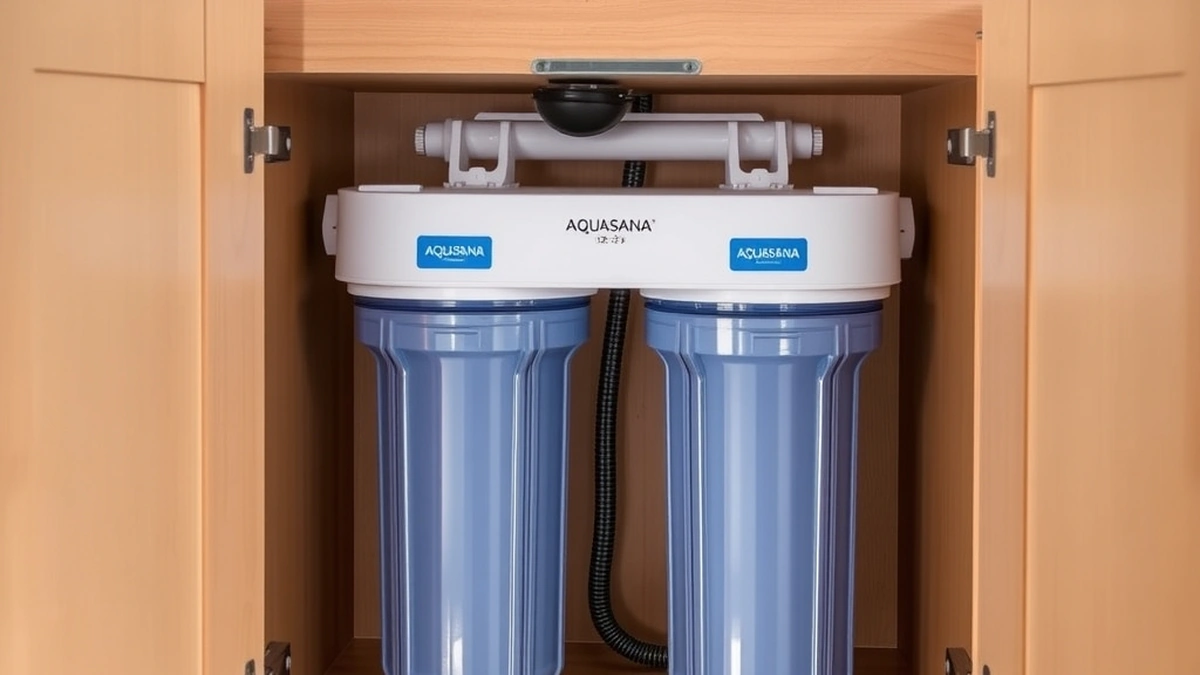
Alkaline Water Ionisers: What They Change And What They.
Alkaline water ionisers raise pH through electrolysis. Here is what they actually change, what they claim, and how they compare to other treatment systems.

Alkaline ionisers use electrolysis to raise pH and split water into alkaline and acidic streams; they do not soften water or remove dissolved contaminants.
- Primary process
- Electrolysis over platinum-coated plates
- Typical pH change
- Raises source water pH by roughly 0.5 to 1.5 units
- Equipment price estimate
- $800 to $4,000+
- Filter replacement estimate
- $50 to $150 per cartridge, every 6 to 12 months
- Softening capability
- None; hardness minerals pass through unchanged
Some links on this page are affiliate links.If you buy through them we may earn a commission at no extra cost to you. We do not accept payment for rankings. Read the full disclosure.
Alkaline water ionisers use electricity to split incoming water into two streams: one with a higher pH and one with a lower pH. They do not soften water, and they do not remove dissolved contaminants such as hardness minerals, iron, or nitrate. The drinking stream comes out at a higher pH, while the mineral content of the source water remains essentially unchanged.
How an Alkaline Water Ioniser Works
An ioniser passes tap water over electrically charged plates, usually coated with platinum and separated by a membrane. Through electrolysis, the device divides the water into an alkaline output and an acidic output. The alkaline stream is intended for drinking, while the acidic stream is typically discarded or used for cleaning.
The key change is pH. Depending on the source water and the machine settings, an ioniser may raise the pH of the drinking stream by roughly 0.5 to 1.5 units. It does not add minerals, and it does not take them out. Calcium, magnesium, iron, and dissolved solids pass through at approximately the same concentration they entered with.
This matters because pH is only one water quality parameter. Hardness, measured in grains per gallon, is unaffected. If your water tests at 10 grains per gallon before the ioniser, it will still test at approximately 10 grains per gallon after the alkaline stream is produced.
What Ionisers Claim vs. What They Do
Marketing for alkaline ionisers often emphasizes pH, antioxidant potential, and hydration. From a treatment equipment standpoint, the only measurable change an ioniser reliably produces is a shift in pH and oxidation-reduction potential in the output stream. It does not function as a filter, softener, or disinfection system.
If your water contains dissolved contaminants, an ioniser will not reduce them. A reverse osmosis system, by comparison, uses a membrane to reduce total dissolved solids, with typical rejection rates of 80 to 95 percent. An ioniser has no membrane and no rejection rate for dissolved solids. If your goal is contaminant reduction, an ioniser is the wrong tool.
Hardness and Scale Problems
Hard water creates a specific problem for ionisers. Calcium and magnesium in the water can precipitate on the electrically charged plates, forming scale that reduces efficiency and can eventually damage the unit. Water hardness is commonly classified as soft at 0 to 3 grains per gallon, moderate at 3 to 7, hard at 7 to 10, and very hard at 10 grains per gallon or higher.
If your water tests above 7 grains per gallon, an ioniser may require frequent cleaning or scale mitigation. Some manufacturers recommend pre-treatment, such as a water softener, before installing an ioniser on hard water. A water softener typically costs $1,200 to $4,500 installed, with salt running $120 to $400 per year and resin rebeds around $300 to $600 when needed. Adding that equipment changes the economics significantly.
Cost Comparison With Other Systems
Alkaline ionisers are priced as small appliances, but installed costs can approach whole-house treatment equipment. Equipment commonly ranges from about $800 to more than $4,000, depending on plate count, flow rate, and features. Installation is usually straightforward for countertop models, but under-sink or plumbed-in models may add labor costs.
For comparison, a carbon filter system typically costs $500 to $1,800 installed, with cartridges running $80 to $300 per year and replacement every 6 to 12 months. An under-sink reverse osmosis system costs $300 to $900 installed, with running costs of $60 to $150 per year and membrane replacement every 2 to 3 years. A whole-house RO system runs $3,000 to $8,000 installed.
None of these figures include the cost of a water test, which is the recommended first step. A lab test typically costs $40 to $150. Testing tells you whether your water has hardness, iron, or other conditions that would make an ioniser impractical without pre-treatment.
Maintenance and Operating Costs
Ionisers contain built-in filters that must be replaced on a schedule, commonly every 6 to 12 months. Cartridge costs are typically estimated at $50 to $150 each, depending on the model. The electrolysis plates may require cleaning if scale builds up, especially in hard water applications.
Unlike a salt-based softener, an ioniser does not consume salt or require regeneration cycles. Unlike a whole-house carbon filter, it does not treat all water entering the home. It treats only the water dispensed through its dedicated faucet or line. That means the rest of the plumbing, water heater, and appliances remain exposed to whatever hardness or minerals are in the source water.
When an Ioniser Makes Sense
An ioniser is appropriate only when the goal is to change the pH of drinking water and the source water is already safe and relatively low in hardness. It is not a substitute for a water test, and it is not a treatment solution for contaminated well water. If a lab test shows elevated iron, sulfur, nitrate, or bacteria, those issues require dedicated equipment such as an iron filter, sulfur filter, UV system, or reverse osmosis.
Households on municipal water with acceptable hardness might use an ioniser as a point-of-use device for drinking water. Households on private wells should test first and treat for health-related or aesthetic contaminants before considering pH adjustment.
Bottom Line
An alkaline water ioniser changes the pH of a portion of your drinking water through electrolysis. It does not soften water, remove dissolved contaminants, or protect plumbing from scale. If your water is hard, the minerals that cause hardness will still pass through and may coat the ioniser plates. Test your water first, compare installed cost and running cost against alternatives such as carbon filtration or reverse osmosis, and buy equipment based on what your water actually contains.
[Internal link: /how-much-does-a-water-softener-cost/] [Internal link: /reverse-osmosis-system-cost/] [Internal link: /whole-house-water-filter-cost/]
Next, compare how much does a water softener cost, water softener installation cost, whole house water filter cost before you commit.
Frequently asked questions
What does an alkaline water ioniser do?
It passes water over electrically charged plates to separate output into alkaline and acidic streams, raising the pH of the drinking stream.
Does an ioniser remove hardness?
No. Calcium and magnesium remain in the water; hard water can scale the plates and shorten electrode life.
How much does an ioniser cost?
Equipment typically ranges from about $800 to more than $4,000, not including installation or ongoing filter cartridges.
How often are filters replaced?
Most built-in cartridges are replaced every 6 to 12 months, depending on manufacturer rating and water volume.
Is an ioniser the same as a reverse osmosis system?
No. RO forces water through a membrane to reduce dissolved solids, while an ioniser uses electricity to change pH without significant contaminant removal.
Should I test water before buying one?
Yes. A lab test for hardness, iron, and total dissolved solids tells you whether an ioniser will work effectively or scale up quickly.
Sources
Some links are affiliate links.If you buy through them we may earn a commission at no extra cost to you. We do not accept payment for rankings. Read the full disclosure.