How to choose a well water treatment system
Choose a well system in order: test, then sediment, iron or sulfur, softener, UV. See the treatment train, sizing, and the $2,000-$8,000 range.
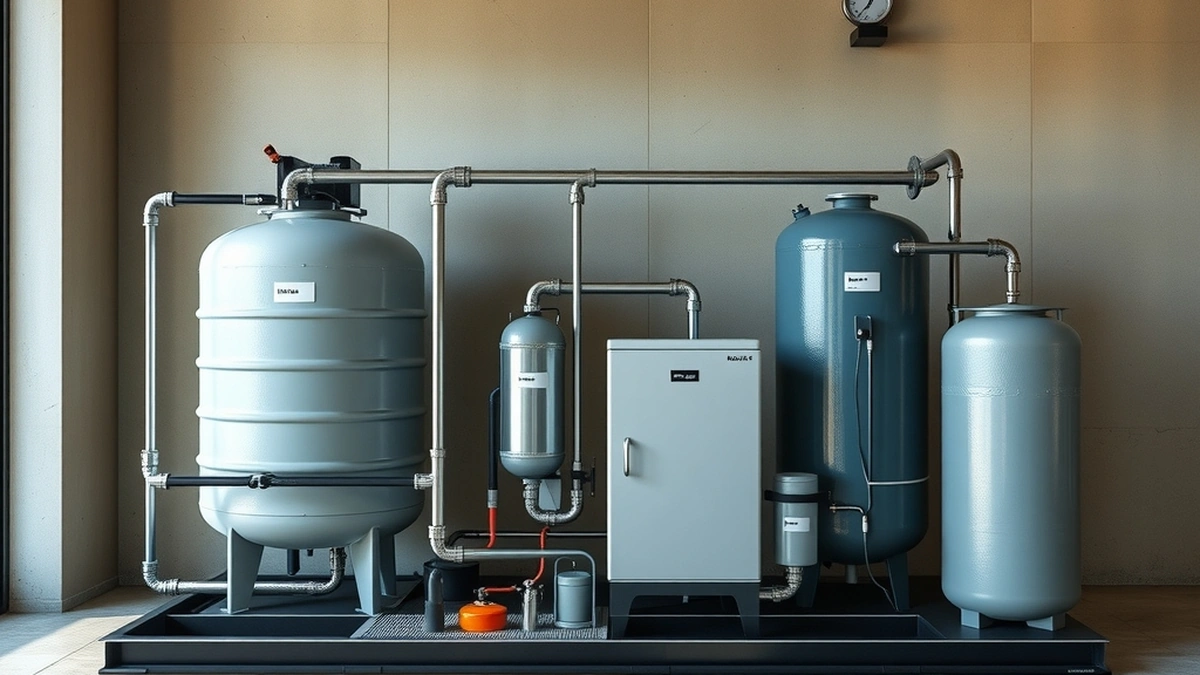
Choose a well water treatment system by testing first, then installing stages in a fixed order: sediment, iron or sulfur oxidation, softener, carbon, and UV last. A full train costs $2,000-$8,000 installed.
- Installed total
- $2,000 - $8,000
- Lab panel
- $40 - $150
- Typical flow
- 8 - 15 GPM
- Stage count
- 3 - 5
- Annual upkeep
- $300 - $700
Some links on this page are affiliate links.If you buy through them we may earn a commission at no extra cost to you. We do not accept payment for rankings. Read the full disclosure.
Choose a well water treatment system by testing first, then building the train in a fixed order. Sediment, iron or sulfur, softener, carbon, UV. A full train costs $2,000-$8,000 installed, and the lab panel that decides it costs $40-$150.
Test before you price anything
A well water treatment system is a chain of devices, each aimed at a class of contaminant. Which devices you need comes from a lab panel, not from a neighbor’s setup or a sales visit.
The minimum panel reports bacteria, nitrate, iron, manganese, hardness, pH, and arsenic. That covers the problems that change equipment selection and the ones that matter most for a private supply.
Wells vary block by block. Casing depth, screen type, and grouting all change what arrives at the tap, so one house’s iron level tells you nothing about the next. Two wells 200 feet apart can differ by 6 ppm of iron and 10 grains of hardness, which is the difference between a $900 job and a $4,000 one.
Sample at a tap that bypasses treatment for the raw number, and at the kitchen tap for the treated number. Label both bottles with the date and which tap they came from, because a lab report without that context is a set of numbers you cannot act on.
The treatment train
| Stage | Device | Cost installed | Targets |
|---|---|---|---|
| 1 | Sediment housing | $80 - $400 | Sand, grit, rust |
| 2 | Iron or sulfur filter | $800 - $3,000 | Iron, manganese, H2S |
| 3 | Water softener | $1,200 - $4,500 | Hardness above 3-7 gpg |
| 4 | Carbon polisher | $500 - $1,800 | Taste, odor, chlorine |
| 5 | UV purifier | $300 - $900 | Microbial load |
Order matters because each stage protects the next. Sediment keeps grit out of valves, iron removal keeps resin clean, softening protects membranes and heaters, and UV goes last because it needs clear water.
Reversing any two stages costs money in media and service calls. A softener ahead of an iron filter will foul its resin within a year on a 5 ppm well.
What each test result buys
Iron above 2-3 ppm means a dedicated filter, because that is the practical limit for a softener. Below it, a softener may handle both hardness and iron. Above 5 ppm, expect the filter to need a larger tank and more frequent backwash, and budget accordingly.
Manganese behaves like iron and often travels with it. It stains black rather than red, and it is harder to oxidize, which usually means a higher oxidant dose or a different media.
Hardness above 7 grains per gallon justifies a softener. Between 3 and 7 it is a judgment call about soap, scale, and appliance life.
Hydrogen sulfide at any detectable level means an odor filter. Nitrate above 10 mg/L is a separate problem that RO at the kitchen sink handles well.
Bacteria change everything. A positive test means shock chlorination and possibly continuous disinfection before any treatment equipment is installed, because a filter does not disinfect a well.
Pressure tank and well yield
Treatment equipment goes downstream of the pressure tank. The tank provides steady flow and the volume a backwash cycle needs.
A 20-gallon tank cannot supply a 10 GPM backwash for 15 minutes without dropping below pump cut-in. A 44-gallon tank is the minimum for one backwashing device, and 52 gallons for two.
Well yield is the other constraint. A 5 GPM well can support a filter that backwashes at 5 GPM, but not one that demands 10. Low-yield wells sometimes need a storage tank and a booster pump, which adds $1,000-$2,500.
Drain, vent, and power
Backwashing devices need a drain within 10-15 feet, sized for 5-10 GPM. A floor drain is ideal; a standpipe or dry well works with an air gap.
Air injection filters need a vent to the outdoors. Chemical oxidation needs a solution tank and sometimes a vented enclosure.
Power is the item most often forgotten. A softener needs an outlet, a backwashing filter another, UV a third, and an injection pump a fourth. Most utility rooms have one, and each additional circuit costs $150-$350.
Measure the room before pricing equipment. A four-stage train needs roughly 6 feet of wall and 4 feet of depth, plus 12 inches above each tank for valve service and 20-40 inches in front of a UV chamber for lamp removal. A layout that ignores service clearance turns every future repair into a dismantling project.
A buying sequence
- Pull a full lab panel and record every value.
- Address bacteria and nitrate before anything else.
- Size the sediment stage to visible load.
- Add iron or sulfur treatment if the numbers call for it.
- Add softening if hardness is above 7 gpg.
- Add carbon and UV last, after the water is clear and soft.
What to ignore
Ignore a quote that starts with equipment and works backward to a test. The test comes first, and a company that skips it is selling a package rather than a solution.
Ignore “all-in-one” claims. No single tank removes iron, hardness, sulfur, and bacteria; a train does that.
Ignore a price that excludes the drain, vent, and electrical work. Those three items can add $500-$1,200 and they are not optional. Well water treatment cost breaks the stages down by price, well water treatment system installation covers the physical work, and well water treatment system maintenance covers the annual calendar that keeps five devices working together. “”
Frequently asked questions
What order should well water treatment equipment be installed in?
Sediment first, then iron or sulfur oxidation, then softener, then carbon, then UV last. Each stage protects the next, and reversing the order shortens media and resin life.
How much does a well water treatment system cost?
Two thousand to eight thousand dollars installed for a typical three- to five-stage train, depending on how many contaminants the lab report shows.
Do I need a softener if I have an iron filter?
Only if hardness is above 3-7 grains per gallon. Iron and hardness are separate problems, and many wells need both stages.
How often should a private well be tested?
Bacteria and nitrate annually, a full panel every two to three years, and a retest after flooding or any change in taste, color, or pressure.
Can I install well treatment equipment myself?
A sediment housing or a single softener is manageable for a confident DIYer. A multi-stage train with oxidation, venting, and UV is a plumber and electrician job in most jurisdictions.
What size pressure tank does a treatment system need?
At least 44 gallons for a house with one backwashing device, and 52 gallons or more for two. The tank supplies the volume a backwash cycle demands.
Sources
Some links are affiliate links.If you buy through them we may earn a commission at no extra cost to you. We do not accept payment for rankings. Read the full disclosure.