Aquasana Whole-House Filter Guide
Aquasana Whole-House Filter Guide: practical numbers, costs, and trade-offs, written independently.
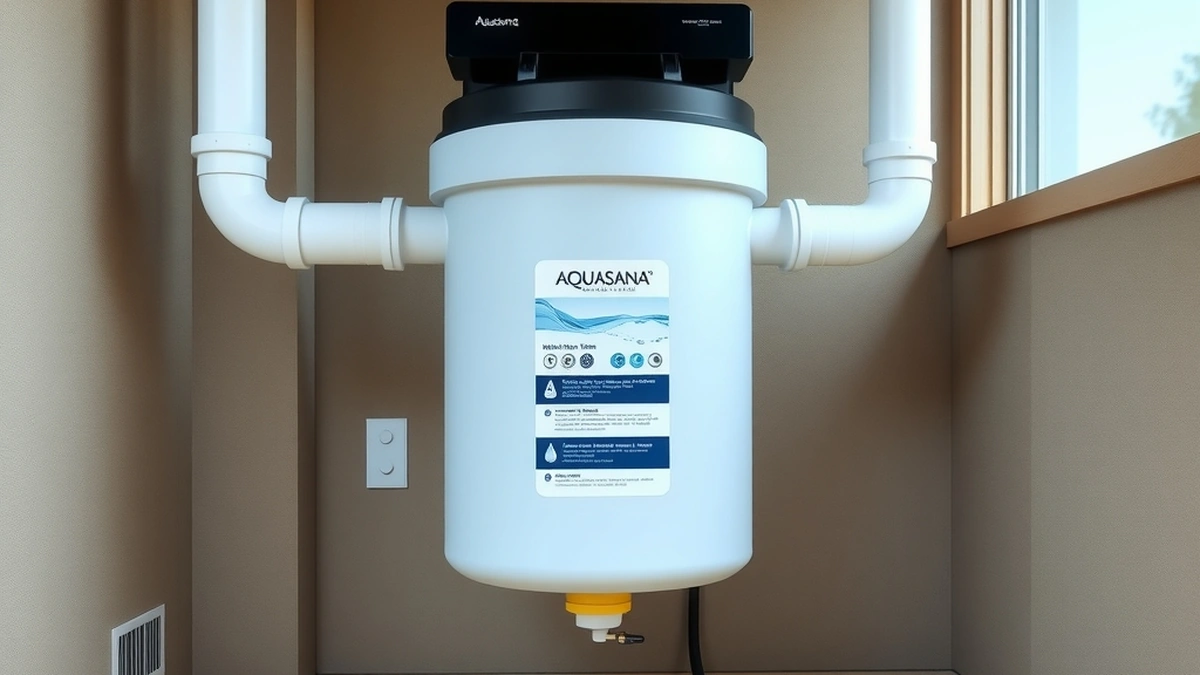
Aquasana whole-house filters are carbon-based systems typically installed between $500 and $1,800, with cartridge replacement every 6 to 12 months.
- System type
- Whole-house carbon filtration
- Installed cost range
- $500–$1,800
- Carbon cartridge replacement
- Every 6–12 months
- Sediment cartridge replacement
- Every 3–6 months
- Typical flow rate
- 8–15 GPM
Some links on this page are affiliate links.If you buy through them we may earn a commission at no extra cost to you. We do not accept payment for rankings. Read the full disclosure.
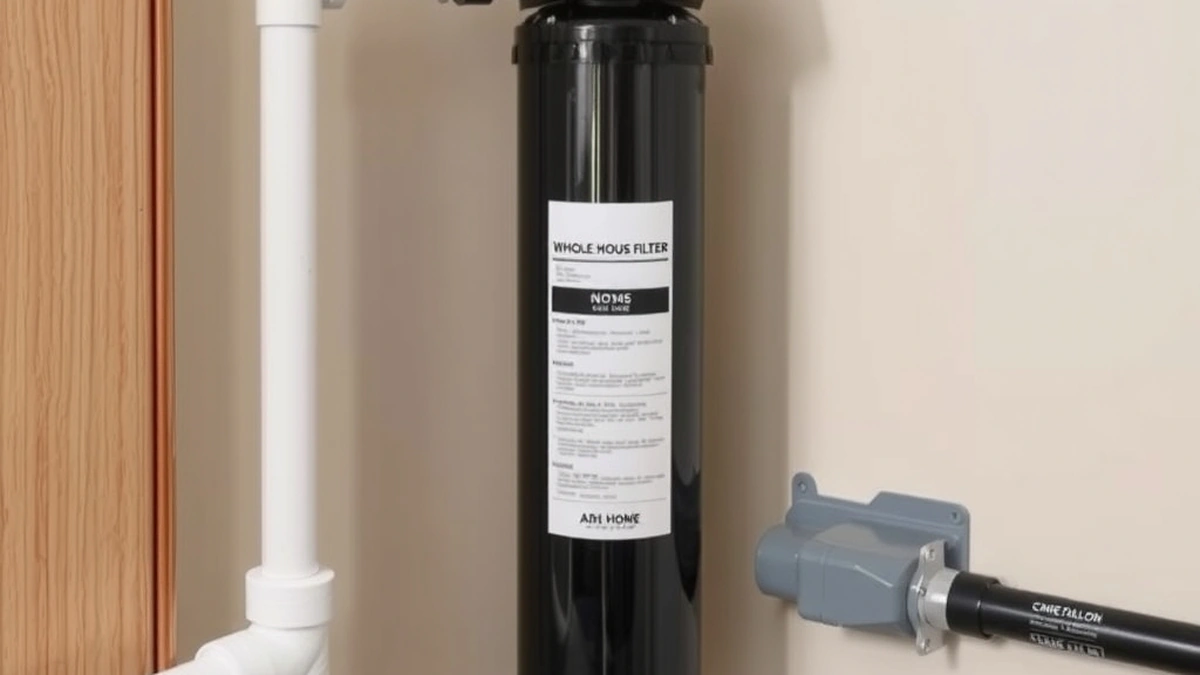
Aquasana whole-house filters are carbon-based point-of-entry systems designed to reduce chlorine, taste, and odor throughout a home. They do not soften water or remove dissolved hardness minerals. Installed costs typically range from $500 to $1,800, with recurring carbon cartridge replacement every 6 to 12 months.
What Aquasana Whole-House Filters Do
Aquasana whole-house units use activated carbon media to treat water at the main line before it branches to fixtures. Carbon adsorption targets chlorine, chloramines (depending on model), sediment, and organic compounds that affect taste and odor. These systems are filters, not softeners. They do not exchange calcium and magnesium ions, so they will not lower grains-per-gallon hardness or prevent scale buildup in water heaters.
Flow rates for whole-house carbon filters generally fall between 8 and 15 gallons per minute. That range is adequate for most single-family homes, but actual performance depends on inlet plumbing size, incoming pressure, and cartridge loading. As carbon pores fill, pressure drop can increase, which is why replacement schedules matter.
Installed Cost and Replacement Math
Canonical pricing for carbon whole-house filtration places equipment and installation between $500 and $1,800. Carbon cartridges run $80 to $300 per year and require replacement every 6 to 12 months. Sediment pre-filters, where included, typically need replacement every 3 to 6 months.
Example annual operating cost estimate:
- Carbon cartridge: $80 to $300 per year
- Sediment cartridge: roughly $40 to $120 per year if replaced twice annually
- Total recurring estimate: $120 to $420 per year
Over a 10-year horizon, installed cost plus consumables could total roughly $1,700 to $6,000, depending on cartridge pricing and local labor rates. These are estimates, not quotes. Actual cost depends on the specific Aquasana model, plumbing configuration, and regional installer pricing.
For comparison, ion-exchange softeners cost $1,200 to $4,500 installed and use $120 to $400 of salt per year. Salt-free conditioners cost $500 to $1,800 installed. If hardness is the primary concern, a softener is the appropriate equipment class; carbon filtration addresses different water quality issues.
When to Choose Carbon vs. Softening
Water treatment should follow test results, not assumptions. A laboratory water test costs $40 to $150 and identifies hardness, iron, pH, and other parameters before equipment is selected.
Hardness guidelines:
- Soft: 0 to 3 grains per gallon
- Moderate: 3 to 7 grains per gallon
- Hard: 7 to 10 grains per gallon
- Very hard: 10+ grains per gallon
If a test shows hardness above 3 grains per gallon and scale prevention is the goal, an ion-exchange softener is the standard tool. Softener capacity ranges from 24,000 to 64,000 grains, and regeneration uses 8 to 12 pounds of salt per cycle. Resin life is typically 8 to 12 years, with full system life around 10 to 15 years.
If the test shows acceptable hardness but chlorine taste or odor is the complaint, whole-house carbon filtration is a logical fit. Aquasana competes in this category alongside other carbon point-of-entry systems. For well water with iron above 2 to 3 parts per million, a softener alone is usually insufficient; dedicated iron treatment may be required. Iron filters cost $800 to $2,500 installed, while sulfur treatment systems run $1,000 to $3,000 installed.
Maintenance Requirements
Carbon capacity is finite. Once adsorption sites are occupied, the cartridge stops reducing chlorine and taste compounds effectively. Manufacturers generally specify replacement at 6 to 12 month intervals, though heavy sediment or high chlorine loads can shorten that window. Sediment pre-filters clog faster and usually require replacement every 3 to 6 months.
Failure to replace cartridges on schedule can cause pressure loss and, in some cases, bacterial growth on saturated carbon. Homeowners should track installation dates and set reminders based on the manufacturer’s gallon rating or time interval, whichever comes first.
Installation Considerations
A whole-house filter installs on the main water line after the meter and pressure tank, if applicable. Adequate clearance is needed for cartridge changes, and a bypass valve is recommended so water service can continue during maintenance. Most residential installations use 3/4-inch or 1-inch plumbing, and flow capacity should match peak household demand.
Professional installation adds labor cost on top of equipment. DIY installation is possible for homeowners comfortable cutting and fitting pipe, but errors at the main line can cause leaks or pressure problems. Local plumbing codes may require permits or backflow protection depending on jurisdiction.
Alternatives by Water Issue
Carbon filtration is one tool among several. Reverse osmosis under the sink costs $300 to $900 installed and runs $60 to $150 per year in consumables. RO membranes last 2 to 3 years, and systems typically waste 3 to 4 gallons for every gallon produced, with rejection rates of 80 to 95 percent depending on contaminant. Whole-house RO costs $3,000 to $8,000 installed and is usually unnecessary unless specific dissolved contaminants require point-of-entry treatment.
UV disinfection addresses microbiological concerns and uses a lamp replaced every 12 months at $30 to $90. UV does not filter sediment or chemicals and requires relatively clear water to work effectively.
Water heater energy use is also affected by treatment choices. Scale buildup from hard water can reduce heating efficiency, which is one reason softening is sometimes paired with carbon filtration rather than treated as an either/or decision.
Bottom Line
Aquasana whole-house filters are carbon filtration systems with installed costs around $500 to $1,800 and annual cartridge costs around $80 to $300. They reduce chlorine, taste, and odor at the point of entry but do not soften water or remove hardness. Test first, then match equipment to the specific contaminants found. If hardness is present, consider a softener; if chlorine taste is the issue, carbon filtration is appropriate. For combined concerns, some homes install both, sequenced so sediment and carbon treatment precede or complement softening depending on the design.
Internal resources for further reading: whole-house water filter cost, water softener installation cost, and reverse osmosis system cost.
Next, compare how much does a water softener cost, water softener installation cost, whole house water filter cost before you commit.
Frequently asked questions
Does Aquasana soften water?
No. Aquasana whole-house units are carbon filters, not ion-exchange softeners, so they do not remove hardness minerals measured in grains per gallon.
How often are cartridges replaced?
Carbon cartridges typically last 6 to 12 months, while sediment cartridges last 3 to 6 months, depending on water quality and usage.
What is the installed cost?
Carbon whole-house filter installation generally falls between $500 and $1,800, excluding ongoing cartridge costs.
Is a water test needed first?
Yes. A lab test costing $40 to $150 helps confirm whether carbon filtration, softening, or iron treatment is appropriate for your water.
What flow rate can I expect?
Whole-house carbon filters commonly support 8 to 15 gallons per minute, depending on model and plumbing size.
How does this compare to a softener?
Softeners cost $1,200 to $4,500 installed and treat hardness; carbon filters cost $500 to $1,800 installed and target chlorine, taste, and odor.
Sources
Some links are affiliate links.If you buy through them we may earn a commission at no extra cost to you. We do not accept payment for rankings. Read the full disclosure.