Best Countertop Reverse Osmosis System: 2026 Picks
Compare countertop RO systems by capacity, cost per gallon, and filter replacement needs.
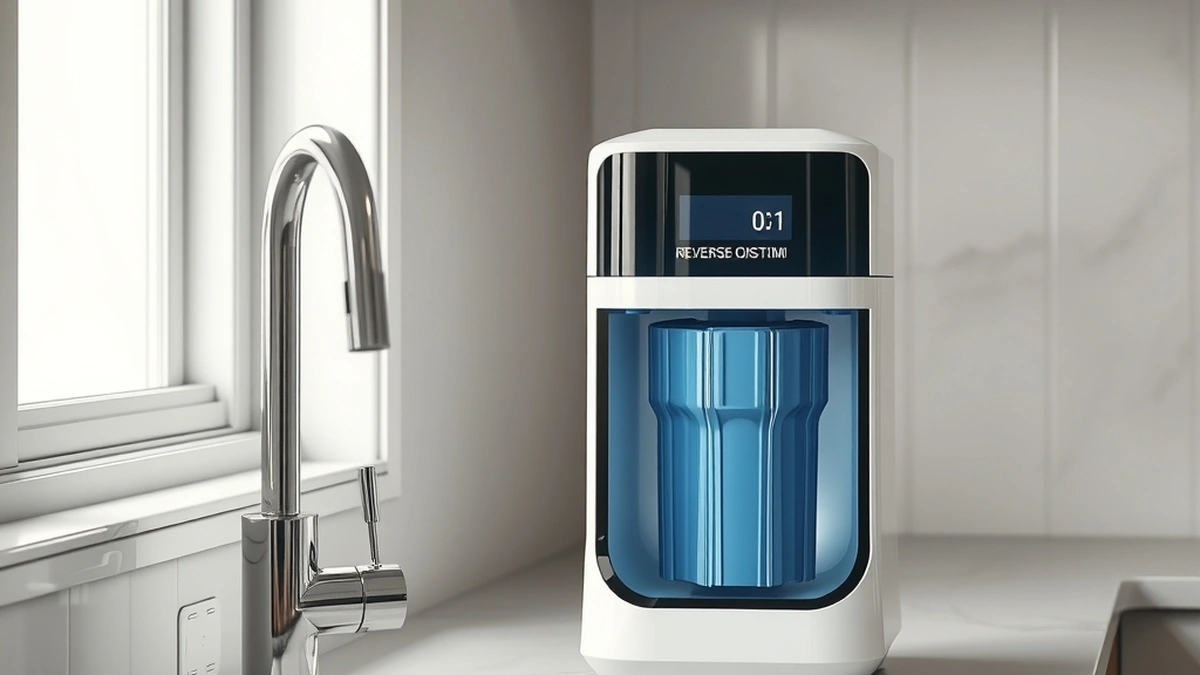
A countertop RO system installs without plumbing and typically costs $150–$400 up front with $60–$150 in yearly filter costs.
- Typical equipment price
- $150–$400
- Estimated yearly filter cost
- $60–$150
- Installation
- None; faucet adapter included
- Daily output
- 10–30 gallons (varies by model)
- Best for
- Renters, apartments, point-of-use drinking water
Some links on this page are affiliate links.If you buy through them we may earn a commission at no extra cost to you. We do not accept payment for rankings. Read the full disclosure.
The best countertop reverse osmosis system is the one that matches your daily water use, local water chemistry, and budget for replacement filters. Countertop RO units require no permanent plumbing, which makes them practical for renters and kitchens without under-sink space. This guide compares capacity, installed cost, and cost per gallon so you can choose equipment based on numbers, not marketing.
How Countertop Reverse Osmosis Works
Countertop reverse osmosis systems push feed water through a sediment prefilter, a carbon prefilter, and a semipermeable membrane. The membrane rejects a portion of dissolved solids, and the treated water goes to a storage tank or pitcher while the concentrate stream goes down the drain. Most units connect to a standard kitchen faucet with an adapter and plug into a wall outlet for the booster pump.
Because there is no under-sink tank or dedicated faucet to install, equipment cost is limited to the unit itself. Typical countertop RO equipment runs about $150–$400. That is below the $200–$600 equipment range for under-sink RO and far below the $3,000–$8,000 installed range for whole-house RO. No plumber is required, so installed cost equals equipment cost.
Cost Per Gallon Arithmetic
Operating cost depends on filter replacement frequency and daily volume. Using published estimate ranges, yearly filter and membrane costs for RO are roughly $60–$150. If a household uses 2 gallons per day for drinking and cooking, that is 730 gallons per year.
At $60 per year, cost per gallon is $0.08. At $150 per year, cost per gallon is $0.21. Over five years, a $250 unit with $100 yearly running cost totals $750, or about $0.21 per gallon at 730 gallons annually. These are estimates; actual cost per gallon changes with water quality, recovery rate, and how much water the unit sends to drain.
Countertop RO waste ratios commonly fall near the standard RO range of 3–4:1, meaning three to four gallons of feed water produce one gallon of treated water. If you use 2 gallons of treated water daily, the unit may send 6–8 gallons to drain, for a total draw of 8–10 gallons from the faucet. That matters if you pay for water and sewer volume.
What to Test Before Buying
Water treatment should start with a lab test, not a product purchase. A basic water test typically costs $40–$150. Results determine whether countertop RO is appropriate or whether pretreatment is needed.
Hardness above roughly 7 grains per gallon can scale an RO membrane over time. If your water tests in the hard or very hard range, a water softener may be more appropriate for whole-house protection. Softener equipment typically costs $600–$2,500, with installed costs of $1,200–$4,500 and yearly salt costs of $120–$400. For drinking water only, countertop RO can follow a softener, but the RO membrane still faces dissolved solids that reduce flow and rejection over time.
Iron above roughly 2–3 ppm can foul softener resin and RO membranes. If iron is present, review dedicated iron treatment options before selecting an RO unit. Sulfur and sediment also require specific pretreatment. A lab report gives you the numbers to match equipment to your water rather than guessing.
Countertop RO vs. Under-Sink RO
Countertop RO trades capacity and convenience for portability. Under-sink RO equipment usually costs $200–$600, with professional installation adding $300–$900 for a total installed range of $300–$900. Running costs are similar, around $60–$150 per year, and membranes typically last 2–3 years.
Under-sink systems generally produce more treated water per day and store it in a pressurized tank, so flow at the faucet is faster. Countertop units often fill an internal pitcher or small tank, which can limit output during heavy use. If you need more than a few gallons per day for drinking and cooking, under-sink RO may deliver a lower long-term cost per gallon despite the higher upfront cost.
Whole-house RO is a different category entirely. Installed costs of $3,000–$8,000 make sense only when dissolved solids affect the entire plumbing system, not just drinking water. For most households, point-of-use countertop or under-sink RO is the more economical starting point.
Filter Replacement and Maintenance
Countertop RO systems use multiple stages. Sediment cartridges typically last 3–6 months, while carbon cartridges last 6–12 months. Carbon replacement cartridges cost roughly $80–$300 per year across all carbon-based systems, though countertop RO sets are often sold as bundled kits. RO membranes usually last 2–3 years depending on feed water quality and volume.
Replacement cost arithmetic matters. If a replacement kit costs $100 and lasts one year, that is $100 per year. If the same kit lasts six months, annual cost doubles to $200. Membrane replacement at $50–$100 every two to three years adds roughly $20–$50 per year when averaged. Label all figures as estimates based on manufacturer schedules and your actual water use.
UV disinfection is sometimes offered as an add-on. UV lamps typically require replacement every 12 months at $30–$90 per lamp. UV does not remove dissolved solids, so it is not a substitute for RO membranes when the goal is reducing TDS or nitrate. Nitrate in drinking water is regulated at 10 mg/L; RO rejection rates of 80–95 percent can reduce nitrate, but performance depends on feed concentration and membrane condition.
Internal Comparisons and Alternatives
If your water test shows hardness as the primary concern, a water softener may be the better first investment. Softener capacity ranges from 24,000–64,000 grains, and resin life is typically 8–12 years. Salt use is roughly 8–12 pounds per regeneration. For full cost context, see /how-much-does-a-water-softener-cost/ and /water-softener-installation-cost/.
For whole-house sediment, chlorine, or taste issues, carbon filtration is another option. Carbon filter systems typically cost $500–$1,800 installed, with cartridges replaced every 6–12 months at $80–$300 per year. More detail is available at /whole-house-water-filter-cost/.
If you eventually want under-sink RO instead of countertop, cost and installation details are covered at /reverse-osmosis-system-cost/. For well water with multiple contaminants, treatment costs vary widely; see /well-water-treatment-cost/ for a broader framework.
Choosing a Countertop RO System
Select a countertop RO system based on three numbers: daily output in gallons, yearly filter cost in dollars, and waste ratio. Measure your daily drinking and cooking water use, then divide yearly filter cost by annual gallons to get cost per gallon. Compare that result against under-sink RO and pitcher filtration before buying.
Check your faucet compatibility before ordering. Most countertop units include adapters for standard aerated faucets, but pull-out sprayers and some commercial-style faucets may not fit without an additional adapter. Confirm power outlet proximity, since the booster pump requires electricity.
Start with a water test. If hardness, iron, or sediment exceeds the limits of the RO unit, add pretreatment or choose a different technology. Countertop reverse osmosis is a practical point-of-use tool, but it performs best when matched to measured water chemistry and realistic daily volume.
Next, compare how much does a water softener cost, water softener installation cost, whole house water filter cost before you commit.
Frequently asked questions
What is a countertop reverse osmosis system?
A self-contained RO unit that sits on a counter, connects to a faucet with an adapter, and produces filtered drinking water without under-sink plumbing.
Does countertop RO require installation?
No. Most models plug into a standard outlet and connect to a kitchen faucet, so no permanent plumbing changes are needed.
How much does countertop RO cost to run?
Expect roughly $60–$150 per year in replacement filters and membranes, depending on water quality and usage.
How often are filters replaced?
Prefilters usually need replacement every 6–12 months, while RO membranes often last 2–3 years.
Is countertop RO good for well water?
Only after testing; high hardness, iron, or sediment can foul the membrane, so pretreatment may be required.
How does it compare to under-sink RO?
Countertop units cost less up front and need no installation, but under-sink systems usually offer higher daily output and lower long-term cost per gallon.
Sources
Some links are affiliate links.If you buy through them we may earn a commission at no extra cost to you. We do not accept payment for rankings. Read the full disclosure.