How to Test for Low Water Pressure: Static vs Dynamic
Measure static and dynamic pressure with a hose bib gauge, then isolate the cause. See what 40 PSI means and how to read the drop under flow.
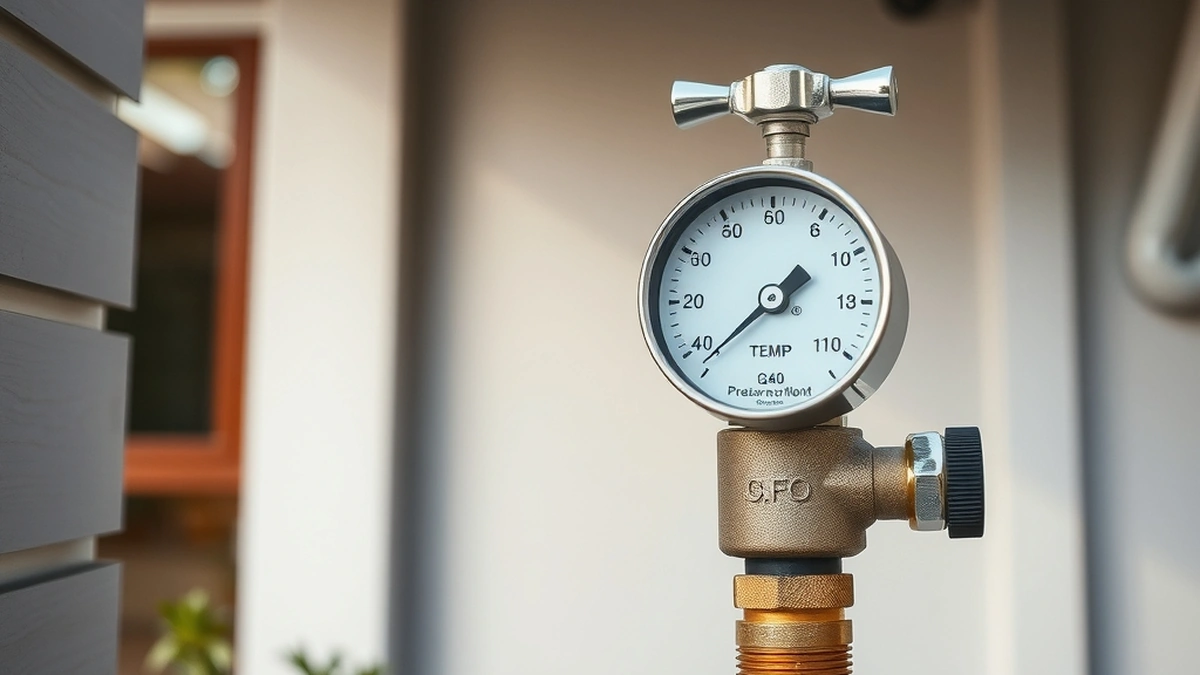
Test water pressure with a hose bib gauge: read static pressure with no water running, then dynamic pressure with a tap open. Normal is 40 - 80 PSI static, and a drop of more than 10 PSI under flow points to a restriction.
- Gauge cost
- $10 - $30
- Normal static
- 40 - 80 PSI
- Low pressure
- Under 40 PSI
- High pressure
- Above 80 PSI
- Significant drop
- More than 10 PSI
Some links on this page are affiliate links.If you buy through them we may earn a commission at no extra cost to you. We do not accept payment for rankings. Read the full disclosure.
Testing water pressure takes a $10 - $30 hose bib gauge and ten minutes. Read static pressure with no water running, then dynamic pressure with a tap open. Normal is 40 - 80 PSI static, and the drop under flow tells you whether the problem is supply or restriction.
The Gauge and the Test Point
A hose bib gauge screws onto an outdoor spigot or a laundry sink faucet with an adapter. Buy one with a peak-hold needle so a momentary spike is visible.
Choose a spigot on the house side of the pressure regulator and after the meter. A spigot on the wrong side reads the supply pressure rather than what the house sees.
Open the valve fully and read the gauge with no water running anywhere in the house. That is static pressure.
Static vs Dynamic
Static pressure is the baseline. A reading of 55 PSI with everything closed is normal.
Dynamic pressure is measured with a tap open, ideally a bathtub or a laundry sink at full flow. Watch the gauge and note how far it falls.
A drop of 3 - 5 PSI is normal. A drop of 10 PSI or more suggests a restriction, an undersized line, or a regulator that cannot pass the flow.
Flow Rate as a Second Measurement
Pressure is one number; flow is another. Fill a bucket of known volume at a fixture and time it.
A bathtub that fills 5 gallons in 60 seconds delivers 5 gallons per minute. A shower head rated at 2.5 GPM that delivers 1.5 GPM is restricted.
Flow tests are useful at each fixture. A single weak fixture with normal pressure elsewhere is a local restriction.
Interpreting the Numbers
| Static reading | Meaning | Action |
|---|---|---|
| Under 30 PSI | Very low | Check regulator, supply, pump |
| 30 - 40 PSI | Low | Investigate before adding fixtures |
| 40 - 60 PSI | Normal | No action |
| 60 - 80 PSI | Normal, high end | Monitor |
| Above 80 PSI | Too high | Install a regulator |
High pressure is as much a problem as low. Above 80 PSI, fixtures, hoses, and appliance valves wear faster, and water hammer becomes common.
Isolating the Cause
- Measure static pressure at the hose bib.
- Open one tap and read dynamic pressure.
- Repeat at a second tap to see whether the drop compounds.
- Check the pressure drop across any filter or softener.
- Inspect the regulator and the main shutoff.
- On a well, check the tank charge and switch settings.
- Compare fixture flow rates around the house.
If pressure is low at every fixture and the gauge agrees, the cause is upstream. If the gauge reads normal and one fixture is weak, the cause is at that fixture.
Testing a Well System
On a private well, the pressure gauge on the tank is the first place to look. It should match the hose bib reading within a few PSI.
Watch the gauge through a pump cycle. It should rise to the cut-out pressure and hold. A gauge that falls slowly with no water running indicates a leak or a failing check valve.
A tank that reads the cut-in pressure immediately after the pump stops is waterlogged. The tank, not the pump, is the problem.
What the Test Cannot Tell You
A pressure test does not measure volume. A house can have 60 PSI static and still deliver weak flow if the pipe is undersized.
It does not locate a restriction. That takes a process of elimination: fixtures, filters, regulator, then the main line.
It does not diagnose a pump’s condition. A pump test needs an amp reading and a drawdown measurement, which is a contractor job.
When to Call a Plumber
Call when static pressure is under 40 PSI and the regulator is not the cause, when pressure fluctuates wildly, or when the gauge shows a large drop that you cannot trace.
Call as well if you are on a well and the tank or switch is suspect. Those are straightforward repairs for a well contractor and risky DIY jobs.
Write the readings down: date, time, static pressure, dynamic pressure, and the fixture used for the flow test. A contractor can diagnose from those numbers faster than from a description.
Repeat the test at the same time of day. Pressure can vary with neighborhood demand, and a morning reading may differ from an evening one.
If the numbers change between tests, note what changed. A new appliance, a repaired main, or a filter change all affect the reading.
A $10 gauge is accurate enough for a household decision, but it can drift after a freeze or a drop. Compare it with a second gauge if the reading seems implausible.
Some gauges have a peak-hold needle that captures the highest pressure. That is useful for detecting a spike when a pump cycles, which a static reading would miss.
Do not leave a gauge on an outdoor spigot through winter. Trapped water freezes and ruins the mechanism, and the next reading will be wrong.
A final comparison is worth making: measure the pressure at the meter and at a fixture at the far end of the house. A large difference between the two points to a restriction in the interior piping rather than at the supply.
For the fixes, see low water pressure treatment. For the causes, see low water pressure causes. For the well side, see pressure tank and treatment.
Frequently asked questions
How do I test my water pressure?
Screw a hose bib gauge onto an outdoor spigot, open the valve, and read the static pressure. Then open a tap inside and watch the gauge for the dynamic reading.
What is normal water pressure for a house?
40-80 PSI static is the normal range. Under 40 is low and above 80 stresses fixtures, appliances, and the plumbing.
What is the difference between static and dynamic pressure?
Static is measured with no water flowing. Dynamic is measured with a tap open, and the difference shows how much the supply and piping restrict flow.
Why does pressure drop when I open a second tap?
The supply or the piping cannot deliver the combined flow. A large drop points to a restriction, an undersized line, or a failing regulator.
Can I test pressure without a gauge?
Only roughly. A flow test with a bucket and a timer measures gallons per minute, which is useful but does not tell you the pressure.
What pressure is too high?
Above 80 PSI, a pressure-reducing valve is recommended. High pressure damages fixtures and can cause leaks and water hammer.
Sources
Some links are affiliate links.If you buy through them we may earn a commission at no extra cost to you. We do not accept payment for rankings. Read the full disclosure.