Tannins in water: the tea-coloured water problem
Tannins turn well water yellow or tea-brown and pass straight through a softener. See what removes them, what does not, and what testing costs.

Tannins are dissolved organic compounds from decaying leaves and peat that tint well water yellow to tea-brown. They pass through sediment filters and softeners, and removal needs anion exchange, oxidation with filtration, or reverse osmosis, chosen after a lab test.
- Appearance
- Yellow to tea-brown, clear not cloudy
- Source
- Decaying organic matter in soil
- Softener effect
- None, and resin can foul
- Test cost
- $40 - $150
- Usual fix
- Anion exchange or oxidation plus carbon
Some links on this page are affiliate links.If you buy through them we may earn a commission at no extra cost to you. We do not accept payment for rankings. Read the full disclosure.
Tannins are dissolved organic compounds from decaying leaves and peat that tint well water yellow to tea-brown. They are clear, not cloudy, they do not settle out, and they pass through a sediment cartridge and a water softener without changing. Removing them takes a different mechanism than hardness, and the first job is confirming tannins rather than iron.
What Tannins Are and Where They Come From
Tannins are natural polyphenols produced by plants as they break down. When groundwater moves through organic-rich soil, peat, or a shallow sand layer under a wooded lot, it dissolves humic and fulvic acids along with tannic compounds. The water comes out of the tap looking like weak tea and, in stronger cases, like cola.
The tell is behaviour. Iron water turns brown when it meets air, leaves rust stains in toilets and sinks, and settles if you let a glass stand. Tannin water is uniformly coloured, does not settle, and stains fixtures a pale yellow that wipes away more easily. Tannins also tend to track rainfall: after a wet week, colour deepens, then fades in a dry spell. That pattern is the clearest signal that surface water is influencing the well.
Because that is what tannins indicate, the test panel matters more than the treatment. If surface water is getting in, bacteria and nitrate can be getting in too. Nitrate has a federal limit of 10 mg/L, and a softener does nothing about it. Treat colour first and you may miss the more important number.
Why Ordinary Filters Do Not Work
Sediment cartridges remove particles. Tannins are dissolved, so a 5 micron pleated filter passes them straight through. Carbon is a partial exception: granular activated carbon adsorbs some colour, but the capacity is small and a tannin-heavy well will exhaust a cartridge in weeks rather than the usual 6 to 12 months.
Cation exchange resin, the material inside a softener, is charged with sodium and grabs positively charged ions. Tannins carry a negative charge. They do not bind, they pass, and over time they coat the resin and reduce its capacity for the calcium and magnesium it is supposed to remove. Running a softener on high-tannin water is one route to an early $300 to $600 rebed.
| Treatment | Removes tannins? | Notes |
|---|---|---|
| Sediment cartridge | No | Particles only |
| Carbon block or GAC | Partly | Exhausts fast on high colour |
| Cation exchange softener | No | Resin can foul |
| Anion exchange | Yes | Purpose-built for organic colour |
| Oxidation plus filtration | Yes | Chlorine or ozone then carbon |
| Reverse osmosis | Yes, at one tap | 80 - 95% rejection, 3 - 4:1 waste |
The Two Treatments That Actually Work
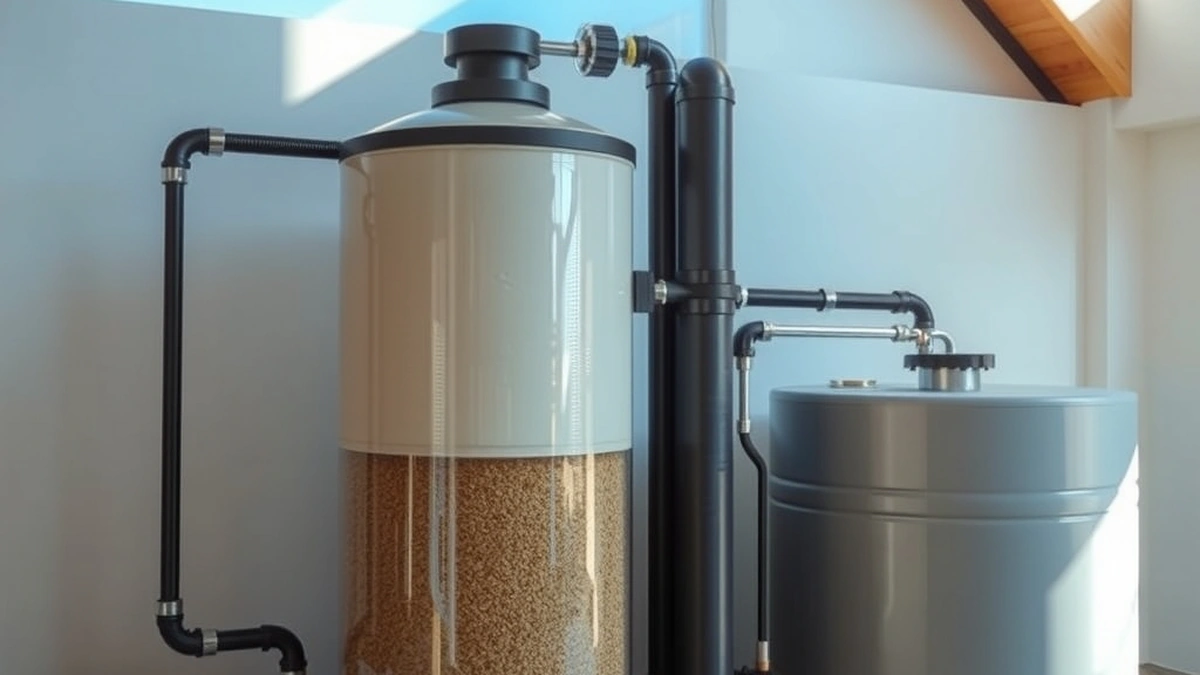
Anion exchange is the direct answer. A tank of anion resin exchanges the negatively charged tannin molecules for chloride. It is regenerated with salt, like a softener but with a different resin and a different brine path. Units are sized by colour load and flow, and they are typically installed after sediment filtration and before or alongside the softener.
Oxidation plus filtration works by breaking the organic molecule apart. Chlorine injection or ozone oxidizes tannins into smaller fragments, and a carbon bed behind the oxidizer removes the colour and the residual oxidant. This approach handles heavier loads and is common where tannins come with iron or sulfur, because the same oxidation step addresses all three.
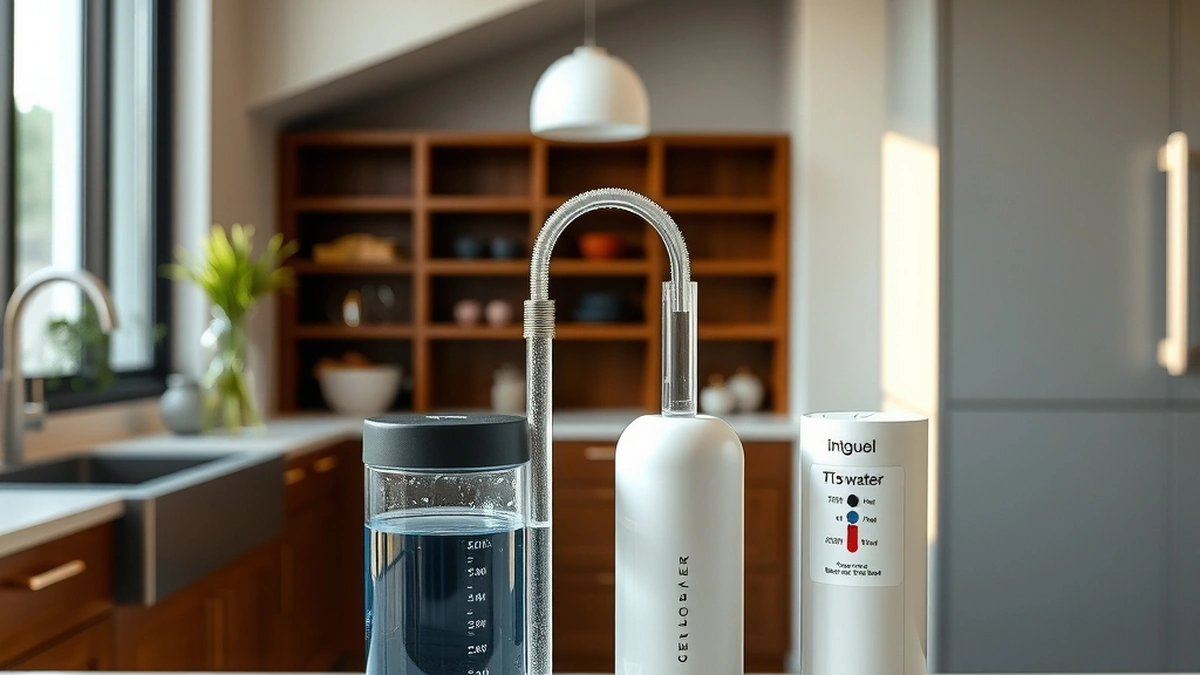
Reverse osmosis removes tannins at the point of use with 80 to 95 percent rejection, but the 3 to 4:1 waste ratio and the low output make it a kitchen-tap solution rather than a whole-house one. An under-sink unit runs $300 to $900 installed with $60 to $150 per year in consumables.
What It Costs
Treatment costs are estimates from published equipment ranges, not quotes:
- Sediment pre-filtration: $500 to $1,800 installed, cartridges $80 to $300 per year
- Anion exchange tannin unit: roughly $1,200 to $2,800 installed, an estimate for a mid-size residential tank
- Oxidation plus carbon: roughly $1,500 to $3,500 installed, an estimate that scales with the oxidizer
- Under-sink RO as a stopgap: $300 to $900 installed, $60 to $150 per year
The arithmetic on the RO stopgap: $600 installed plus five years of consumables at $100 equals $1,100, or about $220 per year, for one tap. A whole-house anion unit at $2,000 installed serving the same house for 12 years works out to $167 per year before salt, which is why whole-house treatment is usually the better value once the colour is confirmed.
Five Steps to Fix Coloured Water
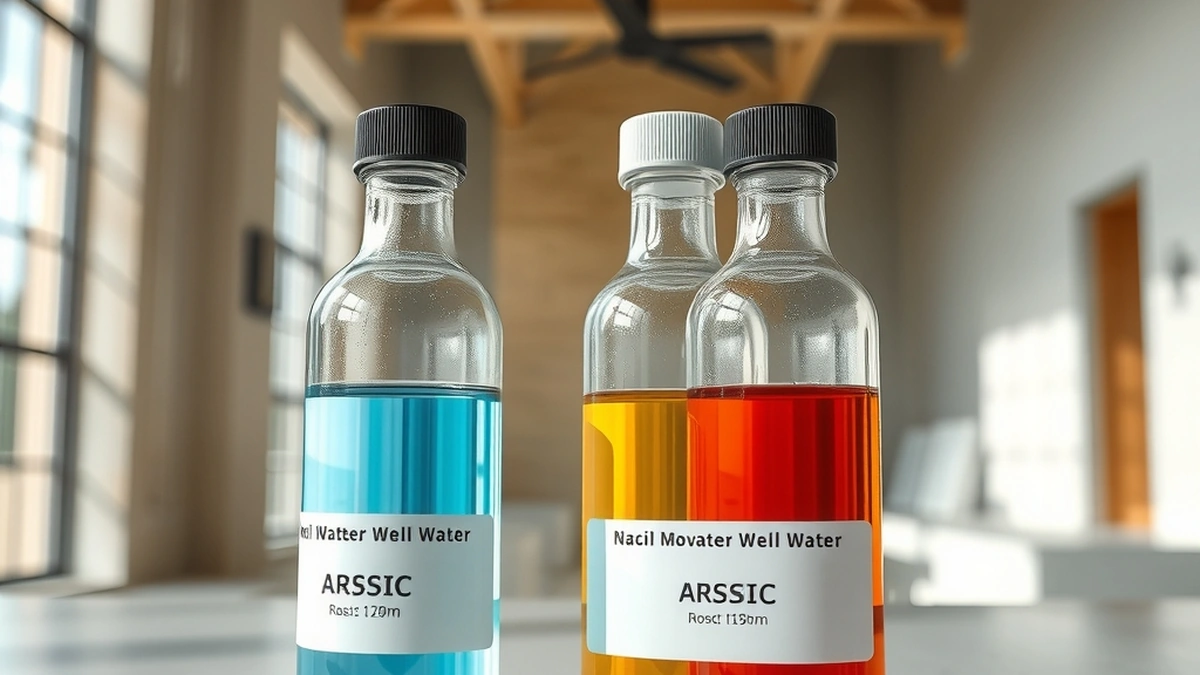
- Fill a glass and let it stand overnight. Uniform colour that does not settle points to tannins; a rust ring at the bottom points to iron.
- Order a lab panel. At $40 to $150, it confirms tannins, iron, manganese, hardness, nitrate, and bacteria in one pass.
- Fix the source if you can. Check the well casing and grout for gaps that let shallow surface water in. A cracked casing will keep feeding colour no matter what you install.
- Treat in the right order. Sediment first, then the tannin stage, then softening, then carbon polishing, following the well water system layout.
- Retest after 30 days. Colour should drop to near clear. If it does not, the unit is undersized or the load is higher than the test captured.
Living With It in the Meantime
Tannins stain laundry, especially whites, and they discolour water in the toilet tank. They are not corrosive in the way low-pH water is, so they do not eat pipes. If the well also runs acidic, though, the combination is worth attention: see water neutralizer for how pH correction is handled.
Do not assume a softener will improve the look of the water. If your report shows 9 GPG hardness alongside visible colour, you need both a softener and a tannin stage, and the softener goes after the tannin removal so its resin is not fouled. Budget for both rather than discovering the second one after the first is installed. If cost is the constraint, treat colour at the kitchen tap with RO and treat hardness at the heater; that split is covered in point of use versus point of entry.
Frequently asked questions
What causes tannins in well water?
Decaying leaves, peat, and other organic material in the soil release tannic and humic compounds that dissolve into groundwater, especially in shallow or sandy wells near wetlands.
Are tannins in water harmful?
Tannins are not a regulated contaminant at typical household levels, but they signal surface water influence, so the same sample should be tested for bacteria and nitrate rather than assumed safe.
Does a water softener remove tannins?
No. Cation exchange resin targets calcium and magnesium, and tannins carry a negative charge that a standard softener does not address; heavy tannin load can also foul the resin.
Will a carbon filter take out tannins?
Only partly. Carbon adsorbs some color but exhausts quickly on high tannin levels, so it is usually a polishing stage after anion exchange or oxidation rather than the primary treatment.
How do I tell tannins from iron?
Let a glass of water stand overnight. Iron settles as rust particles and stains fixtures; tannins stay uniformly coloured in the water and leave a lighter yellow stain.
Can I remove tannins by boiling?
No. Boiling concentrates them and makes the colour darker, so it is not a treatment method and should not be used as one.
Sources
Some links are affiliate links.If you buy through them we may earn a commission at no extra cost to you. We do not accept payment for rankings. Read the full disclosure.