Well pump problems that look like treatment problems
Weak flow, air spitting, and cloudy water can come from the pump, not the filter. See the checks that separate a supply fault from a treatment fault.
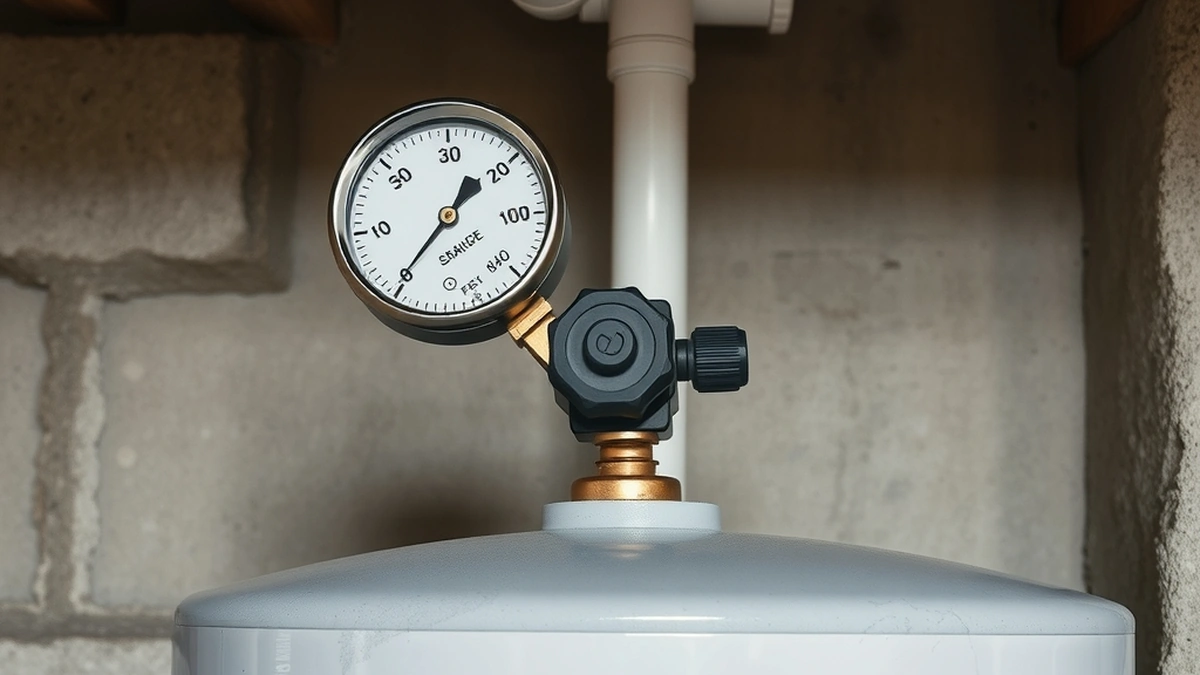
A failing well pump or pressure tank produces weak flow, air spitting at taps, cloudy water, and short cycling, all of which mimic filter and softener faults. Check pump pressure, tank air charge, and drawdown before replacing any treatment equipment.
- Typical house pressure
- 40 - 60 psi
- Pressure switch settings
- 30/50 or 40/60
- Pump repair cost
- $400 - $2,000
- Treatment install
- $500 - $4,500
- Test that separates them
- Pressure at an upstream tap
Some links on this page are affiliate links.If you buy through them we may earn a commission at no extra cost to you. We do not accept payment for rankings. Read the full disclosure.
A well pump fault and a treatment fault produce the same complaints: weak showers, sputtering taps, cloudy water, and a system that seems to be getting worse. The way to separate them is to measure pressure upstream of every treatment device. That one reading tells you which half of the system to work on.
The Upstream Pressure Test
Find a tap or a hose bib that draws water before it passes through any filter or softener. Install a gauge, or use a hose bib gauge, and run water.
- Low pressure upstream means the pump, the pressure tank, or the control switch is the problem.
- Normal pressure upstream, low downstream means treatment is restricting flow.
- Normal pressure everywhere but cloudy water points at sediment or air, not pressure.
This test takes five minutes and prevents the most expensive mistake in this category: replacing a softener that was never the problem.
Symptom Table
| Symptom | Pump or tank cause | Treatment cause |
|---|---|---|
| Weak flow at all taps | Pump wear, low tank charge | Clogged cartridge, fouled resin |
| Weak flow at one tap | Unlikely | Aerator or fixture screen |
| Sputtering and air | Water table drop, suction leak | Air in a filter housing after service |
| Cloudy water that clears upward | Air from the pump | Rare |
| Cloudy water that stays cloudy | Sediment pulled by pump | Sediment filter overloaded |
| Pump runs continuously | Tank bladder failed | None |
| Pump short cycles | Lost air charge | None |
Short Cycling and the Pressure Tank
Short cycling is the clearest pump-side symptom. The pump turns on and off every minute or two with no water running. That is almost always a pressure tank that has lost its air charge.
A pressure tank is a steel vessel with a rubber bladder. Air on one side, water on the other, and the air cushion maintains pressure between pump cycles. When the bladder fails or the air charge leaks out, there is no cushion, so pressure swings immediately and the pump cycles.
Check the air charge with a tire gauge on the tank’s air valve. With the water pressure at zero, the charge should be about 2 psi below the pump cut-in pressure: 28 psi for a 30/50 switch, 38 psi for a 40/60. Recharge with a compressor if it is low. If it will not hold, the bladder is gone and the tank needs replacement.
Air and Cloudy Water
Sputtering taps mean air. On a submersible pump, the usual cause is the water level dropping below the pump intake during heavy use, which is a well yield problem, not a treatment problem. On a jet pump, a leak on the suction side draws air continuously.
A filter housing can also introduce air if it was not bled after a cartridge change. That air works its way out in a day or two. If sputtering persists beyond that, look at the well.
Cloudy water that clears from the bottom up in a glass is air. Cloudy water that stays cloudy is suspended sediment or, less often, a chemical precipitate. Air is harmless and usually pump-related. Sediment is a treatment issue, but the sediment may be arriving because the pump is cycling more or because the water level has dropped and the pump is pulling from a shallower, dirtier zone. Fixing the filter without fixing the cause means replacing cartridges every few weeks.
What Each Repair Costs
Pump work is a different trade from treatment work, and the prices reflect that.
| Item | Typical range |
|---|---|
| Pressure switch | $50 - $150 installed |
| Pressure tank | $300 - $800 installed |
| Pump pull and replace | $800 - $2,000 |
| Sediment filter install | $500 - $1,800 |
| Softener install | $1,200 - $4,500 |
A $150 pressure switch is a far better first purchase than a $2,000 softener if the symptom is short cycling. Confirm before spending.
One more cost trap: a pump that is failing often runs longer, which raises the electric bill before it fails outright. If the bill has climbed and the pump seems to run more than it used to, that is a reason to have the amp draw checked. A pump shop can measure it at the control box in a few minutes, and a pump drawing high amps is on its way out even if pressure still looks acceptable.
What the Well Report Tells You
If you have the driller’s report from when the well was put in, it lists the static water level, the yield in gallons per minute, and the pump setting depth. Those numbers explain a lot of “treatment” complaints.
A well that yielded 5 gpm when drilled and now delivers 2 gpm has a supply problem, not a filter problem. A pump set at 200 feet in a well with a static level that has dropped 40 feet may be running dry during irrigation season, which shows up as air and sediment at the taps. Neither is fixed by a bigger cartridge.
Keep that report with the water test results. It is the baseline that makes a comparison possible.
Five Checks Before You Buy Anything
- Read pressure upstream of all treatment with fixtures running.
- Check the tank air charge with a tire gauge at zero water pressure.
- Watch the pump cycle with no water running; frequent cycling means a tank fault.
- Fill a glass and let it stand to distinguish air from sediment.
- Test hardness and sediment at the tap to see whether treatment is actually underperforming.
When Both Are True
It is common to have a pump at the end of its life and hard water at the same time. In that case, fix the supply first. A softener sized against a failing pump’s flow will be sized wrong, and a pump replacement changes the pressure the treatment sees.
Sequence: pump and tank, then water test, then treatment. That order is the same one in well water system layout, and the pressure budget across treatment is in water pressure and filters. If the pump is fine and the water is hard, water softener sizing is the right next read.
Frequently asked questions
How can I tell if my well pump is failing or my filter is clogged?
Test pressure at a tap upstream of all treatment; if it is weak there, the pump or tank is the problem, and if it is strong there but weak downstream, the treatment is.
Why does my water spit and sputter at the tap?
Air in the lines usually comes from a falling water table, a pump drawing air, a failing pressure tank bladder, or a leak on the suction side of a jet pump.
What causes short cycling of a well pump?
A pressure tank that has lost its air charge is the most common cause, because the tank can no longer buffer the pump's on and off cycle.
Can a well pump make water look cloudy?
Yes, if it is pulling sediment or air; cloudy water that clears from the bottom up is usually air, while water that stays cloudy is usually sediment or hardness.
Does a water softener reduce well pump pressure?
It adds 5 to 15 psi of pressure drop at peak flow, but it does not lower the pump's output; if pressure is low upstream of the softener, the pump is the issue.
When should I call a well contractor?
When pressure at the tank is low, the pump short cycles, or the pump runs continuously, since those point to pump, tank, or control faults rather than treatment.
Sources
Some links are affiliate links.If you buy through them we may earn a commission at no extra cost to you. We do not accept payment for rankings. Read the full disclosure.