well water treatment system troubleshooting
One stage failing can look like five. Diagnose pressure, backwash, and test results in order. See causes and $20-$700 fixes across the train.
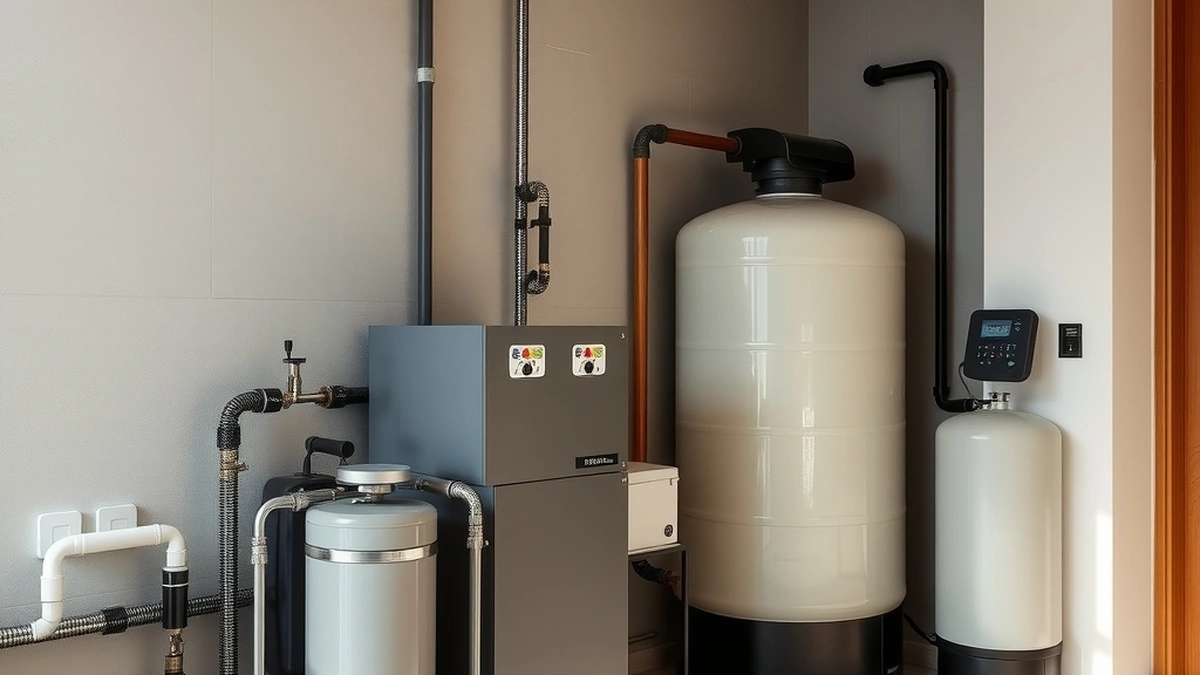
Troubleshoot a well system from the well outward: pump and pressure tank, then sediment, then iron or sulfur, then softener, then UV. Test raw and treated water to find which stage has failed before replacing anything.
- First check
- Raw and treated tests
- Pressure tank
- 40 - 60 psi
- Prefilter
- $10 - $30
- Media
- $200 - $700
- Typical repair
- $20 - $400
Some links on this page are affiliate links.If you buy through them we may earn a commission at no extra cost to you. We do not accept payment for rankings. Read the full disclosure.
Troubleshoot a well system from the well outward. Pump and pressure tank first, then sediment, then iron or sulfur, then softener, then UV. Testing raw and treated water tells you which stage has failed, and it costs less than replacing the wrong tank.
The chain logic
Each stage in a well system assumes the stage before it worked. A softener behind a failing iron filter fouls its resin. A UV unit behind a clogged prefilter cannot deliver dose.
That means a single upstream failure can look like three downstream ones. Replacing the softener when the iron filter is passing iron wastes $300-$600.
Start at the source and work forward, testing as you go.
The symptom table
| Symptom | First suspect | Cost |
|---|---|---|
| Low pressure everywhere | Pressure tank or prefilter | $0 - $800 |
| Iron stains return | Iron filter media or air draw | $20 - $600 |
| Sulfur smell returns | Sulfur media or vent | $10 - $700 |
| Hard water after softener | Salt, brine, or resin | $0 - $600 |
| Bacteria positive after UV | Sleeve, prefilter, or well | $0 - $300 |
| Sediment at taps | Prefilter or housing seal | $10 - $50 |
Pressure tank failures explain a surprising share of “the whole system is bad” calls. A waterlogged tank short-cycles the pump and makes every stage look weak.
Diagnose in this order
- Measure pressure at the tank and at a tap.
- Check the pressure tank precharge with the tank drained.
- Test raw water at a bypass tap.
- Test treated water at the kitchen tap.
- Watch each backwash cycle for drain flow.
- Check salt, brine draw, and UV lamp status.
Two tests and two observations cover most of the diagnosis. The rest is confirming which stage is responsible.
Reading a pressure tank
With the pump off and a tap open, the tank should hold 2 psi below the pump cut-in pressure. A 40/60 system wants 38 psi of precharge.
Low precharge means the tank holds little water and the pump cycles rapidly. High precharge means the same symptom for a different reason.
A tank that will not hold precharge has a failed bladder. Replacement runs $400-$800 installed.
Iron and sulfur stages
Iron returning means the media is exhausted, the air draw has failed, or the backwash is not cleaning the bed.
Check drain flow during a backwash first. A weak drain leaves the bed fouled, and the filter passes iron while running normally.
Then check the air intake and vent on air injection units. A blocked vent stops oxidation.
Then check media age. Three to five years is normal, and $200-$600 is the replacement cost.
Softener problems downstream
Hard water after a softener that follows an iron filter is usually iron fouling, not a softener fault.
Test iron after the filter. Above 0.3 ppm, the filter is passing iron and the resin is paying for it.
If iron is low and hardness is high, the softener has a salt, brine, or resin problem. Water softener troubleshooting covers that sequence.
UV and final-stage problems
A UV unit that alarms needs a lamp, a sleeve cleaning, or a ballast. A unit that runs clean but tests positive needs a well disinfection, not a bigger lamp.
Odor after UV means a carbon stage has exhausted or sulfur is upstream. UV does not change taste or smell.
Sediment at the taps means the final sediment stage has failed or a housing is bypassing.
The tests that settle it
Two numbers do most of the work: pressure at the tank and iron after the filter.
Pressure at the tank should sit between cut-in and cut-out, typically 40-60 psi. A gauge that swings wildly with every tap opening points to a tank problem, not a filter problem.
Iron after the filter should be under 0.3 ppm. Above that, the filter is passing iron and every downstream stage is being asked to compensate.
Hardness after the softener should be under 3 grains per gallon. Above that, the softener has a salt, brine, or resin issue.
Bacteria after UV should be absent. A positive result means the UV is not delivering dose or the well is reinfecting the system.
Write all four numbers on one page, with the date of each test. A technician who can see a six-month trend will diagnose a failing stage in one visit instead of two. That page is worth more to a technician than an hour of description. Well water treatment cost covers what replacement stages cost if the numbers cannot be recovered.
When to call a technician
Call for pump or pressure tank work, valve internals, or any repair that requires draining a tank you cannot lift.
Call when two stages have failed at once. That usually means a source problem rather than two coincidences.
Call when the water tests positive for bacteria after treatment and a well disinfection. That can indicate a casing or grout failure.
Prevention
Test annually, watch one backwash per device monthly, and change prefilters on schedule.
Keep a log of raw and treated numbers. A trend tells you which stage is fading before the household notices.
Write install dates on every tank. Media and resin are replaced on a calendar, not on a hunch. Well water treatment system maintenance covers the combined schedule, and pressure tank and treatment explains the tank’s role. “”
Frequently asked questions
How do I find which stage of my well system failed?
Test at a bypass tap for raw water and at the kitchen tap for treated water. Compare the two with the last lab result to see which contaminant is getting through.
Why is my well water pressure low after treatment equipment?
A clogged prefilter, a fouled media bed, or a pressure tank that has lost precharge. Check the prefilter and the tank first.
Why is my softener not keeping up after an iron filter?
Iron breakthrough from the filter fouls the resin. Test iron after the filter; if it is above 0.3 ppm, the filter is the problem, not the softener.
Why does my water smell after a UV unit?
UV does not remove odor. A smell after UV means a carbon stage has exhausted or a sulfur problem is upstream.
How often should the whole system be tested?
Bacteria and nitrate annually, a full panel every two to three years, and a retest after any equipment change or change in taste, color, or pressure.
Can I troubleshoot a well system myself?
Filters, salt, backwash observation, and water testing are homeowner tasks. Pump, pressure tank, and valve internals are technician work.
Sources
Some links are affiliate links.If you buy through them we may earn a commission at no extra cost to you. We do not accept payment for rankings. Read the full disclosure.