alkaline water filter maintenance schedule
Alkaline filter maintenance is a cartridge every 6-12 months, ionizer plate cleaning every 1-2 months, and pH checks quarterly. Costs $40-$200 a year.
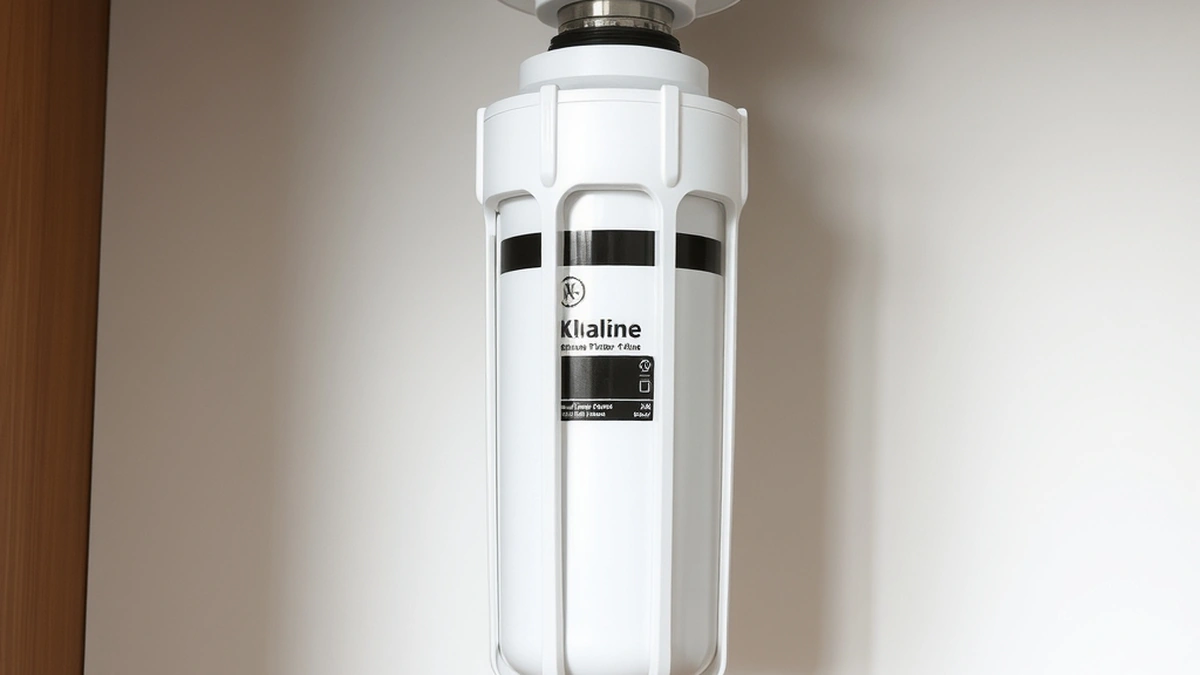
Alkaline water filter maintenance is a mineral cartridge every 6-12 months at $40-$120, ionizer plate cleaning every 1-2 months with citric acid, and a quarterly pH check. Annual cost runs $40-$200 depending on format.
- Cartridge change
- 6 - 12 months
- Plate cleaning
- Every 1 - 2 months
- pH check
- Quarterly
- Cartridge cost
- $40 - $120
- Annual cost
- $40 - $200
Some links on this page are affiliate links.If you buy through them we may earn a commission at no extra cost to you. We do not accept payment for rankings. Read the full disclosure.
Alkaline water filter maintenance is a mineral cartridge every 6-12 months, ionizer plate cleaning every 1-2 months, and a quarterly pH check. A cartridge unit costs $40-$120 a year to run; an ionizer runs $150-$200 once cleaner and pre-filters are counted.
Two schedules in one category
An alkaline water filter is either a passive mineral cartridge that dissolves calcite into the water or a powered ionizer that separates the stream by electrolysis. The maintenance differs completely.
A cartridge has one consumable and no power. Maintenance is replacing it when the pH rise fades, which is a 20-minute job.
An ionizer has plates that scale, a pre-filter that loads, and electronics that need occasional attention. Maintenance is a cleaning cycle plus a filter change, and it takes about 30 minutes a month.
The calendar by format
| Task | Cartridge unit | Ionizer |
|---|---|---|
| pH check | Quarterly | Quarterly |
| Cartridge or pre-filter | 6 - 12 months | 6 - 12 months |
| Plate cleaning | Not applicable | Every 1 - 2 months |
| O-ring inspection | Annually | Annually |
| Descaling soak | Annually | Monthly with cleaner |
| Annual cost | $40 - $120 | $150 - $200 |
Both formats need the same quarterly measurement. If pH is not moving, the device is not working, and the cause is usually the consumable rather than the hardware.
Replacing a mineral cartridge
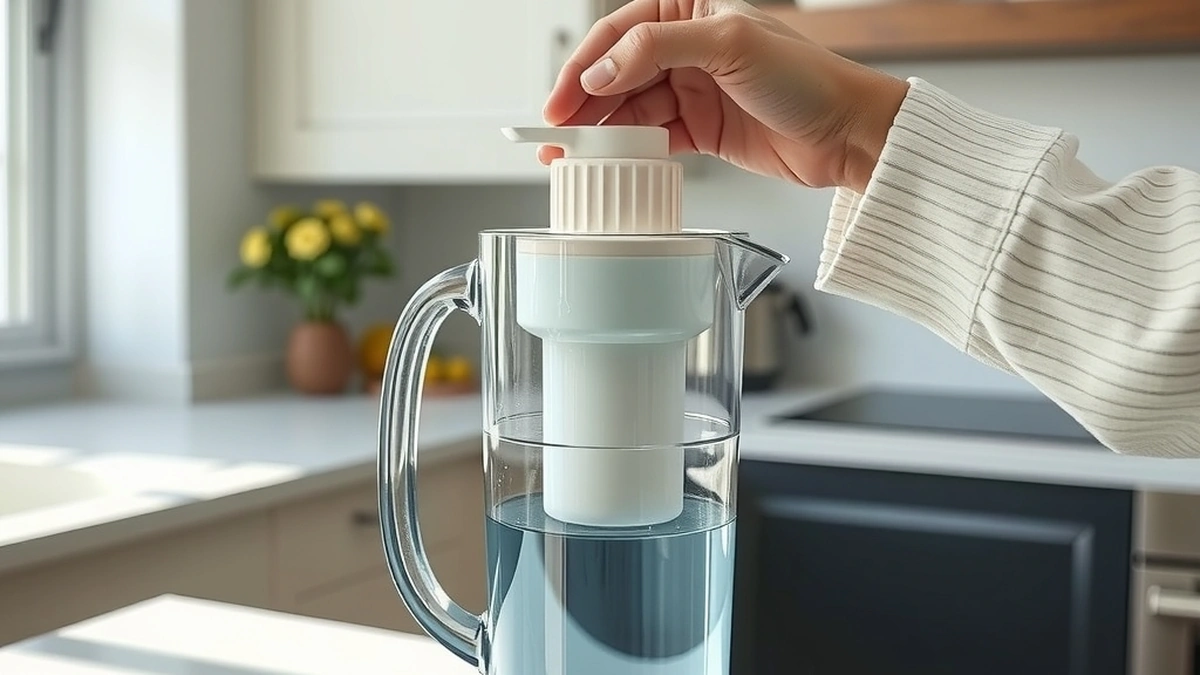
- Shut off the supply valve and open the faucet to release pressure.
- Remove the housing or release the inline cartridge.
- Note the flow arrow before pulling the old cartridge.
- Wipe the housing and lubricate the O-ring.
- Install the new cartridge in the correct orientation.
- Hand-tighten, restore water, and flush 2-5 minutes.
- Re-test pH after a week of use.
Calcite cartridges shed fines when new, which is why the flush matters. A glass of water with a chalky haze right after a change is normal for the first few batches.
If pH does not rise after a change, the flow is probably too high for the media volume. A cartridge rated at 0.75 GPM on a 1.5 GPM line passes water faster than the calcite can dissolve.
Cleaning ionizer plates
Mineral scale builds on the plates as water is electrolyzed. Scaled plates reduce current flow, which reduces pH shift and eventually triggers a low-flow alarm.
Most units have an automatic cleaning cycle that reverses polarity. That helps but does not replace a manual citric acid soak.
Every one to two months, fill the cleaning port with a citric acid solution per the manual, run the cleaning cycle, and flush. In water above 7 grains per gallon, do it monthly.
Never use vinegar in an ionizer unless the manual allows it. Some plate coatings are damaged by acetic acid, and the damage is permanent.
Pre-filter and chlorine
Chlorine attacks the plates. That is why every ionizer has a carbon pre-filter, and why changing it on schedule is the cheapest way to protect a $1,000-$2,000 device.
Change the pre-filter every 6-12 months. In a municipal supply with high chlorine, six months is the realistic interval.
If the pre-filter clogs early, the cause is usually sediment, not chlorine. A 5-micron stage ahead of the carbon handles it, and the sediment filter maintenance schedule covers the interval.
Measuring whether it still works
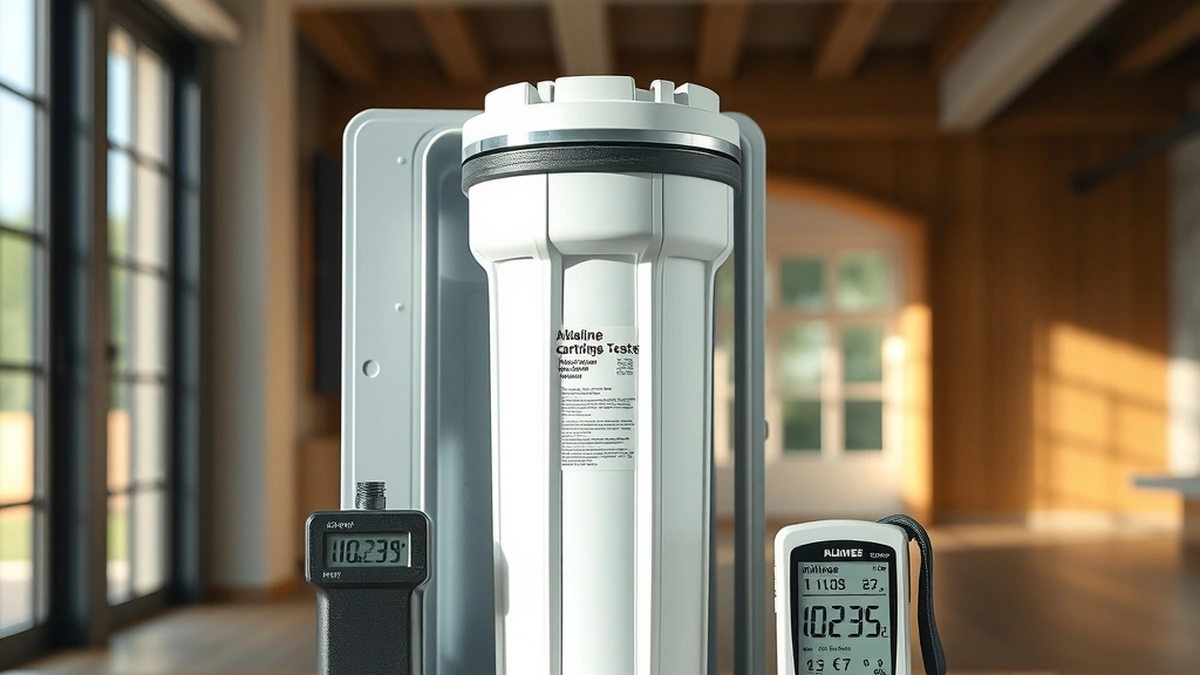
Quarterly, test pH at the alkaline outlet with a calibrated meter. Record the number and the source water pH alongside it.
A drop of half a unit or more from the reading six months ago means the media is exhausting or the plates are scaled. A reading identical to the source water means the unit is bypassing or the cartridge is spent.
Alkalinity matters too. Low-alkalinity source water produces a weaker pH shift because there is little carbonate to buffer. That is chemistry, not a fault.
Cost over three years
A cartridge unit: three cartridges at $60 is $180, plus $20 in O-rings, equals $200 over three years, or $67 per year.
An ionizer: three pre-filters at $50 is $150, cleaner at $30 per year is $90, and a plate replacement if needed at $200 is $200. Total: $440 over three years, or $147 per year. Plate replacement is not routine, but it is the reason the annual figure has a range.
For the installation side, alkaline water filter installation covers the plumbing and power. And if pH is low throughout the house rather than at one tap, water neutralizer is the whole-house fix. “”
What to record each quarter
A quarterly pH check is only useful if you write down four numbers: source pH, alkaline outlet pH, the cartridge install date, and the flow at the faucet.
Source pH matters because the device can only shift what it receives. If the incoming water drifts from 7.2 to 6.8, the outlet drops too, and the cartridge is not at fault.
Flow matters because a calcite cartridge at high flow passes water before it dissolves. A faucet that fills a quart in 20 seconds is pushing more than the media can treat, and slowing the flow raises the pH shift without any new parts.
The install date settles the replacement question. Calcite exhausts on gallons, and a household that fills a pitcher twice a day will get fewer months than the label suggests.
Keep the four numbers on the inside of the cabinet door. When the outlet reading falls half a unit, you will know whether the cause is the cartridge, the flow, or the source. How to read a water test report explains the pH and alkalinity values in more detail.
Frequently asked questions
How often does an alkaline filter cartridge need replacing?
Every 6-12 months, or when pH stops rising as much as it used to. Calcite media dissolves slowly, so the cartridge exhausts on gallons treated rather than on a timer.
How do I clean an alkaline water ionizer?
Run the unit's cleaning cycle with a citric acid solution every one to two months. The acid dissolves mineral scale on the plates, which restores flow and pH performance.
Why is my alkaline filter not raising pH anymore?
The mineral media is exhausted, or the flow is too high for the contact time. Check the cartridge age and the unit's rated flow before assuming the device has failed.
Does an alkaline filter need a pre-filter?
Most ionizers include one, and it should be changed every 6-12 months. A carbon pre-filter removes chlorine, which otherwise attacks the plates and shortens their life.
How much does alkaline filter maintenance cost per year?
Forty to one hundred twenty dollars for a cartridge unit, and one hundred fifty to two hundred for an ionizer including citric acid cleaner and pre-filters.
Can I test pH with strips?
Yes for a rough check, but strips are not precise enough to track a one-unit shift. A calibrated pH meter at $30-$120 gives a number you can compare month to month.
Sources
Some links are affiliate links.If you buy through them we may earn a commission at no extra cost to you. We do not accept payment for rankings. Read the full disclosure.