Brita water filter replacement
When to replace a Brita cartridge, how to reset the indicator, what the gallon rating means, and how to avoid a cartridge that is exhausted early.
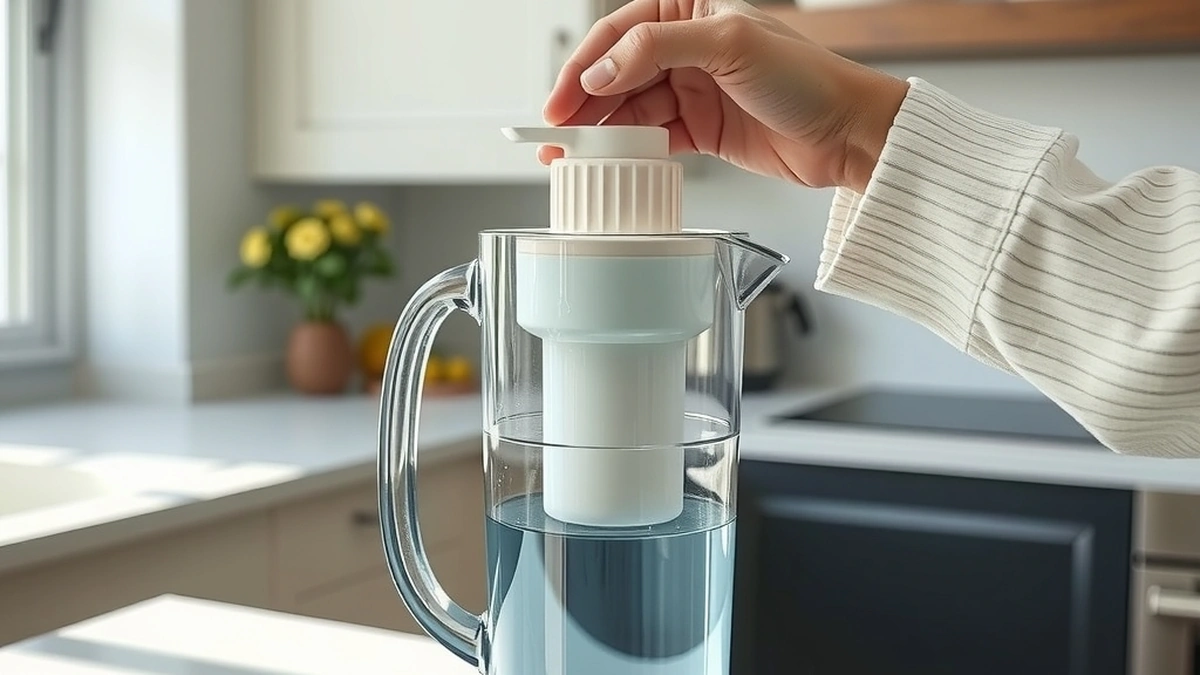
Replace a Brita cartridge every 40 gallons or about two months, whichever comes first. Soak the new cartridge briefly, insert it, run two pitchers through, and reset the indicator by holding the button for three to five seconds.
- Interval
- 40 gallons or 2 months
- Cartridge cost
- $6 - $20
- Annual cost
- $40 - $120
- Soak time
- 5 - 15 minutes
- Flush
- 2 pitchers
Some links on this page are affiliate links.If you buy through them we may earn a commission at no extra cost to you. We do not accept payment for rankings. Read the full disclosure.
Brita cartridges are rated for about 40 gallons, which is roughly two months for an average household. The replacement takes a minute, the soak and flush take a few more, and the indicator reset is a button hold. Getting it right is mostly about the interval, not the procedure.
When to Replace
Three signals, in order of reliability.
The gallon count. Forty gallons is the standard rating. If you track it, this is the cleanest method.
Flow slows. A restricted cartridge is loading with sediment.
Taste changes. Chlorine breaking through means the carbon is spent.
The indicator light is usually a timer set for average use. It lags a heavy-use household and can fire early in a light-use one.
The Replacement Procedure
- Remove the old cartridge from the reservoir, usually with a twist or a pull depending on the model.
- Soak the new cartridge in clean water for five to fifteen minutes to remove carbon fines.
- Rinse the reservoir with warm soapy water while the cartridge soaks.
- Insert the new cartridge and press firmly until it seats.
- Fill and discard two pitchers to flush residual fines.
- Reset the indicator by holding the button for three to five seconds.
The two-pitcher flush is not waste. The first water through a new cartridge is cloudy with fines and tastes flat, and discarding it is faster than waiting for it to clear.
If the pitcher has a lid gasket, check it while the reservoir is empty. A gasket that has stretched or gone missing lets unfiltered water run around the cartridge, and the water tastes the same as tap regardless of cartridge age.
What the Rating Means
Forty gallons is a test volume under specified conditions, not a guarantee for every household.
| Water condition | Effective life |
|---|---|
| Low chlorine, soft water | 40 - 50 gallons |
| Average municipal | About 40 gallons |
| High chlorine | 25 - 35 gallons |
| Turbid or sediment-heavy | 15 - 25 gallons |
The rating assumes a certain chlorine concentration and a certain flow. A utility that doses heavily, or a household that refills constantly, will exhaust the carbon sooner.
Temperature plays a smaller role. Water straight from a cold main filters more slowly than water at room temperature, so a winter refill can take noticeably longer without meaning the cartridge is spent.
That is why taste and flow are better indicators than the calendar for a household with unusual water.
Cost and Frequency
At $8 to $20 per cartridge and six changes a year, the annual cost is $48 to $120. A household using 2 gallons a day needs more like nine cartridges, or $72 to $180.
| Household | Gallons/year | Cartridges | Annual cost |
|---|---|---|---|
| 1 person | 180 | 5 | $40 - $100 |
| 2 people | 365 | 9 | $72 - $180 |
| 4 people | 730 | 18 | $144 - $360 |
At four people, the format stops being economical. An under-sink carbon filter at $150 to $500 installed runs $40 to $120 a year and delivers far more water. The crossover is around two people drinking a normal amount.
The other cost is time. Eighteen changes a year is eighteen orders or trips, and each change means a soak, a fill, and a flush. Individually trivial, and collectively the reason pitchers get abandoned.
Resetting the Indicator
Most Brita pitchers with an indicator use a button on the lid. Hold it for three to five seconds until the light changes.
Some models use a small battery in the lid that powers a countdown. When the battery dies, the indicator stops working and the pitcher still functions. Replace the battery or ignore the light and track the calendar.
A few models reset automatically when the lid is removed and replaced. If the light will not clear, check the manual before assuming the unit is faulty.
On models with a battery, a dead battery usually shows as a blank or stuck display rather than a false countdown. The pitcher still filters; only the reminder is lost.
Common Mistakes
Reusing a cartridge. Rinsing does not restore carbon. An exhausted cartridge can release what it captured.
Skipping the soak. Dry carbon sheds fines into the first pitchers, which is harmless but unpleasant.
Ignoring the reservoir. A dirty pitcher recontaminates filtered water, and the cartridge gets blamed.
Buying the wrong model. Cartridges are keyed to pitcher models, and a loose fit lets water bypass the media.
Storage and Spares
Keep spare cartridges sealed and dry. An open cartridge in a humid cabinet can grow mould in the carbon before it is used.
Buy two at a time. A cartridge that runs out on a Sunday means a day of tap water or a trip to the store, and the spare removes the decision.
Check the part number on the box against the pitcher base before opening it. Returns are easier with the packaging intact.
If the pitcher is more than a few years old, confirm the cartridge is still in production. Brands change housings between generations, and a discontinued model can leave you buying old stock at a premium.
When to Change Format
If you are buying eighteen cartridges a year, the format is telling you something. An under-sink carbon filter treats more water for less, and a faucet mount sits between the two.
If the complaint is scale, no cartridge helps. If it is nitrate, no cartridge helps. Those need a softener and reverse osmosis respectively.
For the pitcher comparison, see Brita water filter and water filter pitcher reviews. For the step up, under sink water filter covers the installation, and water filter pitcher filters covers cartridge selection.
Frequently asked questions
How often should I replace a Brita filter?
Every 40 gallons or about two months for an average household, and sooner if flow slows or the water begins to taste of chlorine.
Do I need to soak a new Brita cartridge?
A brief soak of five to fifteen minutes helps remove carbon fines and prime the media, though some models only require a rinse under the tap.
How do I reset the Brita filter indicator?
Hold the indicator button for three to five seconds until the light changes or resets, depending on the model; some have a replaceable battery in the lid.
Why does my Brita filter slow down before two months?
Sediment in the water loads the cartridge faster than the rating assumes, so a pre-filter or a different format may be needed if it happens repeatedly.
Can I clean and reuse a Brita cartridge?
No. The carbon is exhausted after its rated volume, and rinsing does not restore adsorption capacity or remove what has already been captured.
What happens if I use an expired Brita cartridge?
It stops removing chlorine and may release previously adsorbed material, so the water can taste worse than unfiltered tap water.
Sources
Some links are affiliate links.If you buy through them we may earn a commission at no extra cost to you. We do not accept payment for rankings. Read the full disclosure.