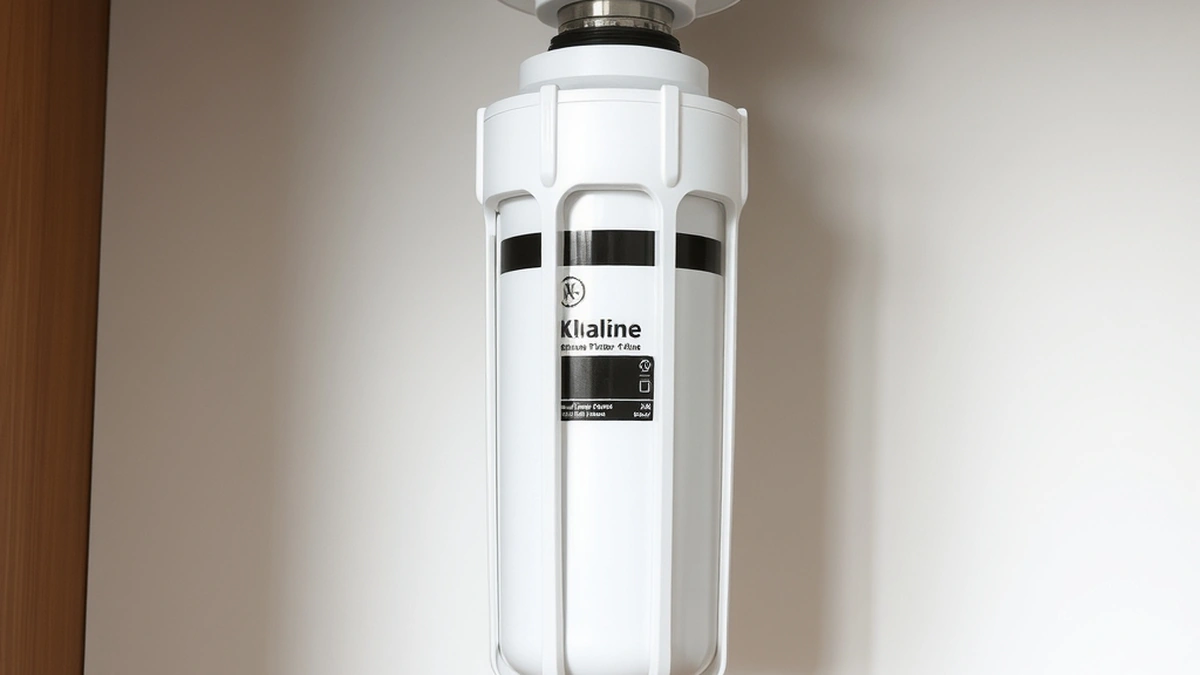
alkaline water filter troubleshooting
pH not rising, cartridge spent, or ionizer alarming? Check media age, flow rate, and plate scale. See causes and the $5-$200 fixes.
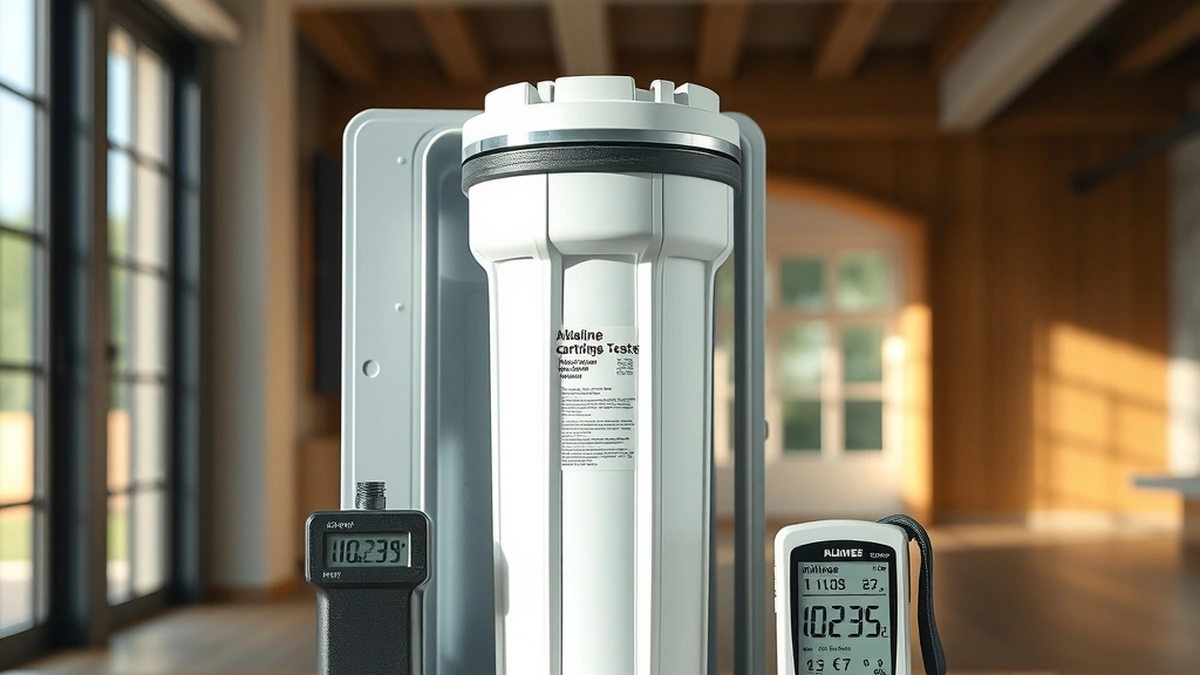
Most alkaline filter complaints are a spent mineral cartridge, flow above the media's rating, or scaled ionizer plates. Test pH at the outlet, check the flow, then replace the cartridge or run a cleaning cycle.
- Cartridge
- $40 - $120
- Ionizer cleaner
- $15 - $30
- Plate set
- $150 - $400
- Flow rating
- 0.5 - 1 GPM
- Typical fix
- $5 - $120
Some links on this page are affiliate links.If you buy through them we may earn a commission at no extra cost to you. We do not accept payment for rankings. Read the full disclosure.
Most alkaline filter complaints are a spent mineral cartridge, flow above the media’s rating, or scaled ionizer plates. Test pH at the outlet, check the flow, then replace the cartridge or run a cleaning cycle. None of those fixes costs more than $120.
What the device can and cannot do
A calcite cartridge raises pH by dissolving calcium carbonate. It cannot raise pH beyond what the media volume and contact time allow.
An ionizer raises pH by electrolysis, and its output depends on the source water’s alkalinity. Low-alkalinity water produces a weaker shift no matter what the dial says.
Neither device removes contaminants. If the complaint is taste or sediment rather than pH, the alkaline stage is not the right tool.
The symptom table
| Symptom | Likely cause | Fix |
|---|---|---|
| pH unchanged | Spent cartridge | $40 - $120 |
| pH rise shrinking | Media exhausting | $40 - $120 |
| Flow very slow | Loaded cartridge | $40 - $120 |
| Ionizer alarm | Scaled plates | $15 - $30 |
| pH drops in the glass | CO2 absorption | $0 |
| White film on fixtures | Added hardness | $0 |
That last row surprises people. Calcite adds calcium carbonate, which is the same mineral a hardness test measures, so a pH cartridge can leave more scale than before.
Diagnose in this order
- Measure source pH and outlet pH with a calibrated meter.
- Measure flow at the faucet with a quart jar and a timer.
- Note the cartridge install date and daily gallons.
- Check the ionizer for an alarm code.
- Inspect the pre-filter on an ionizer.
- Run a cleaning cycle before replacing parts.
Source pH matters because the device can only shift what it receives. If the incoming water dropped from 7.2 to 6.8, the outlet drops with it and the cartridge is not at fault.
Measuring pH honestly
Let the sample reach room temperature, rinse the electrode, and read twice. A meter that has not been calibrated in months can be off by half a unit, which is the entire effect you are trying to measure.
Do not judge by taste. Alkaline water tastes flat or slightly sweet, and neither sensation maps to a pH number.
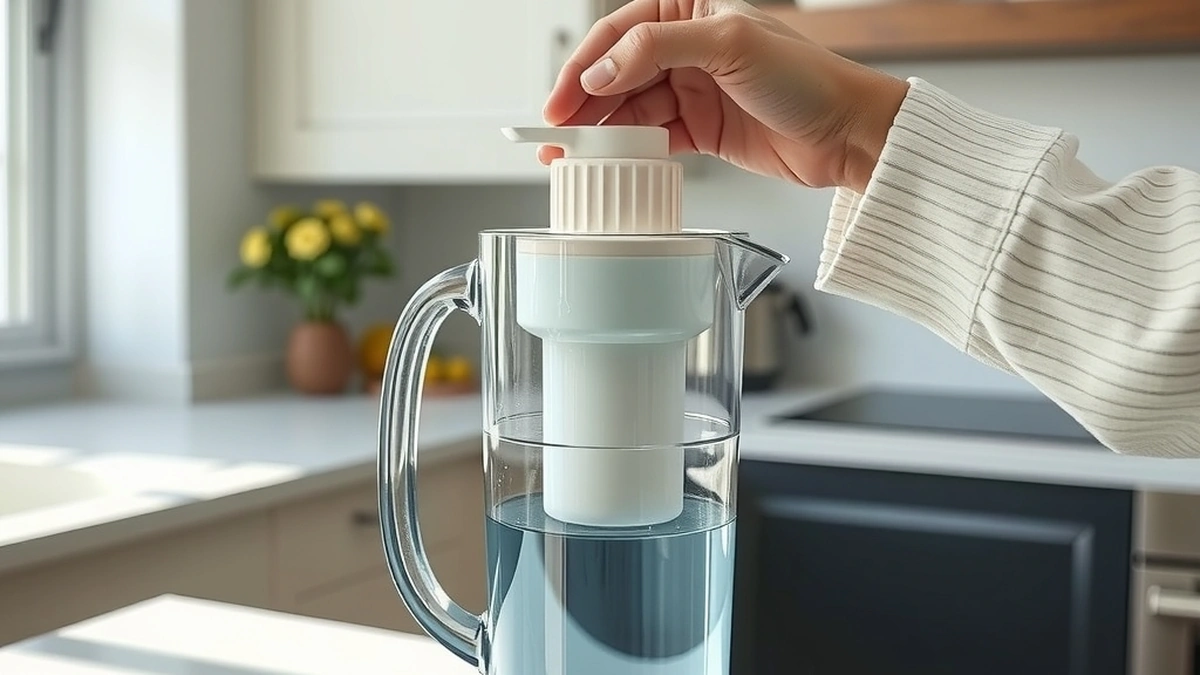
Measure at the tap, not after the water sat in a pitcher for a day. Carbon dioxide absorption lowers pH over hours, and that is chemistry rather than a fault.
Cartridge replacement
A cartridge is spent when the outlet pH falls to within half a unit of the source. Replace it and re-measure after a week.
Installation is a 20-minute job: shut the valve, release pressure, swap the cartridge, flush two minutes.
Check the flow arrow. A reversed cartridge pushes media into the faucet screen and blocks flow.
Ionizer plate cleaning
Scaled plates reduce current and pH output. Most units have a cleaning cycle that reverses polarity, but a manual citric acid soak is still needed every one to two months.
Use the manufacturer’s cleaner or food-grade citric acid. Vinegar is allowed on some units and damages the coating on others.
If cleaning does not restore output, the plates may be at end of life. A plate set runs $150-$400, which is often close to the value of the unit.
Flow and contact time
A calcite cartridge rated at 0.5 GPM on a line delivering 1.5 GPM passes water faster than the media can dissolve.
Slow the flow with a restrictor or use a dedicated faucet rather than the main tap. Contact time is the variable that decides whether the pH shift happens at all.
A larger cartridge helps. A 2-inch by 10-inch cartridge holds more media than a 2-inch by 5-inch one and tolerates higher flow.
When the water is the problem
Low pH throughout the house is a corrosion problem, not a drinking water preference. A backwashing neutralizer at $800-$2,000 protects the plumbing, and an under-sink cartridge does not.
High alkalinity makes pH harder to shift, and low alkalinity makes it harder to hold. Neither is a device fault.
Hard water plus a calcite cartridge produces scale. A softener ahead of the cartridge, or a different media, is the fix.
When the module is the fault
A cartridge that is new and still produces no pH shift is usually bypassed, not spent. Check the housing seal and the flow direction before buying another cartridge.
An ionizer that alarms with clean plates and a fresh pre-filter has a sensor or board problem. Those are rarely economic to repair on a $300-$900 unit.
A calcite cartridge that clogs within weeks is catching sediment the housing was never meant to handle. Add a sediment pre-stage at $15-$30 and the cartridge will last its normal interval.
Test outlet pH after every cartridge change. A reading that matches the source confirms a bad cartridge or a bypassed one, and that is a warranty conversation rather than a maintenance one. Alkaline water ionizer covers the electrolysis units, and does reverse osmosis remove minerals explains the post-RO pairing.
Prevention
Record the cartridge date and the outlet pH quarterly. A trend tells you the media is fading before the taste changes.
Clean ionizer plates monthly and replace the pre-filter every 6-12 months.
Do not chase a pH number. A shift of half a unit is a normal result for a cartridge, and expecting more leads to unnecessary replacements. Alkaline water filter maintenance covers the schedule, and water neutralizer covers whole-house pH correction. “”
Frequently asked questions
Why is my alkaline filter not raising pH?
The calcite media is spent, or the flow is too high for the media volume. Test the outlet pH, slow the flow, and replace the cartridge if the reading stays flat.
How long does an alkaline cartridge last?
Six to twelve months, depending on gallons treated. Calcite dissolves on contact, so a household using two gallons a day exhausts it faster than one using half a gallon.
Why does my ionizer keep alarming?
Usually scaled plates or low flow. Run the citric acid cleaning cycle and check the pre-filter before assuming the unit has failed.
Can I test alkaline output with strips?
For a rough idea. Strips read in half-unit steps and are not precise enough to track a one-unit shift. A calibrated pH meter gives a number you can compare.
Does an alkaline filter reduce flow?
Slightly. Calcite media adds restriction, and a loaded cartridge adds more. A 0.5 GPM rating on a 1.5 GPM line means the media is being pushed too hard.
Why does the pH drop again after a few hours?
Water absorbs carbon dioxide from the air, which lowers pH. That is chemistry, not a filter failure, and it is why the reading at the tap matters more than the reading in a pitcher.
Sources
Some links are affiliate links.If you buy through them we may earn a commission at no extra cost to you. We do not accept payment for rankings. Read the full disclosure.