Bio Clean Hard Water Stain Remover: How to Use It
Bio-Clean is a cream cleaner that lifts mineral deposit from glass and fixtures. See where it works, where it damages, and how it compares to vinegar.
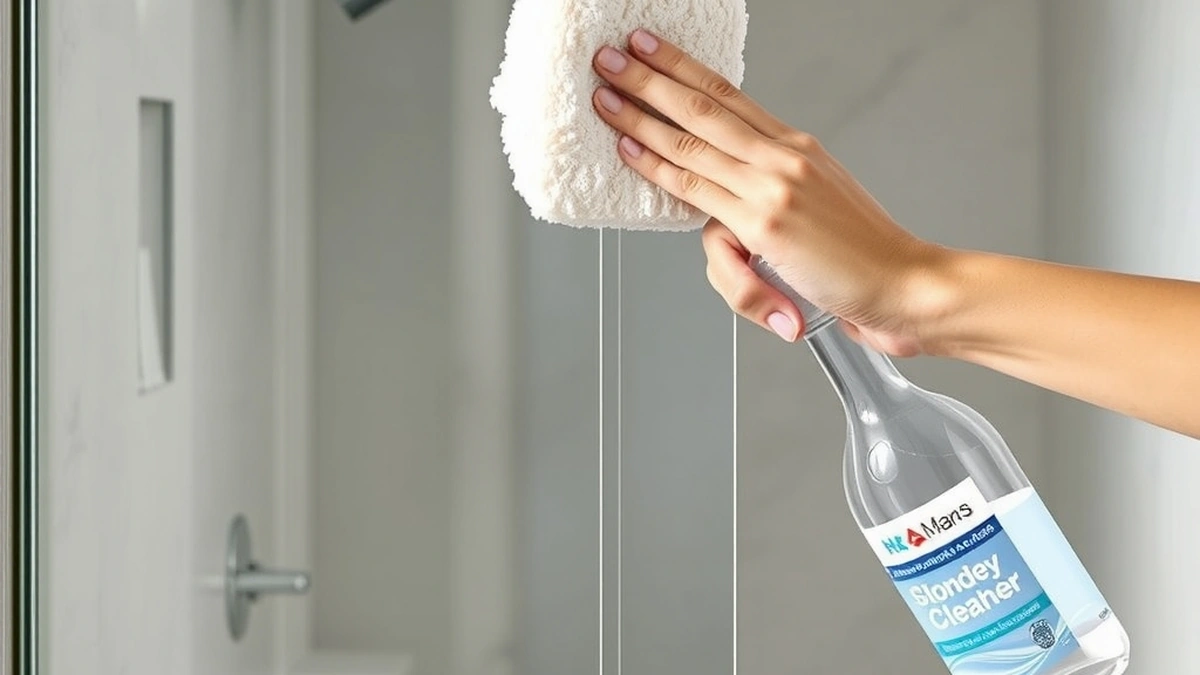
Bio-Clean hard water stain remover is a cream cleaner that combines mild abrasive action with a chelating formula to lift mineral deposit from glass, tile, and fixtures. A tub costs $15 - $30, and it works best on light to moderate scale, not etched glass.
- Tub price
- $15 - $30
- Type
- Cream cleaner with chelators
- Best surfaces
- Glass, tile, chrome, porcelain
- Avoid
- Marble, travertine, coated glass
- Coverage
- About 20 - 40 square feet per tub
Some links on this page are affiliate links.If you buy through them we may earn a commission at no extra cost to you. We do not accept payment for rankings. Read the full disclosure.
Bio-Clean hard water stain remover is a cream cleaner that lifts mineral film from glass, tile, and fixtures using chelating agents plus a fine abrasive. A tub costs $15 - $30 and covers roughly 20 - 40 square feet. It handles light to moderate scale and does nothing for etched glass.
What Kind of Product It Is
The product is a paste or cream, not a spray. That consistency is the point: it stays where you put it, so the active ingredients have time to work on a vertical shower door instead of running to the drain.
The formula combines a chelating agent that binds calcium and magnesium with a mild abrasive that helps lift the loosened deposit. Some versions add a surfactant to cut soap scum at the same time.
That combination makes it faster than vinegar on stubborn film and gentler than a scouring powder on glass. It is a middle-strength option in a category that runs from vinegar to hydrochloric acid.
Where It Works
| Surface | Safe | Notes |
|---|---|---|
| Glass shower doors | Yes | Test a corner, use a soft pad |
| Ceramic tile | Yes | Rinse grout thoroughly |
| Chrome fixtures | Yes | Avoid abrasive pads |
| Porcelain | Yes | Do not soak cracked enamel |
| Stainless steel | Yes | Work with the grain |
| Marble or travertine | No | Acid and chelators etch stone |
| Coated or frosted glass | Caution | Finish can dull |
| Anodized aluminum | No | Finish can strip |
The stone exclusion is the important one. Marble, limestone, and travertine are calcium-based, and a chelating cleaner pulls calcium out of the stone itself. The result is a dull, etched patch that no polish fully restores.
How to Apply It
- Test on a hidden corner and wait five minutes before proceeding.
- Wet the surface lightly so the cream spreads and does not dry out.
- Apply with a soft cloth or a non-scratch pad, working in small circles.
- Leave it 1 - 5 minutes; do not let it dry on the surface.
- Agitate the stubborn areas, then rinse with plenty of water.
- Dry with a squeegee or microfiber cloth to prevent new spotting.
- Repeat on heavy deposit rather than scrubbing harder.
For a shower door with a year of buildup, two or three applications spaced a day apart work better than one long soak. The first pass loosens the top layer, and the second reaches the mineral underneath.
Cost Per Cleaning
A $20 tub covers 20 - 40 square feet, which is roughly one shower enclosure or several sinks and fixtures. Used monthly on a shower door, a tub lasts three to six months, so the annual cost is $40 - $80.
Vinegar costs $2 - $5 a gallon and does the same job on light scale for a fraction of the price. The cream earns its premium when the deposit is old, the surface is vertical, or the user wants a single step instead of a soak-and-scrub routine.
What It Cannot Fix
Etched glass is permanent. Years of hard water and alkaline cleaning can physically pit the silica surface, and the haze that remains after a proper descaling is damage, not deposit. No cream, acid, or polish restores it. Replacement glass or professional polishing is the only route.
The product also does not prevent new scale. It removes what is there, and the next shower starts a new film. Prevention requires drying the surface after each use or removing the minerals from the water.
Prevention Beats Cleaning
A squeegee in the shower is the cheapest intervention. Thirty seconds after each use removes most of the water that would otherwise evaporate and leave minerals behind.
A softener at $1,200 - $4,500 installed removes the minerals at the source. If hardness tests at 7 GPG or higher and the stains return within weeks, the softener is the answer and the cream is a stopgap.
Cream, Gel, or Powder
Cream cleaners are the middle of the range. They cling to vertical surfaces, carry a mild abrasive, and rinse without much residue. Most bathroom descaling products follow this format.
Gels are thicker and slower to dry, which makes them good for toilet bowls and heavily scaled tile. They usually rely on a stronger acid and need gloves.
Powders are the most aggressive. They clean fastest and scratch easiest, which is why they belong on porcelain and not on chrome, glass, or coated surfaces.
For a shower door, a cream is the right default. For a toilet ring, a gel or an overnight acid soak works better. For a glass door with light weekly film, vinegar is enough and the cream is unnecessary.
Reading the Label Before You Buy
Check the active ingredients and the surface warnings. A product that lists hydrochloric acid is a masonry or pool cleaner and does not belong in a bathroom. A product that lists oxalic acid is aimed at rust and iron stains, not calcium.
Check the volume, too. A $25 tub that covers 20 square feet costs more per square foot than a $15 tub that covers 40. The label usually states coverage, and the math is worth doing before the second purchase.
Finally, store the product out of reach of children and away from bleach. Acid and chlorine together release gas, and a bathroom cabinet is exactly where those two products end up next to each other.
For the general removal methods, see remove hard water stains and hard water stains. For glass specifically, see how to remove hard water stains from glass. For the water-side fix, see how to treat hard water.
Frequently asked questions
Does Bio-Clean remove hard water stains?
It removes light to moderate mineral film from glass, tile, and fixtures. Heavy crust may need several applications, and etched glass cannot be restored by any cleaner.
Is Bio-Clean safe on shower glass?
Yes, on standard glass. Test a corner first, use a non-abrasive pad, and rinse thoroughly. Avoid coated or frosted glass where the finish can be dulled.
Can I use it on marble?
No. The chelating and mildly acidic formula can etch calcium-based stone. Use a pH-neutral stone cleaner instead.
How long should I leave it on?
Most users leave it 1-5 minutes, then agitate and rinse. For heavy deposit, a longer dwell helps, but do not let it dry on the surface.
Is it better than vinegar?
It works faster on stubborn film because it combines chelators with mild abrasion. Vinegar is cheaper for weekly maintenance and safe on the same surfaces.
How much does it cost per cleaning?
A $20 tub covers 20-40 square feet and lasts several cleanings, which works out to roughly $1-$3 per shower door treatment.
Sources
Some links are affiliate links.If you buy through them we may earn a commission at no extra cost to you. We do not accept payment for rankings. Read the full disclosure.