How to Remove Hard Water Stains From Glass Safely
Shower doors, windows, and vases need different methods. See the acid soak, the razor-blade technique, and how to tell etching from deposit.
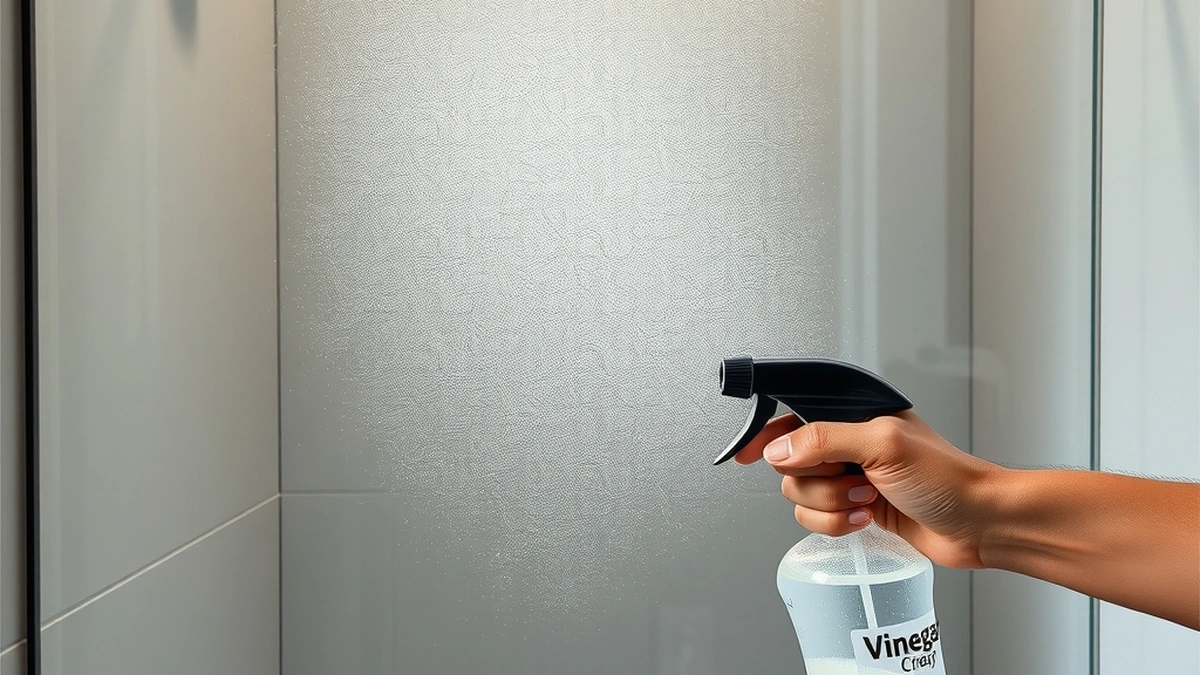
Remove hard water stains from glass with a warm acid soak, a non-scratch pad, and a squeegee dry. Use vinegar for light film, a cream descaler for heavy deposit, and a razor blade at a shallow angle on flat glass only. Etched glass cannot be restored.
- Vinegar
- $2 - $5 per gallon
- Citric acid
- $10 - $20 per pound
- Cream descaler
- $15 - $30 per tub
- Dwell time
- 20 - 30 minutes
- Softener installed
- $1,200 - $4,500
Some links on this page are affiliate links.If you buy through them we may earn a commission at no extra cost to you. We do not accept payment for rankings. Read the full disclosure.
Hard water stains on glass are calcium carbonate film, and acid dissolves them. The variables are the acid strength, the dwell time, and whether the glass is still glass or has been etched by years of deposit. Mild cases come back in twenty minutes; etched glass never comes back.
Why Glass Clouds
Glass looks smooth but has a microscopic surface that minerals can bond to. When hard water dries on it, calcium carbonate crystals anchor in those tiny imperfections and build a film.
The film scatters light, which is why the glass looks cloudy. A thin layer looks like haze; a thick layer looks like white frosting and feels rough to the touch.
If the deposit stays long enough, the minerals can react with the silica surface and pit it. That is etching, and it is physical damage rather than a coating.
The Acid Soak
| Cleaner | Strength | Best for | Dwell |
|---|---|---|---|
| White vinegar | Mild | Weekly film, light haze | 20 - 30 minutes |
| Citric acid solution | Mild to moderate | Medium film, shower doors | 20 - 30 minutes |
| Cream descaler | Moderate | Heavy film, vertical glass | 1 - 5 minutes |
| Phosphoric acid gel | Moderate to strong | Stubborn spots | 10 - 30 minutes |
| Cerium oxide polish | Abrasive | Mild etching | Hand polishing |
The technique matters as much as the product. Spray the glass, then press soaked paper towels against it. The towel holds the acid in contact instead of letting it run down the door.
Warm the glass with hot water first. The reaction runs faster warm, and the dwell time shortens. Re-wet the towel if it starts to dry, because dried acid leaves a residue that is harder to rinse.
The Razor Blade Technique
On flat, uncoated glass, a single-edge razor blade removes softened film and hard water spots that a pad cannot lift. Hold the blade at a shallow angle, almost flat, and keep the glass wet.
Work in overlapping strokes, and wipe the blade clean every few passes. A blade held at an angle digs in and scratches; a blade held flat glides.
Never use a blade on frosted, textured, coated, or chipped glass. The coating peels, and a chip can catch the edge and crack the pane.
Shower Doors vs Windows vs Vases
Shower doors get the heaviest deposit because they are wet and dry repeatedly. They also tolerate acid well, which makes them the easiest surface in the house to restore.
Windows collect deposit from sprinklers and rain, usually on the exterior. The film is thinner, and a vinegar spray with a squeegee handles it. Do not let acid run onto aluminum frames, which can corrode.
Vases and glassware with mineral film respond to a warm vinegar soak overnight. Fill the vessel, leave it, and rinse. For narrow-neck bottles, add a handful of rice and swirl it as an abrasive.
When It Is Etching
Etching looks like cloudy glass that does not change after two proper acid soaks. The surface may feel slightly rough, or the haze may be visible only at an angle.
Mild etching can sometimes be improved with cerium oxide polish, a fine abrasive used by glass workers. It is hand-worked with a felt pad and water, and it removes a microscopic layer of glass. It is slow, and it does not fix deep pitting.
Severe etching means replacement. A new shower door costs $300 - $1,200 installed, and the new glass will etch too unless the water is treated.
Prevention That Actually Works
- Squeegee the glass after every shower, top to bottom.
- Dry the frame and the track, where water sits longest.
- Leave the door open after use so air circulates.
- Clean with vinegar weekly before film builds.
- Apply a hydrophobic sealer every three to six months.
- Test hardness and install a softener if the reading is 7 GPG or higher.
The sealer is optional and the softener is the real fix. A softener at $1,200 - $4,500 installed removes the minerals before they reach the glass, which is the only way to stop the cycle rather than slow it.
The Frame and Track Matter Too
Most people clean the glass and ignore the frame, and the frame is where the deposit starts. Water runs down the door, pools in the track, and evaporates there, leaving a concentration of minerals that stains the aluminum and clogs the weep holes.
Once the weep holes clog, water stands in the track, and the door sits in a mineral bath. That is why a door that is cleaned weekly still develops a crust along the bottom edge.
Clear the track with a small brush and a vinegar soak. Run a pipe cleaner or a toothpick through the weep holes. Dry the track with a cloth after cleaning, and check that the door drains toward the holes rather than away from them.
Aluminum frames corrode in acid, so keep strong cleaners off the metal and rinse thoroughly. A pitted frame is cosmetic, but a frame that no longer sheds water keeps the glass wet and accelerates the next stain.
Glass Type Changes the Method
Tempered glass is standard in shower doors and tolerates acid and a razor blade. Laminated glass, used in some windows and windshields, has a plastic interlayer that solvents can attack.
Frosted and textured glass trap minerals in the pattern. Acid works, but a pad cannot reach the recesses, and a brush is the better tool. Coated glass with a hydrophobic factory finish should never see an abrasive, because the coating is the thing keeping the glass clean.
Mirrors are the exception in the other direction. The reflective backing is a thin metal layer, and acid at the edges can creep behind it and cause black spots. Spray the cloth, not the mirror, and keep the edges dry.
For the general methods, see remove hard water stains and how to get rid of hard water stains. For the water side, see how to treat hard water and water softener cost.
Frequently asked questions
What removes hard water stains from glass?
An acid that dissolves calcium carbonate. White vinegar or a citric acid solution left on the glass for 20-30 minutes softens the film so it wipes away.
Can I use steel wool on glass?
0000 grade steel wool is sometimes used on glass and is less likely to scratch than coarser grades, but a non-scratch pad is safer. Test a corner first.
Does a razor blade scratch glass?
A razor blade held flat and wet removes film without scratching flat glass. Never use one on coated, frosted, or chipped glass.
Why is my shower glass still cloudy after cleaning?
The glass may be etched. Years of hard water and alkaline cleaners pit the surface, and the haze is damage rather than deposit. Polishing with cerium oxide can help mild cases.
Can I prevent stains on glass?
Squeegee after every shower and dry the frame. A softener removes the minerals at the source and stops new deposits entirely.
Do glass sealers work?
A hydrophobic sealer can slow deposit buildup and make cleaning easier, but it needs reapplication every few months and does not stop scale in very hard water.
Sources
Some links are affiliate links.If you buy through them we may earn a commission at no extra cost to you. We do not accept payment for rankings. Read the full disclosure.