Hard Water Stains: What They Are and Why They Form
White chalky spots, cloudy glass, and soap scum come from calcium and magnesium. Learn to tell hardness stains from iron and silica before treating.
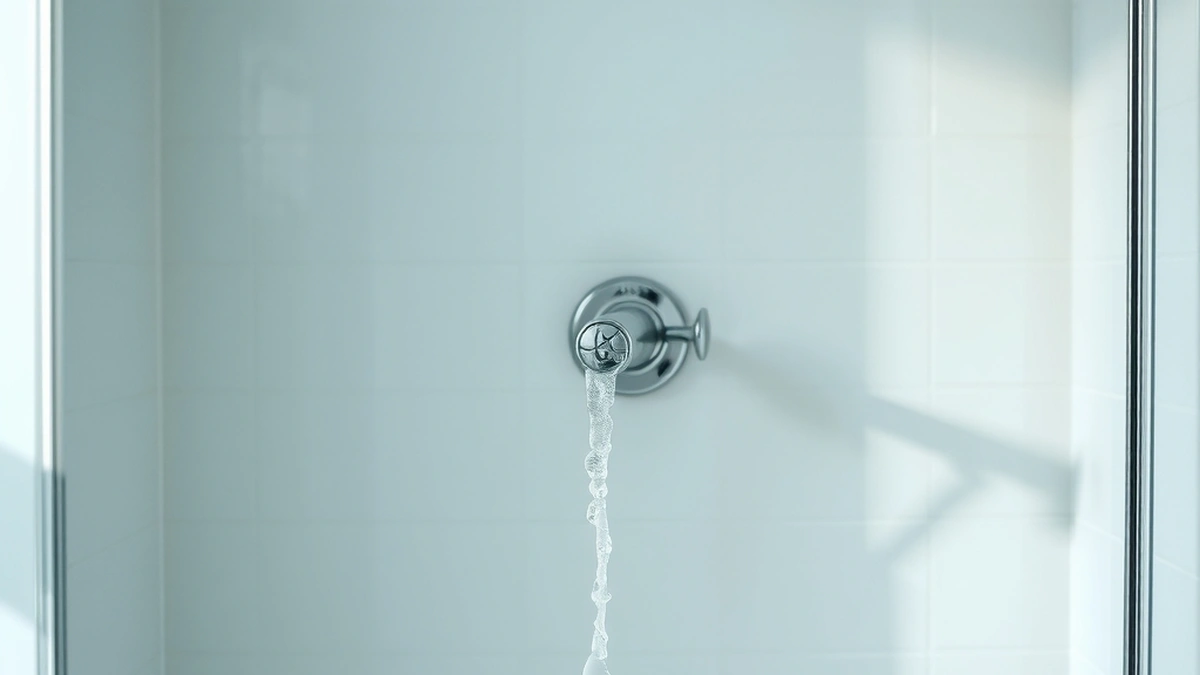
Hard water stains are mineral deposits of calcium carbonate and magnesium that remain when hard water evaporates or heats. They show as white chalky spots on fixtures and cloudy film on glass, and they return until the water is softened or the surface is kept dry.
- Soft water
- 0 - 3 GPG
- Hard water
- 7 - 10 GPG
- Very hard
- 10+ GPG
- Lab water test
- $40 - $150
- Softener installed
- $1,200 - $4,500
Some links on this page are affiliate links.If you buy through them we may earn a commission at no extra cost to you. We do not accept payment for rankings. Read the full disclosure.
Hard water stains are mineral deposits left behind when water containing calcium and magnesium evaporates or is heated. They appear as white or grey chalky spots on fixtures and a cloudy film on glass. The deposit is calcium carbonate, and it returns every time the surface gets wet and dries.
The Chemistry of a Stain
Hard water carries dissolved calcium and magnesium bicarbonates. While the minerals stay dissolved, the water looks clear. When the water evaporates or is heated, the bicarbonate converts to carbonate, which is only slightly soluble, and precipitates as a solid.
That solid is scale. On a faucet, it builds in rings around the aerator. On a shower door, it forms a haze that ordinary glass cleaner smears instead of removing. In a water heater, it coats the elements and the tank floor.
The reaction is reversible with acid. Vinegar, citric acid, and phosphoric acid convert calcium carbonate back into a soluble salt that rinses away. That is why every effective hard water stain remover smells sour.
Telling One Stain From Another
Not every white mark is hardness, and not every stain responds to the same cleaner. Misidentifying the deposit wastes time and can damage a surface.
| Appearance | Likely cause | Test | Remover |
|---|---|---|---|
| White, chalky, rings | Calcium carbonate | Fizzes with vinegar | Acid cleaner |
| Grey or cloudy film on glass | Scale plus soap residue | Vinegar softens it | Acid plus surfactant |
| Orange or red-brown | Iron | Stains porcelain, not glass | Reducing agent or iron remover |
| Black or dark grey | Manganese | Often with iron | Oxidizing cleaner |
| Blue-green | Copper corrosion | Low pH water | Plumbing fix first |
| White powder on basement wall | Efflorescence | Not from fixtures | Moisture control |
Iron is the most common confusion. A rust-colored ring around a drain is not hardness, and vinegar makes it worse by setting the stain. Iron needs a reducing agent such as oxalic acid or a dedicated iron remover, and the water needs an iron filter rather than a softener alone.
Where the Stains Show Up First
Stains appear where water sits and dries. The shower door, the faucet aerator, the toilet bowl water line, the dishwasher interior, and the bottom of a drinking glass are the usual first locations.
The water heater is the expensive one. Scale on a heating element acts as insulation, so the element runs longer to heat the same water. A gas burner heats a layer of rock instead of a tank of water. The energy penalty grows as the layer thickens.
Appliances follow. Washing machine inlet screens clog, dishwasher spray arms lose pressure, and coffee makers brew slower. None of those failures is dramatic, and all of them are the same deposit in a different housing.
What the Hardness Number Tells You
Hardness is measured in grains per gallon. The bands are 0 - 3 GPG soft, 3 - 7 moderately hard, 7 - 10 hard, and 10+ very hard.
| Hardness | Staining pattern |
|---|---|
| 0 - 3 GPG | Little visible deposit |
| 3 - 7 GPG | Light spotting, occasional film |
| 7 - 10 GPG | Regular ring and haze |
| 10+ GPG | Heavy crust within weeks |
A home at 12 GPG can see a new ring on the shower head within two weeks of cleaning. A home at 4 GPG might see light spotting after a month. The cleaning effort scales with the number, which is why the test comes before the purchase.
A lab panel costs $40 - $150 and reports hardness along with iron, manganese, and pH. Those extra numbers matter because iron above 2 - 3 PPM exceeds what a softener handles and changes the treatment plan.
Preventing the Next Stain
The permanent fix is to remove the minerals before they reach the fixture. An ion-exchange softener at $1,200 - $4,500 installed does that for the whole house. A salt-free conditioner at $500 - $1,800 installed changes how the minerals crystallize but does not remove them, so some spotting may continue.
Cheaper habits help between cleanings. Squeegee the shower door after every use, dry the faucet with a cloth, and run a vinegar cycle through the coffee maker monthly. Those reduce the deposit but do not eliminate it.
A practical cleaning order for a stained bathroom:
- Identify the deposit with a vinegar drop; fizzing means carbonate.
- Soak the surface with an acid cleaner and give it 20 minutes.
- Agitate with a non-scratch pad, then rinse and dry.
- Repeat on heavy rings rather than scrubbing harder.
- Squeegee and dry the surface after every use to slow the next deposit.
When to Stop Cleaning and Fix the Water
Clean the same surface three times in a month and the arithmetic changes. A $10 bottle of descaler used monthly costs $120 a year and never solves the source. A softener costs $1,200 - $4,500 installed plus $120 - $400 a year in salt, and it stops the deposit at every fixture.
The crossover is not purely financial. It is the difference between maintaining a surface and maintaining a system. If the stains are confined to one shower and the hardness tests at 4 GPG, keep cleaning. If they appear on every fixture and the test reads 12 GPG, the softener is the cheaper answer over the equipment’s 10 - 15 year life.
For the cleaning methods themselves, see remove hard water stains. For the treatment decision, see how to treat hard water and water softener cost. If the stains are on glass specifically, how to remove hard water stains from glass covers the safe sequence.
Frequently asked questions
What are hard water stains made of?
Mostly calcium carbonate, with magnesium compounds and traces of silica. They form when dissolved minerals precipitate as water evaporates or is heated.
Are hard water stains harmful?
They are a cosmetic and maintenance issue, not a health hazard. The bigger concern is scale inside water heaters and pipes, which reduces efficiency over time.
How do I tell hard water stains from iron stains?
Hardness stains are white or grey and chalky. Iron stains are orange, red, or brown. A water test separates the two, and they need different treatments.
Do hard water stains come back after cleaning?
Yes, unless the water is treated or the surface is dried after each use. Cleaning removes the deposit, but the next wet-dry cycle starts a new one.
Can vinegar damage fixtures?
White vinegar is safe on glass, chrome, and porcelain for short soaks. Avoid it on natural stone, marble, and some coated finishes, where acid etches the surface.
Does a water softener remove existing stains?
No. A softener prevents new deposits, but old scale needs to be dissolved with an acid cleaner or a chelating product before the softener can keep it from returning.
Sources
Some links are affiliate links.If you buy through them we may earn a commission at no extra cost to you. We do not accept payment for rankings. Read the full disclosure.