
RO Water and Minerals: What You Lose and Whether It.
RO Water and Minerals: What You Lose and Whether It Matters: practical numbers, costs, and trade-offs, written independently.
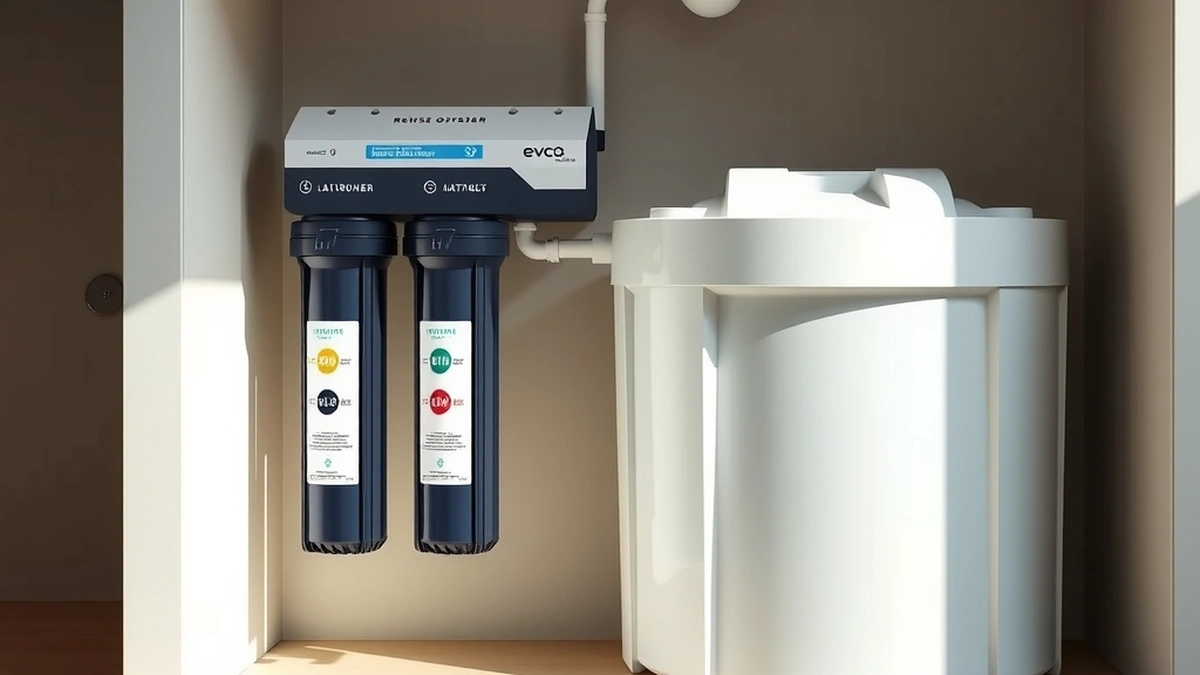
RO removes 80-95% of dissolved minerals including calcium and magnesium. Whether that matters depends on your diet, local water hardness, and whether you prefer mineral taste.
- Typical RO rejection rate
- 80-95%
- Under-sink RO equipment
- $200-$600
- Under-sink RO installed
- $300-$900
- Annual RO running cost
- $60-$150
- Membrane life
- 2-3 years
Some links on this page are affiliate links.If you buy through them we may earn a commission at no extra cost to you. We do not accept payment for rankings. Read the full disclosure.
Reverse osmosis removes most dissolved minerals from drinking water, including calcium and magnesium. Whether that loss matters depends on your diet, your local water hardness, and whether you miss the taste of mineralized water. For most households, the minerals in drinking water are a small fraction of total intake compared with food.
What RO Actually Removes
Reverse osmosis uses a semipermeable membrane to separate dissolved solids from water. Standard residential membranes reject 80-95% of total dissolved solids (TDS), which includes hardness minerals such as calcium and magnesium, along with sodium, potassium, and trace metals.
What gets removed or reduced:
- Calcium and magnesium: 80-95% rejection, depending on membrane age and pressure
- Sodium: 80-95% rejection
- Potassium and trace minerals: 80-95% rejection
- Dissolved solids overall: 80-95% rejection
RO does not remove 100% of anything. A small percentage of dissolved minerals passes through the membrane, so RO water is not chemically pure distilled water. It is low-mineral water.
If your source water tests at 200 parts per million (ppm) TDS, an RO system operating at 90% rejection would deliver water around 20 ppm TDS. If your source water is 400 ppm, the same system might deliver roughly 40 ppm. These are estimates; actual output depends on feed pressure, temperature, and membrane condition.
Does Your Body Need Minerals From Water?
Calcium and magnesium are essential nutrients, but drinking water is not the primary source for most people. A glass of milk, a serving of yogurt, or a portion of leafy greens typically supplies more calcium than a day’s worth of tap water. Magnesium comes from nuts, grains, and vegetables in quantities that usually exceed what water contributes.
Hard water can contribute measurable minerals. At 7 grains per gallon (gpg), water contains roughly 120 ppm of calcium carbonate equivalent. Drinking two liters of that water daily might add a modest amount of calcium and magnesium, but it is still a secondary source compared with food.
If your diet includes varied sources of calcium and magnesium, losing those minerals from drinking water is unlikely to create a nutritional gap. If your diet is limited or your local water was a major mineral source, the change is more noticeable, though still not a medical condition by itself.
Taste, pH, and Plumbing Effects
Minerals affect taste. Water with calcium and magnesium often tastes fuller or slightly sweet to some drinkers. RO water can taste flat or flat because dissolved solids are low. Some households notice the difference immediately; others do not.
RO can also lower pH slightly by removing bicarbonate alkalinity. Lower pH water may be more corrosive to certain plumbing materials over long periods, though under-sink RO systems typically feed a dedicated faucet and short tubing run, limiting exposure.
If you connect RO water to ice makers, coffee makers, or humidifiers, low mineral content reduces scale buildup. That is often a benefit, not a drawback. For whole-house RO, low-mineral water throughout the plumbing can change how water interacts with pipes and water heaters, which is one reason whole-house RO costs $3,000-$8,000 installed and usually requires careful design.
Remineralization: Cost and Tradeoffs
Some RO systems include a remineralization stage that passes product water through a cartridge containing calcium and magnesium media. This adds back some hardness and can raise pH and improve taste.
A remineralization cartridge is an additional consumable. Replacement frequency and cost vary by cartridge size and water volume. It also adds a small amount of pressure drop to the system. You are essentially paying to put back minerals that the RO membrane removed, which adds cost to an already multi-stage process.
Whether remineralization is worth it depends on taste preference, not nutrition. If you like the flavor of mineral water or want to reduce flatness in coffee or tea, a remineralization stage can help. If you drink RO water plain and do not notice a taste difference, you can skip it.
RO Costs vs. Softener Costs
RO is a drinking-water treatment, not a whole-house hardness solution. If your goal is to protect pipes, water heaters, and fixtures from scale, a water softener treats all water entering the home. Equipment ranges from $600-$2,500, with installed costs of $1,200-$4,500. Salt runs $120-$400 per year, and resin beds cost $300-$600 to replace after roughly 8-12 years. Softener capacity ranges from 24,000-64,000 grains, using 8-12 pounds of salt per regeneration. Softener life is typically 10-15 years.
An under-sink RO system costs $200-$600 for equipment and $300-$900 installed. Running costs are $60-$150 per year, with membrane replacement every 2-3 years. The waste ratio is 3-4:1, meaning three to four gallons of water go to drain for every gallon of product water.
If you have hard water and want both softened household water and RO drinking water, the two systems serve different purposes. You can read more about how much does a water softener cost and water softener installation cost for whole-house pricing. For RO-specific pricing, see reverse osmosis system cost.
When to Test First
Before buying RO, test your water. A lab test costs $40-$150 and tells you TDS, hardness, iron, nitrate, and other parameters. If nitrate is at or near the EPA limit of 10 mg/L, RO is one treatment option because it rejects dissolved ions. If iron is above 2-3 ppm, a softener alone may not be sufficient, and pretreatment may be needed before RO to protect the membrane.
Testing also establishes a baseline. If your water is already soft (0-3 gpg), RO is not solving a hardness problem; it is only reducing dissolved solids for drinking water. If your water is very hard (10+ gpg), RO will remove hardness minerals at the tap, but it is not a substitute for a whole-house softener if scale protection is the goal.
Bottom Line
RO removes 80-95% of dissolved minerals, including calcium and magnesium. For most people, that loss is not nutritionally significant because food supplies the majority of these minerals. The practical effects are taste and, in some cases, slight pH change.
Remineralization is optional and mainly about flavor. If you want mineral taste, add a cartridge. If you do not notice a difference, skip the extra cost and maintenance. Test your water first, then decide whether RO, a softener, both, or neither fits your household and budget.
Frequently asked questions
Does RO remove all minerals?
No. RO rejects 80-95% of dissolved solids, so trace minerals may pass through depending on the membrane and feed water chemistry.
Is demineralized RO water unsafe to drink?
RO water meets drinking standards when the source water is safe. Most dietary minerals come from food, not drinking water.
How much calcium does RO remove?
RO can reject 80-95% of dissolved calcium, though actual removal varies by membrane condition, pressure, and feed concentration.
Should I add minerals back after RO?
Only if you prefer the taste of mineral water or want to adjust pH for plumbing. It is not a medical requirement for most households.
How often does an RO membrane need replacement?
Every 2-3 years on average, depending on feed water quality, usage, and prefilter maintenance.
Where can I find local help?
Ask a licensed contractor or installer who has worked with the same system and can inspect your site.
Sources
Some links are affiliate links.If you buy through them we may earn a commission at no extra cost to you. We do not accept payment for rankings. Read the full disclosure.


