How to Read a Water Test Report: A Homeowner's Guide
A numbers-first guide to reading water test results, matching contaminants to treatment options, and estimating installed costs.
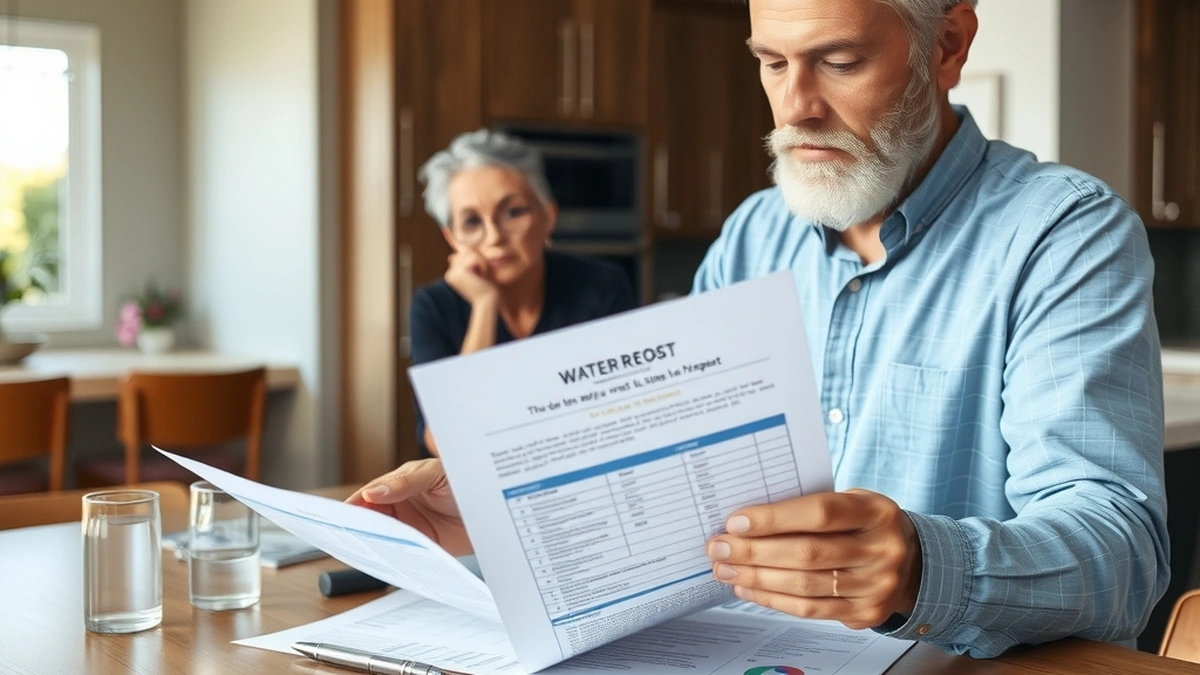
Match each contaminant on your lab report to its unit and limit, then size treatment by grain capacity, flow rate, or removal rate—not by brand claims.
- Lab test cost
- $40–$150
- Hardness units
- GPG or mg/L (ppm)
- Softener equipment
- $600–$2,500
- Softener installed
- $1,200–$4,500
- Whole-house filter flow
- 8–15 GPM
Some links on this page are affiliate links.If you buy through them we may earn a commission at no extra cost to you. We do not accept payment for rankings. Read the full disclosure.
A water test report lists contaminants, units, and measured levels so you can match equipment to actual water chemistry. Start by checking the units on each line, then compare results to common thresholds such as hardness grains per gallon or the 10 mg/L nitrate limit. Equipment selection follows the numbers, not the other way around.
1. Start With the Lab Header and Sample Details
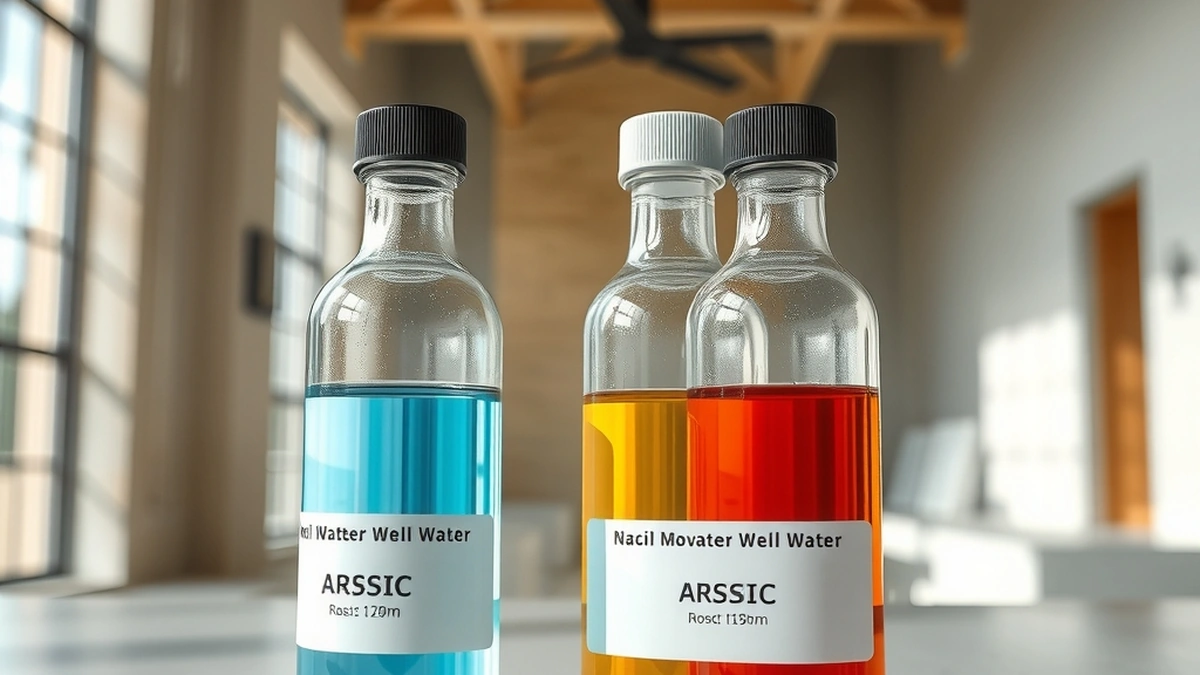
Every report should identify the lab, sample collection date, sample location, and the analytical method used. If you are on a private well, the EPA recommends testing at least once a year for bacteria, nitrate, and any local contaminants of concern. A basic lab test typically costs $40–$150, which is a small fixed cost compared with treatment equipment that can run from hundreds to several thousand dollars installed.
Check whether results are reported as “total” or “dissolved,” because that affects which technology is appropriate. For example, dissolved iron may pass through a sediment filter but require oxidation or ion exchange, while particulate iron is often removable with filtration alone. Note the reporting limit as well; a result listed as “< 0.5 mg/L” means the contaminant was below the lab’s detection threshold, not necessarily zero.
2. Read Hardness in Grains Per Gallon
Hardness is usually reported as calcium carbonate in mg/L (ppm) or in grains per gallon (GPG). To convert mg/L to GPG, divide by 17.1. A result of 171 mg/L equals 10 GPG, which sits at the boundary between hard and very hard water.
Common hardness classifications are:
- Soft: 0–3 GPG
- Moderate: 3–7 GPG
- Hard: 7–10 GPG
- Very hard: 10+ GPG
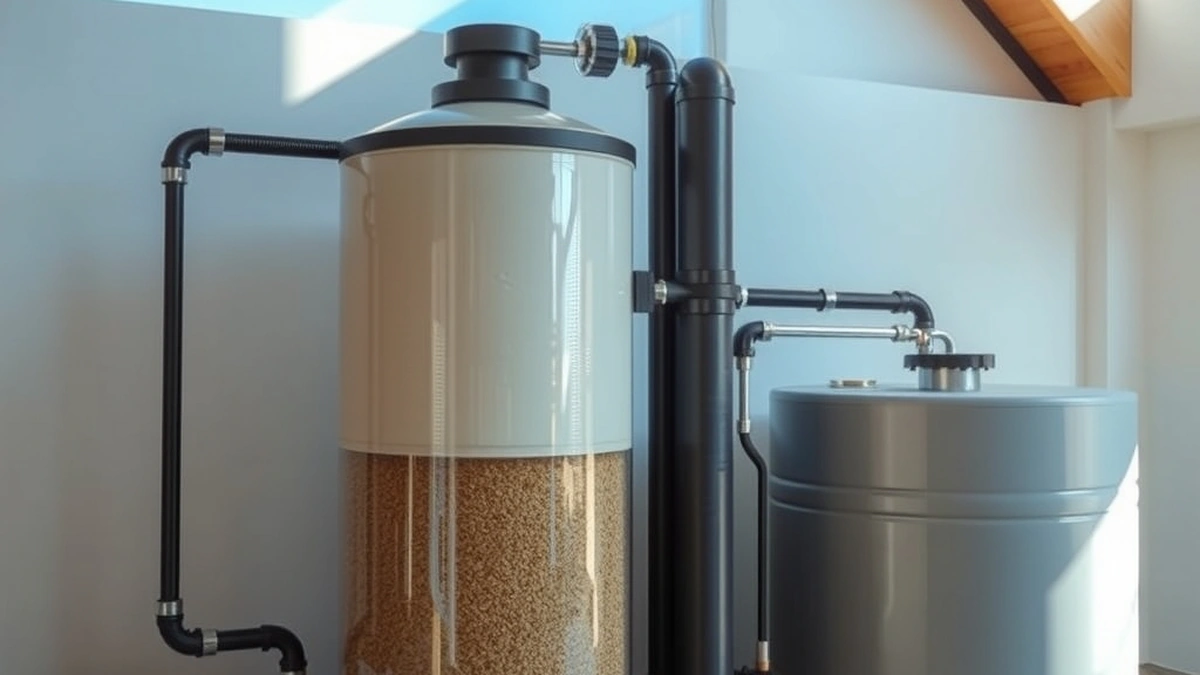
Hardness drives water softener sizing. A softener is rated by grain capacity, commonly 24,000–64,000 grains per regeneration cycle. To estimate daily grain removal, multiply household people by 75 gallons per day, then by hardness in GPG. For a four-person home with 10 GPG hardness: 4 × 75 × 10 = 3,000 grains per day. A 32,000-grain softener would theoretically regenerate every 10 to 11 days before efficiency and reserve factors are applied.
Softener equipment costs $600–$2,500, with installation adding $500–$1,500, for a total installed range of $1,200–$4,500. Salt typically runs $120–$400 per year, and resin rebeds cost $300–$600 every 8–12 years. Equipment life is usually 10–15 years. For more detail, see our breakdown of how much a water softener costs and water softener installation cost.
3. Check Iron Against Softener Limits
Iron is reported in ppm or mg/L, which are numerically equivalent for dilute water solutions. Many softeners can handle only 2–3 ppm of dissolved iron alongside hardness. If your report shows iron above that range, a softener alone may foul or require frequent resin cleaning.
Iron filter systems typically cost $800–$2,500 installed. If your report shows 5 ppm iron and 10 GPG hardness, you may need both an iron filter upstream and a softener sized for the hardness load. Sulfur or hydrogen sulfide, often noticed as a rotten-egg odor, may require separate treatment; sulfur filter systems run $1,000–$3,000 installed. More information is available in our iron filter cost guide.
4. Review Nitrate Against the 10 mg/L Limit
The nitrate limit is 10 mg/L. This is a hard regulatory benchmark, not a soft preference. If your report shows nitrate at or above 10 mg/L, standard softeners, carbon filters, and sediment filters will not remove it. Reverse osmosis is one common point-of-use option for nitrate reduction.
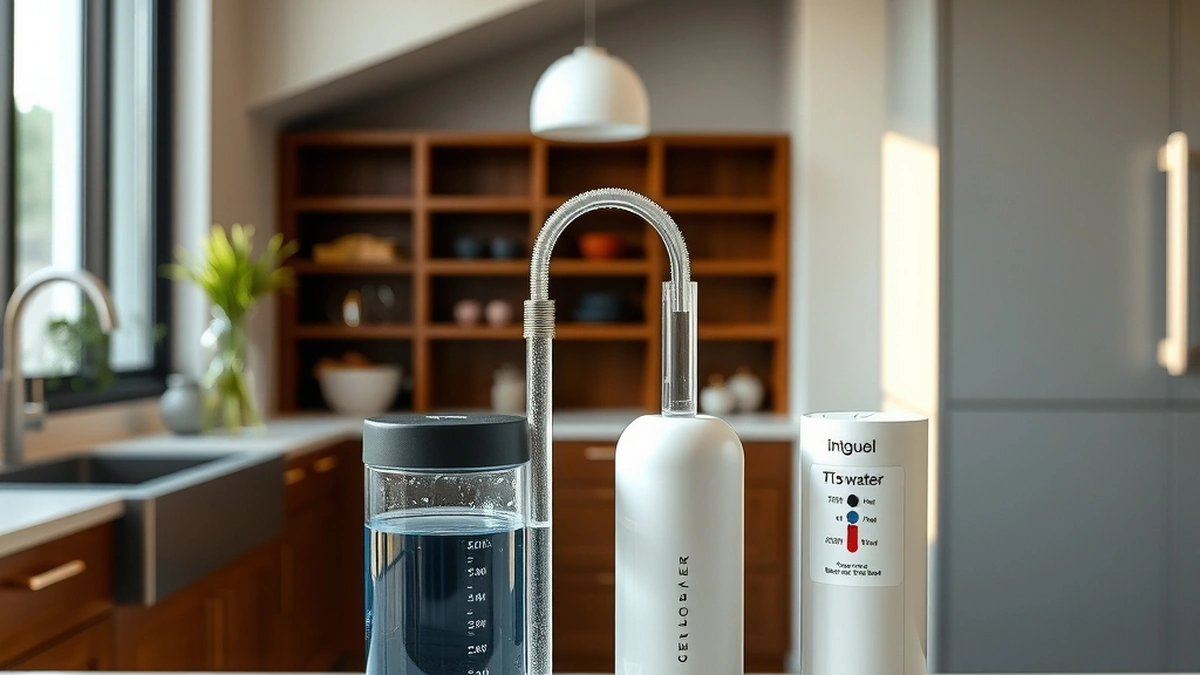
An under-sink RO system costs $200–$600 for equipment and $300–$900 installed. Running costs average $60–$150 per year for filters and membrane replacement. RO membranes typically last 2–3 years. Systems often reject 80–95 percent of dissolved solids and produce wastewater at roughly a 3–4:1 ratio, meaning three to four gallons of drain water for every gallon of product water. Whole-house RO is substantially more expensive, at $3,000–$8,000 installed, and is usually reserved for specific whole-house needs. See our reverse osmosis system cost article for installed pricing context.
5. Interpret pH, TDS, and Secondary Indicators
pH is reported on a standard scale with no unit. Low pH water can be corrosive to plumbing, while high pH may contribute to scaling. These numbers help determine whether you need neutralization equipment in addition to softening or filtration.
Total dissolved solids (TDS), reported in ppm or mg/L, is a general indicator of dissolved mineral content but does not identify specific contaminants. A TDS reading of 500 ppm is not inherently unsafe, and a reading of 50 ppm is not inherently better for every purpose. Use TDS as a trend line: if it climbs between annual tests, something in the water source or plumbing may be changing.
Other common report items include manganese, chloride, sulfate, and hardness minerals such as calcium and magnesium. Treat each line independently. A high chloride reading does not mean you need a softener, and a high hardness reading does not mean you need a carbon filter.
6. Match Results to Equipment Types
Once you know what is in the water, match the contaminant to a treatment category:
- Hardness above 3–7 GPG: water softener, sized by grain capacity
- Iron above 2–3 ppm: iron filter or specialized media, often before softening
- Nitrate at 10 mg/L or higher: RO or anion exchange at point of use or entry
- Chlorine taste and odor: activated carbon, typically $500–$1,800 installed for whole-house systems
- Sediment or turbidity: pleated or spun-polypropylene cartridges, usually replaced every 3–6 months
- Bacteria: UV disinfection, with lamps replaced every 12 months at $30–$90 per lamp
Carbon cartridges cost $80–$300 per year and last 6–12 months. Whole-house filters commonly operate at 8–15 GPM, so match the system to your peak household flow rather than average use. If your report shows multiple issues, equipment may be staged in sequence: sediment first, then iron or carbon, then softener or RO as needed. For broader pricing, see our whole-house water filter cost overview.
7. Turn the Report Into a Purchase List
Write down each contaminant that exceeds a common threshold, its unit, and the required flow rate or capacity. Then request equipment quotes based on those numbers, not on a dealer’s standard package. Ask for grain capacity, removal rates, installed cost, and cost per gallon or per year. Compare those figures against the ranges above before signing anything.
A lab test costing $40–$150 is the cheapest step in the process. Equipment decisions made without test data often result in oversized systems, unnecessary media, or the wrong technology entirely. Read the report first, calculate the load second, and buy equipment third.
Frequently asked questions
What is the first step before buying equipment?
Order a lab water test and read the report before selecting any treatment system.
How do I convert mg/L to grains per gallon?
Divide mg/L (as CaCO3) by 17.1 to get GPG; for example, 171 mg/L equals 10 GPG.
What hardness range is considered very hard?
Water above 10 GPG is classified as very hard under standard hardness scales.
Can a softener remove high iron?
Many softeners handle only 2–3 ppm of iron; higher levels usually need a dedicated iron filter.
What is the EPA action limit for nitrate?
The nitrate limit is 10 mg/L; results at or above that level require treatment before use.
How often should carbon cartridges be replaced?
Carbon cartridges typically need replacement every 6–12 months depending on usage and water quality.
Sources
Some links are affiliate links.If you buy through them we may earn a commission at no extra cost to you. We do not accept payment for rankings. Read the full disclosure.