Bacteria in Water Treatment: UV, Chlorine, or Both
Bacteria treatment depends on the source: shock chlorination for a one-time hit, UV or continuous chlorine for ongoing control. Compare costs and limits.
Bacteria in water are treated by shock chlorination for a one-time contamination, then UV or continuous chlorination for ongoing control. UV costs $400 - $1,200 installed with a $30 - $90 lamp every 12 months, and it only works in clear water.
- Shock chlorination
- $200 - $500
- UV system
- $400 - $1,200 installed
- UV lamp
- $30 - $90 every 12 months
- Chlorine injection
- $1,500 - $3,000
- Lab test
- $20 - $50
Some links on this page are affiliate links.If you buy through them we may earn a commission at no extra cost to you. We do not accept payment for rankings. Read the full disclosure.
Bacteria in water are treated in two stages: a shock dose to clear the current contamination, then a barrier to prevent the next one. UV and continuous chlorination are the common barriers. UV costs $400 - $1,200 installed and needs clear water to work.
Start With the Test Result
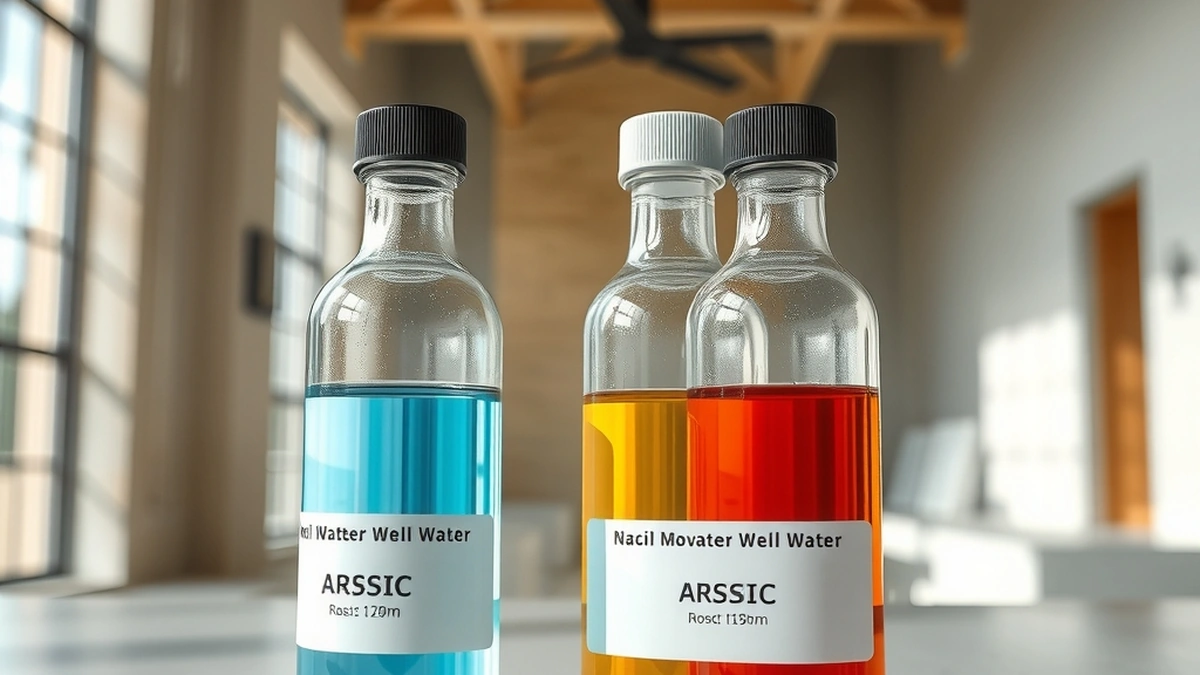
A bacteria test reports total coliform and E. coli. Total coliform is a broad group that includes soil organisms; E. coli is a more specific indicator.
A positive total coliform result means surface water or soil may be reaching the well. That points to the casing, cap, or grout before it points to a filter.
E. coli is the more serious result and calls for immediate action: stop drinking the water, shock chlorinate, and retest.
Shock Chlorination
Shock chlorination disinfects the well, the pump, the drop pipe, and the plumbing. The process uses a calculated dose of chlorine based on the well volume and the water depth.
The chlorine is added, circulated through the system, and left for 12 - 24 hours. Then the well is flushed until the chlorine residual clears, and a sample is taken.
A contractor charges $200 - $500. A homeowner can do it with guidance, a test kit, and care with the chlorine.
UV Disinfection
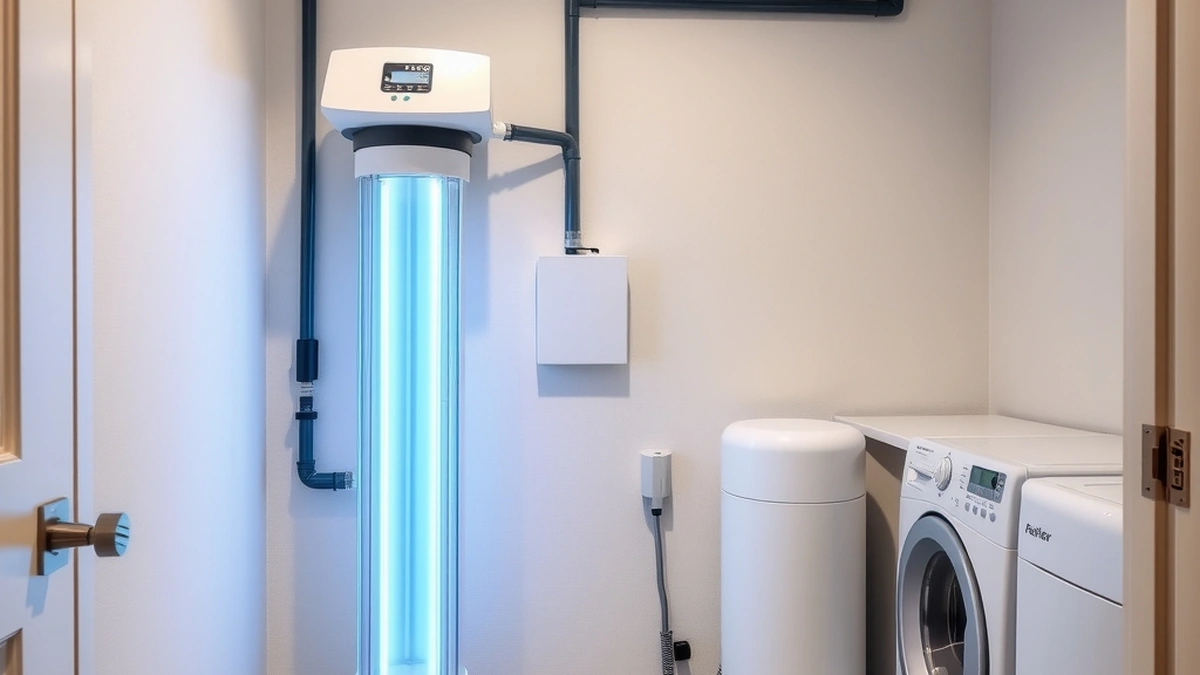
A UV system passes water through a chamber with an ultraviolet lamp. The light damages microbial DNA, which prevents reproduction.
The units cost $400 - $1,200 installed and use a lamp that must be replaced every 12 months at $30 - $90. The lamp loses output before it visibly fails.
UV only works in clear water. Sediment, iron, and manganese shield microbes from the light, so a sediment prefilter at $150 - $600 is usually part of the installation.
Continuous Chlorination
A chemical injection system adds a low dose of chlorine continuously, with a contact tank to give it time to work. It costs $1,500 - $3,000 installed.
It suits a well that cannot be kept clean, a supply with iron bacteria, or a system where UV is impractical because the water is turbid.
The tradeoff is maintenance: a chemical tank to fill, a pump to service, and chlorine residual to monitor.
Comparison
| Method | Cost | Ongoing cost | Works in turbid water |
|---|---|---|---|
| Shock chlorination | $200 - $500 | None | Yes, for the shock |
| UV | $400 - $1,200 | $30 - $90 per lamp | No |
| Chlorine injection | $1,500 - $3,000 | Chemical and service | Yes |
| Ozone | $1,000 - $2,500 | Lamp or generator service | Partly |
| Boiling | Minimal | Energy | Yes, emergency only |
Ozone is a strong oxidant and disinfectant, used in some whole-house systems. It is less common than UV and needs more service.
Boiling is the emergency method. It disinfects a pot of water, and it does not protect a household from a contaminated supply.
Sequencing the Treatment Train
- Test the water for bacteria, nitrate, iron, and hardness.
- Fix the wellhead: cap, casing, grout, and grading.
- Shock chlorinate and retest after the chlorine clears.
- Install a sediment prefilter.
- Install UV after the prefilter and any iron treatment.
- Retest quarterly for the first year.
- Repeat the annual bacteria test every year.
UV goes last because it needs clear water. Iron treatment and softening go ahead of it, and carbon goes ahead of it as well, because carbon can harbor biofilm if it is downstream.
Costs Over Ten Years
A UV system at $800 installed plus a $60 lamp each year costs $1,400 over ten years, plus a prefilter at $300 - $600 and cartridges at $60 - $120 a year.
A chlorine injection system at $2,000 installed plus $300 a year in chemical and service costs $5,000 over ten years.
Shock chlorination at $300 every few years is cheaper, but it is a response rather than a barrier, and it does not prevent recurrence.
Prevention Beats Treatment
Most well contamination starts at the wellhead. A cracked cap, a loose seal, or ground that slopes toward the casing lets surface water in.
Keep the cap sealed, grade the soil away from the well, and do not store chemicals or fuel near it. Those steps cost little and prevent the problem that the equipment is installed to manage.
A wellhead inspection is worth doing once a year with the annual test. Look at the cap for cracks, check that the casing rises above grade, and confirm the ground slopes away. A $20 cap is cheaper than a $300 shock treatment and a week of boiling water.
The plumbing matters too. A dead-end run, an unused fixture, or a water softener that sits idle can harbor biofilm. Running every tap occasionally and keeping the softener in service reduces the places bacteria can settle.
Finally, keep records. The date of each shock treatment, the test results, and any well work belong in one folder. A contractor can diagnose a recurring problem much faster with that history than with a single sample.
A simple log with five columns covers it: date, test type, result, action taken, and cost. Ten years of entries is a small page and a strong negotiating document at resale, where a buyer’s inspector will ask for exactly that history.
Shock chlorination also has limits worth stating. It disinfects the water and the wetted surfaces, and it does not repair a cracked casing or remove a source of contamination. A well that tests positive twice in a year needs a contractor, not a third jug of chlorine.
For the testing side, see bacteria in water test. For the well, see shock chlorinate well. For the UV hardware, see uv water sterilizer and uv lamp replacement.
Frequently asked questions
What is the best treatment for bacteria in well water?
Shock chlorination clears a one-time contamination. For ongoing protection, UV is the common choice, and continuous chlorination is used when the source cannot be kept clean.
Does UV kill bacteria in water?
UV disinfects water as it passes the lamp by damaging microbial DNA. It works only in clear water, so sediment and iron must be filtered out first.
How much does a UV system cost?
Installed cost is $400-$1,200, plus a lamp every 12 months at $30-$90. A prefilter is often required and adds $150-$600.
Can I shock chlorinate a well myself?
Many homeowners do, following local guidance. It requires calculating the well volume, adding chlorine, circulating, and flushing until the residual clears.
Why did bacteria come back after shocking?
A compromised casing, a loose cap, or a persistent source can reintroduce bacteria. Repeat contamination points to a well repair rather than another shock.
Is boiling water enough?
Boiling disinfects water for drinking in an emergency. It is not a household treatment system and does not solve the source of contamination.
Sources
Some links are affiliate links.If you buy through them we may earn a commission at no extra cost to you. We do not accept payment for rankings. Read the full disclosure.