
How a UV Water Steriliser Works: UV Treatment Basics
UV water sterilizers use ultraviolet light to inactivate microorganisms. Learn how the system works, lamp life, and what it costs.
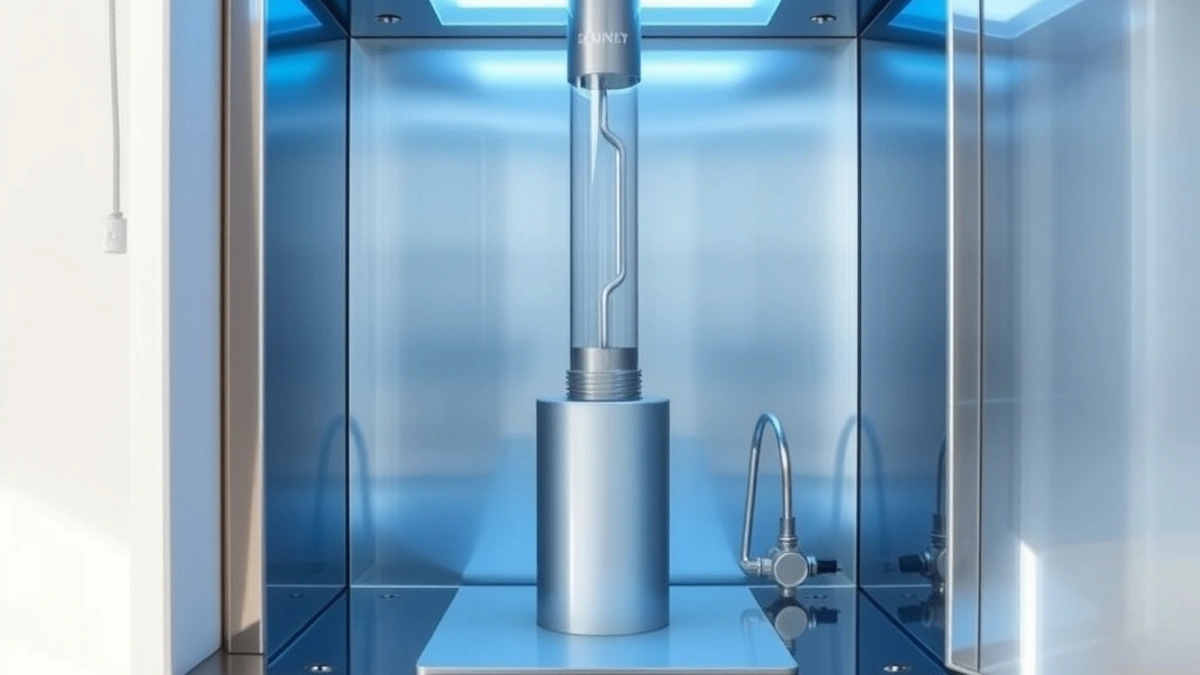
A UV water sterilizer exposes water to ultraviolet light as it flows through a chamber, inactivating microorganisms without adding chemicals.
- Lamp replacement
- Every 12 months
- Lamp cost
- $30–$90
- Chamber material
- Stainless steel
- Flow rate
- Depends on model
Some links on this page are affiliate links.If you buy through them we may earn a commission at no extra cost to you. We do not accept payment for rankings. Read the full disclosure.
A UV water sterilizer treats water by passing it through a chamber where ultraviolet light inactivates microorganisms. The UV lamp sits inside a quartz sleeve, and water flows around the sleeve so every drop receives a measured dose of light. Unlike chemical treatment, UV adds nothing to the water and changes no taste or odor.
How UV Treatment Works
UV sterilization uses short-wavelength ultraviolet light, typically at 254 nanometers, to disrupt the DNA of bacteria, viruses, and cysts. When microorganisms absorb this energy, they cannot reproduce, which removes their ability to cause infection. The process is physical, not chemical, so no disinfectant residual remains in the water after treatment.
A standard residential UV system includes four main parts:
- UV lamp – produces the ultraviolet light
- Quartz sleeve – protects the lamp from water while transmitting UV
- Stainless steel chamber – holds water as it flows past the lamp
- Ballast or controller – regulates power to the lamp and often includes a lamp-life timer
Water enters the chamber, flows around the quartz sleeve, and exits treated. Flow rate matters because UV dose equals UV intensity multiplied by contact time. If water moves too fast, microorganisms may not receive enough exposure. Manufacturers rate each chamber for a maximum flow rate, usually in gallons per minute, and exceeding that rating reduces effectiveness.
What UV Does and Does Not Treat
UV targets microorganisms only. It does not remove hardness, dissolved minerals, iron, sediment, chlorine, or volatile organic compounds. Water quality before the UV chamber determines whether the system can work properly.
Key pretreatment requirements include:
- Hardness: High hardness can cause scale on the quartz sleeve, blocking UV transmission. A water softener may be needed first; installed softener costs typically range from $1,200 to $4,500 depending on capacity and labor.
- Iron: Iron above 0.3 ppm can stain the sleeve and shield organisms. Iron filter systems generally install for $800 to $2,500.
- Sediment: Particles can shadow microorganisms from UV light. A sediment filter is standard pretreatment.
- Turbidity: Cloudy water reduces UV transmittance and should be filtered ahead of the sterilizer.
If your water comes from a private well, a lab water test usually costs $40 to $150 and helps confirm whether UV is appropriate or whether additional treatment is required.
UV Lamp Life and Maintenance
UV lamps do not last forever. Even if the lamp continues to glow blue, its UV output declines over time. Most residential lamps are rated for about 12 months of continuous operation.
Annual maintenance typically includes:
- Replacing the UV lamp: $30 to $90 per lamp
- Cleaning or replacing the quartz sleeve if fouled
- Checking pre-filter cartridges, usually every 3 to 6 months for sediment cartridges
Arithmetic example: If a lamp costs $60 and a quartz sleeve cleaning kit costs $20, annual consumable costs run about $80, not including electricity or pre-filter cartridges. Over 10 years, lamp replacement alone totals roughly $600 to $900.
System Sizing and Flow Rates
UV chambers are sized by flow rate and UV transmittance. A whole-house UV system for an average home might be rated for 10 to 15 gallons per minute, matching typical whole-house filter capacity. Point-of-use units for a single faucet are rated lower, often around 1 to 5 gallons per minute.
To size a system, add the flow rates of fixtures that might run simultaneously. For example, a shower at 2.5 GPM plus a kitchen faucet at 1.5 GPM equals 4 GPM. The UV chamber should exceed that combined flow with margin for pressure drop.
UV dose is measured in millijoules per square centimeter (mJ/cm²). Common residential systems deliver 30 mJ/cm² or more at their rated flow, which is sufficient for most common microorganisms when water quality is within specification.
UV Compared With Other Treatment Methods
UV does not replace filtration or softening. It works alongside them. Here is how UV fits into a typical treatment stack:
| Treatment | Primary Target | Installed Cost Estimate | Ongoing Cost |
|---|---|---|---|
| Sediment filter | Particles | $500–$1,800 | Cartridge $80–$300 per year |
| Water softener | Hardness minerals | $1,200–$4,500 | Salt $120–$400 per year |
| Carbon filter | Chlorine, VOCs, taste | $500–$1,800 | Cartridge $80–$300 per year |
| Reverse osmosis | Dissolved solids, drinking water | $300–$900 under-sink | $60–$150 per year |
| UV sterilizer | Microorganisms | Varies by model | Lamp $30–$90 per year |
A whole-house reverse osmosis system costs roughly $3,000 to $8,000 installed and treats all water entering the home, but it produces waste water at a ratio of about 3 to 4 gallons of waste per gallon of product. UV produces no waste water and does not require a drain connection, though it does require electricity.
Installation Considerations
UV systems are usually installed after the pressure tank on well water or after the main shutoff on municipal water. They should be placed after any sediment or softening equipment and before the water enters the home’s plumbing distribution.
Electrical power is required for the ballast. Most residential units plug into a standard 120-volt outlet. The chamber should be mounted vertically or horizontally per manufacturer instructions, with enough clearance to remove the lamp and quartz sleeve for service.
If the home loses power, the UV system stops treating water. Some homeowners pair UV with a storage tank or backup power if uninterrupted treatment is critical.
Costs to Expect
Equipment prices vary by flow rate, chamber size, and features such as lamp-out alarms or UV sensors. Installed cost depends on local plumbing labor and whether pretreatment is needed.
Lamp replacement is the main recurring expense. At $30 to $90 per lamp every 12 months, annual lamp cost is predictable. Pre-filter cartridges add $80 to $300 per year depending on type and replacement frequency. Electricity use is small, typically comparable to a light bulb or small appliance.
For context, a water softener costs $600 to $2,500 for equipment and $500 to $1,500 for installation, with salt running $120 to $400 per year. A carbon filter installs for $500 to $1,800 with cartridge replacement every 6 to 12 months. UV is generally less expensive to maintain than softeners or carbon systems, but it treats a narrower range of contaminants.
Testing Before Buying
Water quality determines whether UV will work. A lab test can measure hardness, iron, turbidity, and microbiological indicators. Without knowing what is in the water, it is impossible to size pretreatment correctly or confirm that UV alone is sufficient.
If test results show high hardness, a softener may be required before UV to prevent sleeve fouling. If iron is present, an iron filter may be necessary. If sediment is high, a whole-house filter should precede the UV chamber. Testing first and buying equipment second avoids installing a system that cannot perform under real water conditions.
UV sterilizers provide chemical-free microorganism treatment when water is clear and pretreated properly. They are one component of a complete water treatment plan, not a standalone solution for all water quality issues.
Next, compare how much does a water softener cost, water softener installation cost, whole house water filter cost before you commit.
Frequently asked questions
What does a UV water sterilizer do?
It exposes water to ultraviolet light as it passes through a sealed chamber, which inactivates bacteria, viruses, and cysts without adding chemicals to the water.
How often do you replace a UV lamp?
UV lamps typically last about 12 months before the UV output drops below effective levels, even if the lamp still glows visibly.
Does a UV sterilizer remove hardness or sediment?
No. UV treats microorganisms only. Hardness, iron, sediment, and dissolved minerals require separate treatment such as a softener, sediment filter, or whole-house filter.
Is UV safe for drinking water?
UV light is contained inside a stainless steel chamber and does not leave residual chemicals in the water, making it a physical treatment method rather than a chemical one.
Can UV treat cloudy water?
Not effectively. Turbidity or suspended particles can shield microorganisms from UV light, so sediment filtration is usually installed ahead of a UV system.
How much does a UV system cost to run?
Expect roughly $30–$90 per year for lamp replacement, plus minimal electricity to run the ballast and any pre-filter cartridge changes.
Sources
Some links are affiliate links.If you buy through them we may earn a commission at no extra cost to you. We do not accept payment for rankings. Read the full disclosure.


