Best Water Test Kit for a Private Well: 2026 Guide
Compare lab and DIY water test kits for private wells, plus what to test for and how results drive treatment decisions.
The best water test kit for a private well is a certified lab package covering bacteria, nitrate, hardness, iron, and pH, typically $40-$150.
- Recommended first step
- Certified laboratory water test
- Typical lab test cost
- $40-$150
- Key well parameters
- Coliform, nitrate, hardness, iron, pH
- DIY strip suitability
- Screening only, not a substitute
Some links on this page are affiliate links.If you buy through them we may earn a commission at no extra cost to you. We do not accept payment for rankings. Read the full disclosure.
The best water test kit for a private well is a certified laboratory package that checks for coliform bacteria, nitrate, hardness, iron, and pH. Home strips and digital meters can screen for obvious problems, but they do not replace a lab result when you are deciding whether to buy equipment. Start with the water test, then match treatment to the numbers.
What a Private Well Water Test Should Cover
Private wells are not regulated by the EPA the way municipal systems are, so the owner is responsible for knowing what is in the water. A first test should include:
- Total coliform bacteria and E. coli
- Nitrate and nitrite
- Water hardness in grains per gallon
- Iron and manganese
- pH
- Total dissolved solids
If the well is near agriculture or older plumbing, add lead and arsenic. If the water smells like rotten eggs, add hydrogen sulfide. Lab reports give you concentrations in milligrams per liter or grains per gallon, which you can compare against treatment limits. For example, many softeners handle up to 2-3 ppm of dissolved iron before performance drops, and the EPA nitrate limit is 10 mg/L.
Lab Test Kits Versus DIY Strips
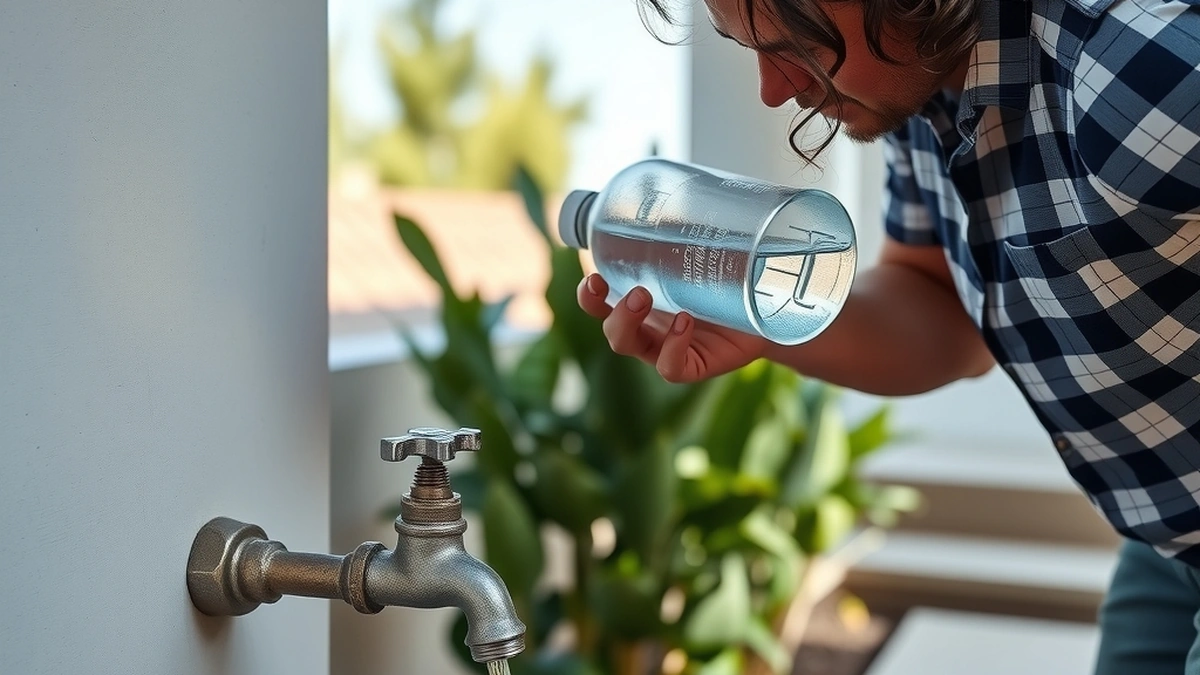
Laboratory kits cost roughly $40-$150 and include a sterile bottle, chain-of-custody paperwork, and return shipping. You collect the sample at the tap, mail it, and receive a report with measured values. DIY strips cost less upfront but provide ranges rather than exact numbers and are not certified for most treatment sizing decisions.
Use strips for a quick check between annual lab tests. Use a lab kit when you are buying a softener, filter, or reverse osmosis system because equipment sizing depends on actual hardness and iron levels, not a color chart.
How Test Results Drive Equipment Costs
Test numbers determine what you buy and what it costs. A water softener typically costs $600-$2,500 for equipment and $500-$1,500 for installation, for a total installed range of $1,200-$4,500. Softener capacity runs from 24,000 to 64,000 grains, and salt use is about 8-12 pounds per regeneration. Annual salt costs run $120-$400, and a resin rebed later costs $300-$600.
If hardness is 7-10 grains per gallon, the water is hard; above 10 grains per gallon is very hard. A household using 80 gallons per person per day with two people at 10 grains per gallon needs to remove roughly 1,600 grains per day (80 x 2 x 10). Over a 7-day regeneration cycle, that is about 11,200 grains, which fits within a 24,000-grain softener with margin for iron and efficiency losses.
If iron is above 2-3 ppm, a softener alone may not be enough. An iron filter costs $800-$2,500 installed. If sulfur is present, a sulfur filter costs $1,000-$3,000 installed. Carbon filters cost $500-$1,800 installed, with cartridges at $80-$300 per year and replacement every 6-12 months. Sediment cartridges usually need replacement every 3-6 months.
Under-Sink and Whole-House Options
If the test shows nitrate at or near 10 mg/L, reverse osmosis is a common point-of-use solution. Under-sink RO equipment costs $200-$600, with installed costs of $300-$900. Running costs are $60-$150 per year for filters and membrane replacement. The membrane lasts 2-3 years, and typical waste ratios are 3-4:1. Rejection rates range from 80-95 percent depending on the contaminant.
Whole-house RO costs $3,000-$8,000 installed and is usually unnecessary unless multiple point-of-entry problems exist. UV systems treat bacteria but require a lamp change every 12 months at $30-$90 per lamp. UV does not remove hardness, nitrate, or metals, so it should follow a proper test rather than replace one.
Choosing a Test Kit Provider
Look for a lab that is state-certified or accredited through a recognized program. The kit should include clear instructions on how to flush the tap, avoid contamination, and ship the sample within the required hold time—often 24-30 hours for bacteria. Some labs offer well-specific packages that bundle bacteria, nitrate, and metals together, which is usually more economical than ordering individual tests.
Do not buy based on packaging or marketing language. A good kit provides units you can use: mg/L for nitrate and iron, grains per gallon for hardness, and MPN or present/absent for bacteria. If the report only says “safe” or “unsafe” without numbers, it is harder to size a softener or RO system correctly.
Internal Links for Next Steps
Once you have results, you can match equipment to the water chemistry. For hardness and softener sizing, see /how-much-does-a-water-softener-cost/. For installation labor and plumbing, see /water-softener-installation-cost/. If the test shows multiple contaminants across the whole house, see /whole-house-water-filter-cost/. For drinking-water-only treatment, see /reverse-osmosis-system-cost/. For well-specific treatment packages, see /well-water-treatment-cost/. For ongoing softener maintenance, see /water-softener-salt-cost/. For iron-specific equipment, see /iron-filter-cost/. For disinfection after a positive bacteria test, see /uv-water-purifier-cost/.
Testing Schedule and Record Keeping
Test a private well at least once a year for coliform bacteria and nitrate. Test again after flooding, a new pump, a change in land use nearby, or any change in taste, odor, or appearance. Keep results in a folder so you can track trends. Hardness that rises from 5 to 9 grains per gallon over two years may mean the aquifer is changing or the well screen is failing, and it affects how often a softener regenerates and how much salt it uses.
A lab test is not a treatment recommendation by itself. It is the measurement step that prevents overspending on equipment that does not match the water. Order the kit, collect the sample, read the numbers, then size the equipment.
Next, compare how much does a water softener cost, water softener installation cost, whole house water filter cost before you commit.
Frequently asked questions
What is the best water test kit for a private well?
A certified lab test package that screens for coliform bacteria, nitrate, hardness, iron, and pH is the best starting point for most private wells.
How much does a private well water test cost?
Laboratory water tests typically range from $40 to $150 depending on the parameters included and whether rush shipping is required.
Can home test strips replace a lab test?
Home strips and colorimeters are useful for quick screening, but they do not match the accuracy or certification of a laboratory water test.
How often should a private well be tested?
Test at least once a year for bacteria and nitrate, and again after flooding, repairs, or noticeable changes in taste, odor, or appearance.
What does water hardness mean for treatment?
Hardness above 7 grains per gallon is considered hard, and water softeners commonly range from 24,000 to 64,000 grains in capacity.
Where can I find official well water guidance?
The EPA and CDC publish private well guidance covering testing frequency, contaminants, and treatment options for household wells.
Sources
Some links are affiliate links.If you buy through them we may earn a commission at no extra cost to you. We do not accept payment for rankings. Read the full disclosure.