Best Whole-House Water Guide
Compare whole-house water filter types, installed costs, flow rates, and maintenance to find the right system for your home.
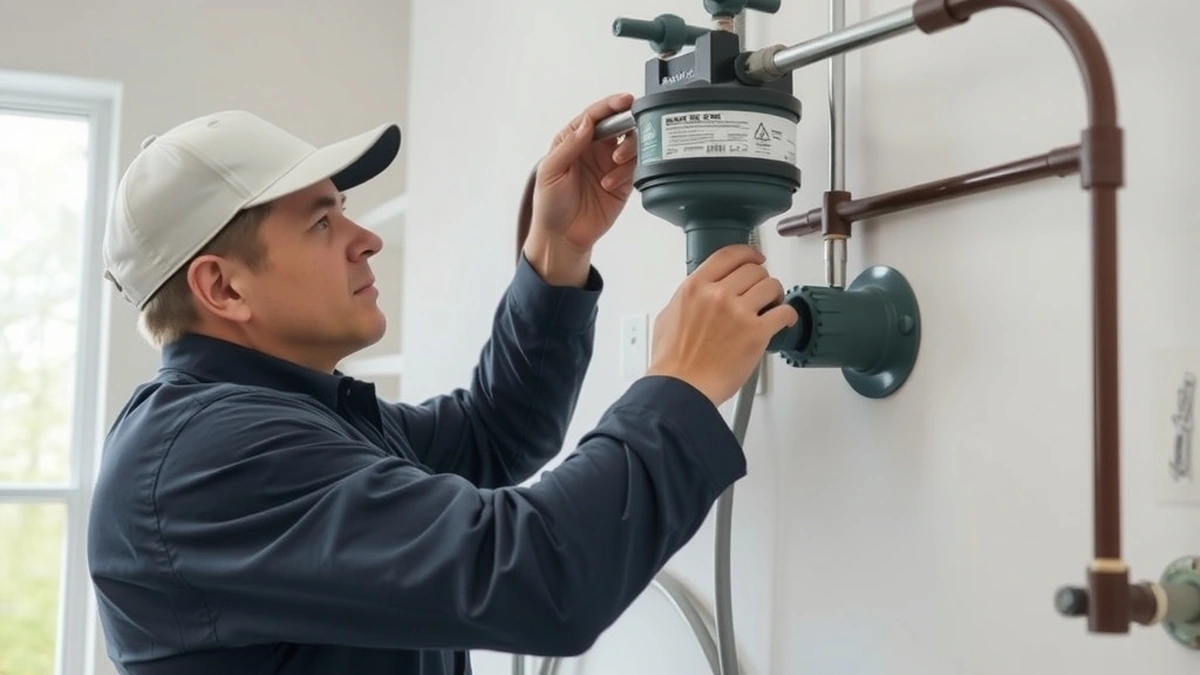
The best whole-house water filter depends on your water test results; sediment and carbon systems typically install for $500–$1,800, while softeners and specialty filters cost more.
- Typical installed cost
- $500–$8,000 by system type
- Flow rate range
- 8–15 GPM for most whole-house filters
- Carbon cartridge replacement
- Every 6–12 months, $80–$300 per year
- Sediment cartridge replacement
- Every 3–6 months
- Water softener installed cost
- $1,200–$4,500
Some links on this page are affiliate links.If you buy through them we may earn a commission at no extra cost to you. We do not accept payment for rankings. Read the full disclosure.
The best whole-house water filter is the one matched to your water test results and your household flow rate. There is no universal top model because a carbon filter, a water softener, and an iron filter solve different problems. Start with a lab water test, then size equipment to your plumbing and contamination profile.
What “Best Whole-House Water Filter” Means
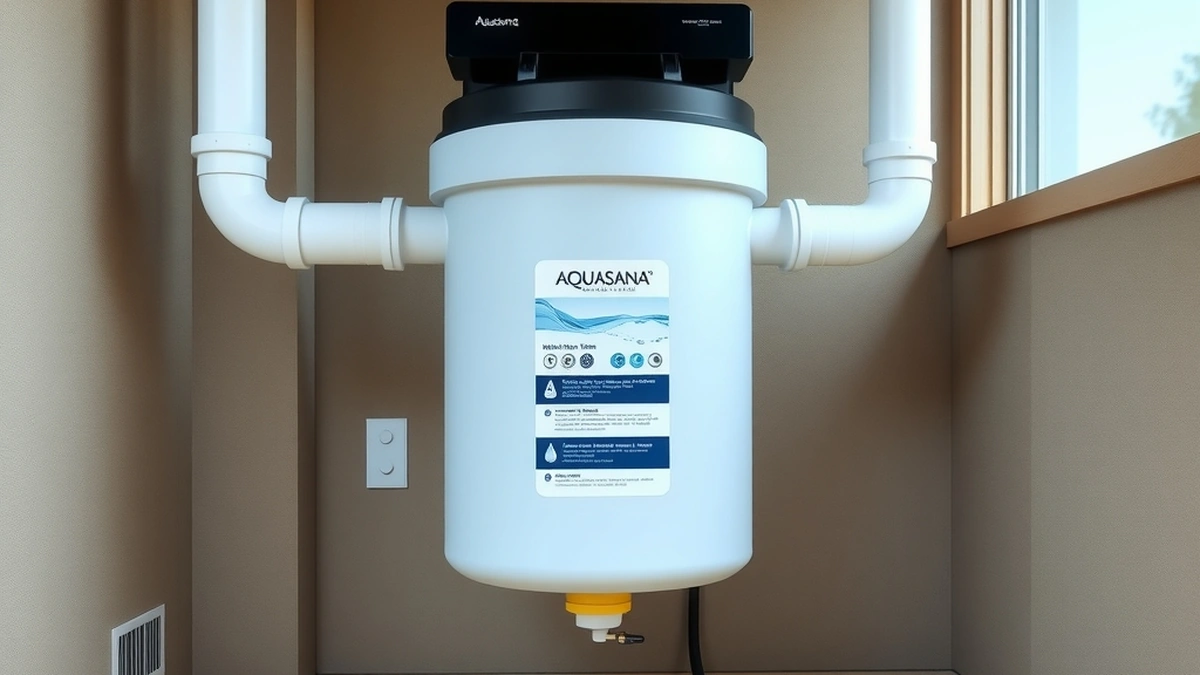
A whole-house filter treats water at the point of entry, before it splits to your water heater, faucets, and appliances. These systems are sold by function: sediment cartridges remove particles, carbon cartridges reduce chlorine and organic chemicals, water softeners exchange hardness minerals, and specialty filters target iron, sulfur, or other well-water issues. Installed prices range widely. Carbon and sediment whole-house filters typically fall between $500 and $1,800 installed. Water softeners run $1,200 to $4,500 installed, while whole-house reverse osmosis can reach $3,000 to $8,000.
Flow rate is the key sizing number. Most whole-house filters are rated for 8–15 gallons per minute (GPM). If your home regularly runs multiple showers, a dishwasher, and a washing machine at once, an undersized filter will drop pressure. Oversizing costs more upfront without improving performance.
Start With a Water Test
Equipment selection should follow data, not assumptions. A lab water test costs $40–$150 and reports hardness in grains per gallon (GPG), iron in parts per million (PPM), pH, and other indicators. Hardness is commonly classified as 0–3 GPG soft, 3–7 GPG moderate, 7–10 GPG hard, and 10+ GPG very hard.
If your test shows hardness above 3 GPG, a water softener may be appropriate. Standard softeners generally handle clear-water iron up to 2–3 PPM; higher iron or sulfur usually requires a dedicated filter before or instead of a softener. Nitrate at or above 10 mg/L requires specific treatment and should not be addressed with a standard carbon filter. Without a test, you risk buying equipment that does not match your water chemistry.
Filter Types and Installed Costs
Sediment and carbon whole-house filters are the most common entry-level systems. Sediment cartridges trap sand, silt, and rust. Carbon cartridges reduce chlorine, chloramines, and some organic compounds. Neither removes dissolved hardness minerals.
Water softeners use resin and salt to remove calcium and magnesium. Equipment alone costs $600–$2,500, with installation adding $500–$1,500 for a total installed range of $1,200–$4,500. Salt-free conditioners do not remove hardness minerals but alter scale formation; installed cost is typically $500–$1,800.
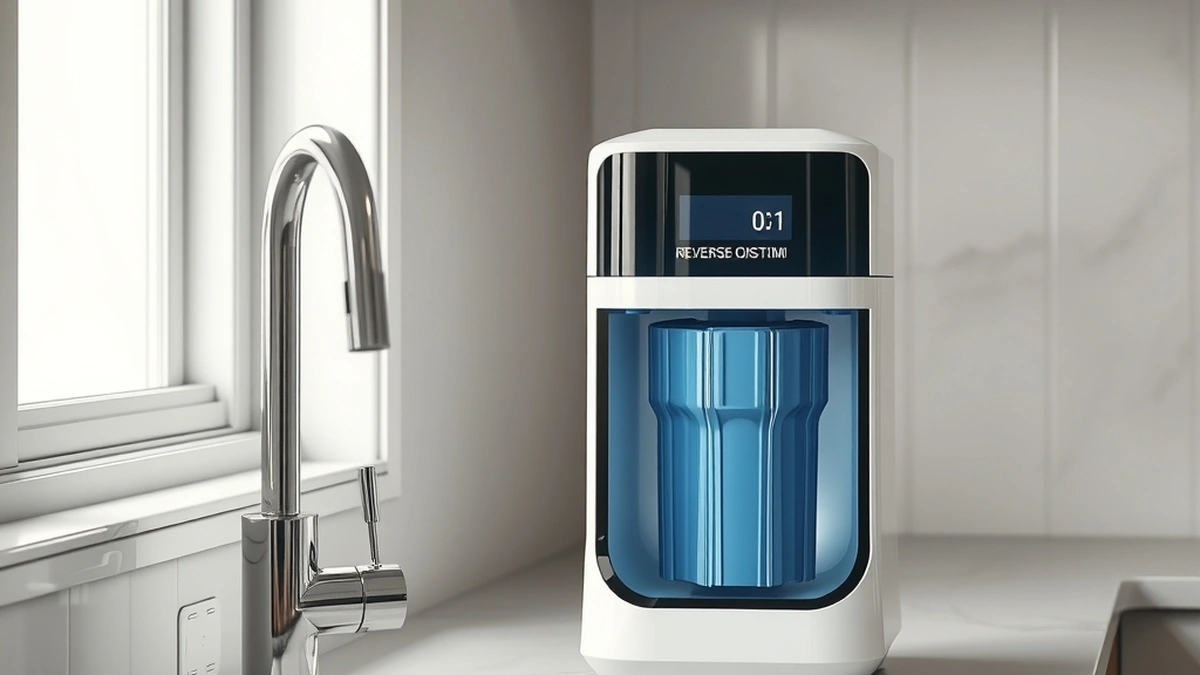
Specialty filters address specific test results. Iron filters install for roughly $800–$2,500. Sulfur filters install for roughly $1,000–$3,000. Whole-house reverse osmosis provides broad reduction at the point of entry but costs $3,000–$8,000 installed and produces wastewater at a 3–4:1 ratio. For drinking water only, under-sink reverse osmosis equipment costs $200–$600 and installed cost is $300–$900.
| System type | Typical installed cost | Primary target |
|---|---|---|
| Sediment + carbon whole-house filter | $500–$1,800 | Particles, chlorine, taste and odor |
| Water softener | $1,200–$4,500 | Hardness minerals |
| Salt-free conditioner | $500–$1,800 | Scale formation (does not remove hardness) |
| Iron filter | $800–$2,500 | Dissolved iron |
| Sulfur filter | $1,000–$3,000 | Hydrogen sulfide odor |
| Whole-house reverse osmosis | $3,000–$8,000 | Broad contaminant reduction |
Sizing by Flow Rate and Grain Capacity
Flow rate determines whether a filter can keep up with peak demand. A typical whole-house carbon system rated for 8–15 GPM should match your home’s simultaneous fixture count. If two showers and a washing machine run together, you might need 10–12 GPM or more depending on fixture flow rates.
Water softeners are sized by grain capacity, commonly 24,000–64,000 grains. A simple load estimate uses grains per gallon and daily water use. For example, a household using 300 gallons per day with 10 GPG hardness generates 3,000 grains of hardness per day. At that rate, a 30,000-grain softener would theoretically reach capacity in 10 days before regeneration, though actual scheduling depends on valve settings and reserve capacity.
Salt use per regeneration typically runs 8–12 pounds. If a system regenerates once per week, annual salt use is roughly 416–624 pounds. At typical salt prices, that supports the $120–$400 per year operating estimate.
Annual Operating Cost Arithmetic
Purchase price is only part of the cost. Carbon cartridges cost $80–$300 per year and usually require replacement every 6–12 months. Sediment cartridges typically need replacement every 3–6 months. Over five years, cartridge costs can add $400–$1,500 beyond the installed price.
Water softeners add salt at $120–$400 per year. Resin beds eventually degrade and may require rebedding at $300–$600, typically within an 8–12 year resin life against a 10–15 year equipment life. Over a 10-year horizon, a softener could cost $1,200–$4,500 installed plus $1,200–$4,000 in salt, plus potential rebedding.
UV systems, if needed for microbiological concerns, require lamp replacement every 12 months at $30–$90 per lamp. These costs are estimates and vary by local water usage, salt prices, and cartridge brand.
How to Choose by Water Problem
For municipal water with chlorine taste and odor, a carbon whole-house filter is usually sufficient. For well water with sand or silt, add sediment pre-treatment. For hardness above 3 GPG, consider a water softener sized to your grain load. For iron above 2–3 PPM, a softener alone is generally not enough; an iron filter is the appropriate category. For sulfur odor, a sulfur filter is the matching equipment type.
If your only concern is drinking-water quality at one tap, under-sink reverse osmosis at $300–$900 installed may cost less than whole-house treatment. Whole-house reverse osmosis is justified only when test results show a broad need for point-of-entry reduction and the budget supports $3,000–$8,000 installed plus wastewater and membrane costs.
Maintenance Schedule and Replacement Costs
Set a replacement calendar before installation. Sediment cartridges: every 3–6 months. Carbon cartridges: every 6–12 months. UV lamps: every 12 months. Softener resin: inspect around year 8–12 and budget $300–$600 for rebedding. RO membranes: every 2–3 years for under-sink units.
Keep a log of installation dates and pressure readings. A sudden pressure drop often means a clogged cartridge rather than equipment failure. Replacing cartridges on schedule protects flow rate and prevents the system from becoming a source of contamination.
The right whole-house water filter is determined by your water test, not by a ranking. Match the system type to your contaminants, size the flow rate to your home, and budget for cartridges, salt, or membranes over the full equipment life.
For more on pricing, see our guides to whole-house water filter cost, water softener installation cost, and reverse osmosis system cost.
Next, compare how much does a water softener cost, water softener installation cost, whole house water filter cost before you commit.
Frequently asked questions
What is the best whole-house water filter?
There is no single best model; the right choice depends on your water test results, flow rate needs, and whether you need sediment, carbon, softening, or specialty treatment.
How much does a whole-house water filter cost installed?
Carbon and sediment whole-house filters typically install for $500–$1,800, while water softeners run $1,200–$4,500 and whole-house reverse osmosis can reach $3,000–$8,000.
How often do whole-house filter cartridges need replacement?
Carbon cartridges usually last 6–12 months and cost $80–$300 per year, while sediment cartridges typically need replacement every 3–6 months.
Do I need a water test before buying a whole-house filter?
Yes. A lab test costing $40–$150 identifies hardness, iron, sulfur, and other contaminants so you buy equipment matched to your water rather than guessing.
What flow rate should a whole-house filter support?
Most whole-house filters are rated for 8–15 GPM; undersizing can restrict pressure, while oversizing wastes money on capacity you do not use.
Can a whole-house filter remove hardness?
Only a water softener removes hardness minerals through ion exchange; standard carbon and sediment filters do not reduce grains-per-gallon hardness.
Sources
Some links are affiliate links.If you buy through them we may earn a commission at no extra cost to you. We do not accept payment for rankings. Read the full disclosure.