Culligan vs Kinetico: Dealer Models Compared
Compare Culligan and Kinetico water softener dealer models, installed cost, grain capacity, salt use, and maintenance before signing a contract.
Culligan and Kinetico are both dealer-sold brands with similar installed softener costs; compare grain capacity, salt per regeneration, and local service before choosing.
- Brand type
- Dealer-exclusive, locally installed
- Softener equipment range
- $600–$2,500
- Typical installed cost
- $1,200–$4,500
- Grain capacity range
- 24,000–64,000 grains
- Salt per regeneration
- 8–12 lbs
Some links on this page are affiliate links.If you buy through them we may earn a commission at no extra cost to you. We do not accept payment for rankings. Read the full disclosure.
Culligan and Kinetico are both dealer-sold water softener brands, and neither publishes a single national price list. Installed equipment typically falls in the $1,200–$4,500 range, with grain capacity from 24,000–64,000 grains and salt use of 8–12 pounds per regeneration. Your best move is to test your water first, then compare dealer quotes on capacity, salt efficiency, and local service terms.
How Dealer Models Work
Culligan and Kinetico do not sell directly to consumers through a standard e-commerce store. Instead, independent dealers size, install, and service the equipment. That means the sticker you see online, if you see one at all, is rarely the final price. Expect equipment costs of $600–$2,500 and installation labor of $500–$1,500, landing in the $1,200–$4,500 installed range. Because pricing is dealer-specific, you should request itemized quotes from multiple local dealers before signing.
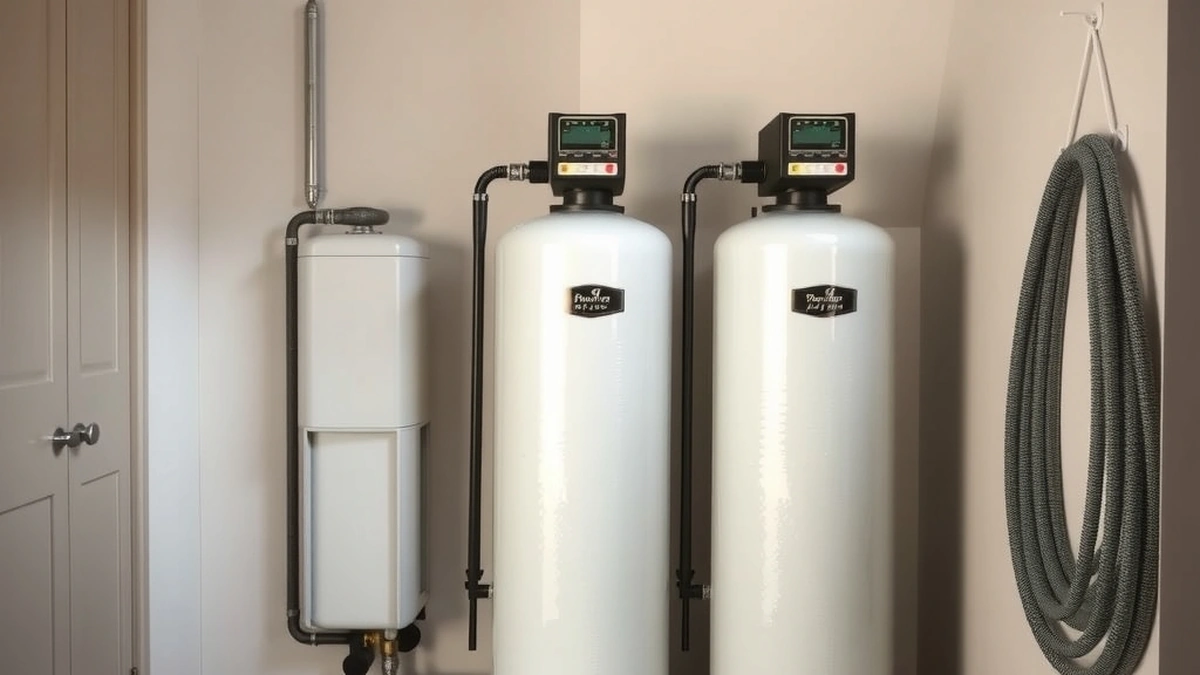
Both brands offer cabinet-style and two-tank softeners. Kinetico is known for non-electric, twin-tank designs that regenerate based on water use rather than a timer. Culligan offers timer-controlled and metered models depending on the dealer and region. Neither design automatically removes iron above 2–3 ppm, so if your well water shows higher iron, you may need a separate iron filter costing $800–$2,500 installed.
Grain Capacity and Sizing Math
Softener capacity is measured in grains of hardness removal between regenerations. Common dealer models range from 24,000–64,000 grains. To estimate what you need, multiply household occupants by daily water use, then by grains per gallon (GPG) hardness from your lab test.
For example, a four-person household using 75 gallons per person per day uses 300 gallons daily. If your water tests at 10 GPG, that is 3,000 grains of hardness per day. A 32,000-grain softener would theoretically regenerate every 10.7 days, though real-world reserve settings and salt dosage change that number. A 64,000-grain unit would stretch to roughly 21 days between regenerations.
Larger capacity usually means a higher equipment price and more salt per regeneration, but fewer regeneration cycles. Smaller units cost less up front but may regenerate more often, increasing annual salt use. Salt typically runs $120–$400 per year depending on household size, water hardness, and the dealer’s programming.
Salt, Resin, and Ongoing Costs
Most softeners in this class use 8–12 pounds of salt per regeneration. If a unit regenerates twice per week, that is roughly 832–1,248 pounds of salt per year. At common retail salt prices, annual salt cost often lands between $120–$400, though local dealers may include delivery or charge a premium for bagged or pellet salt delivered on a route.
Resin beds last about 8–12 years. A rebed costs $300–$600 and is a normal maintenance event, not a failure. Total softener life is typically 10–15 years. Over a 15-year horizon, you should budget for one resin rebed and annual salt, in addition to the initial $1,200–$4,500 installed cost.
If you are comparing against salt-free conditioners, those run $500–$1,800 installed but do not remove hardness minerals the way an ion-exchange softener does. Carbon filters cost $500–$1,800 installed with cartridges at $80–$300 per year and replacement every 6–12 months. Sediment cartridges need replacement every 3–6 months. These are separate purchases if your water test shows chlorine, sediment, or taste issues alongside hardness.
What a Water Test Should Tell You
Before comparing dealer models, get a lab water test. Lab tests typically cost $40–$150 and measure hardness, iron, pH, and other parameters. Hardness is classified as soft (0–3 GPG), moderate (3–7 GPG), hard (7–10 GPG), or very hard (10+ GPG). If your result is above 10 GPG, a high-capacity softener may be justified. If you are below 3 GPG, a softener may not be cost-effective.
Iron limits matter too. Softeners can handle limited clear-water iron, generally up to 2–3 ppm. Above that, dealers often recommend an iron filter before the softener. Nitrate has a federal limit of 10 mg/L; softeners do not remove nitrate, so a separate treatment system is required if your test exceeds that level.
Culligan vs Kinetico: Practical Differences
Culligan dealers often offer timer-controlled or metered single-tank softeners, with some models featuring electronic monitoring and dealer-provided salt delivery programs. Kinetico dealers commonly sell non-electric twin-tank units that regenerate on demand and can provide soft water during regeneration because the second tank stays online.
Neither brand publishes standardized grain capacity or salt-use figures across all dealer models, so you must ask for the spec sheet on the exact unit being quoted. Compare these numbers directly:
- Equipment: $600–$2,500 for either brand
- Installation: $500–$1,500
- Installed total: $1,200–$4,500
- Capacity: 24,000–64,000 grains
- Salt per regeneration: 8–12 pounds
- Resin life: 8–12 years
- Unit life: 10–15 years
Dealer reputation and local service availability often matter more than the brand logo. Ask how long the dealer has been installed in your area, whether they stock parts locally, and what the service call fee is.
Related Equipment Costs
If your water test reveals issues beyond hardness, total project cost rises. A whole-house carbon filter runs $500–$1,800 installed. An iron filter costs $800–$2,500 installed. A sulfur filter runs $1,000–$3,000 installed. Whole-house reverse osmosis starts at $3,000–$8,000 installed, while under-sink RO equipment is $200–$600 with installation at $300–$900 and running costs of $60–$150 per year. RO membranes last 2–3 years and waste 3–4 gallons for every gallon produced, with rejection rates of 80–95 percent.
UV disinfection uses a lamp replaced every 12 months at $30–$90. These systems treat bacteria but do not soften water. If you need both softening and UV, you are buying two separate systems and paying for two maintenance schedules.
Getting a Dealer Quote
Request a written quote that lists equipment model, grain capacity, salt setting, installation labor, and any plumbing modifications. Ask whether the price includes a bypass valve, fittings, and drain connection. Confirm who handles warranty service—the dealer or the manufacturer—and whether there is a trip charge.
Test your water first, then size the softener to your actual hardness and household use. Compare at least two dealers, and do not let a salesperson talk you into a larger unit than your test results justify. A 64,000-grain system costs more up front and uses more salt per regeneration than a 32,000-grain system, so buy the capacity your water actually requires.
Next, compare how much does a water softener cost, water softener installation cost, whole house water filter cost before you commit.
Frequently asked questions
Are Culligan and Kinetico sold online?
No. Both brands are primarily sold through independent local dealers rather than direct online retail.
What is the typical installed cost range?
Installed water softeners generally run $1,200–$4,500 depending on unit size, plumbing, and local labor rates.
How much salt does a regeneration use?
Most softeners in this class use 8–12 pounds of salt per regeneration cycle.
How often does resin need replacement?
Resin beds typically last 8–12 years before a rebed costing $300–$600 may be needed.
Can a softener remove iron?
Softeners can handle limited iron, generally up to 2–3 ppm; higher levels usually need a dedicated iron filter.
Should I test water before buying?
Yes. A lab water test typically costs $40–$150 and confirms hardness, iron, and other contaminants first.
Sources
Some links are affiliate links.If you buy through them we may earn a commission at no extra cost to you. We do not accept payment for rankings. Read the full disclosure.