
Frigidaire refrigerator water filter
Frigidaire fridge filters use PureSource and WF3CB families. See how to identify yours, what the certification covers, and where to buy without overpaying.
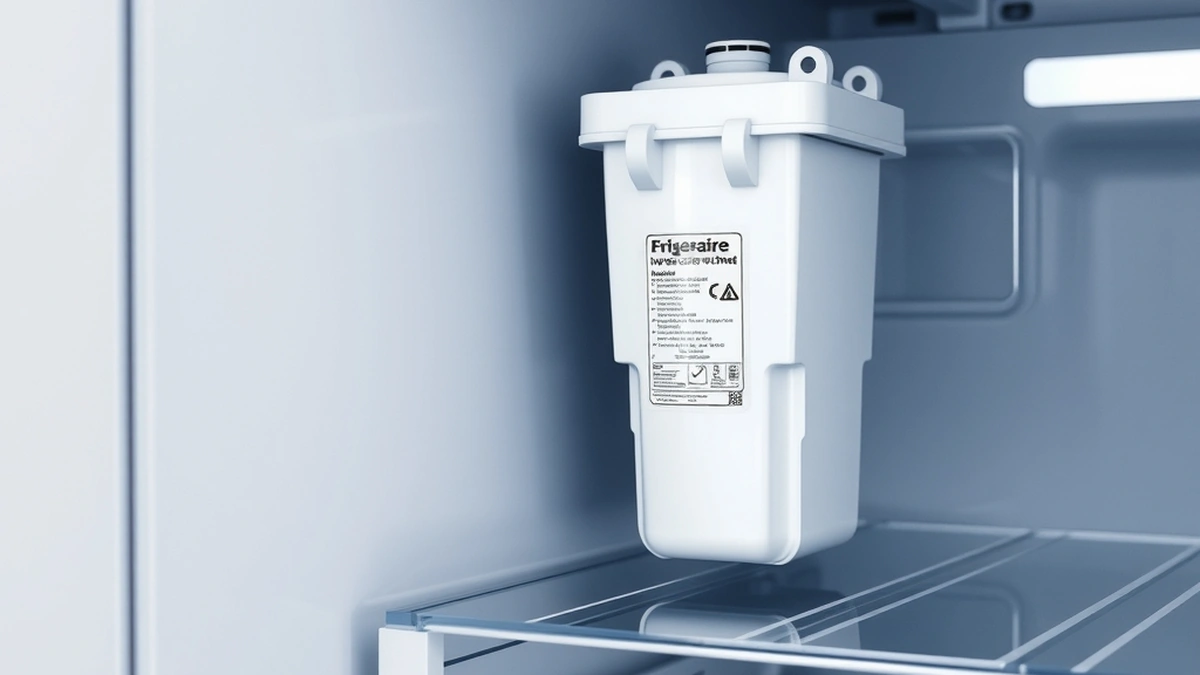
Frigidaire refrigerator filters fall into the PureSource, PureSource 2, and WF3CB families, costing $25 to $55 and lasting about six months. Match the part number on the old cartridge, and check for NSF/ANSI 42 or 53 certification before buying a compatible replacement.
- Common families
- PureSource, PureSource 2, WF3CB
- Cartridge cost
- $25 - $55
- Change interval
- About 6 months
- Volume rating
- 200 - 300 gallons
- Certification
- NSF/ANSI 42, some 53
Some links on this page are affiliate links.If you buy through them we may earn a commission at no extra cost to you. We do not accept payment for rankings. Read the full disclosure.
Frigidaire refrigerator filters are keyed cartridges sold under the PureSource and WF3CB names. They cost $25 to $55, last about six months, and are not interchangeable between families. The part number on the old cartridge is the only reliable buying guide, and the certification listing is the only reliable performance claim.
The Frigidaire Filter Families
Frigidaire has used several filter systems across its refrigerator lines, and the naming is not intuitive.
| Family | Fits | Notes |
|---|---|---|
| PureSource | Older side-by-side and top-freezer | Common in older homes |
| PureSource 2 | Mid-generation models | Different housing |
| PureSource Ultra | Newer French-door | Sometimes labelled ULTRA |
| WF3CB | Many current models | Widely available |
Two fridges from the same product line in different years can take different cartridges. That is why the model plate inside the fresh food compartment is worth more than the brand name on the door.
The keying is physical. The cartridge body has tabs and a connector that only mate with the matching housing, so a wrong cartridge will not seat fully. A cartridge that turns but does not lock is the wrong one, not a defective one.
There is a second compatibility trap that has nothing to do with the fridge. Frigidaire is a brand applied to appliances made by several different manufacturers over the years, and two fridges sold under the same badge can share nothing but the logo. The model plate resolves it; the brand name cannot.
Finding the Right Part
Three sources, in order of reliability.
- The old cartridge. Pull it and read the number printed on the label or molded into the body.
- The fridge label. Many models have a sticker inside the door or on the frame listing the filter.
- The model plate. Inside the fresh food compartment, used with Frigidaire’s filter finder.
Photograph the old cartridge before discarding it. It is the fastest reference if a new one does not fit, and it saves a second trip to the store.
What the Cartridge Does
A Frigidaire cartridge is a carbon block that reduces chlorine, taste, odour, and nominal particulate. Certified models add lead or cyst reduction.
| Contaminant | Standard | Certified models |
|---|---|---|
| Chlorine | Yes | Yes |
| Taste and odour | Yes | Yes |
| Particulate | Yes | Yes |
| Lead | No | Some |
| Cysts | No | Some |
| Nitrate | No | No |
| Hardness | No | No |
The nitrate and hardness rows do not change with the model or the price. A fridge filter is a small carbon cartridge, and it does not soften water or remove dissolved salts.
That limit matters because fridge filters are often sold as general-purpose treatment. If the lab report shows 15 GPG hardness, the filter changes the taste of the water and nothing about the scale in the kettle. If it shows nitrate near 10 mg/L, the dispenser is not the place to fix it.
Cost and Frequency
At $30 to $50 per cartridge and two changes a year, the annual cost is $60 to $100. At 250 gallons per cartridge, the cost per gallon is $0.12 to $0.20.
| Source | Cost per gallon | Capacity |
|---|---|---|
| Frigidaire OEM | $0.12 - $0.20 | 250 gallons |
| Certified third party | $0.08 - $0.15 | 250 gallons |
| Under-sink carbon | $0.02 - $0.08 | 500 - 1,500 gallons |
| Bottled water | $0.50 - $2.00 | As bought |
The premium buys convenience and a guaranteed fit. For water at the door, that is a reasonable trade, though it is the most expensive per-gallon format in the house.
Installation and Reset
Replacement is a two-minute job on most models.
- Locate the housing, usually in the upper right of the fridge interior or behind the base grille.
- Turn the old cartridge a quarter turn and pull, or press the release depending on the model.
- Remove the cap from the new cartridge and insert it fully.
- Flush 2 to 3 gallons through the dispenser to clear air and carbon fines.
- Reset the indicator by holding the filter button for three seconds.
The flush is not optional. A new carbon cartridge sheds fines and traps air, and the first glass after a change tastes flat and looks cloudy if it is not flushed. Two to three gallons is the usual guidance, and it takes a couple of minutes at dispenser flow.
If the dispenser sputters for longer than that, the cartridge is not fully seated or an O-ring is pinched. Pull it, inspect the ring, reseat, and flush again before assuming the cartridge is faulty.
Compatibility and Counterfeits
The aftermarket for fridge filters includes legitimate certified products and a large number of cartridges that claim compatibility without any certification. The difference is invisible on the shelf and matters over months of use.
Look for the NSF mark with the standard number and the specific model. A claim like “meets NSF standards” in the marketing copy is not a certification, and a cartridge that fits loosely can let water bypass the media entirely while still dispensing normally.
Buy from a retailer with a return window. A cartridge that does not seat is a return, not a loss.
One more check is worth thirty seconds: compare the weight of the new cartridge with the old one. A certified carbon block has a substantial mass of media; a suspiciously light cartridge is mostly empty housing. It is not a laboratory test, but it catches the worst of the counterfeits.
Five Steps to Buy the Right One
- Read the old cartridge number.
- Confirm it against the fridge label.
- Check the certification for the claims you need.
- Compare OEM and certified third-party prices.
- Buy two, so a change never waits on a delivery.
For the replacement procedure in more detail, see Frigidaire water filter replacement. For the brand overview, Frigidaire water filter covers the wider product line, and filter refrigerator water filter covers the format comparison.
Frequently asked questions
How do I find my Frigidaire water filter model?
Read the part number on the old cartridge, then confirm it against the label inside the fridge door or the model plate inside the fresh food compartment.
How often should a Frigidaire filter be changed?
About every six months or 200 to 300 gallons, and sooner if the dispenser flow slows or the ice begins to taste of chlorine.
Are Frigidaire filters interchangeable?
No. PureSource, PureSource 2, and WF3CB cartridges use different housings, and a cartridge from one family will not seat in another.
Do Frigidaire filters remove lead?
Only models certified to NSF/ANSI 53 for lead reduction; many standard cartridges carry 42 certification for taste and chlorine only.
Can I use a generic filter in a Frigidaire fridge?
Only if it is certified for the specific model and states that certification, because an uncertified cartridge can fit loosely and let water bypass the media.
Why is my Frigidaire filter so expensive?
Proprietary keyed housings limit competition, so prices run above standard under-sink cartridges; certified third-party options can cut the cost if they list your model.
Sources
Some links are affiliate links.If you buy through them we may earn a commission at no extra cost to you. We do not accept payment for rankings. Read the full disclosure.


