Hard water and hair: what a softener changes
Hard water leaves calcium soap residue in hair that feels waxy and stiff. See what ion exchange actually changes and what it does not.
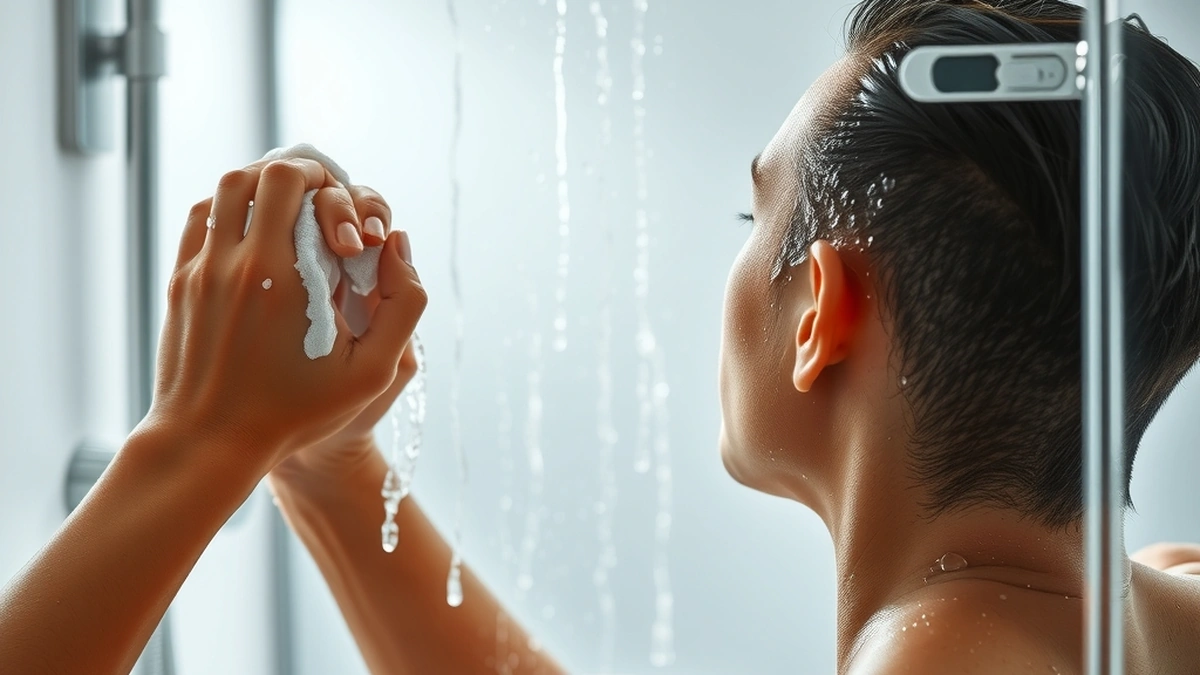
Hard water reacts with shampoo to form calcium and magnesium soap scum that coats the hair shaft, which is why hair feels waxy, stiff, and hard to rinse. A softener removes those minerals before the water reaches the shower, so shampoo lathers and rinses cleanly again.
- Hardness that causes residue
- 7 GPG and above
- Mechanism
- Calcium and magnesium soap scum
- Softener effect
- Removes the minerals at point of entry
- Time to notice
- First wash after softening
- Shower-only fix
- Certified shower filter or softener
Some links on this page are affiliate links.If you buy through them we may earn a commission at no extra cost to you. We do not accept payment for rankings. Read the full disclosure.
Hard water makes hair feel waxy because the calcium and magnesium in the water bind with shampoo and form an insoluble residue that clings to the hair shaft. A softener removes those two minerals before the water reaches the shower, so the same shampoo lathers more freely and rinses without leaving a film. Nothing else about the water changes: the softener swaps minerals for sodium, it does not add a conditioning agent.
What Is Actually on Your Hair
Hard water is water carrying dissolved calcium and magnesium, measured in grains per gallon. The categories that matter here are 0 to 3 GPG soft, 3 to 7 moderate, 7 to 10 hard, and above 10 very hard. The residue problem gets noticeably worse in the 7-plus range.
The chemistry is straightforward. Soap and shampoo surfactants are salts of fatty acids. Calcium and magnesium displace the sodium in those salts and form calcium stearate and magnesium stearate, which are insoluble in water. Those compounds precipitate onto the hair cuticle rather than rinsing down the drain. The result is the familiar waxy, coated feeling, plus dullness because the cuticle scales are no longer lying flat enough to reflect light.
There is a second effect that is easy to miss. Hard water also leaves calcium carbonate scale on the showerhead, the glass, and the tiles. When scale builds inside the showerhead, flow drops and the spray pattern narrows, so rinsing takes longer and residue stays in place longer. That is a plumbing problem masquerading as a hair problem.
What a Softener Changes, Precisely
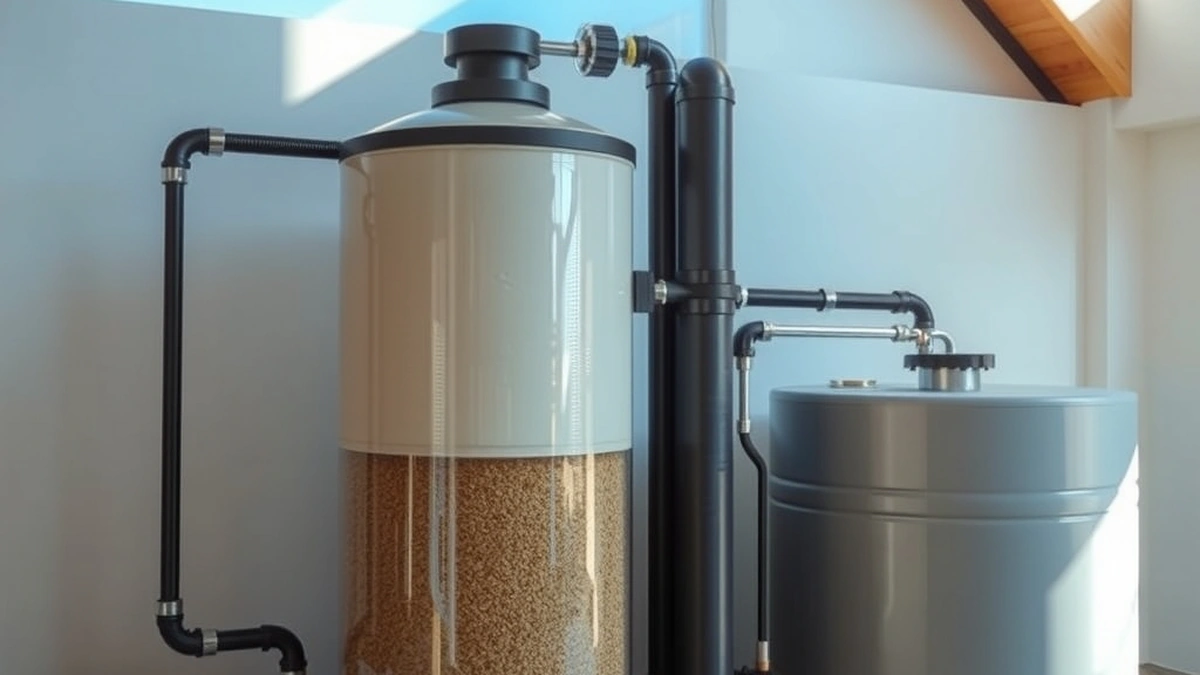
A softener is a tank of strong acid cation resin charged with sodium. As water passes through, calcium and magnesium exchange onto the resin and sodium comes off. The water leaving the tank is low in hardness minerals. Regeneration with brine resets the resin every few days.
So the softener changes one variable: it removes the two minerals that form soap scum. It does not change pH, it does not remove chlorine, and it does not filter sediment. If your hair problem is chlorine dryness rather than mineral residue, a softener will not solve it and a carbon filter will. If it is mineral residue, the softener is the correct tool.
Resin lasts 8 to 12 years and a rebed costs $300 to $600. Equipment runs $600 to $2,500 with installation at $500 to $1,500, so an installed system lands at $1,200 to $4,500. Salt adds $120 to $400 per year. Those are the numbers you are weighing against a shower filter that costs far less but does much less.
Softener vs Shower Filter vs Nothing
| Approach | Removes hardness | Removes chlorine | Cost |
|---|---|---|---|
| Whole-house softener | Yes | No | $1,200 - $4,500 installed |
| Carbon shower filter | No | Yes | tens of dollars, cartridge every few months |
| Ion exchange shower unit | Partly, at low flow | Sometimes | mid-hundreds |
| No treatment | No | No | zero |
The middle row is where most people get misled. A cartridge shower filter that advertises “softening” usually contains KDF media or carbon, which reduces chlorine and some metals but does not remove calcium and magnesium. It may improve the feel of the water because chlorine is gone, and that improvement is real, but it is not softening.
A genuine ion exchange shower unit does remove hardness, but at the flow rates a shower demands it depletes quickly and needs frequent regeneration. For a whole house with 12 GPG water, the softener is the only approach that scales. See salt-based versus salt-free softener for why the salt-free boxes do not do this job.
The Five-Step Fix
- Get a hardness number. A lab test is $40 to $150, or a titration kit gives you a close reading for less. Do not buy equipment on a guess.
- Rule out chlorine. If the water smells of chlorine and hair feels dry rather than waxy, the problem is chlorine. A carbon filter is the fix.
- Clean the showerhead. Soak it in white vinegar for an hour and scrub the face. Restored flow alone changes how well anything rinses out.
- Size the softener to the house. Hardness in GPG times daily gallons gives grains per day. A family of four at 12 GPG needs a larger unit than the same family at 5 GPG.
- Wash once with a clarifying shampoo. Existing residue takes a wash or two to strip. If hair still feels coated after softening plus a clarifying wash, the cause is a product, not the water.
What Softened Water Feels Like
Softened water feels slippery. That is not residual soap; it is the absence of soap scum. People who grew up on hard water often interpret the slippery feeling as “not rinsed” and wash longer, which is the opposite of what is needed. Use the same amount of shampoo or slightly less, and rinse until the water runs clear rather than until the hair feels squeaky.
Hair typically feels smoother within one wash. If you have been on hard water for years, the cuticle may have physical residue in the layers, and two or three washes with a chelating shampoo will clear it. After that, the softener maintains the result.
One caveat on expectations: softened water does not make hair grow, change its texture permanently, or repair splits. It removes a coating. That is a smaller claim than most marketing makes and a more useful one.
When Softening Is the Wrong Purchase
If your hardness reads 4 GPG and your hair feels fine, a $3,000 softener is not a hair product. The same equipment also protects the water heater, the dishwasher, and the fixtures, and those are the reasons to buy it. Read hard water and appliances for that side of the ledger, and water softener sizing before you pick a grain capacity.
If you rent and cannot install a softener, a certified shower filter that reduces chlorine plus a chelating shampoo once a week is the practical compromise. It will not remove hardness, and it will help less than softening, but it costs a fraction of the install.
Frequently asked questions
Why does hard water make hair feel waxy?
The calcium and magnesium in hard water bind with the surfactants in shampoo and form an insoluble soap scum that deposits on the hair shaft instead of rinsing away.
Will a water softener fix hard water hair?
Yes, if hardness is the cause. Ion exchange removes calcium and magnesium before the water reaches the shower, so shampoo lathers normally and rinses without residue.
How long after installing a softener will hair feel different?
Most people notice a difference on the first wash, though hair that has built up residue over months may take several washes to feel normal again.
Does a shower filter soften water?
Most shower filters remove chlorine and sediment but leave hardness minerals in place; only a genuine ion exchange unit or a whole-house softener removes calcium and magnesium.
Is hard water damaging to hair?
It does not damage the shaft chemically the way bleach does, but persistent residue makes hair feel rough, tangle more, and appear dull, which is often described as damage.
What hardness level starts to affect hair?
Reports of waxy or stiff hair become common at 7 GPG and above, in the hard and very hard bands, though individual experience varies with hair type and products.
Sources
Some links are affiliate links.If you buy through them we may earn a commission at no extra cost to you. We do not accept payment for rankings. Read the full disclosure.