Hard water softener
How to choose and size a softener for hard water, what it costs, and how to tell whether ion exchange or a salt-free unit fits.
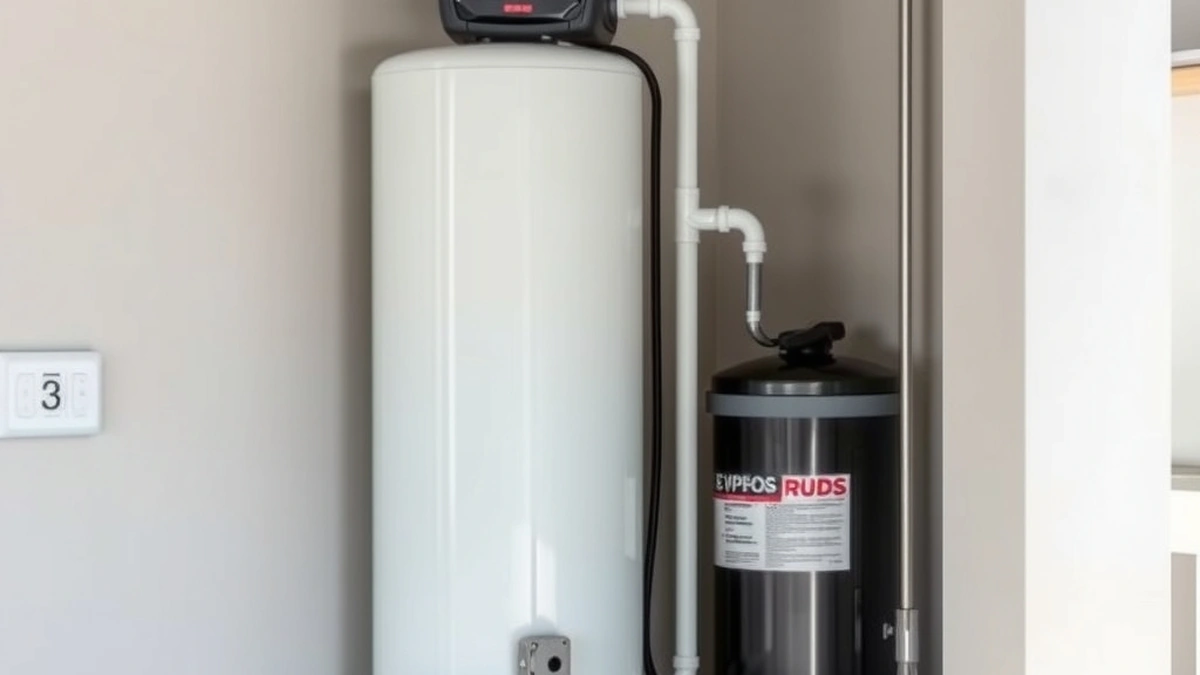
A hard water softener removes calcium and magnesium through ion exchange, and an installed system costs $1,200 to $4,500. Size it by multiplying daily gallons by hardness in grains per gallon, then choose a capacity that regenerates about once a week.
- Installed cost
- $1,200 - $4,500
- Equipment only
- $600 - $2,500
- Grain capacity
- 24,000 - 64,000
- Salt per year
- $120 - $400
- System life
- 10 - 15 years
Some links on this page are affiliate links.If you buy through them we may earn a commission at no extra cost to you. We do not accept payment for rankings. Read the full disclosure.
A hard water softener removes calcium and magnesium through ion exchange, and an installed system typically costs $1,200 to $4,500. Sizing comes from the water test: multiply daily gallons by hardness in grains per gallon, then pick a capacity that regenerates about once a week. Choosing the unit before the test is how households end up with a softener that is too small for the shower and too large for the budget.
What ion exchange does
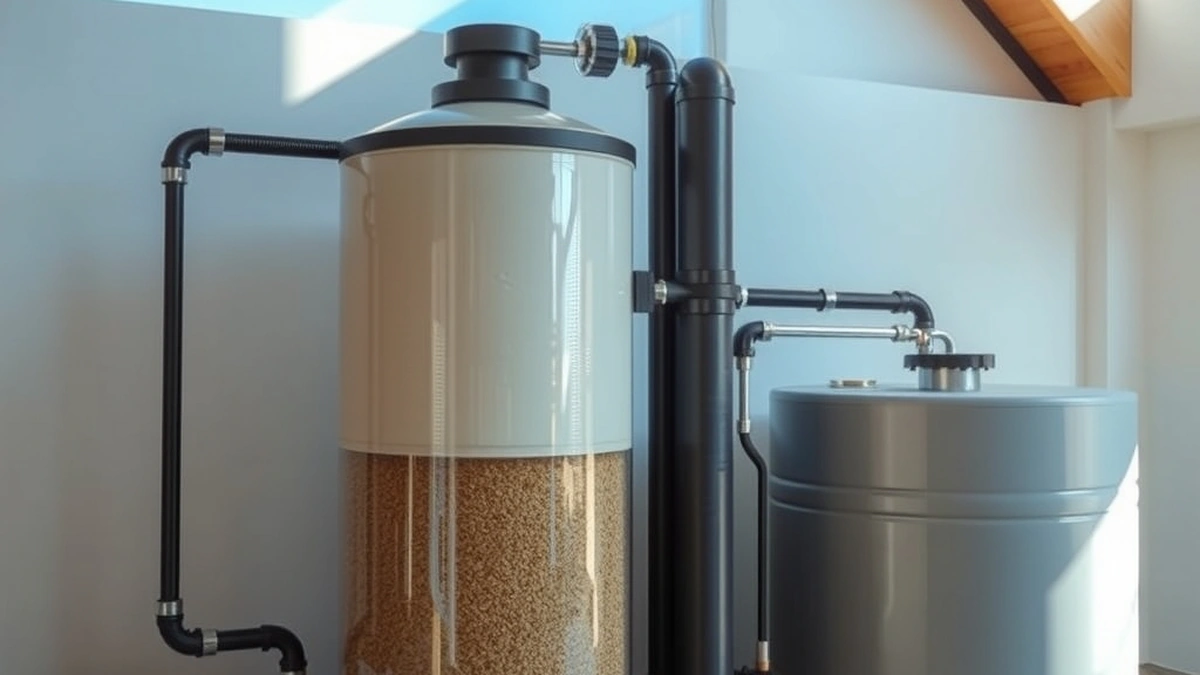
Resin beads in the tank carry sodium or potassium ions. As hard water passes through, calcium and magnesium attach to the resin and the sodium is released.
Eventually the resin is saturated and has to be recharged. A brine draw pulls salt solution through the tank, strips the hardness minerals off the resin, and sends them to the drain.
The result is water that tests near zero hardness. The minerals are not filtered out; they are exchanged.
Start with the test
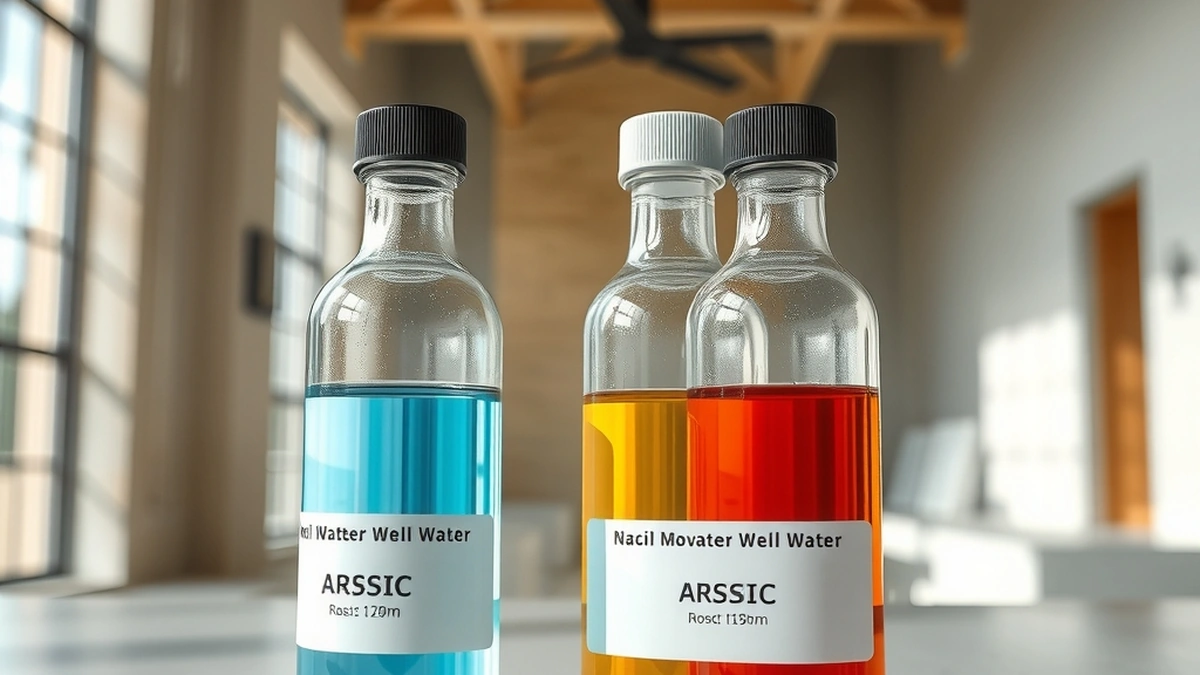
A lab test costs $40 to $150 and reports hardness, iron, manganese, and pH. The hardness number is the one that sizes the system.
The bands are soft at 0 to 3 gpg, moderate at 3 to 7, hard at 7 to 10, and very hard above 10.
Iron matters because resin fouls. Most softeners handle 2 to 3 ppm of iron, and above that an iron filter at $800 to $2,500 installed is needed upstream.
If the water is from a private well, test bacteria and nitrate as well. A softener does nothing for either.
Sizing arithmetic
Daily demand is roughly 75 gallons per person. Four people use about 300 gallons per day.
At 10 gpg, that is 300 x 10 = 3,000 grains per day. With a weekly regeneration and a reserve, a 32,000-grain unit is a reasonable fit.
At 18 gpg, the same household uses 300 x 18 = 5,400 grains per day, and a 48,000 or 64,000-grain unit is needed to keep the interval near a week.
| Household | Gallons/day | Hardness | Grains/day | Suggested capacity |
|---|---|---|---|---|
| 2 people | 150 | 8 gpg | 1,200 | 24,000 |
| 4 people | 300 | 10 gpg | 3,000 | 32,000 |
| 4 people | 300 | 18 gpg | 5,400 | 48,000 - 64,000 |
| 6 people | 450 | 12 gpg | 5,400 | 48,000 - 64,000 |
Those are estimates. A softener that regenerates every two days wastes salt and water, while one that runs past its capacity lets hard water through.
What it costs
Equipment runs $600 to $2,500 depending on capacity and valve type. Installation runs $500 to $1,500 for a standard connection with a drain and outlet nearby.
The installed total of $1,200 to $4,500 covers the unit, bypass, drain line, and startup. Permit fees, if required locally, are extra.
Salt costs $120 to $400 per year. A household regenerating twice a week at 10 pounds per cycle uses about 1,040 pounds per year, or roughly 26 bags of 40 pounds.
Resin lasts 8 to 12 years, and a rebed costs $300 to $600. Over a 10 to 15 year system life, plan for one rebed.
Salt-based versus salt-free
| Factor | Salt-based softener | Salt-free conditioner |
|---|---|---|
| Removes hardness | Yes | No |
| Water tests soft | Yes | No |
| Salt use | Yes | None |
| Installed cost | $1,200 - $4,500 | $500 - $1,800 |
| Scale reduction | Yes | Partial, changes crystal form |
| Best for | Hard and very hard water | Moderate hardness, no salt preference |
A salt-free conditioner is not a softener. It changes how minerals precipitate, which can reduce scale adhesion, but the water still contains calcium and magnesium.
Choosing a unit
- Test the water and record hardness, iron, and pH.
- Calculate daily grains from gallons and hardness.
- Choose a capacity that allows a weekly regeneration with a reserve.
- Decide between metered demand-initiated and timer regeneration; metered usually saves salt.
- Confirm the valve, tank, and brine tank are included in the quote.
- Ask about the warranty, the resin type, and the rebed cost.
A metered valve regenerates based on actual use, which suits households with variable occupancy. A timer valve regenerates on a schedule and can waste salt in a house that is empty for weeks.
Installation details that matter
The softener goes after the meter or pressure tank and before the water heater. A bypass valve is required for service and for any future plumbing work.
The drain line needs an air gap or a standpipe, and it must not be able to back up into the tank. A dedicated electrical outlet is needed for most control valves.
Hard water also affects the water heater, so softening extends appliance life. That is a maintenance benefit, not a health claim.
For the sizing detail, see water softener sizing and what size water softener do i need. For the installation lines, water softener installation cost breaks down the quote.
Bottom line
A hard water softener is sized from a test, not a guess: gallons per day times grains per gallon, with a capacity that regenerates weekly. Expect $1,200 to $4,500 installed, $120 to $400 a year in salt, and a resin rebed every 8 to 12 years.
Two checks after installation are worth the ten minutes. First, test hardness at the kitchen cold tap and confirm it reads under 1 gpg; a result of 3 or 4 means the valve is blending raw water or the hardness setting is wrong. Second, watch a full regeneration and confirm the drain line runs clear for the whole cycle rather than trickling.
A softener that passes both is doing its job. One that passes the first and fails the second will work for a few weeks and then fade as the brine draw degrades.
Frequently asked questions
How does a hard water softener work?
Water passes through resin beads that exchange calcium and magnesium for sodium or potassium, and the resin is recharged with a brine solution.
What size softener do I need?
Multiply daily gallons by hardness in grains per gallon; a family of four at 300 gallons per day and 10 gpg needs about 3,000 grains per day.
How much does a softener cost installed?
Equipment runs $600 to $2,500 and installation $500 to $1,500, for a typical installed total of $1,200 to $4,500.
Does a softener remove iron?
Most softeners handle only 2 to 3 ppm of iron; above that, an iron filter at $800 to $2,500 installed should come first.
Is salt-free conditioning the same thing?
No. A salt-free conditioner changes how minerals behave rather than removing them, so the water does not test soft.
How much salt does a softener use?
A typical regeneration uses 8 to 12 pounds of salt, and annual salt cost runs $120 to $400 depending on hardness and water use.
Sources
Some links are affiliate links.If you buy through them we may earn a commission at no extra cost to you. We do not accept payment for rankings. Read the full disclosure.