How to choose a shower water filter
Choose a shower filter by flow rating, media, and thread fit. See cartridge life, pressure loss, and the $25-$100 price range for these units.
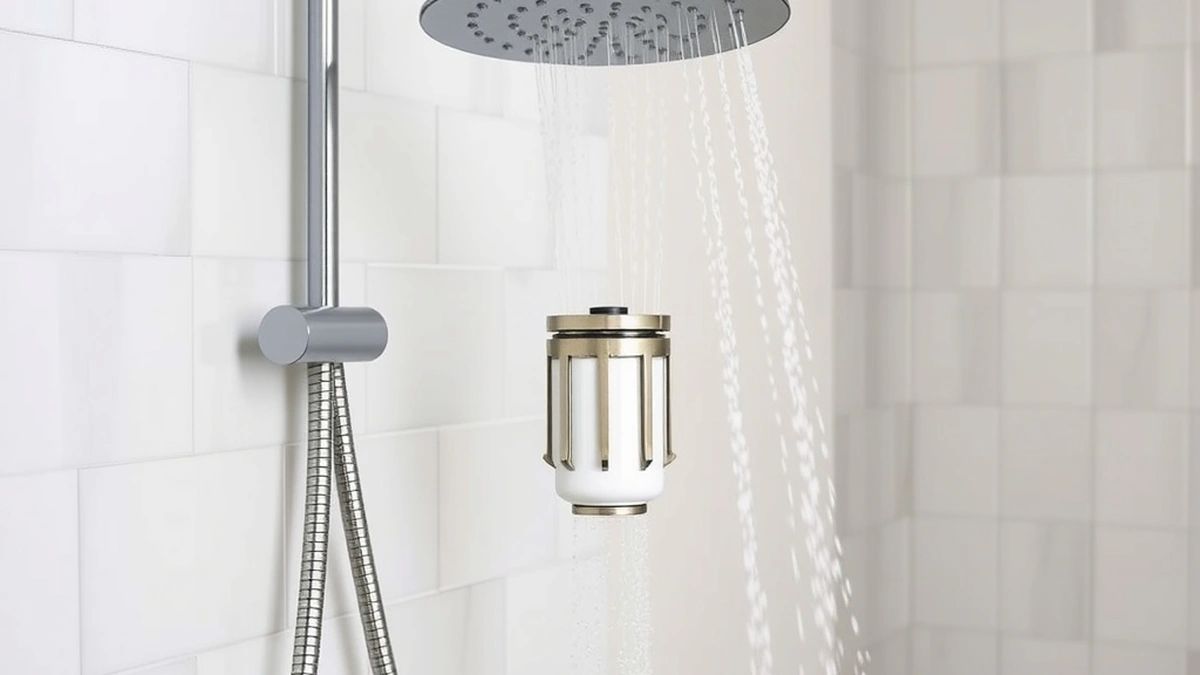
Choose a shower water filter by flow rating first, then media and thread fit. Units cost $25-$100, cartridges $15-$40 every 3-6 months, and a filter that restricts below 1.5 GPM will make the shower feel weak.
- Unit cost
- $25 - $100
- Cartridge cost
- $15 - $40
- Cartridge life
- 3 - 6 months
- Flow rating
- 1.5 - 2.5 GPM
- Thread
- 1/2 inch NPT
Some links on this page are affiliate links.If you buy through them we may earn a commission at no extra cost to you. We do not accept payment for rankings. Read the full disclosure.
Choose a shower water filter by flow rating first, then media and thread fit. Units cost $25-$100 and cartridges $15-$40 every 3-6 months. A filter that restricts below 1.5 GPM will turn a good shower into a weak one, and that is the most common reason these units get removed.
Flow is the spec that decides satisfaction
A shower filter adds restriction to the line. Every unit drops pressure, and the question is how much.
A filter rated at 2.0-2.5 GPM on a 2.5 GPM shower head will feel close to unfiltered. A filter rated at 1.5 GPM on the same head will feel noticeably weaker, and the head’s own flow restrictor may compound it.
If the existing shower already feels marginal, adding a filter makes it worse. Fix the pressure problem first, then filter.
Media types and what they target
| Media | Targets | Life | Cost |
|---|---|---|---|
| Carbon block | Free chlorine, taste | 3 - 6 months | $15 - $35 |
| KDF | Chlorine, some metals | 6 - 12 months | $25 - $45 |
| Carbon + KDF | Chlorine, metals, odor | 6 - 12 months | $30 - $50 |
| Vitamin C | Chlorine | 2 - 4 months | $20 - $40 |
Carbon is the baseline. KDF media uses a copper-zinc alloy that handles chlorine and some dissolved metals and lasts longer. A blend is common in mid-priced units.
Vitamin C media neutralizes chlorine quickly but has a short life and is sensitive to hot water. It is popular in units marketed for sensitive skin, and it works, but it costs more per month.
Thread fit and installation
Nearly all US shower arms use a 1/2-inch NPT thread. Most filters thread directly on with a washer.
Imported fixtures and some rain heads use different threads, and adapters are available but add a step. Measure before ordering if the fixture is not standard.
The filter body adds 2-4 inches below the arm. In a tub-shower combo with a low arm, that can put the head at chest height, which is the second most common reason a unit gets returned.
What a shower filter does not do
It does not soften water. Calcium and magnesium pass through, so scale on glass and tile continues at the same rate.
It does not remove iron. A well with iron will clog the cartridge in weeks and stain the shower anyway.
It does not fix pressure. A filter can only reduce flow, never increase it.
If spotting and scale are the complaint, the fix is at the entry point. Hard water symptoms covers what to look for, and water softener alternative installation covers the entry-point options.
Cost per shower
A $45 unit with a $25 cartridge every four months costs $45 + ($25 × 3) = $120 in the first year, or $10 per month.
A $90 unit with a $35 cartridge every six months costs $90 + ($35 × 2) = $160 in the first year, or $13 per month.
The cheaper unit is cheaper to own only if the cartridge actually lasts four months. Check the rated gallon life against your household’s shower minutes; a family of four can double the consumption of a single user.
Certification and claims
Shower filters are not covered by the same certification standards as drinking water filters, because the water is not ingested. That means claims are less regulated and more variable.
Look for third-party test data on chlorine reduction at a stated flow rate. A claim of “removes 99 percent of chlorine” without a flow rate is not reproducible.
Be skeptical of claims about absorption through skin. The measurable effect of a shower filter is on the water, and the rest is marketing.
Installation details that decide whether it stays
A shower filter is a five-minute install, and most of the failures are at the two threaded joints.
Wrap the shower arm with two or three turns of plumbers tape, thread the filter on by hand, and check that it hangs straight before attaching the head. A filter that hangs crooked puts lateral load on the threads and weeps at the top joint within weeks.
Use the supplied washer, and replace it whenever the cartridge is changed. A flattened rubber washer will not seal a second time, and a $1 part prevents a drip that runs down the wall.
Do not use a wrench on a plastic filter body. Hand-tight plus a quarter turn is the specification, and a wrench cracks the collar.
If the existing shower head is old, replace it at the same time. A scaled head on a new filter produces weak flow that everyone blames on the filter, and the head costs $20-$60.
Check the joint after the first hot shower, not just after installation. Heat expands the plastic and reveals a connection that was only snug when cold.
A buying sequence
- Measure the shower arm thread and the clearance below it.
- Note the shower head’s flow rating.
- Choose a filter rated at or above that flow.
- Pick media based on the complaint: chlorine, odor, or metals.
- Check cartridge price and rated life.
- Buy one spare cartridge with the unit.
What to ignore
Ignore units that promise softer water. They cannot remove hardness, and a shower is where scale is most visible, so the disappointment arrives fast.
Ignore a filter sold only on “wellness” benefits. The water chemistry claim is what matters, and it should be stated as a reduction at a flow rate.
Ignore the cheapest cartridge if it needs changing every six weeks. The annual cost is what you live with. Shower water filter installation covers the fit, and shower water filter maintenance covers the change interval and head cleaning. “”
Frequently asked questions
What flow rate should a shower filter have?
At least 1.5 GPM, and 2.0-2.5 GPM if your shower head is a standard model. A filter rated below the head's flow will make the shower feel weak.
Do shower filters really remove chlorine?
Most use carbon or KDF media that reduces free chlorine by a measurable amount. Reduction varies with media volume, flow rate, and water temperature, and no shower filter treats the whole house.
How often should a shower filter cartridge be changed?
Every 3-6 months, or when flow drops noticeably. A household with four daily showers will reach the rated gallon life sooner than a single-person household.
Will a shower filter help with hard water?
No. It does not remove calcium or magnesium, so scale on glass and fixtures continues. A softener or conditioner at the entry point is the correct tool.
Do shower filters fit all shower arms?
Most use a standard 1/2-inch NPT thread, which fits nearly all US shower arms. Imported or specialty fixtures may need an adapter.
Is a shower filter worth it?
It is worth it if chlorine smell or taste in the shower is the complaint. It is not worth it for hardness, iron, or pressure problems, which need different equipment.
Sources
Some links are affiliate links.If you buy through them we may earn a commission at no extra cost to you. We do not accept payment for rankings. Read the full disclosure.