
water softener alternative installation: what it involves
Salt-free softener alternatives install in 2-4 hours and cost $500-$1,800. See conditioner, descaler, and cartridge formats and what each needs.
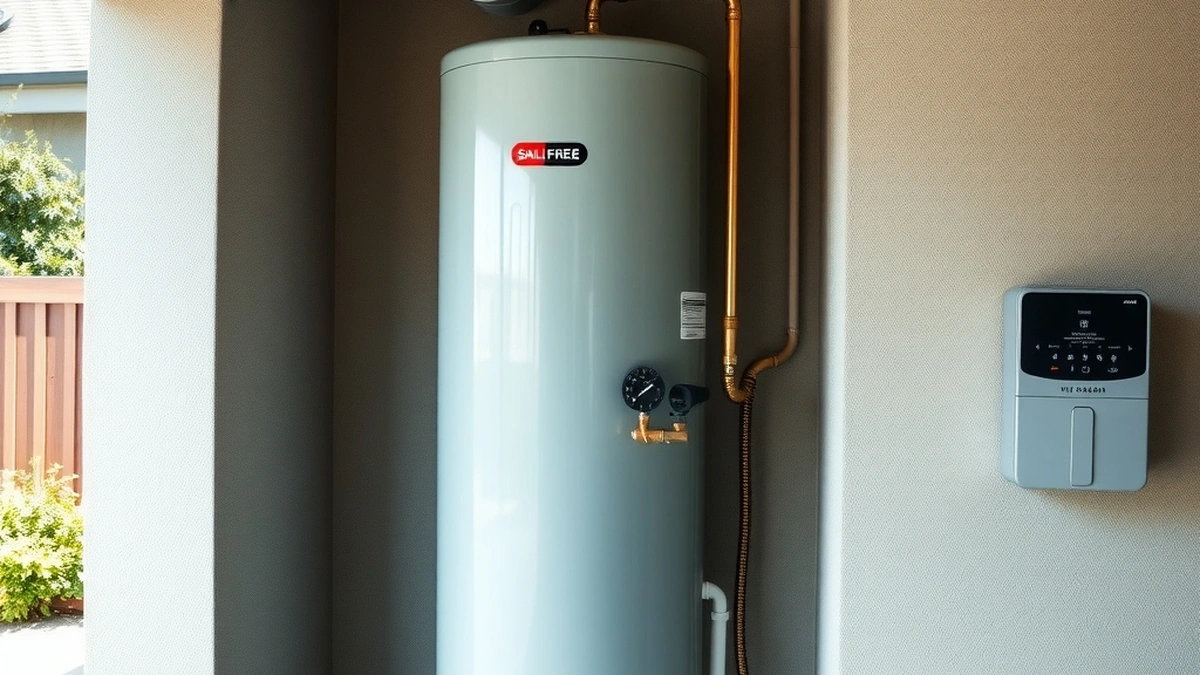
A water softener alternative installs in 2-4 hours and costs $500-$1,800 installed. Media conditioners need a bypass and wall space; cartridge descalers need a housing; electronic units need only a power outlet and a wrap on the pipe.
- Installed cost
- $500 - $1,800
- Labor time
- 2 - 4 hours
- Drain required
- None on media units
- Salt use
- None
- Media life
- 3 - 5 years
Some links on this page are affiliate links.If you buy through them we may earn a commission at no extra cost to you. We do not accept payment for rankings. Read the full disclosure.
A water softener alternative installs in 2-4 hours and costs $500-$1,800 installed. What the job involves depends entirely on which alternative: a media conditioner needs a bypass and wall space, a cartridge descaler needs a housing, and an electronic unit needs an outlet and 15 minutes.
Three products wear the label
A water softener alternative is any device marketed to reduce scale without ion exchange. Three formats dominate, and they are not equivalent in hardware or results.
Template-assisted crystallization conditioners pass water over a media bed that encourages calcium carbonate to form microscopic crystals that stay suspended instead of sticking to surfaces. They need a tank, a bypass, and nothing else.
Cartridge descalers use a smaller housing with a media or polymer cartridge, usually at point of entry or under a sink. They need a housing and a cartridge change every 6-12 months.
Electronic and magnetic descalers wrap a coil or magnets around the pipe and plug into an outlet. They involve no plumbing cut at all, which is why they are popular in rentals.
Hardware and installation by type
| Type | Installed cost | Time | Plumbing work | Power |
|---|---|---|---|---|
| TAC media tank | $500 - $1,800 | 2 - 4 hours | Bypass cut-in | None |
| Cartridge descaler | $200 - $600 | 30 - 60 min | Housing cut-in | None |
| Electronic descaler | $100 - $300 | 15 min | None | 120V outlet |
| Magnetic clamp | $40 - $150 | 5 min | None | None |
The price spread tracks the hardware, not the labor. A media tank is a $300-$900 pressure vessel; an electronic unit is a $60 circuit board in a plastic case.
What the installer actually does
On a media tank: shut off the main, drain the line, cut out a section, fit a three-valve bypass, mount the tank on a bracket or a stable base, connect two unions, and flush.
On a cartridge: same cut-in, smaller housing, one cartridge, and a mounting bracket.
On an electronic unit: clean a section of pipe, wrap the coil, secure it with ties, and plug in the adapter. No water is shut off, which is why the job takes minutes.
The media tank is the only one that resembles a softener install. It still skips the drain, the brine tank, and the electrical connection, which is most of what makes a softener a plumber job.
What it does to hardness numbers
Nothing. A conditioner does not remove calcium or magnesium, so a titration test before and after reads the same grains per gallon. If a salesperson promises a hardness drop, the product is either an ion exchange softener or a misrepresentation.
What changes is scale behavior. Treated water tends to release scale as a suspension rather than depositing it on heat exchange surfaces, which is why water heater elements and shower heads stay cleaner in some installations.
That effect is difficult to verify in a single home, and manufacturer claims vary widely. Treat performance claims as claims, not measured results, and buy from a seller with a return policy.
Sizing a media conditioner
Flow rate sets the tank. Whole-house conditioners typically support 8-15 GPM, and a three-bathroom home peaks near 6-8 GPM. A 1.5-cubic-foot tank handles most single-family homes; 2.5 cubic feet is for higher flow.
Hardness decides whether it is appropriate. At 0-3 grains per gallon the water is already soft. At 3-7 grains, conditioning is a reasonable choice for scale control. Above 10 grains, scale volume is high enough that many homeowners still prefer ion exchange, because a conditioner does not reduce the mineral load.
Water temperature and flow both affect crystallization. A unit sized for 8 GPM that sees 12 GPM during irrigation will underperform, so size for peak, not average.
Installation steps for a media unit
- Test hardness and iron; iron above 2-3 ppm needs upstream treatment.
- Confirm the main’s size, material, and shutoff condition.
- Mount the bypass and tank bracket, allowing 12 inches above for media expansion.
- Connect the unions and check that the flow arrow points downstream.
- Flush to drain for 5-10 minutes to clear media fines.
- Recheck for leaks after 24 hours and again after a week.
Cost over ten years
A $900 media conditioner with $250 media replacement in year five: $900 + $250 = $1,150 over ten years, plus nothing for salt.
A softener at $1,600 installed with $250 per year in salt and a $450 rebed in year ten: $1,600 + ($250 × 10) + $450 = $4,550.
The conditioner is cheaper by roughly $3,400 over a decade. What you give up is actual hardness removal, which matters for soap use, water heater efficiency, and the feel of the water. That is the trade, stated plainly.
If the choice is still open, salt-based versus salt-free softener lays out what each removes, and salt-free water softener cost explains the equipment bands. For the plumbing detail on the tank version, salt-free water softener installation walks the same cut-in step by step.
One installation detail worth stating: put the conditioner after the water heater’s cold feed but before any branch that serves irrigation, or skip irrigation entirely. A unit sized for household peak flow will be overwhelmed by a lawn zone drawing 12 GPM, and the media bed does not benefit grass.
Another: keep the tank out of freezing. A media tank full of water that freezes will crack the vessel, and warranty coverage typically excludes freeze damage. Garage installs in northern states need insulation and a heat source, which is a $100-$300 addition that rarely appears in the quote.
Frequently asked questions
How long does a water softener alternative take to install?
Two to four hours for a media conditioner with a bypass. A cartridge descaler takes 30-60 minutes, and an electronic unit takes 15 minutes because it only needs a wrap and an outlet.
Do salt-free alternatives need a drain?
Media conditioners and cartridge descalers do not. They have no regeneration cycle and no brine discharge, which is why they fit in closets and crawlspaces where a softener cannot go.
Do salt-free alternatives actually soften water?
No. They condition water so scale is less likely to adhere, but they do not remove calcium and magnesium. A hardness test still reads the same grains per gallon after installation.
What is the cheapest water softener alternative to install?
An electronic descaler at $100-$300 with no plumbing work. It is also the least proven; a cartridge or media unit at $500-$1,800 has more consistent results.
Can I install a salt-free conditioner myself?
Yes on a PEX or copper main with a working shutoff. The job is a bypass, two unions, and a bracket. Soldering copper is the only step that requires experience.
How long does the media last in a salt-free conditioner?
Three to five years under normal use, then $150-$400 for replacement media. Cartridge descalers are replaced every 6-12 months at $40-$120.
Sources
Some links are affiliate links.If you buy through them we may earn a commission at no extra cost to you. We do not accept payment for rankings. Read the full disclosure.


