
salt-free water softener installation: what it involves
Salt-free softener installation takes 2-4 hours, costs $500-$1,800 installed, and needs no drain or salt. See the plumbing, mounting, and setup steps.
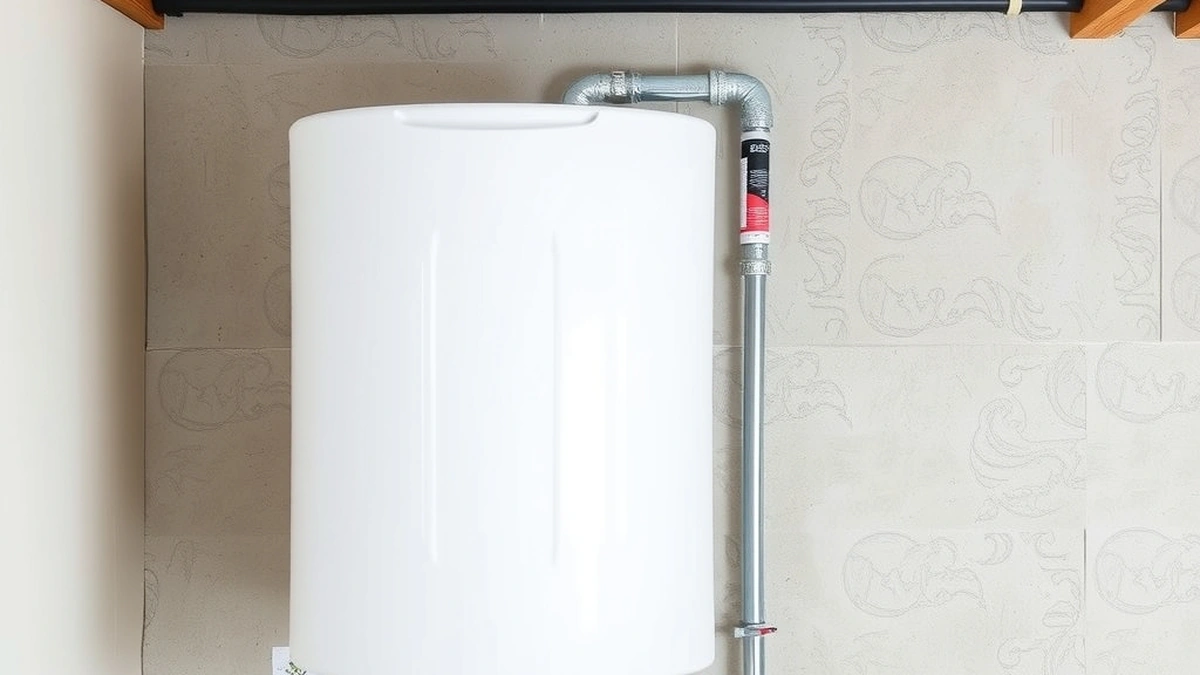
Salt-free water softener installation takes 2-4 hours on a standard 3/4-inch main line. It involves a bypass, a mounting bracket, two plumbing connections, and no drain, salt, or electrical line, for a total of $500-$1,800 installed.
- Installed cost
- $500 - $1,800
- Labor time
- 2 - 4 hours
- Drain required
- None
- Electrical required
- None for media tanks
- Media life
- 3 - 5 years
Some links on this page are affiliate links.If you buy through them we may earn a commission at no extra cost to you. We do not accept payment for rankings. Read the full disclosure.
Salt-free water softener installation takes 2-4 hours and costs $500-$1,800 installed, which is less than half the labor of a salt-based system. There is no drain line, no brine tank, and no electrical connection on a media-tank unit. That short equipment list is why the job is often a same-day install.
What the device is, and what installation means
A salt-free water softener is a point-of-entry conditioner that runs water through a catalytic or template-assisted crystallization media to change how hardness minerals behave, without removing them. It is installed on the main line after the meter or pressure tank and before the water heater.
Installation means cutting the main line, fitting a bypass, mounting the tank, and connecting two unions. Nothing else. No regeneration cycle means no drain, no salt, and no timer to program.
That is the whole mechanical job. The complications come from where the main line runs, not from the device.
The five parts of the job
| Step | What happens | Time |
|---|---|---|
| 1. Isolate and drain | Close the main valve, open a low faucet | 15 min |
| 2. Cut in the bypass | Remove a section of main, fit bypass valve | 45 - 90 min |
| 3. Mount the tank | Bracket to wall or set on a stable base | 20 - 40 min |
| 4. Connect unions | Solder, press, or push-fit to the head | 30 - 60 min |
| 5. Flush and check | Run water, purge air, inspect joints | 20 - 30 min |
A 3/4-inch copper main with a shutoff and 4 feet of clear wall is the easy case: 2 hours. A 1-inch PEX main in a finished ceiling with no shutoff is the hard case: 5-6 hours plus patching.
What the installer brings and what you pay for
The equipment range is $250-$1,200 depending on tank size and media volume. Installation labor at $95-$175 per hour for 2-4 hours is $190-$700. Fittings and a bypass valve add $60-$150.
Add those: $250 + $190 + $60 = $500 at the low end; $1,200 + $700 + $150 = $2,050 at the high end. The published $500-$1,800 installed band covers the common middle, where most homes land.
Compare that to a salt-based softener at $1,200-$4,500 installed. The gap is not the tank; it is the drain line, the electrical outlet, the brine tank footprint, and the extra hour of setup for the regeneration valve.
Salt-free versus salt-based, on install effort
A salt-based softener needs a drain within 10-15 feet, a grounded outlet, a 4-square-foot footprint for two tanks, and a programming step for hardness and capacity. A salt-free conditioner needs a wall, a bypass, and nothing else.
That difference decides placement. Salt-free units go in closets, under stairs, and in crawlspaces where a brine tank would never fit. Salt-based units go in basements and garages near a floor drain.
It also decides who can do the work. A homeowner with PEX tools and a Saturday can install a salt-free tank. A salt-based system is a plumber job for most people because of the drain and the valve programming.
For the capability side of that comparison, salt-based versus salt-free softener explains what each does to hardness and scale. If price is the deciding factor, salt-free water softener cost breaks the equipment bands down further.
Sizing before you cut the line
Flow rate is the number that sets the tank. Whole-house filters and conditioners commonly support 8-15 GPM, and a three-bathroom home peaks near 6-8 GPM with two showers and a laundry running. Size for peak, not average.
Hardness decides whether the device is appropriate at all. At 0-3 grains per gallon the water is already soft and a conditioner buys little. At 7-10 grains the case is reasonable. Above 10 grains, scale volume is high enough that some homeowners still prefer ion exchange.
Media volume drives both price and contact time. A 1.5-cubic-foot tank handles most single-family homes; a 2.5-cubic-foot tank is for higher flow or very hard water. Media is replaced every 3-5 years at $150-$400.
Six steps to a clean install
- Test hardness and iron; iron above 2-3 ppm needs treatment upstream.
- Confirm the main’s size and material, and buy the matching bypass kit.
- Pick a location out of direct sun and protected from freezing.
- Install the bypass first so the house can be returned to service during the job.
- Flush the new tank to drain for 5-10 minutes before putting it online.
- Recheck for leaks at both unions after 24 hours and again after a week.
What changes the labor number
Four conditions move the quote: no existing main shutoff (adds $150-$350 for a valve install), a main buried in a finished wall (adds drywall and patching), a water heater or furnace blocking access (adds relocation or a longer run), and a crawlspace install (adds $200-$500 in difficulty).
The device itself is the least variable line. A 1.5-cubic-foot media tank costs $600-$900 almost anywhere; the install is what separates a $700 invoice from a $1,600 one.
One expectation to set: a salt-free unit will not change a hardness test result. If a salesperson promises a grains-per-gallon drop, that is a different product. Read what a water softener removes before you sign, and check water softener sizing if you are weighing a salt-based unit instead.
Frequently asked questions
Does a salt-free softener need a drain line?
No. A salt-free conditioner does not regenerate, so it has no brine discharge. That is why it can go where a salt softener cannot, such as a closet or a crawlspace with no drain.
How long does salt-free softener installation take?
Two to four hours for a straightforward install on an accessible 3/4-inch main. Adding a bypass, moving a water heater, or working in a tight crawlspace can push it to a full day.
Do I need an electrician for a salt-free softener?
Not for a media tank, which has no controls. A cartridge-based or electronic descaling unit may need a nearby outlet, which usually means a $150-$350 electrician visit.
Can a salt-free softener be installed outdoors?
Only in a freeze-protected enclosure. The media tank and plastic head will crack if water freezes inside, and ultraviolet exposure degrades the housing over years.
Does salt-free installation require a permit?
Most jurisdictions do not require a permit for a point-of-entry appliance swap on an existing line. Cutting and rerouting the main line may require one, so check before scheduling.
Will a salt-free softener reduce hardness numbers on a test?
Usually not. It conditions water so scale is less likely to adhere, but a titration test still reports the same grains per gallon. Do not expect a hardness drop on the report.
Sources
Some links are affiliate links.If you buy through them we may earn a commission at no extra cost to you. We do not accept payment for rankings. Read the full disclosure.


