How to choose a water softener alternative
Choose a softener alternative by what you need changed, then by type. See conditioner, descaler, and electronic options and the $100-$1,800 range.
Choose a softener alternative by the outcome you want. If you need lower hardness, no alternative works and a softener is the answer. If you need less scale adhesion with no salt or drain, a media conditioner at $500-$1,800 fits.
- Installed cost
- $500 - $1,800
- Media life
- 3 - 5 years
- Salt used
- None
- Drain required
- None
- Hardness removed
- None
Some links on this page are affiliate links.If you buy through them we may earn a commission at no extra cost to you. We do not accept payment for rankings. Read the full disclosure.
Choose a water softener alternative by the outcome you actually need. If the goal is a lower hardness reading, no alternative delivers it and a softener is the answer. If the goal is less scale adhesion with no salt and no drain, a media conditioner at $500-$1,800 is the fit.
The category boundary
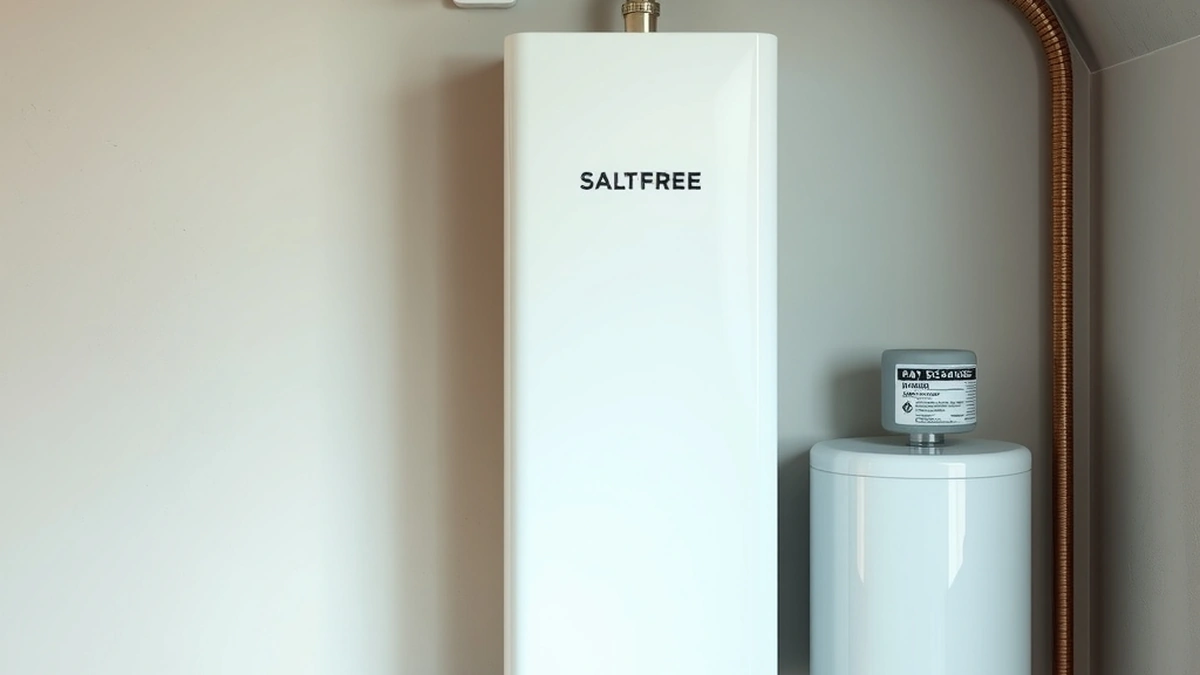
A water softener alternative is any device sold to reduce scale without ion exchange. That includes media conditioners, cartridge descalers, and electronic or magnetic units.
None of them removes calcium or magnesium. A softener does, by exchanging those minerals for sodium or potassium on a resin bed.
That single difference decides most purchases. Spotted glass, stiff laundry, and soap that will not lather are hardness symptoms, and only ion exchange changes them.
If those symptoms are the complaint, stop shopping in this category. A softener at $1,200-$4,500 installed is the honest answer, and a conditioner bought instead is money spent on a device that cannot produce the result.
If the complaint is scale on a tankless heater’s heat exchanger or white crust on a faucet, conditioning is a reasonable attempt at the problem, with the caveat that results vary by water chemistry.
Conditioner versus descaler versus electronic
| Type | Cost | Plumbing | Life | Best for |
|---|---|---|---|---|
| Media conditioner | $500 - $1,800 | Bypass cut-in | 3-5 years media | Whole house |
| Cartridge descaler | $200 - $600 | Housing cut-in | 6-12 months | Smaller homes |
| Electronic descaler | $100 - $300 | None | 5-10 years | Rentals |
| Magnetic clamp | $40 - $150 | None | Indefinite | Nothing proven |
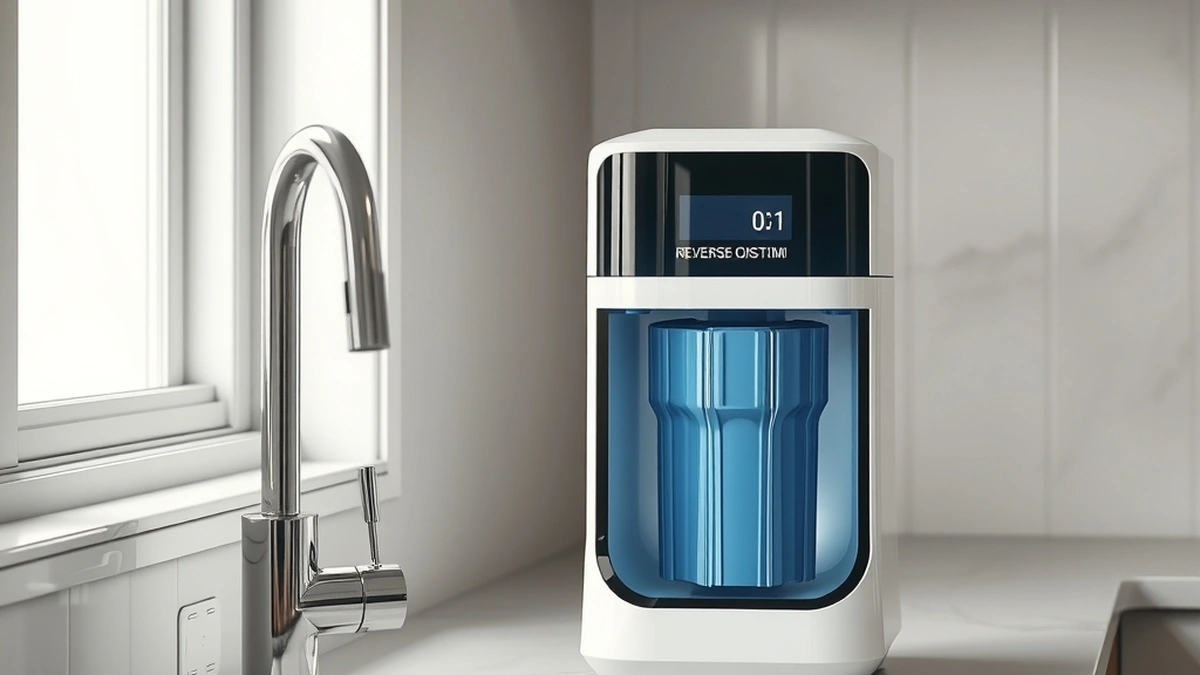
A media conditioner treats full household flow with real contact time. A cartridge handles lower flow and needs frequent replacement. An electronic unit wraps a coil on the pipe and has the weakest evidence base.
The price ordering matches the capability ordering, which is unusual in this category and worth noting.
What conditioning changes
Conditioned water tends to release scale as a suspension rather than depositing it on heat exchange surfaces. That is the mechanism behind the scale-reduction claims.
The effect is real in some installations and hard to verify in a single home. Manufacturer claims vary widely, and independent test data is thin.
Treat claims as claims. Buy from a seller with a return policy and test your own fixtures before and after: shower glass, kettle, and water heater element are the three places scale shows first.
Photograph the shower glass before installation and again after three months. A visual comparison is crude, but it is more honest than a brochure claim and it costs nothing.
If the water is above 10 grains per gallon, conditioning has more scale to manage than at 5 grains, and the visual difference may be small. That is a reason to set expectations low rather than to spend more on a larger tank.
Sizing a conditioner
Flow sets the tank. Whole-house conditioners typically support 8-15 GPM, and a three-bathroom home peaks near 6-8 GPM.
Hardness sets expectations, not size. At 10 grains per gallon, a conditioner does not reduce the mineral load; it only changes how that load behaves.
A 1.5-cubic-foot tank handles most single-family homes. A 2.5-cubic-foot tank is for higher flow or harder water.
Installation constraints
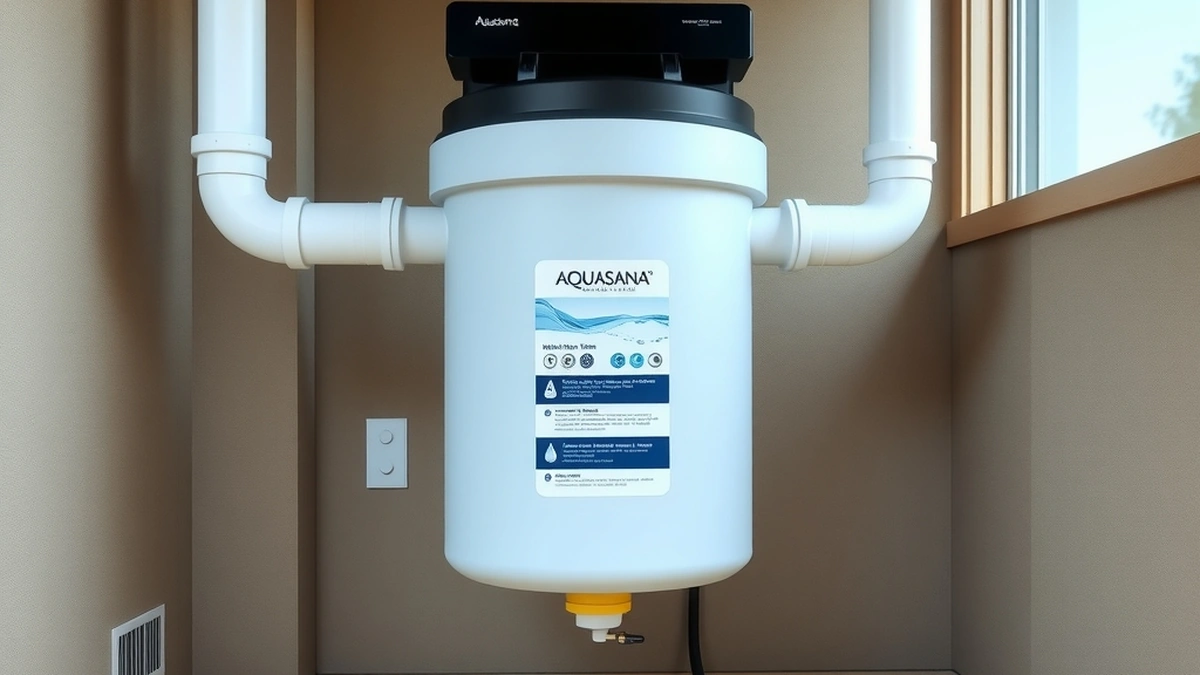
A media conditioner needs a bypass, a level base, and 12 inches above the tank. No drain, no outlet, no salt.
That is why it fits closets and crawlspaces where a softener cannot go. It also means a renter with main-line access can install one and remove it later, which is the single strongest argument for the format.
Freeze protection matters. A tank full of water that freezes cracks, and freeze damage is usually excluded from warranty coverage. A garage install in a cold climate needs insulation and a heat source, which adds $100-$300 and rarely appears in the quote.
Freeze protection matters. A tank full of water that freezes cracks, and freeze damage is usually excluded from warranty coverage.
Cost over ten years
A $900 conditioner with $250 media in year five: $1,150 over ten years, plus nothing for salt.
A $1,600 softener with $250 per year in salt and a $450 rebed in year ten: $4,550.
The conditioner saves about $3,400. What it gives up is hardness removal, which matters for soap, appliances, and the feel of the water.
A buying sequence
- Test hardness and iron, and decide whether hardness removal is the actual goal.
- Measure peak flow by counting simultaneous fixtures.
- Choose a media conditioner for whole-house coverage.
- Confirm replacement media price and availability.
- Check freeze protection and clearance at the install spot.
- Get a quote that names media volume, not just tank dimensions.
What to ignore
Ignore “softens without salt” phrasing. The device conditions, and the distinction is the purchase.
Ignore laboratory scale tests with no method description. Ask what was measured: mass, adhesion, or appearance.
Ignore a unit sized only in gallons per day. Flow in GPM decides whether media has contact time. Salt-based versus salt-free softener sets out the capability gap, water softener alternative installation covers the plumbing work, and water softener alternative maintenance covers the media and cartridge intervals.
One last check before you buy: ask what the return policy covers once the unit is installed. A conditioner that has been cut into a main line is treated as used by most sellers, and a 30-day return that requires original packaging is not a return policy for installed equipment. “”
Frequently asked questions
Do water softener alternatives actually soften water?
No. They condition water so scale is less likely to adhere, but they do not remove calcium or magnesium. A hardness test reads the same after installation.
Which alternative works best?
A media conditioner has the most consistent results and the longest service life. Cartridge descalers are cheaper and need more frequent changes. Electronic units have the weakest evidence.
How much does a water softener alternative cost?
Five hundred to one thousand eight hundred dollars installed for a media conditioner, two hundred to six hundred for a cartridge descaler, and one hundred to three hundred for an electronic unit.
Do alternatives work with tankless water heaters?
They are commonly paired with tankless heaters to reduce scale adhesion on the heat exchanger, but they do not eliminate scale the way ion exchange does.
How often do the media need replacing?
Every three to five years at $150-$400. Cartridge descalers need a new cartridge every 6-12 months at $40-$120.
Can I install an alternative myself?
A media tank needs a bypass and two unions, which is a 2-4 hour job. A cartridge unit is a 30-60 minute housing install. An electronic unit needs no plumbing at all.
Sources
Some links are affiliate links.If you buy through them we may earn a commission at no extra cost to you. We do not accept payment for rankings. Read the full disclosure.