How to choose a water test kit
Choose a water test kit by the contaminants you need to measure and the precision required. See strips vs meters vs lab panels and $15-$150 pricing.
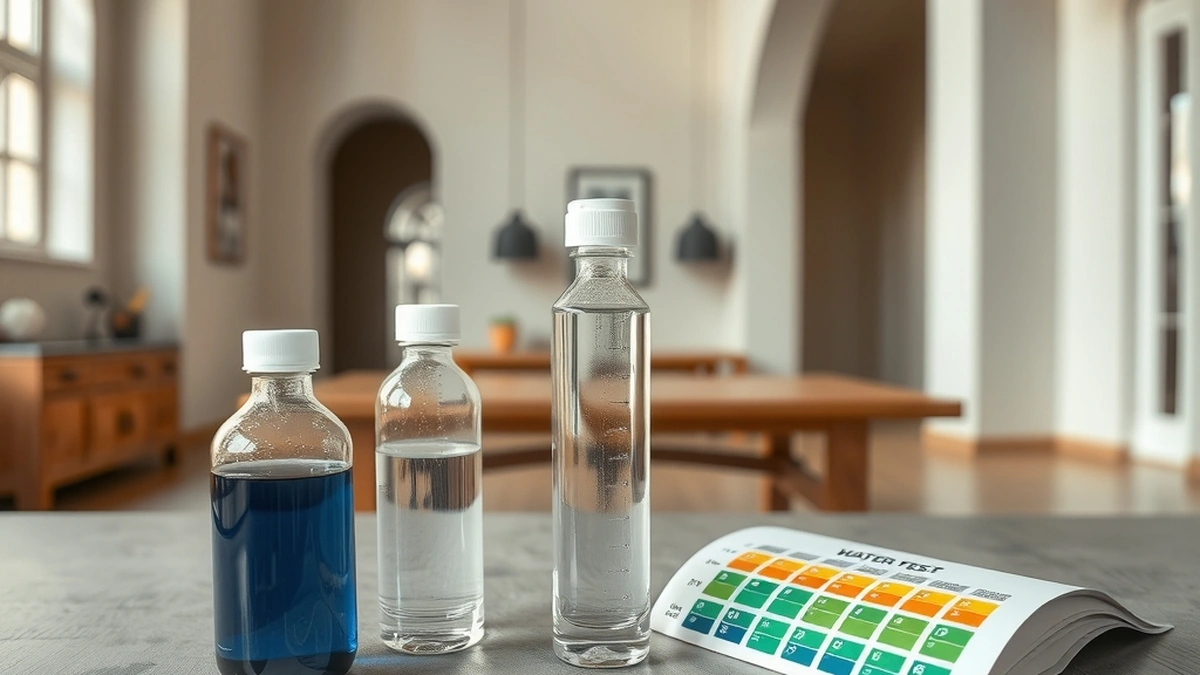
Choose a water test kit by what you need to measure and how precise the answer must be. Strips at $15-$40 answer quick questions; a lab panel at $40-$150 gives the numbers that size equipment.
- Strip kit
- $15 - $40
- Digital meter
- $30 - $120
- Lab panel
- $40 - $150
- Turnaround
- 3 - 10 days
- Best for sizing
- Lab panel
Some links on this page are affiliate links.If you buy through them we may earn a commission at no extra cost to you. We do not accept payment for rankings. Read the full disclosure.
Choose a water test kit by the question you need answered. Strips at $15-$40 tell you whether something is off; a lab panel at $40-$150 gives the numbers that size a softener or a filter. Using the wrong one costs far more than the kit.
Start with the decision the test serves
Every test exists to support a decision. Write the decision down before buying anything.
If the decision is “do I need a softener,” you need hardness in grains per gallon with enough precision to choose a capacity. That is a lab panel or a drop-count kit.
If the decision is “is my RO membrane still working,” you need total dissolved solids before and after the membrane. A $20 TDS meter answers that.
If the decision is “is my well safe to drink,” you need bacteria and nitrate, and those require a lab.
Strips, meters, drop kits, labs
| Kit type | Cost | Precision | Best for |
|---|---|---|---|
| Test strips | $15 - $40 | Wide bands | Quick screening |
| Digital TDS meter | $15 - $40 | Good for TDS | RO performance |
| Digital pH meter | $30 - $120 | Good with calibration | pH tracking |
| Drop-count kit | $25 - $60 | Moderate | Hardness, iron |
| Lab panel | $40 - $150 | Reference grade | Sizing equipment |
Strips are fast and cheap and imprecise. A hardness pad that reads “hard” covers everything from 7 to 14 grains, which is a factor-of-two error in the number that sizes your softener.
Meters measure one parameter well. A TDS meter reports electrical conductivity converted to ppm, which is not hardness and not a contaminant count.
Drop-count kits use titration and are more precise than strips at a similar price. They take five minutes and a steady hand.
What a lab panel should include
For a private well: bacteria (total coliform and E. coli), nitrate, iron, manganese, hardness, pH, and arsenic. That is the minimum useful panel.
For municipal water, the utility’s annual quality report covers most of it. Test privately if you are on a well, if the building has older plumbing, or if you want lead at the tap.
Add PFAS only if you have a reason: a known local contamination issue, or a utility report that flags it. PFAS panels cost more and are not part of a standard residential package.
Sample handling decides the result
A lab result is only as good as the sample. Use the bottle the lab supplies, fill to the line, cap immediately, and keep it cold.
Bacteria samples have a holding time, usually 24-30 hours. A sample that sat in a warm car overnight will culture something, and the result will not describe your well.
Take the sample from a faucet that bypasses treatment if you want raw water, and from the kitchen tap if you want to know what you are drinking. Label both.
Cost and frequency
An annual bacteria and nitrate test runs $40-$80. A full panel every two to three years runs $100-$150.
That is $60-$100 per year averaged out, which is less than a single unnecessary cartridge change and far less than a wrongly sized softener.
Test sooner after flooding, after any well work, or when taste, color, or pressure changes. A well that has never been tested should get a full panel before any equipment is purchased.
A buying sequence
- Write down the decision the test supports.
- Choose the kit type that gives enough precision for that decision.
- Confirm the panel includes the parameters you need.
- Check the lab’s certification and turnaround time.
- Buy the sample bottles the lab supplies rather than improvising.
- Record results in one place with the date.
What to ignore
Ignore kits that report only “safe” or “unsafe.” You cannot size equipment from a verdict.
Ignore TDS as a proxy for contamination. It measures conductivity, and water can be high in TDS and perfectly safe or low in TDS and contaminated.
Ignore free test offers that exist to generate a sales visit. Take the free test if you like, then confirm the numbers with an independent lab. Water testing cost covers pricing, water test kit installation covers the sampling routine, and how to read a water test report explains what each number means. “”
Building a testing routine that holds up
The kit is one part of a routine. Without the routine, a drawer full of strips produces a handful of numbers with no context.
Pick one tap for treated water and one for raw water, and use the same ones every time. A hardness result from the kitchen tap and a hardness result from a bathroom tap are not comparable if one is softened and the other is not.
Test at the same time of day. First-draw samples carry different chemistry than samples after a two-minute flush, and both are useful, but only if you know which one you took.
Write results down immediately. A number remembered a week later is a guess, and the trend is what tells you whether a filter is exhausting faster than it used to.
Keep the kit in a dry cupboard, not a bathroom. Humidity ruins strips, and heat ruins reagents, and both fail silently. Replace strips annually whether or not they are used up, because the pad chemistry ages in the container.
If a result matters for a purchase over $500, confirm it with a lab. The kit tells you where to look; the lab tells you what to buy.
Frequently asked questions
Are home test strips accurate enough to size a softener?
No. Strip hardness bands are often 25-50 ppm wide, which cannot distinguish a 32,000 from a 48,000 grain unit. Use a lab panel or a drop-count kit for sizing.
What should a basic well water test include?
Bacteria, nitrate, iron, manganese, hardness, and pH at minimum. Every two to three years, add arsenic and a broader metals panel.
How much does a lab water test cost?
Forty to one hundred fifty dollars for a residential panel, depending on how many parameters are included and whether bacteria culture is part of it.
How long do lab results take?
Three to ten days. Bacteria tests need incubation time, and metals run on different instruments, so panels with both take longer.
Do I need a TDS meter?
Only to check whether a reverse osmosis membrane is still rejecting. TDS is not hardness, iron, or nitrate, and it should not be used to size treatment equipment.
How often should I test my water?
Bacteria and nitrate annually on a private well, a full panel every two to three years, and a retest whenever taste, color, or pressure changes.
Sources
Some links are affiliate links.If you buy through them we may earn a commission at no extra cost to you. We do not accept payment for rankings. Read the full disclosure.