
water test kit installation: what it involves
A water test kit needs no plumbing: setup is 5 minutes of unpacking plus a sampling routine. See strip, meter, and lab kit choices and how to sample.
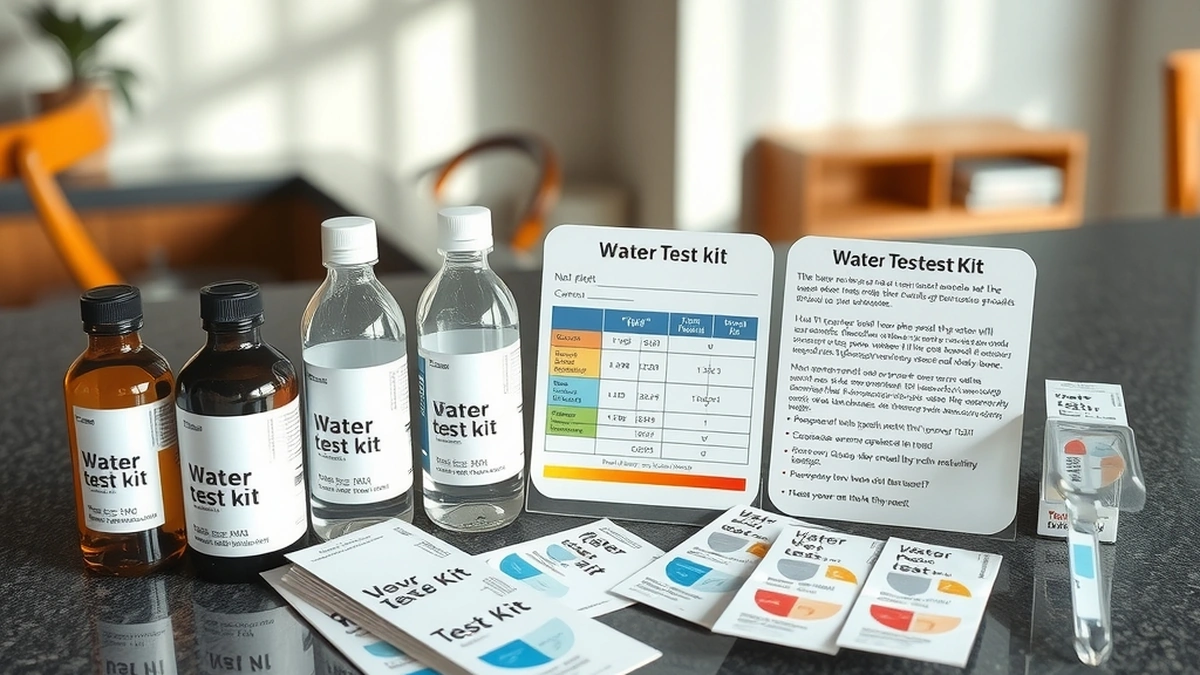
Water test kit installation is not a plumbing job: it is 5 minutes of unpacking plus a sampling routine. Diy strips and meters cost $15-$60, while a lab kit with shipping runs $40-$150 and gives the numbers that actually size equipment.
- Strip kit
- $15 - $40
- Digital meter
- $30 - $120
- Lab test
- $40 - $150
- Sample volume
- 250 - 500 mL
- Turnaround
- 3 - 10 days
Some links on this page are affiliate links.If you buy through them we may earn a commission at no extra cost to you. We do not accept payment for rankings. Read the full disclosure.
Water test kit installation is not a plumbing job. Setup takes about 5 minutes of unpacking and reading the instructions, then a sampling routine you repeat every year. The kit itself costs $15-$40 for strips, $30-$120 for a digital meter, or $40-$150 for a lab panel with shipping.
What “installation” means here
A water test kit is a set of reagents, strips, or sample bottles used to measure water chemistry. There is nothing to mount, plumb, or wire. The only installation decisions are where you keep the kit and how you calibrate a meter.
That makes the real question different from other pages in this section: not how to install it, but how to choose the right kit and take a sample that means something.
The cost of a bad sample is a wrong equipment purchase. A strip that reads hardness as “moderate” when the lab would report 14 grains per gallon will send you to a 32,000-grain softener that exhausts in three days.
Matching the kit to the question
| Kit type | Cost | Measures | Accuracy |
|---|---|---|---|
| Test strips | $15 - $40 | pH, hardness, chlorine, nitrate | Rough bands |
| Digital TDS meter | $15 - $40 | Total dissolved solids only | Good for TDS |
| Digital pH meter | $30 - $120 | pH | Good with calibration |
| Drop-count kit | $25 - $60 | Hardness, iron | Moderate |
| Lab panel | $40 - $150 | Full chemistry plus bacteria | Reference grade |
Strips answer “is something wrong” quickly. A lab panel answers “what size equipment do I buy.” If you are spending $1,200-$4,500 on a softener, the $40-$150 lab test is the cheapest part of the project.
A TDS meter is the most misunderstood tool on the list. It measures electrical conductivity and reports it as ppm, which is not hardness, not iron, and not nitrate. It is useful for checking whether an RO membrane is still rejecting, and little else.
Taking a sample that holds up
- Read the kit’s instructions and check every expiry date before opening anything.
- Run the cold tap for 2-3 minutes, or purge the well line, so you sample fresh water not water that sat in the pipe.
- Fill the supplied bottle to the line, cap it immediately, and avoid touching the inside of the cap.
- Label the bottle with the date, the tap, and whether the water was treated or raw.
- Keep the sample cold and ship or drop it off the same day.
- Record the results in one place with the date, so you can see trends rather than one snapshot.
For a well, sample at a faucet that bypasses treatment if you want raw water, and at the kitchen tap if you want to know what you are drinking. Both numbers matter, and mixing them up is the most common sampling error.
Bacteria samples are their own procedure. Use the sterile bottle, do not rinse it, and get it to the lab within the holding time, usually 24-30 hours. A sample that sat in a warm truck for two days will culture something, just not the something you wanted to measure.
Setup details people miss
Calibrate a pH meter with fresh buffer solution before the first use and every few weeks after. A meter that has drifted by 0.5 pH will mislead you about corrosion risk and about whether a neutralizer is needed.
Store strips in a sealed container away from humidity. A strip that has absorbed moisture from a bathroom cabinet reads low, and the error is invisible.
Check the reagent dates on drop-count kits. Hardness reagents expire, and an expired bottle can read several grains low, which is exactly the error that undersizes a softener.
If the kit includes a color chart, read it in daylight, not under a warm kitchen bulb. Color matching under incandescent light is unreliable, and the difference between two hardness bands can be one shade.
What the numbers decide
Hardness is the first number. Soft is 0-3 grains per gallon, moderate 3-7, hard 7-10, and very hard above 10. A softener is usually justified above 7, optional at 3-7, and unnecessary below 3.
Iron is the second. Above 2-3 ppm, a softener cannot keep up and a dedicated iron filter is the correct purchase. Nitrate above 10 mg/L is a third flag that changes the equipment list entirely.
pH, alkalinity, and TDS round out the picture. Low pH corrodes plumbing and calls for a neutralizer. High TDS with a bad taste may point to RO. None of these can be read from a strip with confidence.
The annual rhythm
Test bacteria and nitrate every year on a private well. Run a full panel every two to three years, or sooner after flooding, a new well, or any change in taste, color, or smell. Test treated water at the tap once a year to confirm the equipment is still doing its job.
Replace strips when they expire, recalibrate meters quarterly, and keep a log. A three-year record of hardness and iron is more useful than any single result, because it shows whether a filter is exhausting faster than expected.
For the pricing side of lab work, water testing cost breaks out panels. And once you have numbers, how to read a water test report explains which values map to which equipment decision. If you have not bought a kit yet, how to choose a water test kit compares panels by the contaminants they actually report, which matters more than the number of test strips in the box.
Frequently asked questions
Do water test kits need installation?
No plumbing is involved. Setup means unpacking, checking expiry dates, calibrating a meter if you have one, and reading the sampling instructions before you fill anything.
How accurate are home test strips?
Strips are useful for a rough reading and useless for sizing decisions. Hardness bands are typically 25-50 ppm wide, which is not enough to choose between a 32,000 and 48,000 grain softener.
How much water do I need for a lab test?
Usually 250-500 milliliters, collected in the bottle the lab supplies. Follow their fill line and cap it immediately; headspace and delay both change the result.
How long does a lab water test take?
Three to ten days depending on the panel. Bacteria tests need incubation time, and nitrate and metals run on different instruments, so turnaround varies.
Should I test before or after my treatment system?
Both. Test raw water at the well or entry point to size equipment, then test treated water at the tap to confirm the system is working.
How often should I test well water?
Once a year for bacteria and nitrate, and every two to three years for a full panel including metals and hardness. Test sooner after flooding or any change in taste or color.
Sources
Some links are affiliate links.If you buy through them we may earn a commission at no extra cost to you. We do not accept payment for rankings. Read the full disclosure.


