Ion Hard Water Shampoo: Chelating on a Budget
Ion's hard water shampoo uses chelating agents to lift mineral film at a drugstore price. See how it compares with salon formulas and what it cannot fix.
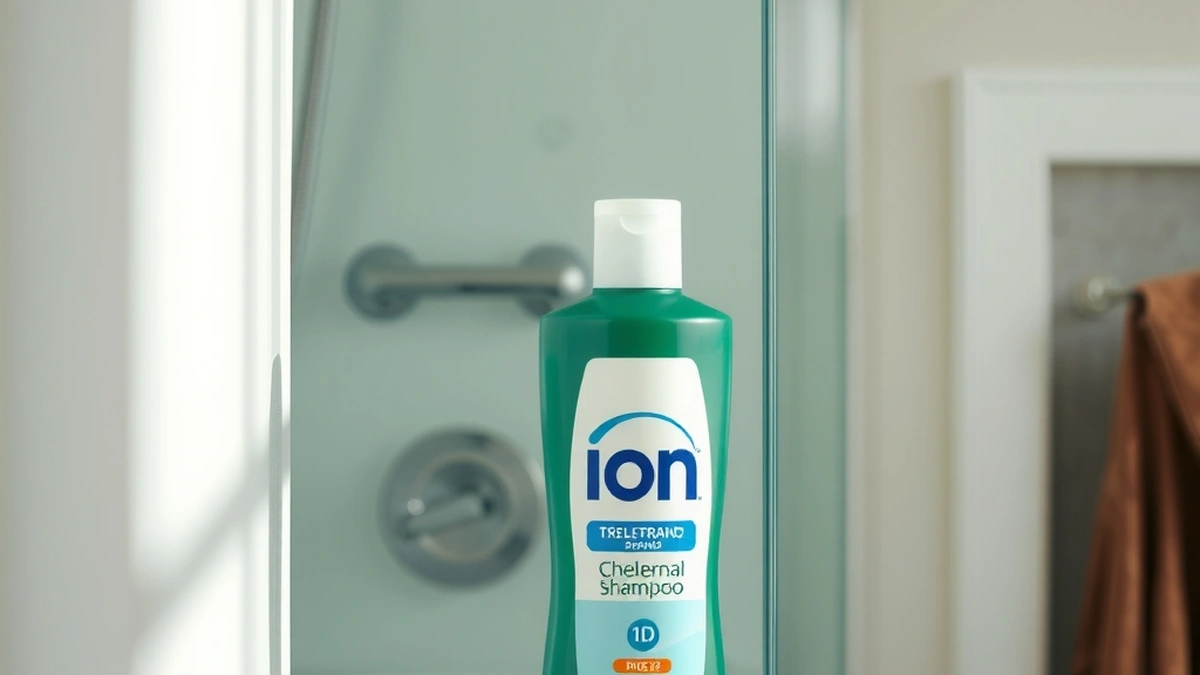
Ion hard water shampoo is a drugstore chelating formula that lifts calcium and magnesium film from hair for about $8 - $15 a bottle. It works on existing deposit, does not soften the water, and needs to be alternated with a regular shampoo to avoid stripping hair.
- Bottle price
- $8 - $15
- Key chemistry
- Chelating agents and surfactants
- Use frequency
- Weekly to twice weekly
- Where sold
- Salon retail and drugstores
- Softener installed
- $1,200 - $4,500
Some links on this page are affiliate links.If you buy through them we may earn a commission at no extra cost to you. We do not accept payment for rankings. Read the full disclosure.
Ion hard water shampoo is a chelating formula sold at drugstore prices, usually $8 - $15 a bottle. It lifts the calcium and magnesium film that hard water leaves on hair, and it does not change the water. The film returns after a few washes unless the supply is softened.
What Makes It a Hard Water Shampoo
A standard shampoo cleans oil, sweat, and styling product with surfactants. It does not remove metal ions, because surfactants are not designed to bind them.
A chelating shampoo adds a molecule that grips calcium and magnesium and holds them in solution so they rinse away. Common agents are EDTA, sodium gluconate, phytic acid, and citric acid.
Ion’s formula follows that pattern with a surfactant base plus chelating agents. The claim is mineral removal, and the ingredient list is the way to verify it. A bottle that lists only surfactants is clarifying, not chelating.
What It Does to Hair
Hard water film makes hair feel waxy, dulls shine, and interferes with color uptake. A chelating wash removes the film and leaves the shaft cleaner, which is why hair feels lighter after the first use.
The effect is temporary. The next shower deposits new minerals, and the film begins rebuilding immediately. How fast it returns depends on hardness: at 4 GPG it may take a week to notice, and at 15 GPG it may be obvious after two washes.
The shampoo does not repair damage or change the structure of the hair. It removes a deposit. That is a narrower claim than the marketing suggests, and it is the accurate one.
Price and Value
| Product type | Price | Cost per wash | Chelates |
|---|---|---|---|
| Ion hard water shampoo | $8 - $15 | $0.40 - $0.75 | Yes |
| Salon chelating shampoo | $20 - $30 | $0.90 - $1.50 | Yes |
| Standard shampoo | $5 - $12 | $0.25 - $0.50 | No |
| Clarifying shampoo | $8 - $15 | $0.40 - $0.75 | Sometimes |
At two washes a week, a $12 bottle lasting 20 washes costs about $0.60 per wash, or roughly $60 a year. A salon formula at $25 for 25 washes costs $1 per wash, or $100 a year.
The drugstore option is a reasonable value for light to moderate film. The salon formulas often include more conditioning agents, which matters if the chelating step leaves hair dry.
How to Use It
- Wet hair thoroughly with warm water.
- Apply to the scalp and work through the lengths, focusing on areas that feel coated.
- Leave it for one to three minutes so the chelating agents have contact time.
- Rinse completely; the minerals need water to carry them away.
- Follow with a conditioner, especially on the ends.
- Use once or twice a week, and a regular shampoo on the other days.
Contact time is the step most people skip. A quick lather and rinse removes some surface film, but the chelator needs a minute or two to bind the minerals. Set a timer if needed.
Who Should Use It
Use it if you have visible film, dull hair, or color that fades faster than expected, and if a hardness test reads 3 GPG or higher. It is also useful before a color service, because mineral film interferes with dye uptake.
Use it with caution on color-treated hair. Chelating agents can accelerate color loss with overuse, and most bottles recommend once or twice a week at most. Follow the label rather than a routine from a forum.
Do not expect it to fix scale on fixtures, soap scum on tile, or spotting on glass. Those are mineral deposits on surfaces, and they need an acid cleaner and, eventually, a water softener.
When the Water Is the Problem
At 7 GPG or higher, the film returns within days and the shampoo becomes a subscription. At 10+ GPG, the deposit is visible on the shower door and the fixtures, and hair is only one symptom.
A $40 - $150 lab test gives the number. If it is high and the household also sees scale and stiff laundry, a softener at $1,200 - $4,500 installed addresses all of it at once. If the number is moderate and hair is the only complaint, the shampoo is the economical choice.
Sulfates, Color, and Hair Type
Sulfates are the surfactants that make shampoo lather. They clean well and strip color faster, which is why sulfate-free formulas became popular for treated hair. Ion sells both, and the bottle label is the only reliable guide.
A chelating shampoo does not have to be sulfate free to work. The chelating agent is a separate ingredient, and a formula can contain sulfates and a chelator at the same time. If color retention is the priority, look for both a sulfate-free base and a chelating agent.
Hair type changes the aftercare more than the shampoo. Coily and dry hair holds mineral film differently and often needs a heavier conditioner after a chelating wash. Fine hair may find the same conditioner too heavy.
Porosity matters too. High-porosity hair absorbs minerals and loses them slowly, so the film may take longer to build and longer to remove. Low-porosity hair collects film on the surface, where a chelator reaches it easily.
What to Expect in the First Month
The first wash usually produces the most obvious change: hair feels lighter and lathers differently. The second and third washes show diminishing returns, because the surface film is already gone and only new deposit is being removed.
After a month, most users settle into a rhythm of one chelating wash a week and regular shampoo in between. If the film returns faster than that, hardness is high enough to justify testing the water.
For the salon version, see Malibu C hard water shampoo. For the generic category, see hard water shampoo. For treatment, see how to treat hard water.
Frequently asked questions
Is Ion hard water shampoo effective?
It removes mineral film better than a standard shampoo because it contains chelating agents. It does not change the water, so the film returns after a few washes.
How often should I use Ion hard water shampoo?
Once or twice a week, alternated with a regular shampoo. Daily use can strip color and leave hair dry, especially on chemically treated hair.
Is Ion shampoo sulfate free?
Some Ion formulas are sulfate free and some are not, so check the label on the specific bottle. Sulfate-free versions are gentler on color-treated hair.
Can I use it on natural hair?
Yes. Chelating shampoos are used on all hair types to remove mineral buildup, though coily and dry hair may need a heavier conditioner afterward.
Does it work on iron in water?
Partly. Chelators bind some metals, but iron staining is stubborn and usually needs a dedicated treatment plus an iron filter on the water supply.
Is it as good as a salon chelating shampoo?
It is comparable for light to moderate mineral film at a lower price. Salon formulas often include more conditioning agents and a different surfactant blend.
Sources
Some links are affiliate links.If you buy through them we may earn a commission at no extra cost to you. We do not accept payment for rankings. Read the full disclosure.