Hard Water Shampoo: What It Can and Cannot Fix
Chelating shampoos lift mineral film that hard water leaves on hair. See how they work, what they cost, and why treating the water is the durable fix.
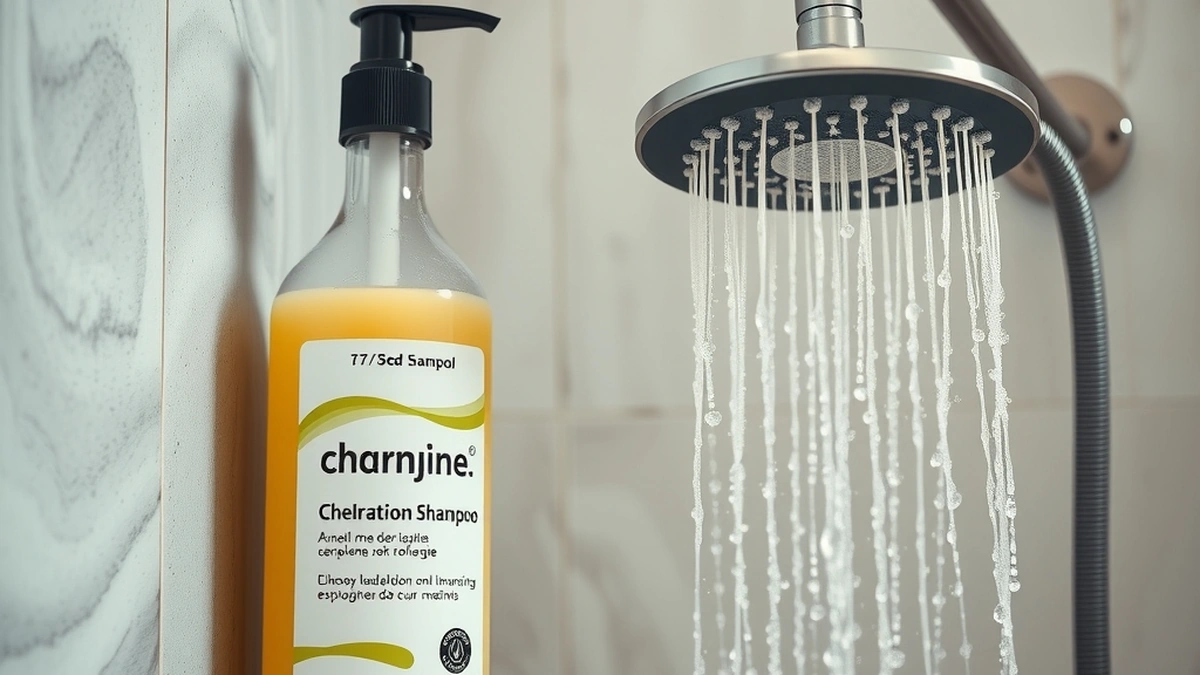
Hard water shampoo is a chelating or clarifying formula that lifts calcium and magnesium film from hair. It costs $10 - $30 per bottle and helps between washes, but it does not change the water, so the film returns until the supply is softened.
- Bottle price
- $10 - $30
- Key ingredients
- EDTA, gluconate, citric acid
- Use frequency
- Once a week to once a month
- Shower filter
- $25 - $90, no hardness removal
- Softener installed
- $1,200 - $4,500
Some links on this page are affiliate links.If you buy through them we may earn a commission at no extra cost to you. We do not accept payment for rankings. Read the full disclosure.
Hard water shampoo is a chelating or clarifying formula designed to lift the calcium and magnesium film that hard water leaves on hair. It works on the deposit already there, costs $10 - $30 a bottle, and does not change the water. The film returns with the next wash unless the supply is softened.
What Hard Water Leaves Behind
Hard water carries dissolved calcium and magnesium, measured in grains per gallon. When that water wets hair, the minerals bind to the protein surface and to soap residue, forming a thin film that feels waxy and dulls shine.
The film also changes how shampoo behaves. Surfactants lather by trapping air and water, and calcium ions interfere with that process, so hard water produces thinner lather and leaves more residue behind. The same mechanism leaves soap scum on a shower door.
This is a surface effect, not structural damage. The mineral deposit sits on the outside of the hair shaft and rinses away with the right chemistry. It is also why a chelating shampoo produces an immediate difference that a regular shampoo cannot.
How Chelating Shampoos Work
A chelating agent is a molecule that grabs a metal ion and holds it in solution so it rinses away. The common ones in hair products are EDTA, sodium gluconate, phytic acid, and citric acid.
The molecule wraps around calcium or magnesium and forms a stable complex that water carries off. That is the same chemistry used in descalers and in some water treatment media, applied at a lower concentration and a different pH for hair.
Clarifying shampoos are a related but different category. They use stronger surfactants to strip product buildup, silicones, and oils. Some clarifying formulas also chelate, and the label will list the chelating agent if they do. A shampoo with EDTA or gluconate near the middle of the ingredient list is doing both jobs.
What It Costs and How Often to Use It
A bottle runs $10 - $30, and a little goes a long way. Most people use a chelating shampoo once a week in very hard water, or once a month as maintenance between regular washes.
At $20 a bottle used weekly, a household of two goes through roughly four to six bottles a year, or $80 - $120. That is cheap next to a softener, and it is also a recurring cost that never solves the source.
| Option | Cost | Removes hardness | Addresses film |
|---|---|---|---|
| Chelating shampoo | $10 - $30 per bottle | No | Yes, temporarily |
| Shower head filter | $25 - $90 plus cartridges | No | No |
| Salt-free conditioner | $500 - $1,800 installed | No, alters crystal behavior | Partially |
| Ion-exchange softener | $1,200 - $4,500 installed | Yes | Yes, at the source |
The table explains why the shampoo aisle is full of products and the water treatment aisle is not: the shampoo treats the symptom at a low price point, and the softener treats the cause at a high one.
Why a Shower Filter Does Not Solve It
A shower filter is a carbon or KDF cartridge that reduces chlorine, sediment, and some metals. It does not remove dissolved calcium or magnesium, because those are ions, not particles.
That distinction is the most common misunderstanding in the category. A $60 filtered shower head will improve the chlorine smell and may reduce rust grit, and it will leave the hardness exactly where it was. Hair still gets the mineral film, and the shower door still gets scale.
If chlorine is the complaint, the filter is the right purchase. If mineral film is the complaint, the filter is the wrong one. For the full breakdown, see shower head filter for hard water.
When Softening Is the Better Answer
Water at 7 GPG or above is hard, and at 10+ GPG it is very hard. In that range, the film affects hair, skin, laundry, dishes, and every fixture, and a softener addresses all of it at once.
Installed cost is $1,200 - $4,500. Equipment runs $600 - $2,500, installation adds $500 - $1,500, and salt runs $120 - $400 a year. Resin lasts 8 - 12 years, and a rebed costs $300 - $600.
A household spending $100 a year on chelating shampoo would need 12 - 45 years to match the softener price on shampoo alone. That arithmetic is the honest test: buy the softener for the whole house, not for the shampoo line item. If scale, stiff laundry, and spotty dishes are also present, the case is strong. If hair is the only complaint and hardness tests at 4 GPG, the shampoo is the cheaper answer.
A Workable Routine
- Test the water first. A $40 - $150 lab panel gives you the grains per gallon and settles whether treatment is justified.
- If hardness is 7 GPG or higher, get a softener quote and compare it against the annual cost of chelating products.
- If hardness is moderate, use a chelating shampoo once a week and a regular shampoo between.
- Rinse with cooler water and finish with a light conditioner; minerals bind more readily to stripped hair.
- Clean the shower head monthly with vinegar to remove scale that restricts flow.
Reading the Label
Look for EDTA, sodium gluconate, phytic acid, or citric acid in the ingredient list. A formula that lists only surfactants is clarifying, not chelating.
Avoid daily use of strong chelators on color-treated hair. The same chemistry that lifts minerals can accelerate color loss, and most bottles recommend once a week at most. Follow the directions on the bottle rather than a routine from a forum.
For the water side, see hard water and skin and hard water symptoms. For treatment options and pricing, see how to treat hard water and water softener cost.
Frequently asked questions
Does hard water shampoo actually work?
Yes, for the film already on the hair. Chelating agents bind calcium and magnesium and rinse them away, but the next wash in hard water deposits new minerals.
How often should I use a chelating shampoo?
Once a week in very hard water, or once a month as maintenance. Daily use can strip color and dry the hair shaft, so follow the bottle directions.
What is the difference between clarifying and chelating shampoo?
Clarifying formulas remove product buildup with strong surfactants. Chelating formulas also bind metal ions, which is the part that addresses hard water minerals.
Will a shower filter make hard water shampoo unnecessary?
No. Shower filters remove chlorine and sediment but leave calcium and magnesium, so the mineral film continues unless the water is actually softened.
Can hard water damage hair permanently?
Mineral film is a surface deposit, not permanent damage. It changes how hair feels and how color behaves, and it rinses away with the right chelating product.
Is a softener worth it just for hair?
It is worth it if hardness is high and the film bothers you across hair, skin, laundry, and fixtures. Installed cost is $1,200-$4,500, so consider the whole house, not one benefit.
Sources
Some links are affiliate links.If you buy through them we may earn a commission at no extra cost to you. We do not accept payment for rankings. Read the full disclosure.