Shower Head Filter for Hard Water: What It Does
A shower head filter removes chlorine and sediment, not calcium or magnesium. See what it fixes, what it costs, and when a softener is the real answer.
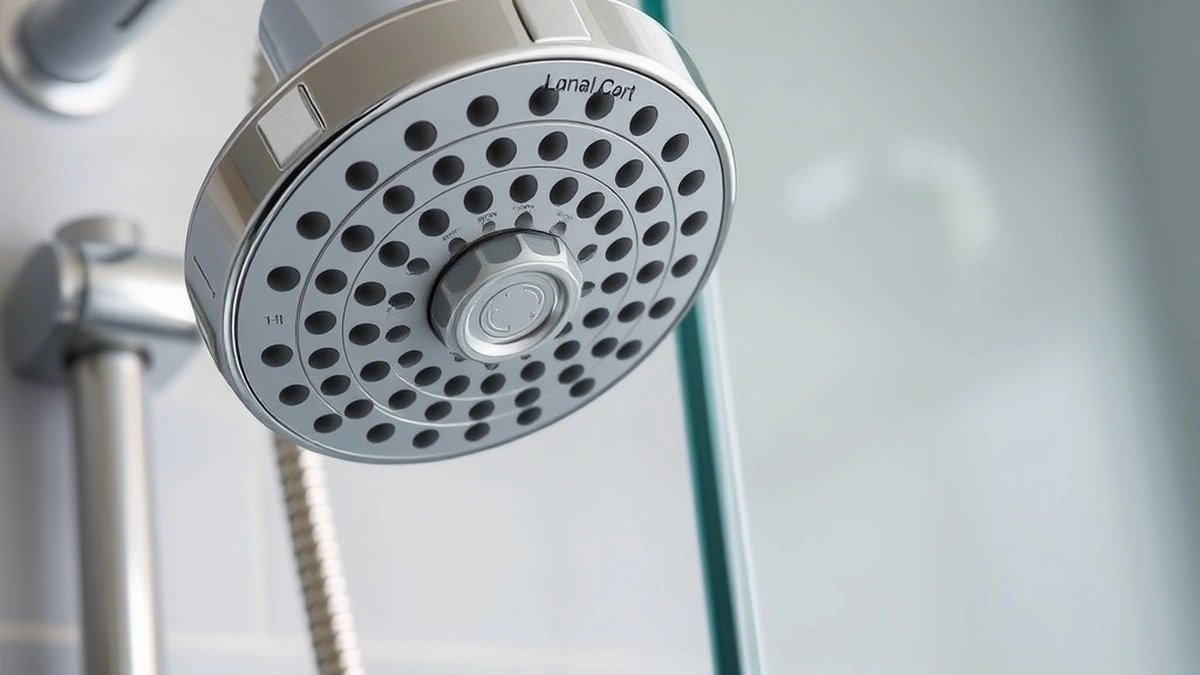
A shower head filter treats chlorine, sediment, and some metals at the shower, but it does not remove the calcium and magnesium that make water hard. If scale and soap scum are the problem, the fix is a softener or conditioner sized to your test result.
- Typical filter head price
- $25 - $90
- Replacement cartridge
- $15 - $40 every 3 - 6 months
- Removes hardness minerals
- No
- Softener installed
- $1,200 - $4,500
- Lab water test
- $40 - $150
Some links on this page are affiliate links.If you buy through them we may earn a commission at no extra cost to you. We do not accept payment for rankings. Read the full disclosure.
A shower head filter is a small inline device that reduces chlorine, sediment, and some metals at the shower outlet. It does not remove calcium or magnesium, so it does not soften water and will not stop scale. If hardness is your problem, the filter is the wrong tool and a softener or conditioner is the right one.
What a Shower Head Filter Actually Removes
A shower head filter is a cartridge housing that sits between the shower arm and the shower head, or a filter built into the head itself. Water passes through granular activated carbon, KDF media, or a sediment membrane before it reaches the spray face.
Carbon handles chlorine and the chloramine byproducts that give municipal water its pool smell. KDF media, a copper-zinc alloy, reduces free chlorine and some dissolved metals through an oxidation-reduction reaction. Sediment membranes catch rust and grit that come through older pipes. None of these media pull calcium or magnesium out of solution, because those minerals are dissolved, not suspended.
Hardness is dissolved calcium and magnesium measured in grains per gallon. A filter that catches particles cannot catch an ion. That is the whole distinction, and it explains why the film on your shower door survives a new filter cartridge.
Hardness Is a Whole-House Number
Water hardness is classified in grains per gallon, and the band tells you how much mineral load the water carries:
| Classification | Grains per gallon | What it usually looks like |
|---|---|---|
| Soft | 0 - 3 | Little visible scale, soap lathers easily |
| Moderately hard | 3 - 7 | Spots on glass, occasional film |
| Hard | 7 - 10 | Steady scale on fixtures, soap scum |
| Very hard | 10+ | Heavy crust, clogged aerators, dull glass |
A test result of 12 GPG means every gallon carries roughly 12 grains of hardness. A 10-minute shower at 2.5 gallons per minute uses 25 gallons, which carries about 300 grains of mineral into the drain. Over a month of daily showers, that is roughly 9,000 grains deposited on tile, glass, and skin. No shower-mounted cartridge holds enough resin to remove that load, and none is designed to try.
A lab test runs $40 - $150 and reports hardness alongside iron, manganese, and pH. Iron matters because a softener handles only about 2 - 3 PPM of dissolved iron before the resin fouls, so high iron changes the equipment plan before hardness is even addressed.
Filter, Conditioner, or Softener: Three Different Jobs
The table below separates the three devices that get confused with each other. They are not interchangeable, and the price gap reflects what each one actually does.
| Device | Addresses hardness | Stops scale | Installed cost |
|---|---|---|---|
| Shower head filter | No | No | $25 - $90 for the head |
| Salt-free conditioner | Partially, by altering crystal behavior | Reduces visible deposit | $500 - $1,800 |
| Ion-exchange softener | Yes, removes calcium and magnesium | Yes | $1,200 - $4,500 |
A shower filter is a point-of-use device. A conditioner or softener is point-of-entry equipment that treats every fixture. If you mainly object to the chlorine smell in a municipal supply, the filter does its job. If you are scrubbing a white ring out of the tub every week, the filter cannot help.
A salt-free conditioner is the middle option. It changes how hardness minerals precipitate, which can reduce the visible crust, but it does not lower the grains per gallon reading. Water treated by a conditioner still tests hard.
What the Hardware Costs
A basic filtered shower head sells for about $25 - $90. Cartridges run $15 - $40 and last 3 - 6 months, so a household replacing four per year spends $60 - $160 on media. Add the head and a first cartridge and year one lands near $100 - $200.
Compare that with a softener. Equipment runs $600 - $2,500, installation adds $500 - $1,500, and the installed total is typically $1,200 - $4,500. Salt costs $120 - $400 per year. A resin rebed, needed roughly every 8 - 12 years, runs $300 - $600. The softener costs ten to twenty times more up front and is the only one of the three that removes hardness.
The arithmetic is simple: $45 head plus four $20 cartridges equals $125 in year one for chlorine reduction. A $1,800 installed softener plus $200 of salt equals $2,000 in year one for softening. Buy the one that matches the problem.
Installing and Maintaining a Shower Filter
- Test the water first. A $40 - $150 lab panel tells you hardness, iron, and chlorine so you know which device addresses your complaint.
- Unscrew the existing shower head and clean the threads. Old tape and mineral grit prevent a sealed fit.
- Thread the filter housing on hand-tight, then snug it a quarter turn with a cloth-wrapped wrench. Over-tightening cracks the housing.
- Flush for two to three minutes before showering. New carbon cartridges shed fine dust at first.
- Write the install date on the cartridge. Replace every 3 - 6 months, or sooner if flow drops noticeably.
Flow rate matters more than most buyers expect. A 2.5 GPM shower head is the standard maximum, and a restrictive filter can cut that to a weak spray. Look for a filter rated at or above your head’s flow rate, and check whether the cartridge is listed to NSF/ANSI 177, the standard for shower filtration systems.
When a Shower Filter Is the Wrong Purchase
Skip the filter if your complaint is scale, spotty glass, stiff laundry, or soap that will not lather. Those are hardness symptoms, and the filter does not touch them. Skip it as well if you are trying to protect a water heater or washing machine, because a shower-mounted device protects exactly one fixture.
Buy the filter if the complaint is chlorine smell, rust grit in the spray, or a metallic note in the water at the shower only. In that case it is cheap, reversible, and does not require a plumber.
What to Test Before You Buy
Order the lab panel, then read the hardness line. Under 3 GPG, you are in the soft band and a filter is a reasonable purchase for chlorine alone. Between 3 and 7 GPG, you are moderately hard and cleaning habits may be enough. At 7 GPG or above, hardness is the dominant issue and a filter will disappoint you.
Record the test date and results. Retest once a year, or after any change in taste, odor, or scaling. Equipment sizing depends on the number, and the number changes when a supply source changes. A filter purchase is a $100 decision; a softener is a $1,200 - $4,500 decision. Spend the $40 - $150 on the test before either one.
For a broader comparison of treatment at one tap versus the whole house, see point of use vs point of entry. If hardness is confirmed, read how a water softener works and what a softener costs installed before requesting quotes.
Frequently asked questions
Does a shower head filter soften hard water?
No. Shower filters use carbon or KDF media to reduce chlorine, sediment, and some metals. They leave dissolved calcium and magnesium in the water, so hardness and scale remain unchanged.
Why does my hair feel filmy after showering?
Hard water minerals and soap residue can leave a film on hair and fixtures. A shower filter will not stop that film if the cause is calcium and magnesium in the supply.
What does a shower head filter cost to run?
Most cartridge filters cost $15-$40 per replacement and need a new cartridge every 3-6 months, which works out to roughly $60-$160 per year in consumables.
Will a shower filter stop white scale on the glass door?
No. Scale is mineral deposit left when hard water evaporates. Only removing hardness minerals upstream, with a softener or a whole-house treatment system, stops that deposit.
Can I use a shower filter with a softener?
Yes. Many households run a softener for hardness and a shower filter for chlorine taste and odor, since the two devices address different problems in the same water.
How do I know whether my water is hard?
Test it. A lab test costs $40-$150 and reports hardness in grains per gallon, along with iron and pH, which determine whether treatment is justified at all.
Sources
Some links are affiliate links.If you buy through them we may earn a commission at no extra cost to you. We do not accept payment for rankings. Read the full disclosure.