Iron Bacteria: The Slime That Clogs Filters
How iron bacteria form slime in well water, clog filters and softeners, and what treatment options cost.

Iron bacteria are living organisms that create reddish-brown slime in wells and plumbing, clogging filters and softeners; they require physical removal and disinfection, not just filtration.
- Common sign
- Reddish slime in toilet tanks and fixtures
- Typical treatment
- Shock chlorination plus filtration
- Softener iron limit
- 2-3 ppm dissolved iron
- Iron filter installed
- $800-$2,500
- Lab water test
- $40-$150
Some links on this page are affiliate links.If you buy through them we may earn a commission at no extra cost to you. We do not accept payment for rankings. Read the full disclosure.
Iron bacteria are living microorganisms that feed on dissolved iron and oxygen, producing a reddish-brown slime that coats well casings, pipes, and treatment equipment. That slime clogs sediment cartridges, fouls softener resin, and restricts flow throughout a home’s plumbing. There is no single product that eliminates iron bacteria by itself; control usually requires physical cleaning plus disinfection and ongoing filtration.
What Iron Bacteria Look Like in a Well System
Iron bacteria do not appear as dissolved minerals in a water sample. They appear as visible sludge. Homeowners often first notice a gelatinous reddish-brown or yellowish buildup inside toilet tanks, on faucet aerators, or around well pump components. The slime can also produce a swampy or musty odor and cause staining on laundry and fixtures even when standard iron tests show only moderate levels.
Because the organisms grow in colonies, they can clog the inlet screens of pumps and the beds of water softeners. A softener rated for 24,000 to 64,000 grains of capacity may lose effective capacity as slime coats the resin beads, forcing more frequent regeneration and higher salt use. Salt consumption typically ranges from 8 to 12 pounds per regeneration, and a fouled system may regenerate more often than necessary.
Start With a Lab Water Test
Equipment selection should follow test results, not assumptions. A lab water test costs $40 to $150 and should measure total iron, iron bacteria presence, pH, hardness, and manganese. Dissolved iron levels determine whether a softener can handle part of the load. The typical softener limit for dissolved iron is 2 to 3 ppm; above that, iron passes through or coats the resin. Hardness is measured in grains per gallon: 0 to 3 gpg is soft, 3 to 7 is moderate, 7 to 10 is hard, and 10+ is very hard.
Testing matters because iron bacteria treatment is not interchangeable with standard iron filtration. A system designed for clear-water iron will not address biological slime, and a carbon cartridge replaced every 6 to 12 months at $80 to $300 per year will clog quickly if slime is present.
Why Filters and Softeners Clog
Sediment cartridges usually require replacement every 3 to 6 months under normal conditions. With iron bacteria, replacement intervals can shorten dramatically as slime captures particulate iron and debris. Whole-house filters typically operate at 8 to 15 gallons per minute, but biofilm buildup increases pressure drop and reduces flow long before the cartridge reaches its rated lifespan.
Water softeners are particularly vulnerable because the resin bed provides a large surface area for bacteria to attach. Once established, the slime can shield iron from the ion-exchange process and reduce the softener’s effective grain capacity. A softener costs $600 to $2,500 for equipment, $500 to $1,500 for installation, or $1,200 to $4,500 installed. Annual salt runs $120 to $400, and a resin rebed costs $300 to $600. Resin typically lasts 8 to 12 years, while the full softener lasts 10 to 15 years. If iron bacteria foul the resin early, those replacement costs arrive sooner.
Treatment Starts With Physical Removal and Disinfection
There is no filter cartridge that kills iron bacteria on contact. The first step is usually mechanical cleaning of the well and distribution system, followed by shock chlorination. Chlorine is introduced at high concentration to kill the organisms and oxidize the iron they have accumulated. After the contact time, the system is flushed to remove dead bacteria and loosened slime.
This process is labor-intensive and may need repeating. Iron bacteria often return if the well environment still supports them, so disinfection is treated as a maintenance event rather than a one-time cure. Homeowners should not attempt well disinfection without understanding safe chlorine handling and flushing procedures; improper flushing can leave residual chlorine that damages plumbing fixtures or treatment media.
Filtration Options After Disinfection
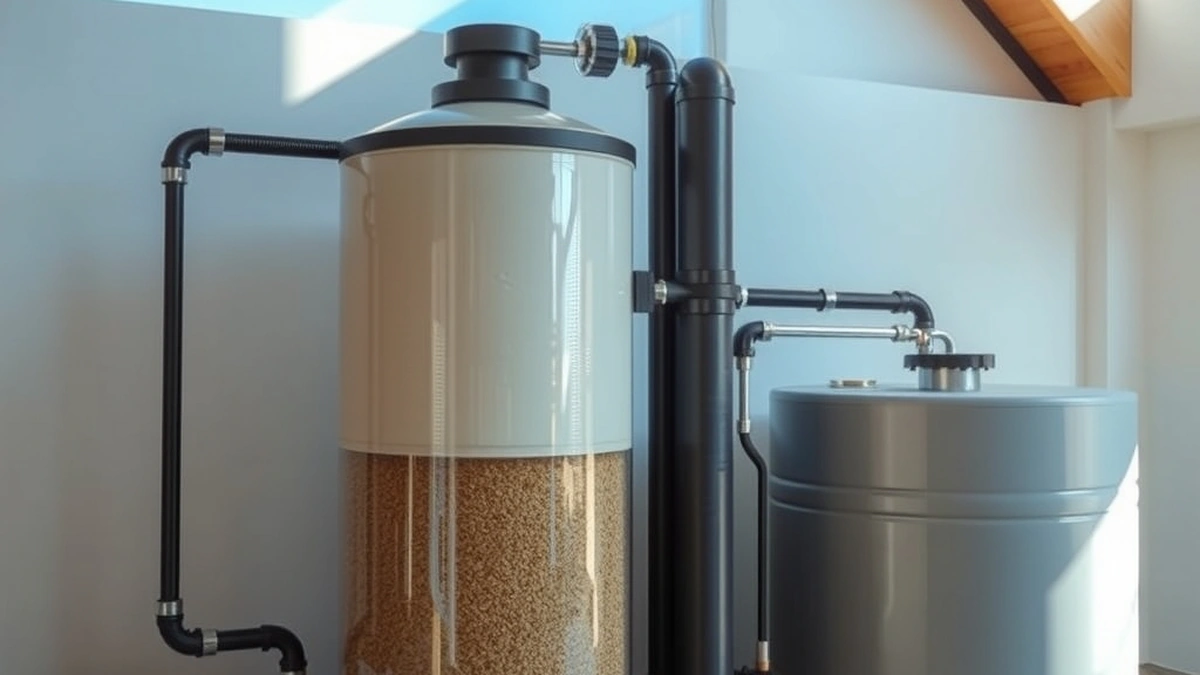
Once bacteria are controlled, filtration removes the oxidized iron and particulate matter they leave behind. An iron filter costs $800 to $2,500 installed and is sized based on flow rate and iron load. For context, whole-house filters commonly handle 8 to 15 gallons per minute. If the water also contains hardness, a softener may be added downstream, but only after the iron load is within the 2 to 3 ppm softener limit.
Carbon filtration costs $500 to $1,800 installed, with cartridges at $80 to $300 per year replaced every 6 to 12 months. Carbon does not remove iron bacteria and is not a substitute for iron-specific media. Reverse osmosis at the point of use costs $200 to $600 for equipment, $300 to $900 installed, and $60 to $150 per year to run. RO membranes last 2 to 3 years, reject 80 to 95 percent of contaminants, and produce waste at a 3 to 4:1 ratio. RO is a drinking-water solution, not a whole-house fix for slime.
Whole-house reverse osmosis runs $3,000 to $8,000 installed and is rarely the first choice for iron bacteria because pretreatment is still required to protect membranes from fouling.
UV and Other Technologies
Ultraviolet systems can inactivate microorganisms in clear water, but iron bacteria present a challenge. Slime can coat the quartz sleeve and shield organisms from UV light, reducing the dose delivered. UV lamps last about 12 months and cost $30 to $90 to replace. UV may serve as a polishing step after filtration, but it does not remove existing slime from pipes or well components, and it does not remove iron.
Salt-free conditioners cost $500 to $1,800 installed and do not remove iron or bacteria. They alter hardness scale formation but leave biological slime untouched.
Cost Arithmetic Example
Consider a household with 8 ppm total iron, confirmed iron bacteria, and 10 gpg hardness. A softener alone is inappropriate because the iron exceeds the 2 to 3 ppm limit. A practical sequence might be:
- Lab test: $100 (estimate)
- Well shock chlorination and mechanical cleaning: $300 to $600 (estimate, varies by contractor)
- Iron filter installed: $1,600 (midpoint of $800-$2,500)
- Softener installed for hardness after iron reduction: $2,850 (midpoint of $1,200-$4,500)
- Annual salt: $260 (midpoint of $120-$400)
Total initial outlay roughly $4,850 plus disinfection, with ongoing salt and media costs. If the homeowner skipped the lab test and bought a softener first, the resin could foul within months, leading to a $300 to $600 rebed earlier than the normal 8-to-12-year resin life.
Maintenance Expectations
Iron bacteria management is ongoing. After initial disinfection, monitor toilet tanks and pressure tanks for slime return. Replace sediment cartridges on a shortened schedule if pressure drop increases. Sanitize filter housings during cartridge changes to prevent re-colonization. Keep records of iron levels and regeneration frequency so a gradual rise in salt use can be traced to resin fouling rather than normal operation.
Equipment warranties typically do not cover damage from iron bacteria slime because it is considered a feed-water condition, not a manufacturer defect. That makes pretreatment and regular inspection the most cost-effective protection for a softener or filter investment.
When to Call a Professional
Well disinfection, pump removal, and downhole cleaning involve electrical and plumbing work in a confined space. A water treatment professional can size an iron filter based on measured flow and iron load, confirm whether a softener can be added safely, and establish a disinfection schedule. Use the lab test as the baseline, then match equipment to the numbers rather than to marketing claims.
For more on equipment pricing, see the water softener cost guide, installation cost breakdown, and whole-house water filter cost overview. Additional context is available in the well water treatment cost article and the iron filter cost page.
Internal linking paths used: /how-much-does-a-water-softener-cost/, /water-softener-installation-cost/, /whole-house-water-filter-cost/, /well-water-treatment-cost/, /iron-filter-cost/
Next, compare how much does a water softener cost, water softener installation cost, whole house water filter cost before you commit.
Frequently asked questions
What are iron bacteria?
Iron bacteria are naturally occurring microorganisms that combine iron and oxygen to form rust-colored slime deposits in wells, pipes, and water treatment equipment.
Is iron bacteria dangerous?
The EPA does not regulate iron bacteria as a health hazard in private wells, though they can create conditions that support other nuisance organisms.
Can a water softener remove iron bacteria?
No. A softener handles dissolved iron up to about 2-3 ppm but cannot remove or kill iron bacteria; slime can foul the resin bed and reduce capacity.
How do I test for iron bacteria?
Order a lab water test for iron bacteria and total iron; a standard home hardness kit will not detect biological slime organisms.
What does iron bacteria treatment cost?
Shock chlorination is relatively inexpensive, while an installed iron filter typically runs $800-$2,500 plus ongoing media or chemical costs.
Will UV light kill iron bacteria?
UV can inactivate some microorganisms in clear water, but iron bacteria slime can shield cells and coat the quartz sleeve, reducing effectiveness.
Sources
Some links are affiliate links.If you buy through them we may earn a commission at no extra cost to you. We do not accept payment for rankings. Read the full disclosure.