How to Test for Lead in Water: First Draw vs Flushed
Lead testing depends on which sample you take. See first-draw versus flushed sampling, the 0.015 mg/L action level, and how to read a lab report.
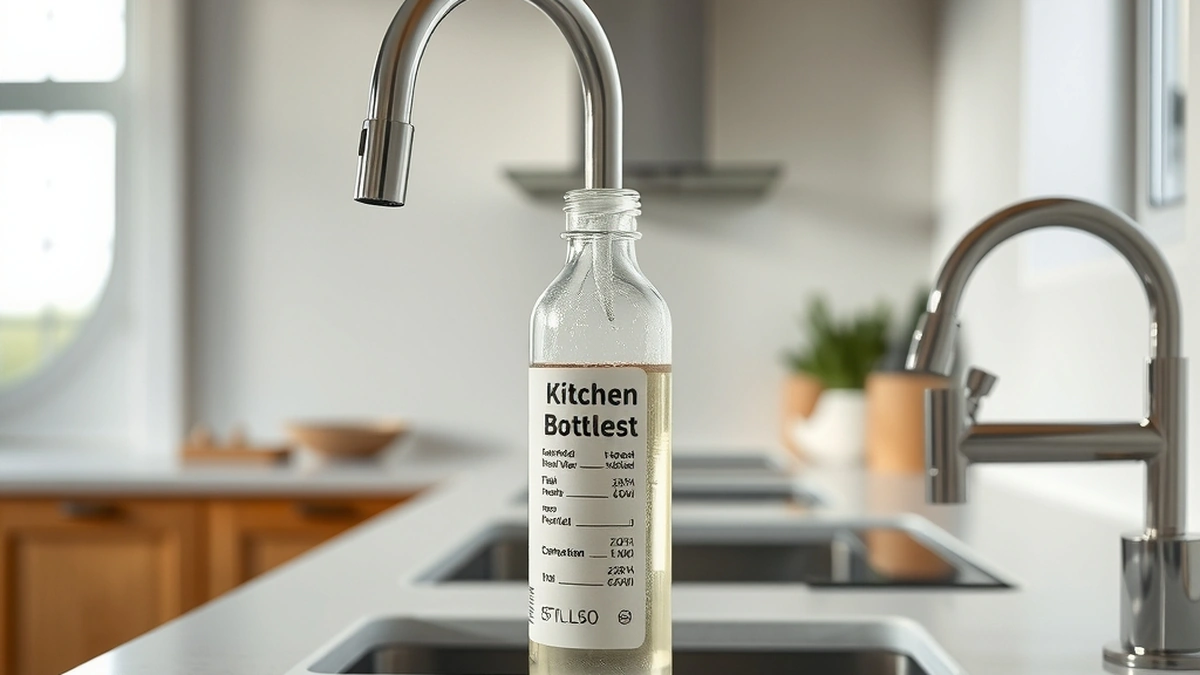
Test for lead with a certified laboratory, using a first-draw sample to capture water that sat in the pipes. The EPA action level is 0.015 mg/L, and a first-draw result above it points to plumbing or a service line as the source.
- Lab test
- $30 - $100
- Action level
- 0.015 mg/L
- First draw
- 6 - 8 hours standing
- Flushed sample
- After 2 - 3 minutes
- Test frequency
- After plumbing work, or yearly
Some links on this page are affiliate links.If you buy through them we may earn a commission at no extra cost to you. We do not accept payment for rankings. Read the full disclosure.
Lead testing is a sampling problem more than a laboratory problem. A first-draw sample captures water that sat in the pipes, which is where lead concentrates. A flushed sample shows what the main delivers. The EPA action level is 0.015 mg/L.
Why Sampling Decides the Result
Lead enters water by contact. The longer water sits in a lead pipe, lead solder, or a brass fixture, the more metal dissolves into it.
A first-draw sample, taken before any water has run, captures that standing water. It is the sample that reflects what a person drinks after the water has been idle overnight.
A flushed sample, taken after two or three minutes, shows the water coming from the service main. Comparing the two tells you whether the problem is in the building or upstream.
Taking a First-Draw Sample
- Do not use the tap for 6 - 8 hours before sampling.
- Use a bottle from the lab, not a household jar.
- Fill the bottle slowly without touching the inside of the cap.
- Label it with the time, tap, and “first draw.”
- Keep it cool and deliver within the holding time.
Choose a kitchen or bathroom tap that is used for drinking. A tap that is rarely used holds older water and may overstate the result.
If the lab asks for a flushed sample as well, run the water for two to three minutes and fill a second bottle. Label both clearly.
Lab Methods and Cost
A certified lab uses inductively coupled plasma or another approved method and reports lead in milligrams per liter or micrograms per liter.
The test costs $30 - $100, and some labs sell a mail-in kit with the bottle and instructions included.
Ask for the reporting limit. A lab that reports “less than 0.005 mg/L” is giving you a useful number; one that reports “not detected” with a high limit is not.
Reading the Result
| Result | Interpretation | Action |
|---|---|---|
| Under 0.005 mg/L | Low | Retest after plumbing work |
| 0.005 - 0.015 mg/L | Detectable | Flush, consider a filter |
| At 0.015 mg/L | Action level | Treat or replace the source |
| Above 0.015 mg/L | Above action level | Treat immediately and investigate |
The action level is not a pass/fail line with a physical threshold. It is a regulatory trigger, and results near it deserve attention.
A first-draw result above the action level with a low flushed result points to building plumbing. A high result in both samples points to the service line or the source.
What the Number Does Not Tell You
A single lead test does not describe exposure. It describes one sample at one tap on one day.
Lead concentrations vary with stagnation time, water temperature, and plumbing configuration. A result taken after a weekend away may be higher than one taken on a weekday morning.
That variability is why flushing is recommended regardless of the result, and why a filter is a reasonable precaution in an older home even at a low reading.
Testing After Treatment
Sample the treated water at the same tap and compare it with the untreated result. A certified filter should bring lead below 0.005 mg/L.
Test after any cartridge change and again at six months. A spent cartridge can release lead, so the schedule matters more than the model.
If the treated result is not lower, check that the filter is certified for lead and that the cartridge is seated correctly.
When to Test
Test after moving into a home built before 1986, after any plumbing renovation, and after a utility reports a lead service line.
Test annually if lead is present in the service line or if a previous result was near the action level.
Test the water after any change in taste, color, or corrosion symptoms, such as blue-green staining on fixtures.
Common Mistakes
The first is using a strip. Lead strips are not reliable at the concentrations that matter.
The second is sampling after a filter and calling it a raw water test. Note which tap and whether treatment was in line.
The third is sampling a tap that was used an hour earlier. The first-draw condition is what makes the test meaningful.
The fourth is ignoring the service line. A filter protects the tap; it does not remove the source.
Homes built before 1986 may have lead solder on copper pipes, and homes built before the 1950s may have lead service lines or lead-containing fixtures. Both are reasons to test rather than assume.
A visual inspection helps. Lead service lines are dull grey and soft enough to scratch with a key. Copper is reddish, and galvanized steel is grey and magnetic.
The utility may know the material of the service line. Many publish an inventory, and some will confirm it on request.
If the line is lead, flushing and a certified filter reduce exposure while a replacement is planned. The filter is not a substitute for replacement, and replacement is not an instant fix either, because interior plumbing can still contain lead solder.
Both are reasons to test rather than assume. A visual inspection helps: lead service lines are dull grey and soft enough to scratch with a key.
A certified filter is not a permanent installation, either. Cartridges exhaust, and the certification applies to a properly maintained unit. Keep the change date on the housing and replace on the schedule the maker specifies, because a spent lead cartridge can release what it captured.
For the treatment options, see lead in water treatment. For the tap-level problem, see lead in tap water. For the lab schedule, see water tests for wells.
Frequently asked questions
How do I test my water for lead?
Use a certified lab. Collect a first-draw sample from a tap that has not been used for 6-8 hours, and optionally a flushed sample to compare.
What is the action level for lead in water?
The EPA action level is 0.015 mg/L, or 15 parts per billion. Above that, treatment or source replacement is indicated.
Why does the first draw matter?
Lead leaches into water that sits in pipes and fixtures. A first-draw sample captures that contact water, which is where the highest concentrations usually appear.
Can I use a home test kit for lead?
Some labs sell mail-in kits with a sample bottle and chain of custody. Avoid dip strips, which are not reliable at the 0.015 mg/L level.
Does a softener or filter affect the test?
Yes. Sample from an untreated tap for a raw water test, or from the treated tap if you are verifying a filter. Note which one you used.
How often should I test for lead?
Test after any plumbing work, after moving into an older home, and annually if lead is present in the service line or solder.
Sources
Some links are affiliate links.If you buy through them we may earn a commission at no extra cost to you. We do not accept payment for rankings. Read the full disclosure.