How to Test for Manganese in Water: Lab and Field
Manganese shows as black staining and needs a lab test at low levels. See sampling, field kits, the 0.05 mg/L limit, and how to read a result.
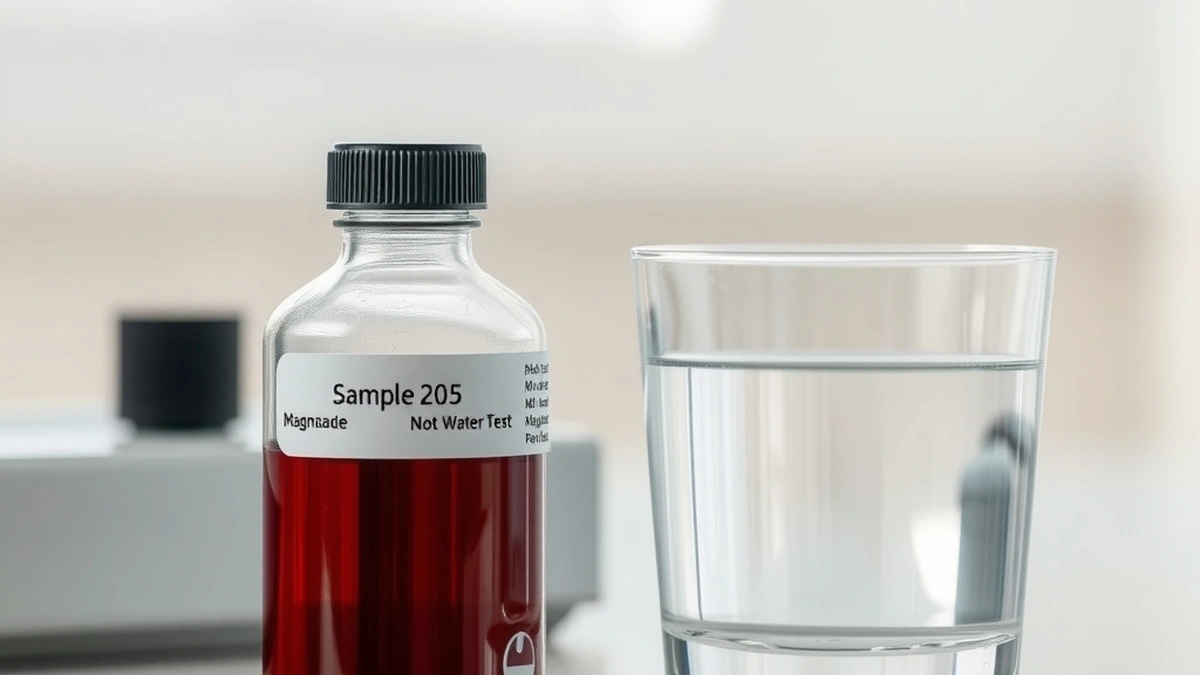
Test for manganese with a certified lab, since the aesthetic limit is 0.05 mg/L and home strips are too coarse. Sample a cold untreated tap, note whether the water is clear or already dark, and compare with iron and hardness results.
- Lab panel
- $40 - $150
- Field kit
- $20 - $60
- Aesthetic limit
- 0.05 mg/L
- Sample tap
- Cold, untreated
- Retest interval
- Every 3 - 5 years
Some links on this page are affiliate links.If you buy through them we may earn a commission at no extra cost to you. We do not accept payment for rankings. Read the full disclosure.
Testing for manganese means measuring a metal at a very low concentration. The aesthetic limit is 0.05 mg/L, and home strips rarely resolve that level. A certified lab is the practical choice, with a field kit as a screen.
Why the Limit Is So Low
Manganese stains at concentrations far below those that affect taste. A reading of 0.1 mg/L is twice the aesthetic limit and enough to blacken a fixture over weeks.
The limit is a secondary standard, set for appearance and taste rather than for a health threshold. It exists because the staining is persistent and difficult to remove.
That is why a result of 0.03 mg/L is worth noting even though it is below the limit. A small rise can push the water into visible staining.
Lab Testing
A lab reports manganese in milligrams per liter using an approved method. The panel usually includes iron, hardness, pH, and sometimes aluminum.
Cost is $40 - $150, and the lab supplies a bottle with a holding time. Collect from a cold untreated tap, and deliver promptly.
Ask for the reporting limit. A lab that reports down to 0.01 mg/L gives you a usable number; one that reports “less than 0.1” is too coarse.
Field Kits
Field kits use a colorimetric reagent and cost $20 - $60. They give a rough reading in minutes.
The resolution is usually 0.05 - 0.1 mg/L per step, which is enough to see that a problem exists and not enough to size a filter.
Use a kit to decide whether to order a lab test, not to replace one. The lab number is what the dealer will ask for.
Taking the Sample
| Step | Action | Reason |
|---|---|---|
| 1 | Use the lab bottle | Clean and preserved |
| 2 | Sample a cold untreated tap | Treatment changes the result |
| 3 | Run water 3 - 5 minutes | Clears the line |
| 4 | Fill without touching the cap | Avoids contamination |
| 5 | Note clear or dark | Indicates dissolved or oxidized |
| 6 | Deliver within the holding time | Results depend on it |
If the water runs clear and then darkens, the manganese is dissolved and oxidizing in air. That detail helps the treatment design.
Reading the Result
A result under 0.05 mg/L is below the aesthetic limit. Monitor and retest every few years.
A result of 0.05 - 0.2 mg/L produces light staining and calls for treatment if the fixtures show it.
A result above 0.2 mg/L produces clear black staining and needs an oxidizing filter.
Iron in the same sample changes the plan. A combined iron and manganese filter is usually the right specification.
The two metals commonly appear in the same water, and manganese is the harder one to remove. A filter designed for iron alone may pass manganese.
That is why the lab panel includes both. A dealer who quotes an iron filter without a manganese number is quoting half a system.
The cost difference is small. A combined oxidizing filter runs $800 - $3,000 installed, and it handles both metals in one tank.
What the Test Does Not Tell You
A single sample does not show whether the manganese is dissolved or particulate. The appearance of the sample and a field check help.
It does not show the source. Manganese can come from the aquifer, from corroding pipes, or from a water heater that has accumulated deposit.
It does not predict staining. A reading of 0.06 mg/L may stain in one house and not another, depending on how much water sits on the fixtures.
Testing After Treatment
Sample downstream of the filter and compare with the raw result. A working oxidizing filter brings manganese below 0.05 mg/L.
Test after every backwash cycle for the first month, then quarterly. A filter that is channeling will show a rising treated number.
Retest annually and after any media change. Manganese removal depends on oxidation, and a media bed that has lost activity will pass the metal.
When to Test
Test once on any private well, then every three to five years, or annually if a result was near the limit.
Test after any well work, after a pump replacement, and whenever black staining appears on fixtures or laundry.
Test the hot and cold taps separately if only one shows staining. That separates a heater problem from a supply problem.
That is why the lab panel includes both, and why a dealer who quotes an iron filter without a manganese number is quoting half a system. The cost difference is small: a combined oxidizing filter runs $800 - $3,000 installed and handles both metals in one tank.
- Collect the bottle from the lab first.
- Run the cold tap for five minutes.
- Fill without touching the cap.
- Note whether the water darkens while standing.
- Deliver within the holding time.
- Compare the result with iron and hardness.
A single sample does not show whether the manganese is dissolved or particulate, and it does not show the source. The appearance of the sample and a field check help, but the lab number is what the treatment design depends on.
A final note on interpretation: the aesthetic limit is not a safety threshold, and a result below it can still stain. If the fixtures show black deposits and the lab reports 0.04 mg/L, the number and the symptom disagree, and the symptom is usually right. Retest and inspect the plumbing before concluding the water is clean.
For the treatment options, see manganese in water treatment. For the general problem, see manganese in water. For the lab schedule, see water tests for wells.
Frequently asked questions
How do I test for manganese in water?
Use a certified lab for a result at the 0.05 mg/L level. A field kit can screen, but the resolution is too coarse for a treatment decision.
What is the limit for manganese in drinking water?
The secondary aesthetic limit is 0.05 mg/L. Above that, black staining and taste are the usual complaints.
Why does manganese cause black stains?
Dissolved manganese oxidizes into black manganese oxide particles, which deposit on fixtures, laundry, and dishwasher surfaces.
Can I test manganese with a strip?
Some multi-parameter strips include manganese, but the range is usually too high for the 0.05 mg/L threshold. Confirm with a lab.
Should I test for iron at the same time?
Yes. Iron and manganese commonly occur together, and the treatment is usually designed for both. Testing one without the other leads to undersized equipment.
How often should manganese be tested?
At least once on a private well, then every three to five years, or annually if a prior result was near the limit.
Sources
Some links are affiliate links.If you buy through them we may earn a commission at no extra cost to you. We do not accept payment for rankings. Read the full disclosure.