Municipal vs Well Water Treatment: Equipment and Costs
Compare municipal and well water treatment options, including testing, hardness, iron, and installed system costs for US homes.
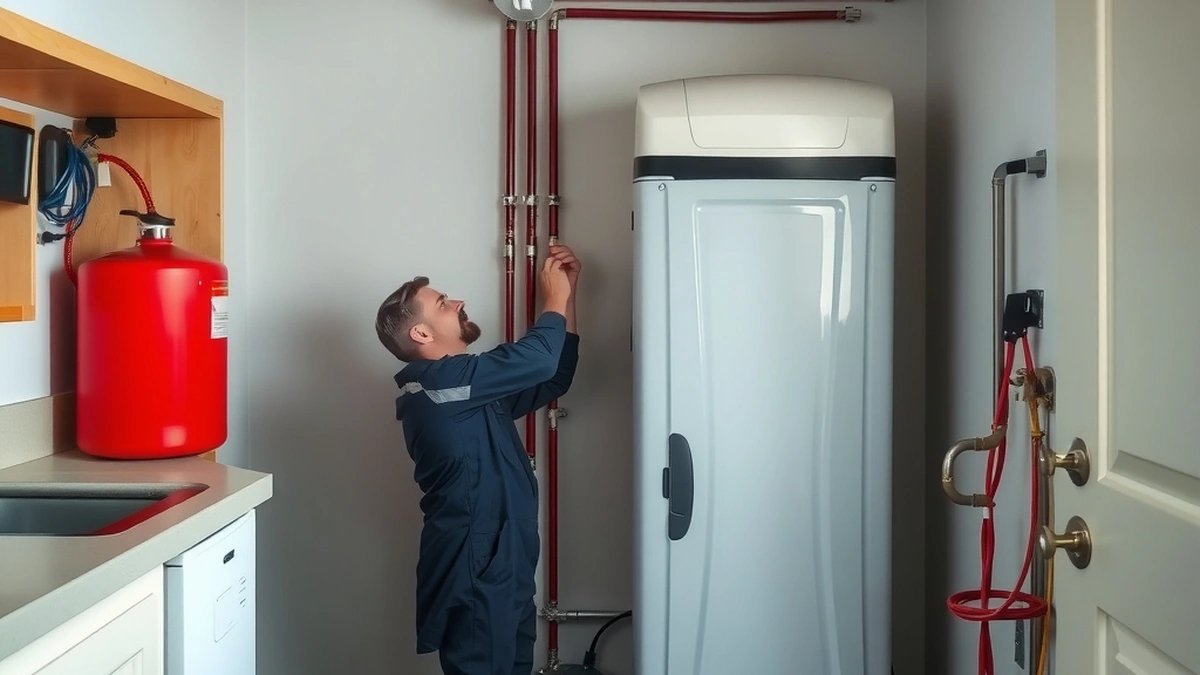
Municipal water is pre-treated by a utility but may still need softening or carbon filtration; well water is untreated and usually requires testing plus targeted equipment for hardness, iron, sulfur, or bacteria.
- Primary regulator
- EPA public water standards (municipal); owner responsibility (private well)
- Typical first step
- Lab water test ($40-$150)
- Softener equipment
- $600-$2,500
- Softener installed
- $1,200-$4,500
- Whole-house filter installed
- $500-$1,800
Some links on this page are affiliate links.If you buy through them we may earn a commission at no extra cost to you. We do not accept payment for rankings. Read the full disclosure.
Municipal and well water require different treatment approaches because they arrive at the home with different starting conditions. Municipal water is treated by a utility and delivered through a distribution system, while well water is pumped directly from groundwater and is the homeowner’s responsibility to test and treat. Equipment selection should follow a water test, not assumptions about the water source.
Where the water comes from
Municipal water is drawn from rivers, lakes, reservoirs, or wells operated by a public utility. The utility treats it to meet EPA public drinking water standards and distributes it through pressurized mains. Homeowners receive water that has already undergone disinfection and, in many cases, corrosion control or partial softening. The utility issues consumer confidence reports, but those reports describe water at the treatment plant or distribution points, not necessarily at your kitchen tap after it travels through your home’s plumbing.
Well water comes from a private well on the property. There is no utility treatment step between the aquifer and the house, so the water enters the home exactly as it exists underground, minus whatever the well pump and pressure tank add. Private well owners are responsible for testing, maintenance, and any treatment equipment. This is the fundamental difference that drives equipment decisions.
What testing tells you
A lab water test costs $40-$150 and should be the first step for both sources. For municipal water, the test verifies what is actually entering your home and identifies chlorine, chloramines, hardness, and possible lead from older plumbing. For well water, the test is essential because there is no third-party monitoring. Common parameters include hardness, iron, manganese, pH, nitrate, total coliform bacteria, and sulfur.
Hardness is measured in grains per gallon (gpg). Soft water is 0-3 gpg, moderate is 3-7 gpg, hard is 7-10 gpg, and very hard is 10+ gpg. If a test shows 12 gpg and the household uses 300 gallons per day, the daily hardness load is 3,600 grains. A 32,000-grain softener would theoretically need regeneration every nine days before efficiency and reserve factors are applied. Salt use typically runs 8-12 pounds per regeneration, so salt consumption can be estimated from regeneration frequency and local salt prices.
Nitrate is a common well-water concern. The federal limit is 10 mg/L. Standard water softeners and carbon filters do not remove nitrate; reverse osmosis or specialized anion treatment is required if nitrate is present at actionable levels.
Common municipal issues and equipment
Municipal water is usually free of bacteria because of utility disinfection, but it can still arrive at the home with hardness, chlorine taste, or sediment from aging pipes. A whole-house carbon filter costs $500-$1,800 installed and can reduce chlorine and improve taste. Carbon cartridges run $80-$300 per year and are typically replaced every 6-12 months. Sediment cartridges usually need replacement every 3-6 months.
If hardness is moderate to very hard, a water softener is the standard equipment. Softener equipment costs $600-$2,500, with installation adding $500-$1,500 for a total installed range of $1,200-$4,500. Salt costs $120-$400 per year. Resin beds last 8-12 years and cost $300-$600 to rebed. Total softener life is typically 10-15 years.
For drinking water at a single tap, under-sink reverse osmosis equipment costs $200-$600, or $300-$900 installed. Running costs are $60-$150 per year. RO membranes last 2-3 years and rejection rates range from 80-95 percent. Waste ratios are typically 3-4:1, meaning three to four gallons are sent to the drain for every gallon of product water.
Common well issues and equipment
Well water frequently requires more extensive treatment because it is untreated groundwater. Hardness is common and is addressed with the same softener equipment and costs described above. Iron is another frequent issue. Softeners can handle limited dissolved iron, generally up to 2-3 ppm. Above that, a dedicated iron filter is usually needed, with installed costs of $800-$2,500.
Sulfur, which causes a rotten-egg odor, often requires a dedicated sulfur filter costing $1,000-$3,000 installed. If bacteria are present, UV treatment is a common non-chemical option. UV lamps are replaced every 12 months at $30-$90 per lamp. Whole-house flow rates for filtration equipment typically range from 8-15 GPM, so equipment must be sized to the home’s peak demand.
Whole-house reverse osmosis is rarely necessary for municipal water but is occasionally considered for wells with severe dissolved solids. Installed costs range from $3,000-$8,000, and the waste ratio and membrane replacement schedule are similar to under-sink units but at higher volume.
Equipment cost comparison
| Equipment | Typical installed cost | Ongoing cost |
|---|---|---|
| Water softener | $1,200-$4,500 | $120-$400 salt per year |
| Salt-free conditioner | $500-$1,800 | Minimal media replacement |
| Whole-house carbon filter | $500-$1,800 | $80-$300 per year |
| Iron filter | $800-$2,500 | Media and backwash water |
| Sulfur filter | $1,000-$3,000 | Media and maintenance |
| Under-sink RO | $300-$900 | $60-$150 per year |
| Whole-house RO | $3,000-$8,000 | Membrane and waste water |
| UV system | Varies by flow rate | $30-$90 per lamp per year |
These figures are estimates and vary by local labor rates, equipment size, and water chemistry. For more detail on softener pricing, see our breakdown of water softener cost and installation cost. Whole-house filter pricing is covered separately at whole-house water filter cost.
Maintenance and lifespan
Softener resin lasts 8-12 years, and the full system typically lasts 10-15 years. Salt usage depends on hardness and regeneration settings. At 8-12 pounds per regeneration, a household regenerating twice per month uses 192-288 pounds of salt annually. Salt prices vary regionally, which is why annual salt cost is estimated at $120-$400.
Carbon cartridges last 6-12 months, sediment cartridges 3-6 months, and UV lamps 12 months. RO membranes last 2-3 years. Pre-filters on RO systems protect the membrane and should be changed on schedule to avoid premature membrane replacement.
Well systems add pressure tank and pump maintenance that municipal customers do not face. A private well owner should also retest periodically, especially after flooding, nearby construction, or changes in taste, odor, or appearance.
Choosing equipment by source
Start with a lab test. Municipal customers often need only a carbon filter for taste or a softener for hardness. Well customers usually need a broader treatment train, which might include sediment filtration, softening, iron or sulfur removal, and UV disinfection depending on results. Point-of-use RO can be added for drinking water regardless of source.
Equipment should be sized to measured hardness, flow rate, and household water use rather than purchased based on the water source alone. For well-specific cost planning, see well water treatment cost. For ongoing softener consumables, see water softener salt cost. If iron is confirmed, see iron filter cost. For UV pricing, see UV water purifier cost.
Water treatment is equipment matched to measured water quality. Municipal and well water both benefit from testing first and equipment second.
Next, compare how much does a water softener cost, water softener installation cost, whole house water filter cost before you commit.
Frequently asked questions
Is municipal water safer than well water?
Municipal water is treated and monitored by a utility under EPA public water rules, while private well owners are responsible for their own testing and treatment.
Do I need to test municipal water?
Yes. A lab test ($40-$150) confirms chlorine, hardness, and other parameters before you buy equipment.
What hardness range is considered hard?
Water is hard at 7-10 grains per gallon and very hard at 10+ grains per gallon.
Can a softener remove iron?
Softeners can handle limited iron, typically up to 2-3 ppm; higher levels usually need a dedicated iron filter ($800-$2,500 installed).
How often do RO membranes need replacement?
Under-sink RO membranes typically last 2-3 years, with running costs of $60-$150 per year.
What is the UV lamp replacement interval?
UV lamps are generally replaced every 12 months at $30-$90 per lamp.
Sources
Some links are affiliate links.If you buy through them we may earn a commission at no extra cost to you. We do not accept payment for rankings. Read the full disclosure.