How to Test for Nitrate in Water: Kits and Labs
Nitrate testing needs a lab or a reliable kit and a sample that has not been softened. See what 10 mg/L means and how to read a result correctly.
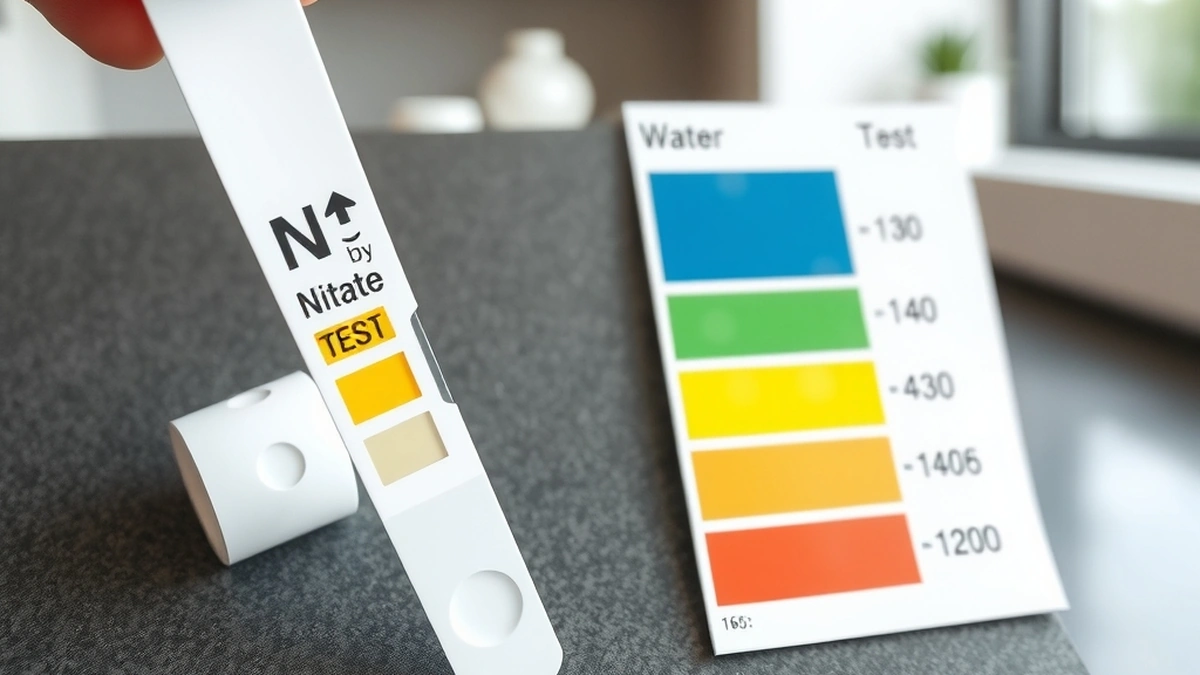
Test for nitrate with a certified lab for a precise result, or a nitrate-specific strip for a screen. The federal limit is 10 mg/L, and the sample should come from a cold untreated tap and be delivered within the lab's holding time.
- Lab test
- $20 - $50
- Nitrate strips
- $15 - $40
- Federal limit
- 10 mg/L
- Sample tap
- Cold, untreated
- Test frequency
- Yearly on a well
Some links on this page are affiliate links.If you buy through them we may earn a commission at no extra cost to you. We do not accept payment for rankings. Read the full disclosure.
Testing for nitrate is straightforward once the sample is right. Use a certified lab for a number you can act on, or a nitrate-specific strip for a quick screen. The federal limit is 10 mg/L, and anything at or above it calls for treatment or another water source.
What Nitrate Is and Where It Comes From
Nitrate is a dissolved form of nitrogen. It reaches groundwater from fertilizer, animal waste, septic systems, and decaying organic matter.
It has no taste, color, or smell at typical concentrations, which is why testing is the only way to detect it.
Private wells in agricultural areas, near feedlots, or with older septic systems are the common cases. Shallow wells and wells with damaged casing are more vulnerable.
Lab Testing
A certified lab reports nitrate as nitrogen in milligrams per liter, usually by an ion chromatography or colorimetric method. The test costs $20 - $50, often less when bundled with a well panel.
The lab provides a bottle and a holding time. Collect from a cold untreated tap, chill the sample if instructed, and deliver it promptly.
A lab result is the standard for a real-estate transaction, a treatment decision, and any situation where the number matters.
Strip Testing
Nitrate strips cost $15 - $40 and give a reading in about a minute. They are calibrated for nitrate and report in mg/L.
Accuracy is coarse, often plus or minus 5 - 10 mg/L at higher concentrations. That is enough to see that a problem exists and not enough to design a system.
Strips are useful for monitoring between lab tests and for a quick check on a new well. Confirm any high reading with a lab.
Taking the Sample
| Step | Action | Reason |
|---|---|---|
| 1 | Use the lab bottle | Clean and appropriate |
| 2 | Sample a cold untreated tap | Treatment changes the result |
| 3 | Run water 3 - 5 minutes | Clears the line |
| 4 | Fill without touching the cap | Avoids contamination |
| 5 | Chill if required | Preserves the sample |
| 6 | Deliver within the holding time | Results depend on it |
Do not sample through a softener, carbon filter, or RO unit when testing raw water. Those devices change the nitrate reading, and the point is to know what the well is producing.
Reading the Result
A result under 5 mg/L is comfortably below the limit. Retest annually and note the trend.
A result of 5 - 10 mg/L is approaching the limit. Retest in a few months and consider treatment if the number is rising.
A result at or above 10 mg/L exceeds the federal limit. Treat the drinking water, and consider whether the well itself needs attention.
Nitrite is sometimes reported separately. It is less common in well water and is usually included in a nitrogen panel.
Why Nitrate Moves
Nitrate concentration in a well can change with rainfall, snowmelt, irrigation, and the water table. A sample taken after a dry spell may read lower than one taken after a wet spring.
That variability is why a single test is a snapshot. Test in the same season each year, and test again after any change in land use nearby.
A new septic system, a change in fertilizer practice, or a neighbor’s new well can all affect a shallow aquifer.
What to Do With a High Result
- Stop using the water for drinking and cooking, or use bottled water.
- Retest to confirm the result.
- Identify the source: septic, fertilizer, animal waste, or a casing problem.
- Install point-of-use RO or a nitrate-selective system.
- Retest the treated water at the tap.
- Retest the raw water annually.
Boiling is not a solution for nitrate. It removes water and leaves the nitrate, so the concentration rises.
When to Test
Test annually on a private well, along with bacteria. Test before buying a home with a well, after any work on the well, and after a flood.
Test more often if the well is shallow, if it is near agricultural activity, or if a previous result was near the limit.
Keep the results. A trend over five years is more useful than a single number, and it shows whether the source is getting worse.
A lab may report nitrate and nitrite separately, or report nitrate as nitrogen. The distinction matters when comparing a result with the 10 mg/L limit.
Nitrate as nitrogen is the form the federal limit uses. A result reported as nitrate ion rather than nitrogen is a different number, roughly 4.4 times larger, and comparing it directly with 10 mg/L is a mistake.
Ask the lab which convention it uses, or look for the unit line on the report. A result of 44 mg/L nitrate ion is about 10 mg/L as nitrogen, and it sits at the limit rather than far above it.
A nitrate test at closing usually has a required window and a chain-of-custody form. The sampler signs for the bottle, and the lab reports the result to the parties.
Do not collect the sample days in advance. The holding time applies, and a sample that sits over a weekend may be rejected.
If the result is high, the negotiation is about treatment cost, not just the number. A $600 RO installation is a small line item next to a failed well inspection.
For the treatment options, see nitrate in water treatment. For the well problem, see nitrate in well water. For the full panel, see water tests for wells.
Frequently asked questions
How do I test water for nitrate?
Use a certified lab for a precise result, or a nitrate-specific strip for a quick screen. Sample from a cold untreated tap and deliver within the holding time.
What is a safe nitrate level in drinking water?
The federal limit for nitrate as nitrogen is 10 mg/L. Results at or above that level call for treatment or an alternative water source.
Can I test nitrate with a pool strip?
No. Pool strips measure different parameters and are not calibrated for drinking water. Use a nitrate-specific kit or a lab.
Does a water softener affect a nitrate test?
It does not remove nitrate, but sampling after any treatment device is still the wrong approach for a raw water test. Sample upstream of the equipment.
Why does nitrate change between tests?
Rainfall, irrigation, septic activity, and seasonal water table changes can move nitrate in a well. Test in the same season each year for a comparable result.
What if my result is just under 10 mg/L?
Retest in a few months and consider treatment if the trend is upward. A result near the limit is a reason to monitor, not to ignore.
Sources
Some links are affiliate links.If you buy through them we may earn a commission at no extra cost to you. We do not accept payment for rankings. Read the full disclosure.