
Permeate pumps: when an RO needs one
A permeate pump uses reject pressure to fill the tank faster and cut waste. See the pressure threshold, the cost, and when it will not help.
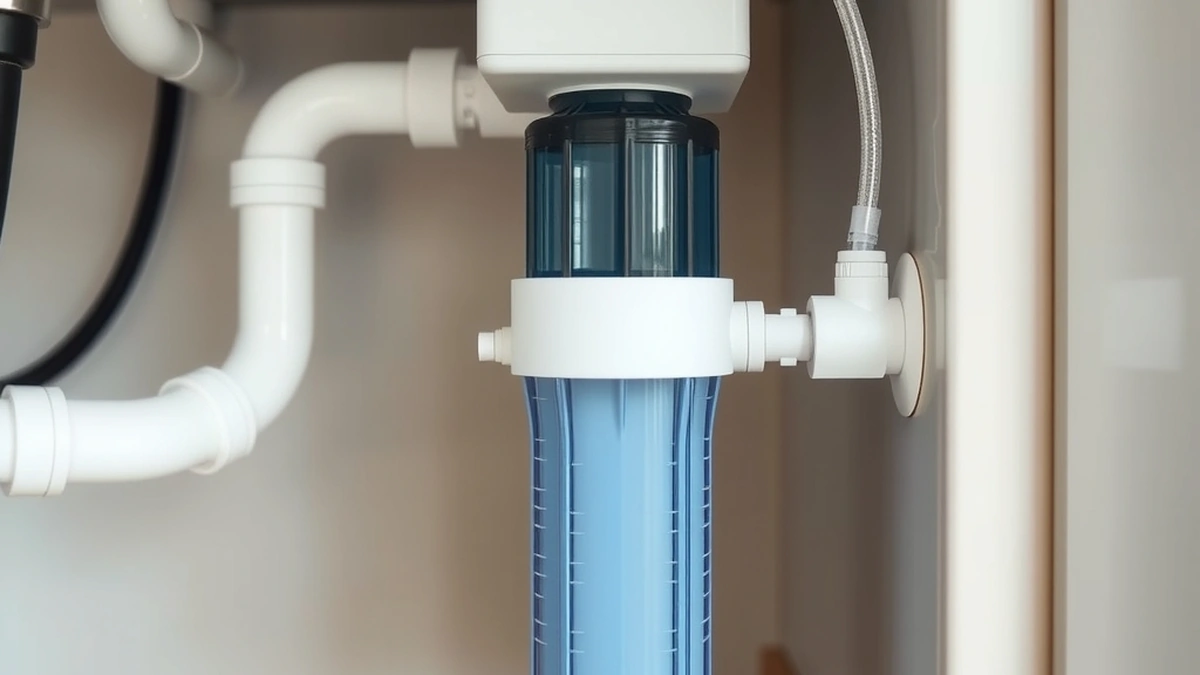
A permeate pump is a hydraulic device that uses the RO reject stream to push product water into the tank, improving recovery and fill speed without electricity. Add one when supply pressure is under about 40 psi or when the tank takes more than a few hours to refill.
- Typical part cost
- $60 - $120
- Power required
- None, hydraulic
- Best when pressure
- Below 40 psi
- Waste reduction
- Meaningful, up to half the reject flow
- Install time
- 30 - 60 minutes
Some links on this page are affiliate links.If you buy through them we may earn a commission at no extra cost to you. We do not accept payment for rankings. Read the full disclosure.
A permeate pump is a small hydraulic device that sits between the RO membrane and the storage tank. It uses the pressure of the waste stream to push product water into the tank, which means the membrane is not fighting tank back-pressure. The result is faster tank fill and less water sent to drain, with no electricity.
The Problem It Solves
An RO system produces water slowly. A typical residential membrane makes 50 to 75 gallons per day, which works out to roughly 2 to 3 ounces per minute. That is fine, because the storage tank buffers demand. But the tank itself creates back-pressure.
As the tank fills, pressure inside rises. The membrane has to overcome that pressure to keep producing. Near the end of the fill, the membrane is working against maybe 40 to 60 psi of tank pressure plus its own osmotic pressure, so production slows to a crawl and the reject stream keeps running. That is why an RO system can send water to drain for hours after the tank is nearly full.
A permeate pump interrupts that. It isolates the tank from the membrane hydraulically, so the membrane always sees low back-pressure and produces at its rated rate. The reject stream drives a piston that pumps product into the tank.
When It Is Worth Adding
The threshold is supply pressure. At 60 psi or above, a standard system fills a 3 gallon tank in a couple of hours and the pump adds little. At 40 psi or below, fill times stretch and the waste ratio climbs.
| Supply pressure | Symptom | Permeate pump helps? |
|---|---|---|
| 60 psi and above | Normal fill | Marginally |
| 50 psi | Slightly slow | Somewhat |
| 40 psi | Tank takes hours | Yes |
| 30 psi | Very slow, high waste | Yes, or booster |
| Below 25 psi | May not produce | Booster pump needed |
A practical test: open the faucet and run 2 quarts. Then time how long until the flow at the faucet returns to full. If that takes more than 2 or 3 hours, the system is undersized for the household or the pressure is low. A permeate pump is the cheaper of the two fixes.
Permeate Pump vs Booster Pump
These are different devices and they are often confused.
A permeate pump is passive. It recovers energy from the reject stream and uses it to pressurize product water. It does not increase feed pressure at the membrane. Benefit: less waste, faster tank fill, no electricity, no noise.
A booster pump is active. It raises the feed pressure, typically from 30 or 40 psi to 60 or 80 psi. That increases production directly and improves rejection. Benefit: works when supply pressure is genuinely too low, and it helps a system that is not producing at all. Cost: electricity, noise, another failure point, and typically $100 to $200 for the part.
The two can be combined. On very low pressure, a booster raises feed pressure and a permeate pump improves tank fill and recovery.
What It Costs and Saves
Part cost is roughly $60 to $120. Installation is 30 to 60 minutes for anyone comfortable with push-fit tubing, since the pump splices into the existing lines. No wiring, no drain work.
The savings arithmetic depends on how bad the ratio is. Take a system producing 2 gallons a day at 4:1, which sends 8 gallons to drain. If the pump brings that to 3:1, drain drops to 6 gallons, saving 2 gallons a day or 730 gallons a year. At a cent per gallon, that is $7 a year. Not a financial case on water alone.
The real case is performance. A tank that refills in 45 minutes instead of 4 hours changes how the system is used, and a household that stops running out of water stops buying bottled water as a backup. That is where the money actually comes back.
Installation Basics
The pump has four connections: feed in, feed out, reject in, reject out. It goes between the membrane housing and the tank, with the reject line routed through it. Most kits include the tubing and quick-connect fittings.
Two things to get right. First, the flow direction matters; the pump is marked and installed backwards it simply will not work. Second, the drain line must remain open and downhill, because the pump increases reject flow during the production cycle. If the drain is kinked, the pump has nothing to work with.
Five Checks Before Buying
- Measure supply pressure at the kitchen cold line with a gauge; this is the single deciding number.
- Time the tank refill after drawing 2 quarts.
- Confirm the system has a tank. Tankless units do not use a permeate pump.
- Check tubing access. You need enough slack to splice in four connections.
- Price the kit against a booster. If pressure is under 25 psi, a booster is the correct first purchase.
When to Skip It
Skip the pump if pressure is good and the tank keeps up. Skip it if the system is tankless. Skip it if the RO unit is a sealed, proprietary design with no accessible tubing, because there is nowhere to install it.
Do not skip it if you are on a private well with a 30 to 40 psi pressure switch setting, which is common. That is exactly the case where a permeate pump turns a disappointing system into an adequate one. If the well pressure itself is the problem, low water pressure causes covers the upstream fixes, water pressure and filters explains the whole-house budget, and RO waste water explains what the ratio means for your bill.
Frequently asked questions
What does a permeate pump do on an RO system?
It uses the pressure energy of the reject stream to push product water into the storage tank, so the membrane works against less back pressure and fills the tank faster with less waste.
Do I need a permeate pump if my pressure is 60 psi?
Usually not. Above about 50 to 60 psi a standard RO system fills adequately, and the permeate pump adds cost for a benefit you will barely notice.
Does a permeate pump use electricity?
No. It is driven hydraulically by the reject water, which is why it can be installed where there is no outlet under the sink.
How much water does a permeate pump save?
It can cut reject flow meaningfully, often bringing a 4:1 system closer to 2:1 or 3:1, depending on supply pressure and membrane condition.
Can a permeate pump be added to any RO system?
It can be added to most tank-style units with standard tubing, but tankless systems and units with integrated manifolds may not have a compatible connection point.
What is the difference between a permeate pump and a booster pump?
A permeate pump recovers energy from the reject stream, while a booster pump uses electricity to raise feed pressure; the booster helps more when supply pressure is very low.
Sources
Some links are affiliate links.If you buy through them we may earn a commission at no extra cost to you. We do not accept payment for rankings. Read the full disclosure.


