PFAS in water treatment options
Which treatment methods reduce PFAS in drinking water, how they compare, and why the test result decides the system.
PFAS in water is reduced with granular activated carbon, anion exchange, or reverse osmosis, and the right choice depends on the test result and the chain lengths present. Whole-house carbon runs $500 to $1,800 installed, and under-sink RO $300 to $900.
- Carbon filter
- $500 - $1,800
- Under-sink RO
- $300 - $900
- Whole-house RO
- $3,000 - $8,000
- RO rejection
- 80% - 95%
- Test type
- Laboratory panel
Some links on this page are affiliate links.If you buy through them we may earn a commission at no extra cost to you. We do not accept payment for rankings. Read the full disclosure.
PFAS in water is reduced with granular activated carbon, anion exchange resin, or reverse osmosis. The right choice depends on the laboratory result and the specific compounds present. A whole-house carbon filter costs $500 to $1,800 installed, and an under-sink reverse osmosis system costs $300 to $900.
What PFAS are and why treatment is specific
PFAS is a family of synthetic chemicals with fluorinated carbon chains. The family includes thousands of compounds, and they behave differently in treatment.
Long-chain compounds are more readily adsorbed by carbon. Short-chain compounds are more mobile and need more contact time, a different media, or a membrane. A system designed for one group can underperform badly on the other.
That is why a treatment claim has to name the compounds and the test conditions. “Removes PFAS” without a list is not a specification, and a certification for one compound does not cover the family.
The three treatment routes
| Method | How it works | Best fit | Typical cost |
|---|---|---|---|
| Granular activated carbon | Adsorbs compounds onto media | Longer-chain PFAS | $500 - $1,800 installed |
| Anion exchange | Exchanges PFAS onto resin | Short-chain PFAS | Quoted by system |
| Reverse osmosis | Rejects compounds at the membrane | Drinking water at one tap | $300 - $900 installed |
| Whole-house RO | Membrane treatment for all water | Whole-home reduction | $3,000 - $8,000 installed |
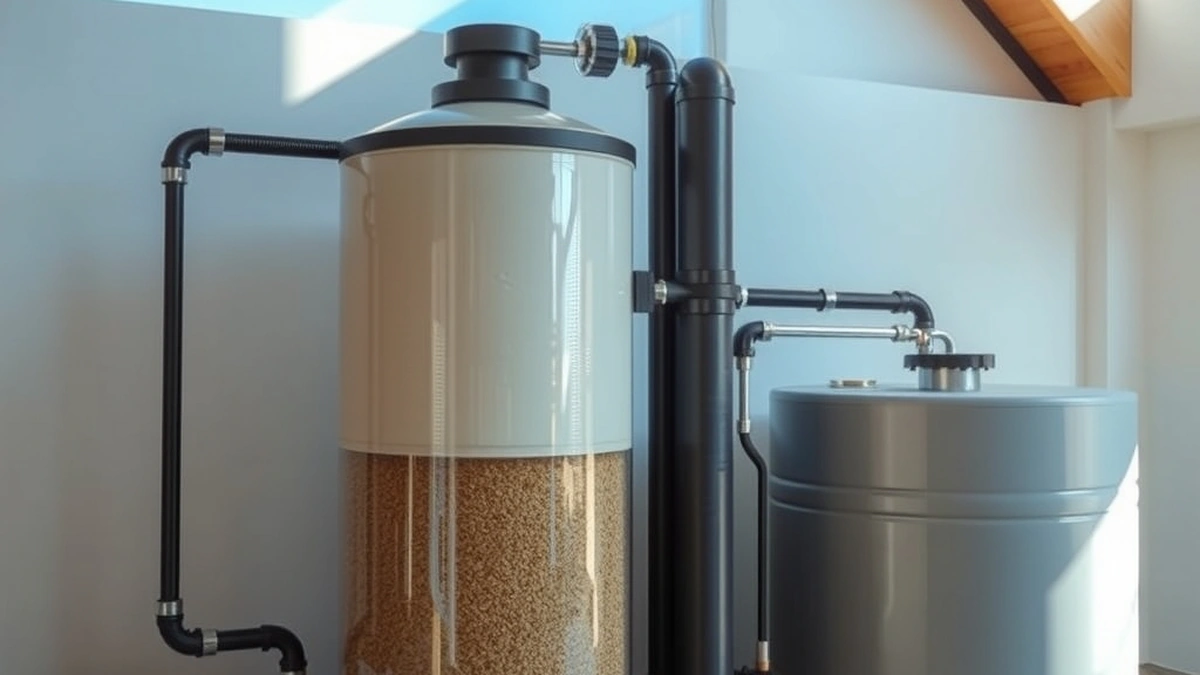
Carbon and anion exchange are media that exhaust and need replacement. RO uses a membrane and a reject stream, so it needs a drain and produces wastewater alongside the treated water.
Where treatment belongs
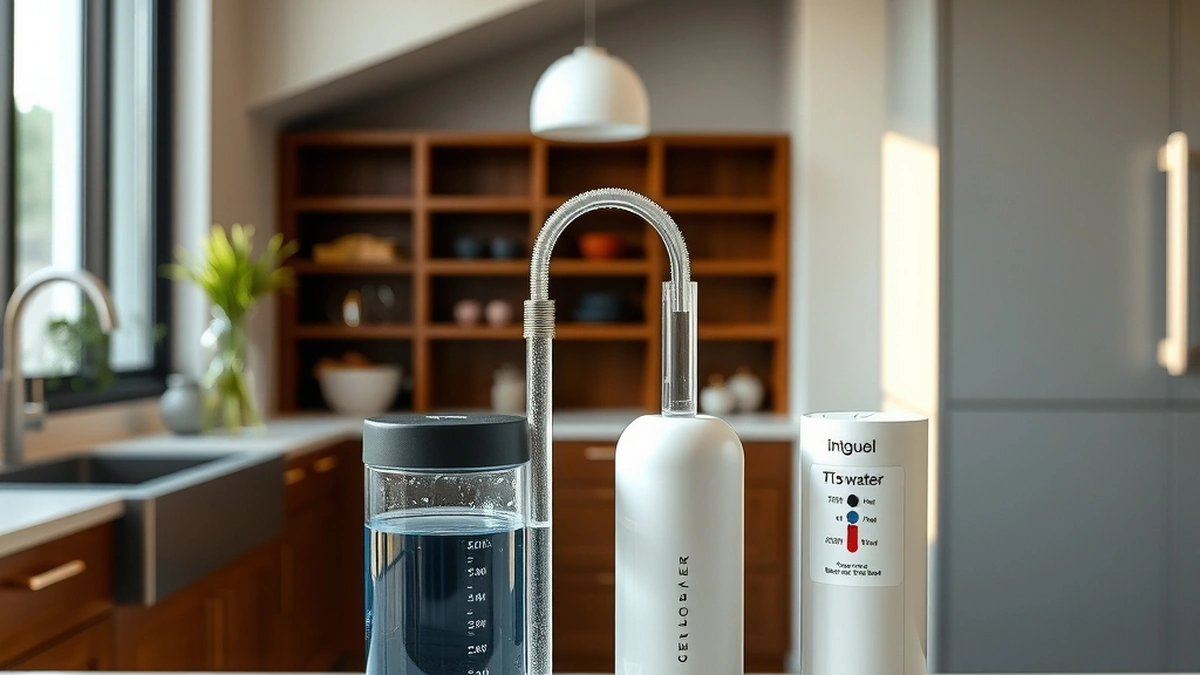
Most households treat drinking and cooking water at the kitchen tap. An under-sink RO system at $300 to $900 installed does that with a rejection rate of 80 to 95 percent.
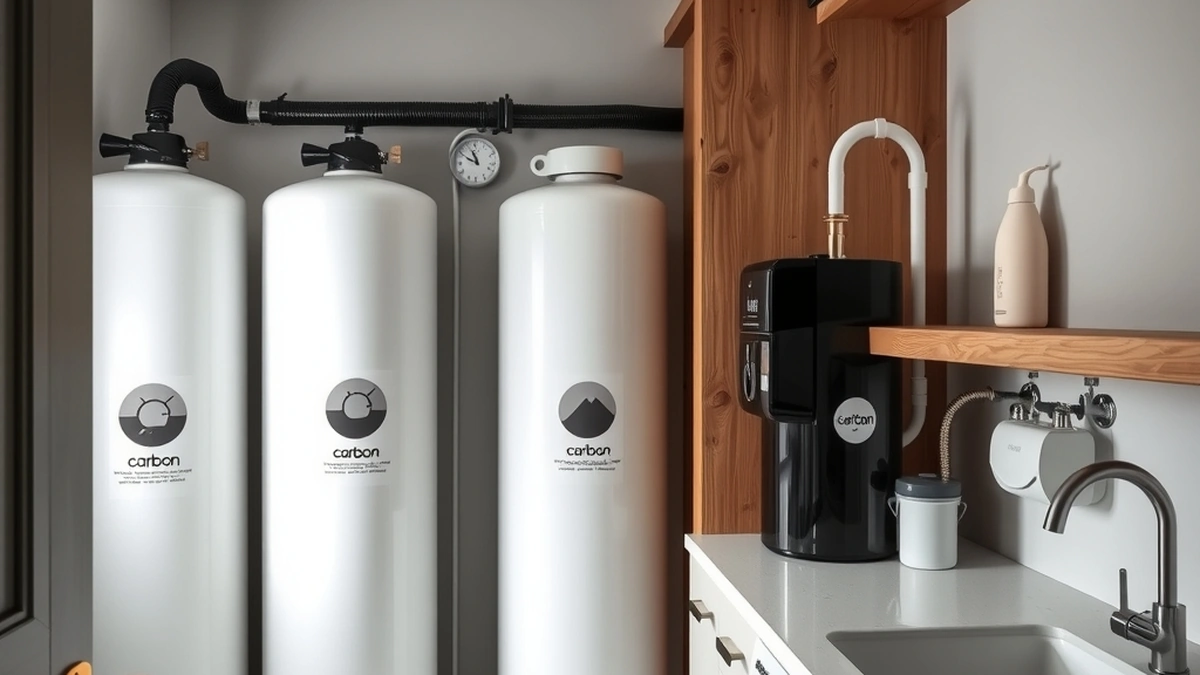
A whole-house carbon filter at $500 to $1,800 treats every tap, which reduces exposure from showering and laundry but uses much more media and exhausts it faster.
A whole-house RO system at $3,000 to $8,000 is a large installation with a significant waste stream, and it is usually specified when a contaminant must be reduced at every outlet. For PFAS alone, a kitchen-tap system is usually the proportionate choice.
The decision is about how much water needs treatment, not about which technology is strongest. A whole-house system treating 300 gallons a day uses media far faster than a 3-gallon-a-day drinking tap.
Media life and replacement
Carbon and resin have a finite capacity, and PFAS breakthrough happens before the media looks dirty. Replacement is scheduled by treated volume and by testing, not by appearance.
A whole-house carbon tank on a family of four may exhaust in months rather than years, depending on the influent concentration and the media volume. That is why whole-house PFAS treatment is a commitment to ongoing media cost, not a one-time purchase.
Under-sink cartridges are smaller and cheaper, which is one reason point-of-use treatment is the common choice for PFAS.
Testing decides the design
A laboratory PFAS panel is the only way to know what is present. Reporting limits are measured in parts per trillion, and field strips cannot detect at that level.
The panel identifies the compounds and their concentrations. That list determines whether carbon is adequate or whether anion exchange or RO is needed, and it also sets the replacement schedule for the media. Without the report, the equipment decision is a guess with a filter housing around it.
Testing after installation confirms the system is working. A treated-water test is the only evidence that the media is still doing its job.
Federal drinking water standards for some PFAS compounds are set at levels measured in parts per trillion, and utilities test and report against them.
Private wells are not covered by utility testing, so a household on a well has to arrange its own panel.
State rules can be stricter than federal ones, and local health departments often publish guidance for affected areas. Check both before assuming a private well is unaffected.
Installation and maintenance
- Test the raw water with a laboratory PFAS panel.
- Choose the treatment route based on the compounds and the volume needed.
- Install a sediment pre-filter to protect the media or membrane.
- Fit a bypass for service and sampling.
- Test treated water after installation and then annually.
- Replace media or membranes on schedule, not on taste.
Spent media should be disposed of according to local rules, because it concentrates the compounds it removed. Do not rinse a spent cartridge and return it to service as a way to extend its life.
What treatment does not do
Carbon does not remove nitrate, bacteria, or hardness, and it is not a steriliser.
RO does not remove all dissolved gases, and it produces a reject stream that has to go to a drain.
Neither method makes water safe from every possible contaminant, which is why the lab panel comes before the equipment and a treated-water test comes after it.
For the testing side, see pfas in water test and pfas in water. For the RO option, reverse osmosis system cost covers the under-sink numbers.
Bottom line
PFAS treatment is carbon, anion exchange, or reverse osmosis, chosen from a laboratory result. Treat the water you drink at the tap for $300 to $900, and go whole-house only when every outlet needs reduction.
Frequently asked questions
What removes PFAS from drinking water?
Granular activated carbon, anion exchange resin, and reverse osmosis all reduce PFAS, with effectiveness varying by compound and system design.
Does a standard carbon filter remove PFAS?
Some carbon filters reduce longer-chain PFAS, but short-chain compounds need more contact time or a different media such as anion exchange.
Is reverse osmosis effective for PFAS?
RO membranes reject a high percentage of PFAS, typically in the 80 to 95 percent range, and under-sink units treat drinking water at one tap.
Do I need a whole-house system?
Only if the goal is reducing exposure from all uses; drinking and cooking water can be treated at the kitchen tap for far less.
How do I know if my water has PFAS?
Only a laboratory panel detects PFAS, because the reporting limits are measured in parts per trillion rather than milligrams.
What happens to spent filter media?
Spent carbon and resin contain concentrated PFAS and should be disposed of according to local rules rather than placed in general waste.
Sources
Some links are affiliate links.If you buy through them we may earn a commission at no extra cost to you. We do not accept payment for rankings. Read the full disclosure.