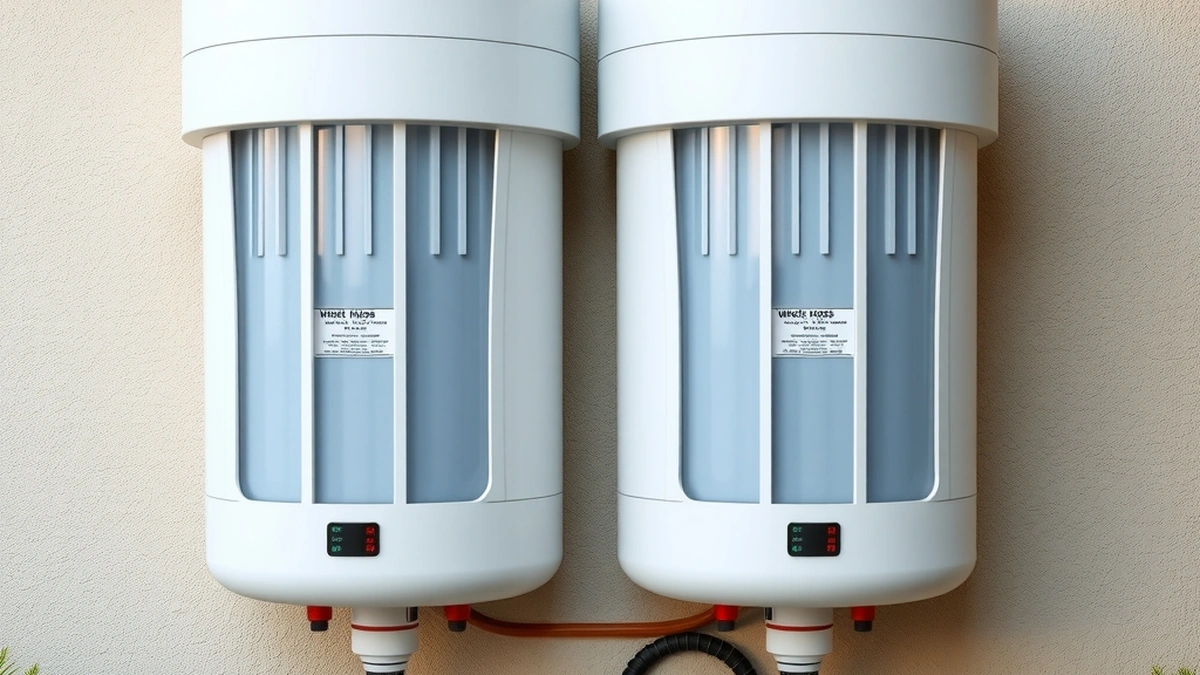
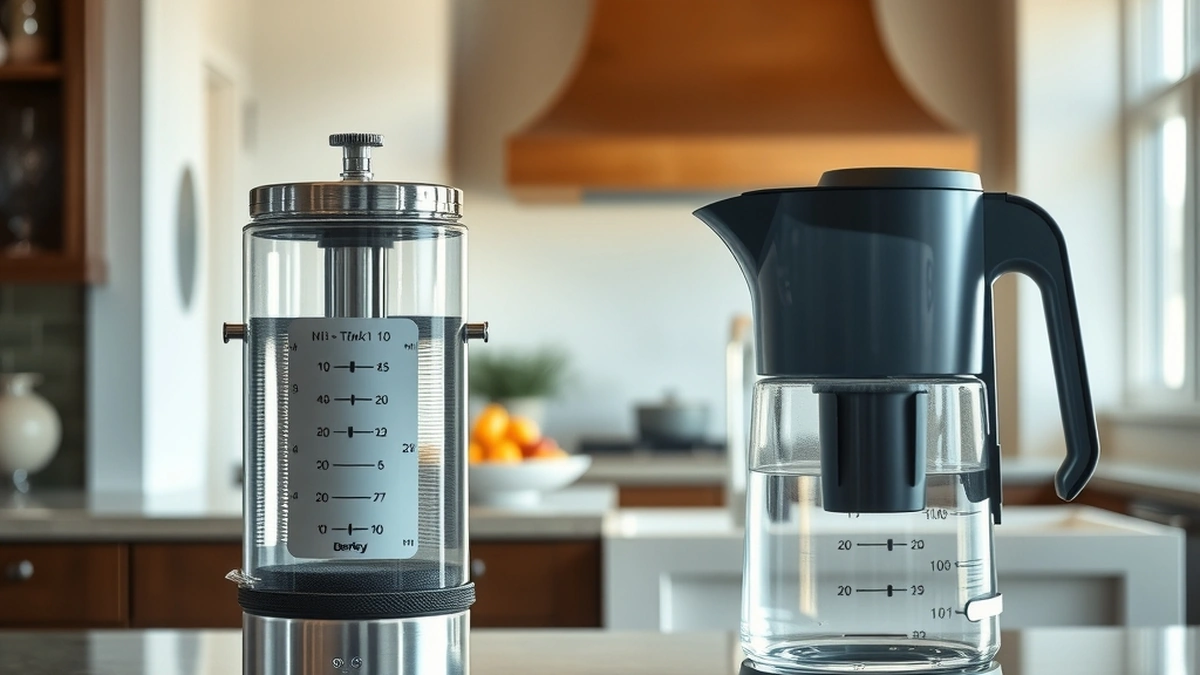
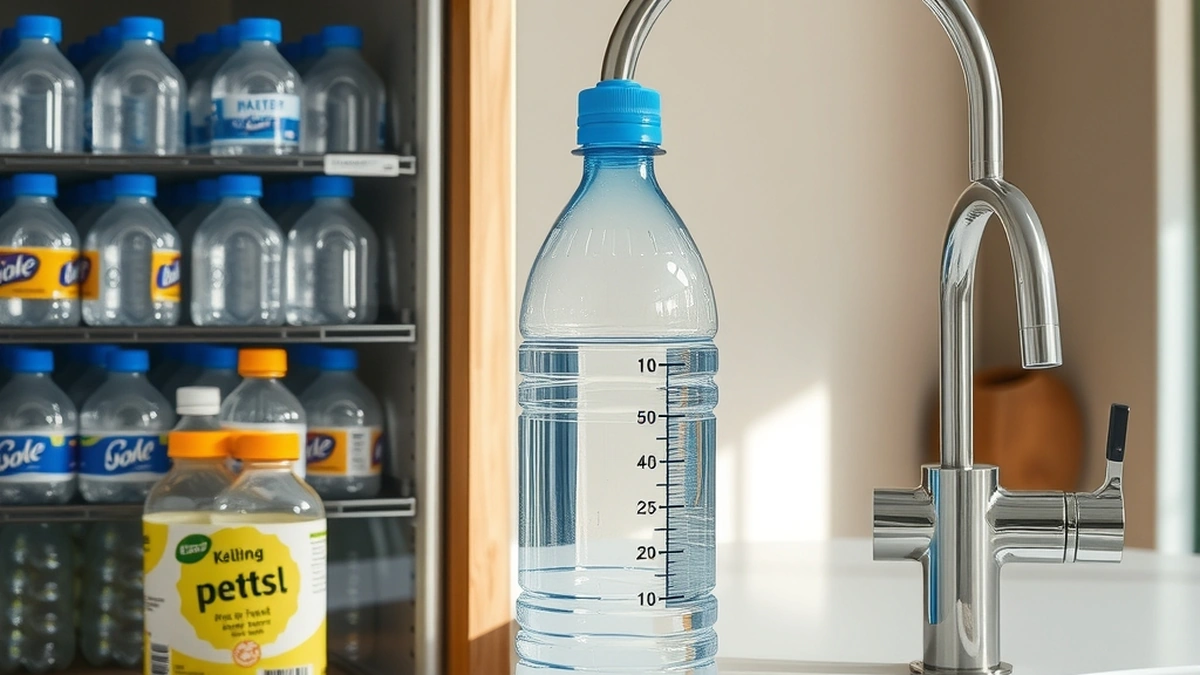
Reverse osmosis vs carbon filter
Carbon filters remove chlorine and taste; reverse osmosis removes dissolved solids. Compare what each handles, what each costs, and when you need both.
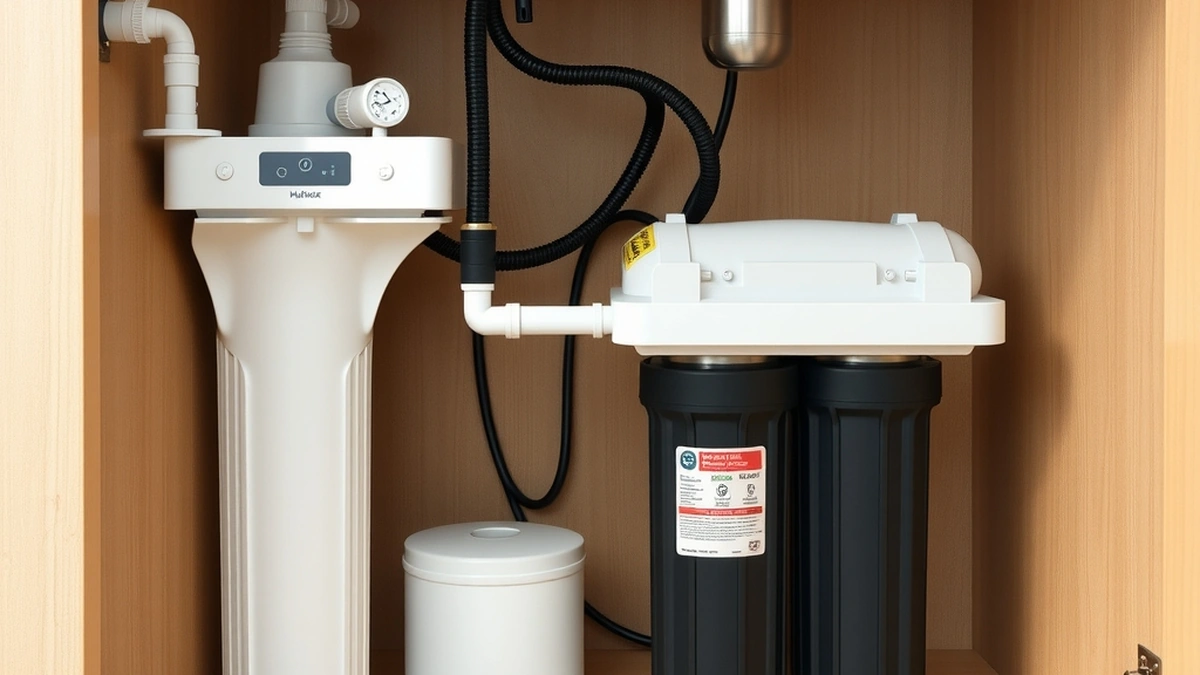
A carbon filter removes chlorine, taste, and odor by adsorption, while reverse osmosis removes dissolved solids including nitrate and sodium by forcing water through a membrane. Carbon fixes taste cheaply; RO handles what is dissolved, and most RO units contain carbon anyway.
- Carbon installed
- $500 - $1,800 whole house
- RO installed
- $300 - $900 under sink
- RO rejection
- 80 - 95 percent
- RO waste ratio
- 3 - 4:1
- Carbon cartridge life
- 6 - 12 months
Some links on this page are affiliate links.If you buy through them we may earn a commission at no extra cost to you. We do not accept payment for rankings. Read the full disclosure.
A carbon filter removes chlorine, taste, and odor by adsorption. Reverse osmosis removes dissolved solids by pushing water through a membrane that rejects most ions and molecules. They are not competing products so much as different tools, and most under-sink RO systems contain carbon filters because the membrane cannot survive chlorine.
Definitions That Settle the Argument
A carbon filter is a housing packed with activated carbon, either granular or extruded into a solid block. Water passes through the carbon, and chlorine, chloramine, and a range of organic compounds bind to its enormous internal surface area. Nothing is removed by size; removal is by adsorption, and the carbon exhausts as sites fill.
Reverse osmosis is a membrane process. Pressure pushes water against a semi-permeable membrane, water molecules pass through, and most dissolved ions, larger molecules, and particles are left behind and flushed to drain. Rejection rates for residential membranes run 80 to 95 percent depending on the contaminant and the membrane.
That difference explains everything downstream. Carbon treats what is dissolved as a gas or an organic; RO treats what is dissolved as an ion.
What Each One Actually Removes
| Contaminant | Carbon filter | Reverse osmosis |
|---|---|---|
| Chlorine and chloramine | Yes | No direct, needs carbon first |
| Taste and odor compounds | Yes | Partly |
| Sediment | No, needs pre-filter | No, needs pre-filter |
| Hardness minerals | No | Yes, 80 - 95 percent |
| Sodium | No | Yes |
| Nitrate | No | Yes |
| Lead | Some, by adsorption | Yes |
| Arsenic | Limited | Yes, depending on species |
| Bacteria | No | Some, not a barrier |
| PFAS | Some, with certified media | Yes, with certified membrane |
The last two rows are the ones people overestimate. Carbon does not disinfect, and RO is not a reliable microbiological barrier because a pinhole or a loose O-ring defeats it. Neither replaces UV if bacteria are the concern.
Cost, Side by Side
Carbon filtration installed runs $500 to $1,800 for a whole-house unit, with cartridges at $80 to $300 per year and a 6 to 12 month change interval. Sediment cartridges ahead of it need changing every 3 to 6 months.
Under-sink RO runs $300 to $900 installed for equipment in the $200 to $600 range. Running cost is $60 to $150 per year, and the membrane itself is replaced every 2 to 3 years.
The five-year arithmetic is worth doing properly. A whole-house carbon system at $1,000 installed plus $150 per year in cartridges is $1,000 + ($150 × 5) = $1,750. An under-sink RO at $600 installed plus $100 per year is $600 + ($100 × 5) = $1,100, but it serves one tap instead of the whole house. They are not the same purchase even when the numbers look close.
Then add the water bill for RO. At a 3 to 4:1 waste ratio, producing 2 gallons per day sends 6 to 8 gallons to drain. Over a year that is roughly 2,200 to 2,900 gallons of extra water, which at typical US rates is a few dollars, not the scary number people expect.
Where Each One Belongs in a House
Carbon belongs at the point of entry when chlorine is the issue. Municipal water carries chlorine or chloramine to the tap by design, and a whole-house carbon filter removes it before it reaches the shower, the washing machine, and the water heater. That is also the reason carbon precedes a softener on city water: chlorine degrades cation resin over time.
RO belongs at the point of use, almost always the kitchen sink. It is the right tool for nitrate, sodium, arsenic, and the general dissolved load that makes water taste flat. Whole-house RO exists, at $3,000 to $8,000 installed, and it is reserved for specific water chemistry problems rather than a general upgrade.
If both are needed, the sensible layout is whole-house carbon for chlorine and taste everywhere, plus under-sink RO for drinking water at one tap. The well water system layout covers how those stages order against softening and UV.
The Pre-Filter Rule
An RO membrane is a expensive part wrapped in cheap protection. Every system needs a sediment pre-filter to stop particles, and a carbon pre-filter to stop chlorine, because chlorine attacks the membrane’s polymer structure. Skip the pre-filters and a membrane rated for 2 to 3 years fails in months.
That is why the “RO vs carbon” question dissolves in practice. The carbon stage is not an alternative to RO; it is a component of it. Compare the maintenance instead: RO needs three or four cartridges plus a membrane on a schedule, while carbon needs one cartridge on a schedule.
Five Steps to Choose
- Read your water report. If the only complaint is chlorine taste, carbon is sufficient and cheaper.
- Look for a dissolved number. Nitrate, sodium, TDS, or arsenic above a threshold means RO at the tap.
- Decide the scope. Whole-house protection points to carbon at the entry; drinking water only points to under-sink RO.
- Check the pressure. RO needs at least 40 psi to produce at rate; below that, add a permeate pump or boost pump.
- Budget the consumables, not just the box. Five years of cartridges often costs as much as the hardware.
Which One Most Homes End Up With
Municipal water with a chlorine taste: whole-house carbon, no RO needed unless the report shows nitrate or a metal. Well water with hardness and iron: softener and iron filter first, then under-sink RO for drinking water, with carbon as the RO pre-filter. Well water with sulfur: oxidation and carbon, then RO if TDS is high.
In every one of those, carbon appears. The variable is whether RO is added on top. If you are weighing RO against a pitcher or a distiller instead, reverse osmosis versus distilled covers the running-cost difference, and what reverse osmosis removes lists the contaminants with rejection figures.
Frequently asked questions
Does a carbon filter remove dissolved solids?
No. Carbon adsorbs chlorine, organic compounds, and some taste and odor molecules, but dissolved minerals, sodium, and nitrate pass through largely unchanged.
Does reverse osmosis remove chlorine?
The membrane itself is degraded by chlorine, which is why every under-sink RO system includes carbon pre-filters ahead of the membrane to remove it first.
Which is better for drinking water taste?
Most people prefer RO for taste because it removes the dissolved solids that give water a flat or mineral edge, but carbon alone fixes chlorine taste at far lower cost.
How much water does an RO system waste?
Typical residential units send 3 to 4 gallons to drain for every gallon produced, so a family using 2 gallons a day for drinking and cooking sends roughly 6 to 8 gallons to drain daily.
Can I put a carbon filter after an RO membrane?
Yes, and most systems do. A final carbon polishing cartridge improves taste and catches any residual taste from the storage tank.
How often do RO membranes need replacing?
Every 2 to 3 years under normal municipal water, sooner if pre-filter cartridges are neglected or hardness and sediment are high.
Sources
Some links are affiliate links.If you buy through them we may earn a commission at no extra cost to you. We do not accept payment for rankings. Read the full disclosure.