Reverse Osmosis vs Distilled Water: Cost and Performance
Compare reverse osmosis and distilled water for home use, including equipment cost, operating cost, waste ratio, and maintenance.
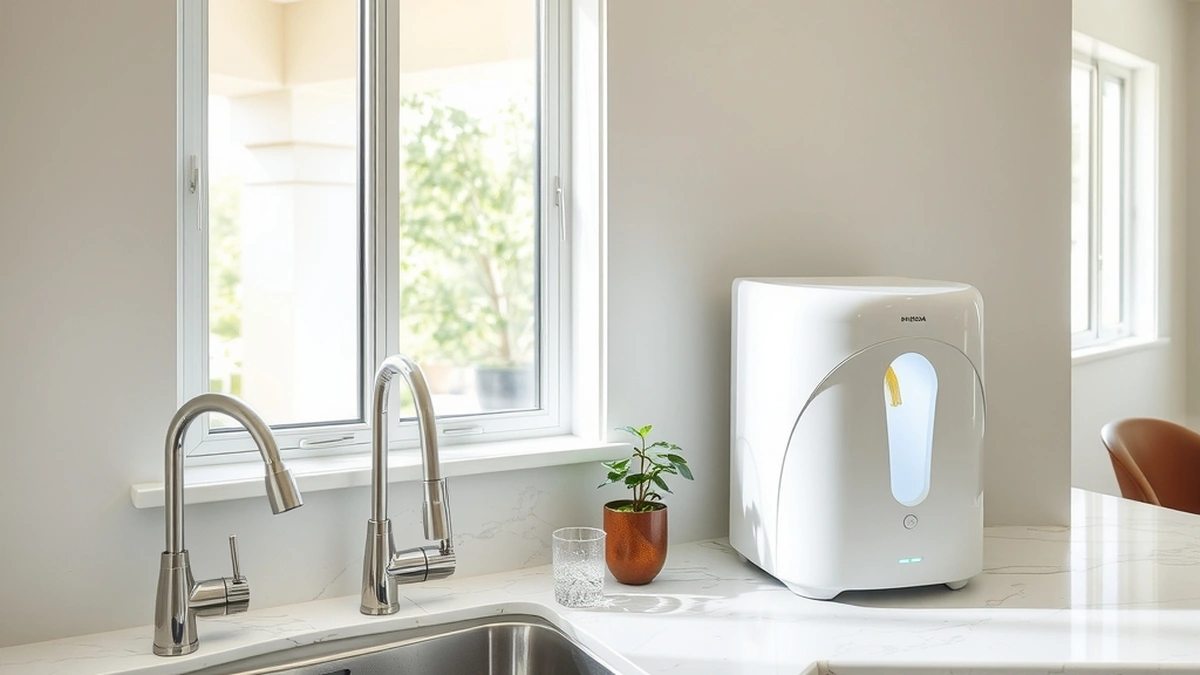
Reverse osmosis costs less per gallon than distillation and installs under a sink, while distillation uses heat and electricity but needs no membrane replacement.
- RO under-sink equipment
- $200–$600
- RO installed cost
- $300–$900
- RO annual running cost
- $60–$150
- RO membrane life
- 2–3 years
- RO waste ratio
- 3–4:1
Some links on this page are affiliate links.If you buy through them we may earn a commission at no extra cost to you. We do not accept payment for rankings. Read the full disclosure.
Reverse osmosis and distillation both reduce dissolved solids in drinking water, but they work differently and carry different ownership costs. Reverse osmosis forces water through a semi-permeable membrane, while distillation boils water and collects the condensed steam. For most households, the choice comes down to installed price, cost per gallon, waste water, and maintenance effort.
Start with a water test before buying either system. A lab test costs about $40–$150 and reveals hardness, total dissolved solids, and other parameters that determine which technology fits your water. Equipment selection should follow test results, not the other way around.
How Reverse Osmosis Works
An under-sink RO system connects to a cold-water line and uses pressure to push water through a membrane. The membrane rejects a portion of dissolved solids, and the treated water goes to a small storage tank. Most residential RO units carry a rejection rate of 80–95%, meaning that share of incoming dissolved solids does not pass into the product water.
RO systems produce waste water as part of normal operation. The typical waste ratio is 3–4:1, so for every gallon of treated water, three to four gallons go to the drain. If your household uses 2 gallons of RO water per day, that means roughly 6–8 gallons of waste water daily, or about 2,190–2,920 gallons per year.
RO Costs
Equipment and installation figures are estimates and vary by region and contractor.
- Under-sink RO equipment: $200–$600
- Under-sink RO installed: $300–$900
- Annual running cost: $60–$150
- Membrane replacement interval: 2–3 years
Example annual operating math: if cartridges and membrane replacement average $100 per year and the system produces 730 gallons per year (2 gallons per day), the cost is about $0.14 per gallon before water and sewer charges. Add waste water at 3:1, and total water entering the system is about 2,920 gallons to yield 730 gallons of product.
Whole-house RO is also available but costs significantly more, with installed estimates of $3,000–$8,000. It is usually unnecessary unless test results show a whole-house need for dissolved-solids reduction.
How Distillation Works
A water distiller heats water to boiling, captures the steam, and condenses it back into liquid in a separate container. Most dissolved solids and non-volatile contaminants remain in the boiling chamber as residue. Distillation does not use a membrane, so there is no membrane replacement schedule.
Distillation is energy-intensive. A countertop distiller typically runs on standard household electricity and may produce roughly 0.25 to 1 gallon per cycle, depending on the model. Operating cost depends on local electricity rates and how many gallons you produce.
Distillation Costs
Because distiller prices and electricity consumption vary widely by model, specific installed cost and cost-per-gallon figures are not included in the canonical data set. You should compare the wattage of a specific distiller against your electricity rate to estimate running cost. Maintenance mainly involves cleaning scale from the boiling chamber, which frequency depends on water hardness.
Side-by-Side Comparison
| Factor | Reverse Osmosis | Distillation |
|---|---|---|
| Primary mechanism | Membrane pressure separation | Boiling and condensation |
| Under-sink equipment | $200–$600 | Varies by model |
| Installed cost | $300–$900 | Usually plug-in, minimal installation |
| Annual running cost | $60–$150 | Electricity-dependent |
| Membrane replacement | Every 2–3 years | No membrane |
| Waste ratio | 3–4:1 | No waste water, but boiling residue remains |
| Rejection rate | 80–95% | High for dissolved solids |
| Daily output | Tank-limited, typically gallons per day | Cycle-limited, often slower |
Water Test First
Test results matter because neither RO nor distillation is a universal fix for every water problem. For example, if your water has high hardness, a softener may be more appropriate for whole-house protection. Softener equipment runs $600–$2,500, with installed costs of $1,200–$4,500 and annual salt costs of $120–$400. If iron is present, a softener generally handles only 2–3 ppm, so an iron filter may be needed instead or in addition.
If your concern is limited to drinking and cooking water at one sink, an under-sink RO system is usually the simpler and cheaper route. Whole-house RO at $3,000–$8,000 installed is typically overkill unless test data supports it.
Maintenance and Longevity
RO systems require periodic cartridge changes and membrane replacement every 2–3 years. Pre-filters protect the membrane from chlorine and sediment, and neglecting them shortens membrane life. Distillers require regular descaling of the boiling chamber, especially on hard water. Scale buildup reduces efficiency and can eventually damage the heating element.
RO waste water adds to your sewer or septic load. On a septic system, the extra 3–4 gallons of waste per gallon of product is a real consideration. Distillation adds no waste water to the drain, but it does add heat and humidity to the room during operation.
Which Costs Less Per Gallon
RO usually wins on cost per gallon for drinking water because it uses line pressure rather than purchased heat. Using the canonical estimates, $60–$150 per year in running costs divided by typical annual production puts RO in the range of roughly $0.08–$0.20 per gallon, excluding water and sewer charges. Distillation cost per gallon depends on your electricity rate and the distiller’s efficiency, so calculate it from your own bill before deciding.
If you already pay for water and sewer, remember that RO waste water may appear on both sides of the bill. A household using 2 gallons of RO product per day with a 4:1 waste ratio sends about 2,920 gallons to the drain annually just to produce 730 gallons.
Bottom Line
Choose reverse osmosis if you want a lower-cost, pressure-driven system for drinking and cooking water and you can manage membrane replacement every 2–3 years. Choose distillation if you prefer a no-membrane process and are willing to pay for electricity and handle scale cleaning. Either way, order a lab water test first so your equipment choice matches your actual water chemistry rather than assumptions.
For more on equipment pricing, see our guides on reverse osmosis system cost, whole house water filter cost, and water softener installation cost.
Next, compare how much does a water softener cost, water softener installation cost, whole house water filter cost before you commit.
Frequently asked questions
What is the main difference between RO and distilled water?
Reverse osmosis pushes water through a membrane under pressure, while distillation boils water and condenses the steam, leaving most dissolved solids behind.
How much does an under-sink RO system cost installed?
Installed under-sink RO equipment runs about $300–$900, depending on the model and labor.
What is the annual running cost for RO?
Expect roughly $60–$150 per year for filters and membrane replacement.
How much water does RO waste?
Typical residential RO waste ratio is 3–4 gallons of wastewater for every 1 gallon of product water.
How long does an RO membrane last?
RO membranes generally last 2–3 years before replacement is needed.
Should I test my water before choosing?
Yes. A lab water test costs about $40–$150 and helps you match equipment to what is actually in your water.
Sources
Some links are affiliate links.If you buy through them we may earn a commission at no extra cost to you. We do not accept payment for rankings. Read the full disclosure.