Sodium in softened water: how much, and who should care
Ion exchange adds sodium to water in proportion to hardness. See the actual milligrams per quart, how it compares to food, and how to avoid it.
Softening adds about 8 mg of sodium per quart for every grain per gallon of hardness removed, so water at 10 GPG ends up near 80 mg per quart. That is low against most foods, but a sodium-restricted diet is a reason to use potassium chloride or a bypass tap.
- Sodium per GPG removed
- about 8 mg per quart
- At 10 GPG
- about 80 mg per quart
- At 20 GPG
- about 160 mg per quart
- Potassium chloride
- Alternative regenerant
- Hardness soft band
- 0 - 3 GPG
Some links on this page are affiliate links.If you buy through them we may earn a commission at no extra cost to you. We do not accept payment for rankings. Read the full disclosure.
Ion exchange adds sodium to water in direct proportion to the hardness it removes: roughly 8 milligrams per quart for every grain per gallon. Water at 10 GPG therefore arrives at the tap with about 80 mg of sodium per quart. Whether that matters depends entirely on who is drinking it and what else is on the plate.
The Exchange Reaction in Plain Terms
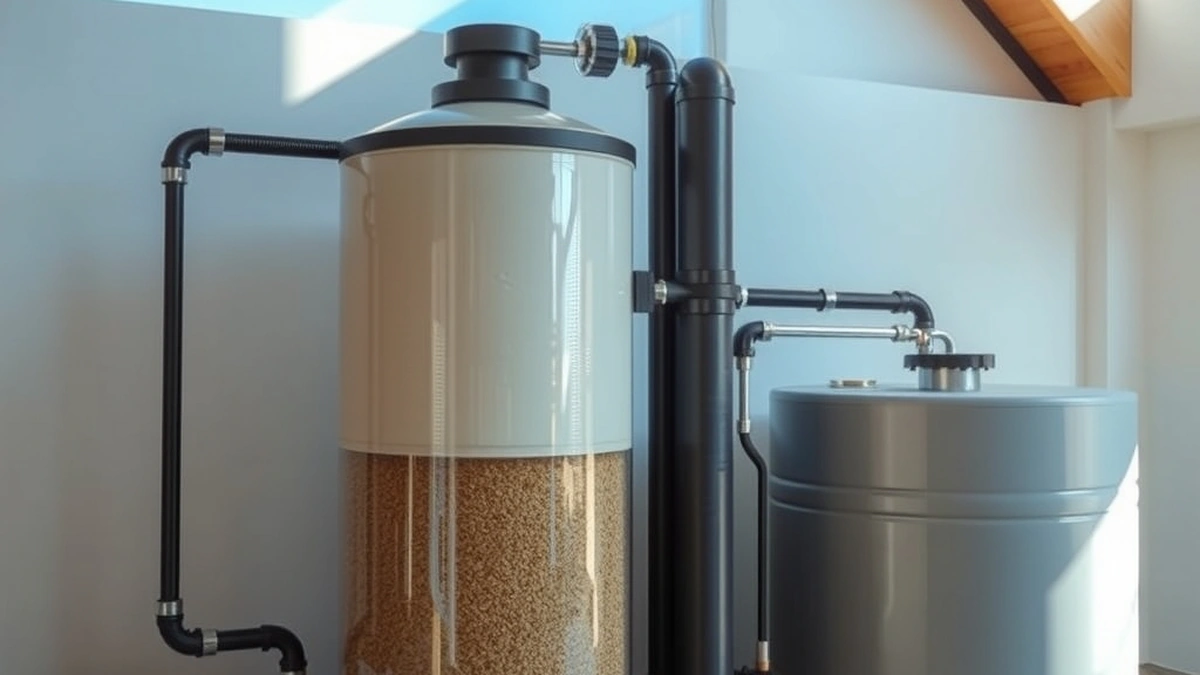
A softener tank holds cation resin charged with sodium ions. Hard water carries calcium and magnesium. As water passes the resin, calcium and magnesium bind to the beads and sodium is released into the water in a chemically equivalent amount. The water leaves softer and slightly higher in sodium.
The amount is fixed by chemistry, not by brand or setting. Each grain per gallon of hardness removed, per gallon of water, brings a known quantity of sodium with it. Expressed per quart, the working figure is about 8 mg per GPG.
| Hardness removed | Sodium added per quart | Sodium added per gallon |
|---|---|---|
| 3 GPG | about 24 mg | about 96 mg |
| 5 GPG | about 40 mg | about 160 mg |
| 10 GPG | about 80 mg | about 320 mg |
| 15 GPG | about 120 mg | about 480 mg |
| 20 GPG | about 160 mg | about 640 mg |
Those are estimates from the standard exchange ratio, and they assume the softener is set correctly. A unit set to a hardness lower than actual will under-soften and add less sodium, which is not a benefit.
Putting 80 mg in Context
A quart of 10 GPG softened water carries about 80 mg of sodium. A slice of bread carries roughly 120 to 150 mg. A cup of canned soup can carry 600 to 800 mg. A teaspoon of table salt carries about 2,300 mg.
So the water is not the main sodium source in most diets. A person drinking 2 quarts a day of 10 GPG softened water takes in about 160 mg from water, which is a small fraction of typical daily intake.
The caveat is that “typical” is doing work in that sentence. Someone on a sodium-restricted diet is working from a much smaller budget, and 160 mg of it going to water is worth knowing about. That is a conversation with a clinician, not a decision an article can make for you.
Why Cooking Concentrates It
Boiling does not remove sodium. It removes water. If you boil 2 quarts of softened water down to 1 cup, the sodium that was in 2 quarts is now in 1 cup. The same applies to reducing stock or making rice, where the water is absorbed rather than poured off.
That is the practical argument for an unsoftened cold tap at the kitchen sink. Cooking water is often the largest single use of drinking-quality water in a house, and it is also the use where concentration happens.
Four Ways to Reduce It
- Plumb the kitchen cold line upstream. A cold supply taken before the softener gives you hard water at one tap for drinking and cooking. It is the cheapest fix and requires no new equipment.
- Add a bypass tap. A dedicated unsoftened faucet beside the kitchen faucet achieves the same result with less pipe work in some layouts.
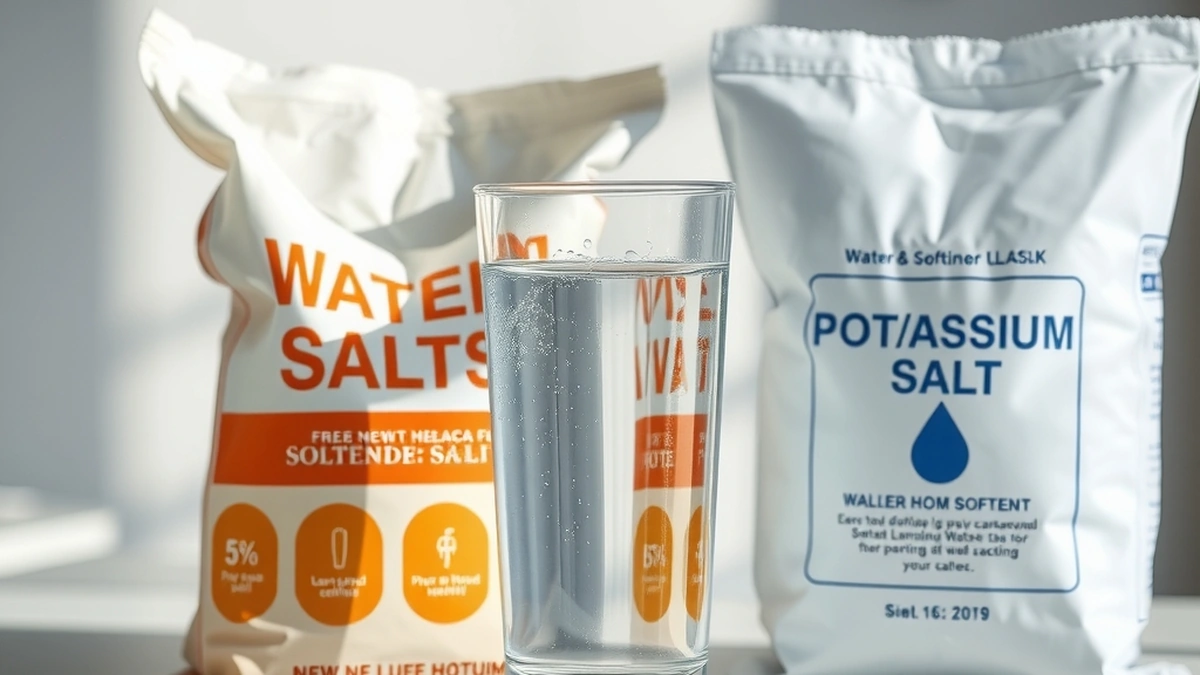
- Switch to potassium chloride. The resin exchanges potassium instead of sodium, so the added mineral is potassium. Pellets cost roughly two to three times what sodium chloride costs, which pushes annual salt from $120 to $400 into a higher band.
- Use reverse osmosis at the sink. An RO membrane rejects most sodium, typically 80 to 95 percent along with other dissolved solids. An under-sink unit runs $300 to $900 installed.
Option four is the one that also improves taste, and it is what most households with a sodium concern end up doing. The trade is the 3 to 4:1 waste ratio and an annual cartridge cost of $60 to $150. See can you drink softened water for the broader question.
What About the Salt-Free Boxes
Salt-free conditioners do not remove hardness and do not add sodium, because they do not perform ion exchange at all. They alter the way calcium and magnesium crystallize so that scale is less likely to adhere. The water still contains the same minerals.
That is a legitimate product for someone who wants to reduce scale without changing water chemistry, and it is not a solution for someone who wants soft water. Installed cost runs $500 to $1,800. If you are comparing the two, salt-based versus salt-free lays out the difference in outcomes rather than marketing.
Who Should Care, and Who Should Not
Care about it if you are on a sodium-restricted diet, if you mix formula for an infant with tap water, or if you simply want to know what is in the glass. In those cases, an unsoftened cold tap plus RO at the sink covers it.
Do not spend much energy on it if you are an average adult with no restriction and your hardness is in the moderate band. At 5 GPG, the added sodium is about 40 mg per quart, which is a rounding error against a normal diet.
Do reconsider if your hardness is very high. At 20 GPG, 160 mg per quart becomes 640 mg per gallon, and a household drinking a gallon a day each is taking in meaningful sodium from water alone. High hardness is also the case where softening delivers the most benefit to plumbing and appliances, so the right answer is usually to soften and bypass the kitchen tap rather than to skip softening.
The Configuration Most Homes Use
Softener at the entry, sized to the house, with the kitchen cold line taken upstream. If taste or dissolved solids are also a concern, add under-sink RO fed from the softened line, which protects the membrane from hardness scale and gives you low-sodium drinking water at the same time.
That layout solves both problems with one plumbing decision. The well water system layout shows where the tap comes off, and water softener sizing covers the capacity math so the softener is not oversized for the house.
Frequently asked questions
How much sodium does a softener add to water?
Ion exchange adds roughly 8 milligrams of sodium per quart for each grain per gallon of hardness removed, so 10 GPG water gains about 80 mg per quart.
Is softened water safe to drink?
For most people it is, because the sodium added is small compared with dietary intake, but anyone on a sodium-restricted diet should discuss it with their clinician or use an unsoftened tap.
Does boiling softened water remove sodium?
No. Boiling removes water and concentrates the sodium, so it increases the amount per cup rather than reducing it.
Can I use potassium chloride instead of salt?
Yes. Potassium chloride pellets regenerate the resin the same way, replacing sodium with potassium, at roughly two to three times the cost per bag.
How do I get unsoftened water at the kitchen sink?
Plumb a cold line to the kitchen faucet upstream of the softener, or add a bypass tap, so drinking and cooking water never passes through the resin bed.
Does a salt-free conditioner add sodium?
No, because it does not use ion exchange and does not remove hardness; it alters scale behaviour, which is a different outcome from softening.
Sources
Some links are affiliate links.If you buy through them we may earn a commission at no extra cost to you. We do not accept payment for rankings. Read the full disclosure.